

ESI Launches MUSE-UA: World’s First Ultrasound AI Agent Deployment Project in Collaboration with Over 100 Tier-3 Hospitals

eSonic
Innovative Medical Imaging Equipment Manufacturer
Driven by the global wave of technological innovation, large language models have emerged in rapid succession, not only sparking an unprecedented technological revolution in the healthcare sector but also profoundly reshaping the development landscape across multiple specialized industries.
However, amid the industry’s rapid development, it also faces practical challenges such as homogenization, difficulties in implementation, insufficient general capabilities, and high costs. Particularly in the field of medical ultrasound imaging, which relies heavily on machine operation and large-scale data analysis, many large-model products remain limited to assisting diagnosis for single anatomical regions or specific diseases, failing to meet the demand for comprehensive, end-to-end intelligent support in complex clinical scenarios.
To address these core challenges, eSonic (ESI) recently unveiled Dolphin-V1.0, the world’s first general-purpose large model for ultrasound medicine, at the 3rd Ultrasound Young Physicians Academic Conference of the Chinese Medical Association.
It is reported that this ultrasound AI agent is developed byUltrasound Branch of the Chinese Medical AssociationLead,eSonic Partners with Dolphin IntelligenceJoint R&D. The release of this achievement not only marks a key breakthrough in the clinical application of intelligent ultrasound in China, but also provides a vivid example of the deep integration and collaborative innovation among industry, academia, research, and healthcare.
Medical imaging is one of the most mature healthcare scenarios for the current deployment of artificial intelligence technologies. Amidst the continuous iteration and upgrading of ultrasound technology, Dolphin-V1.0 has not only overcome the long-standing performance bottlenecks of traditional ultrasound systems but also redefined industry technical standards through innovations across four core dimensions.
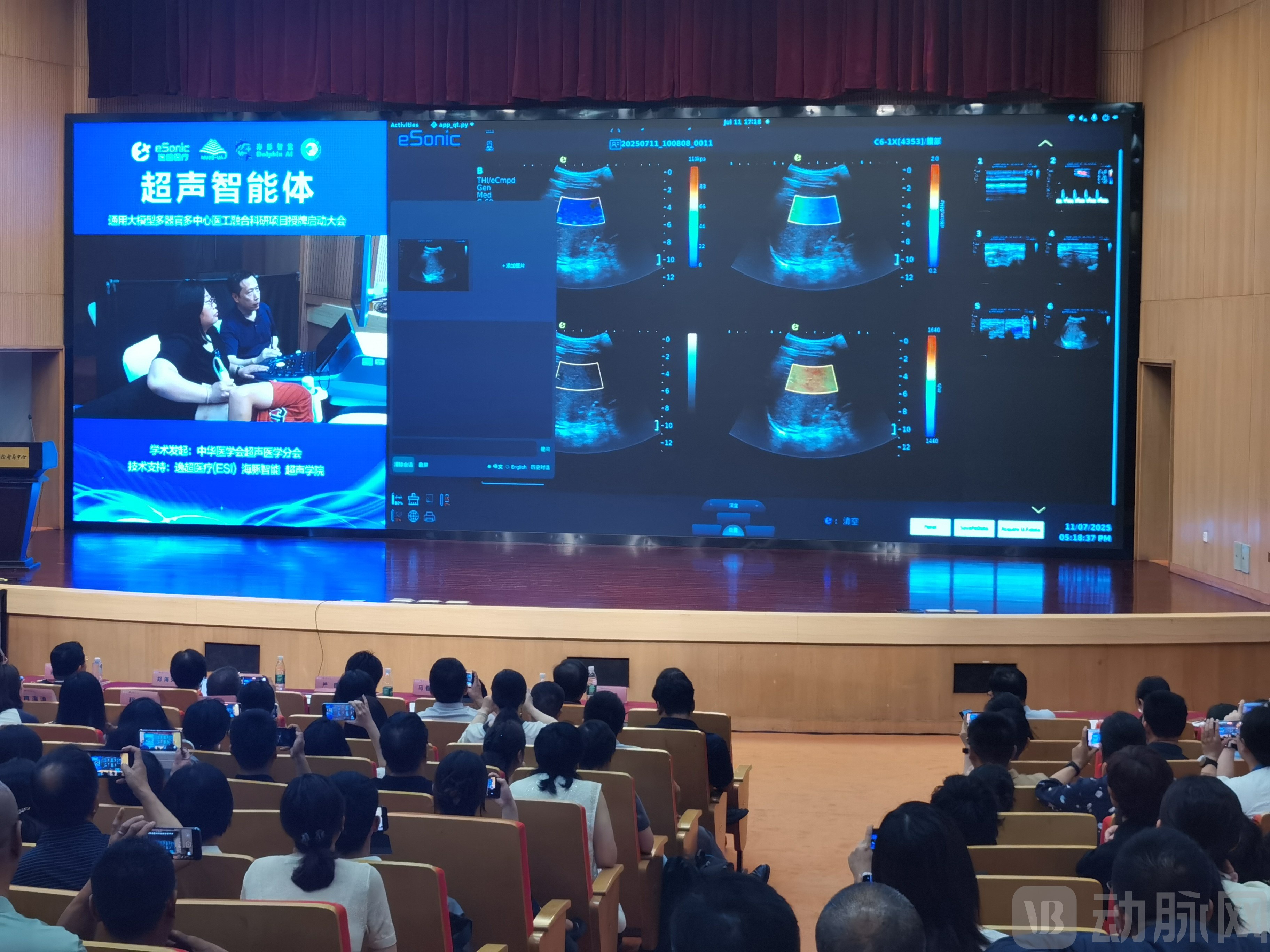
Specifically,First, ultra-high-speed data acquisition.Dolphin-V1.0 leverages a high-performance computing platform integrating thousands of GPUs with plane-wave ultrasound technology, achieving data transmission rates of 8 GB/s and acquisition speeds of 25,000 frames per second—approximately a 200-fold improvement over traditional systems;Second, intelligent human-computer interaction.First implementation of bidirectional human-machine intelligent interaction on an ultrasound system, enhancing operational efficiency through voice commands, gesture recognition, and a real-time feedback system;3. Image Intensifier SystemLeveraging the synergy of ultra-wideband technology and intelligent computing to significantly enhance image recognition;Fourth, high-precision quantitative measurement.Tissue stiffness measurement range up to 1210 kPa, providing large-scale models with a wide-range biomarker data resource.
Although the capabilities of various general-purpose large models in the industry are increasingly improving, scenario breakthroughs and data challenges remain the “last mile” that must be crossed to truly implement them in clinical practice. In this regard, Dolphin-V1.0 has taken the lead in establishing a data barrier.Possessing a whole-body, multimodal ultrasound database with over one million annotated cases. In terms of algorithmic innovation, this systemAdopting the SFT + R1 hybrid training paradigm to successfully achieve cross-modal correlation of disease features。
Based on the aforementioned advantages, Dolphin-V1.0 has ultimately established a comprehensive systemFull-Cycle AI Training System: From Data Acquisition to Clinical Feedback. More importantly, Dolphin-V1.0 can leverage real-world scenario data for iterative upgrades, continuously optimizing its performance.Expected to cover 80% of ultrasound diagnostic scenarios within two years, evolving into an "evolvable ultrasound brain"。
Data shows that Dolphin-V1.0 has achieved an initial diagnostic accuracy rate of over 90% in scenarios such as pediatric pneumonia screening, carotid artery plaque risk warning, and cardiac ejection fraction prediction, with further improvements expected as the number of deploying institutions increases. Notably, its built-in “Intelligent Teaching” module can generate real-time operational guidance, case analyses, and simulation training through human-computer interaction.
Le Bin, Founder and CEO of eSonic, emphasized: “The breakthrough of Dolphin-V1.0 lies in its cognitive capabilities. By leveraging adaptive multimodal data analysis and deep learning, the system continuously upgrades and iterates to simulate expert thinking pathways, providing clinicians with dynamic and precise diagnostic recommendations. This innovation has the potential to transform the workflow of ultrasound medicine.”
According to reports, Dolphin-V1.0 will be deployed atePascal Dongfeng Series: The World’s Fastest Plane-Wave Ultrasound System, propelling ultrasound imaging technology from the era of "imaging-assisted diagnosis" into a new age of "agent-based diagnosis."
At this academic conference, in addition to the global launch of the ultrasound AI agent Dolphin-V1.0, there were also held“MUSE-UA: A Multi-Center, Multi-Organ Medical-Engineering Integration Research Project on Ultrasound Agents”The Plaque-Awarding and Launch Ceremony.
“MUSE-UA” is the world’s first general large-model project for an “ultrasound intelligent agent,” spearheaded by the Ultrasound Medicine Branch of the Chinese Medical Association, with technical support provided by eSonic and Dolphin Intelligence.
In this medical-engineering integrated research project, more than 110 Grade A tertiary hospitals across China are conducting large-scale, multicenter studies focused on key clinical areas involving multiple organs, including the heart, liver, kidneys, obstetrics and gynecology, thyroid and breast, and vasculature. These efforts are dedicated to exploring the in-depth application and translation of the world’s first general-purpose ultrasound large model in the medical field, with the aim of significantly enhancing the precision, efficiency, and accessibility of ultrasound medicine.
At the event, Professor Liang Ping, Chair of the Ultrasound Medical Branch of the Chinese Medical Association, and Professor Zheng Hairong, Director of the National Center for Innovation in High-Performance Medical Devices and Vice President of Nanjing University, along with other society leaders and standing committee members, attended in person to present plaques to representatives from more than 110 Grade A tertiary hospitals across China.
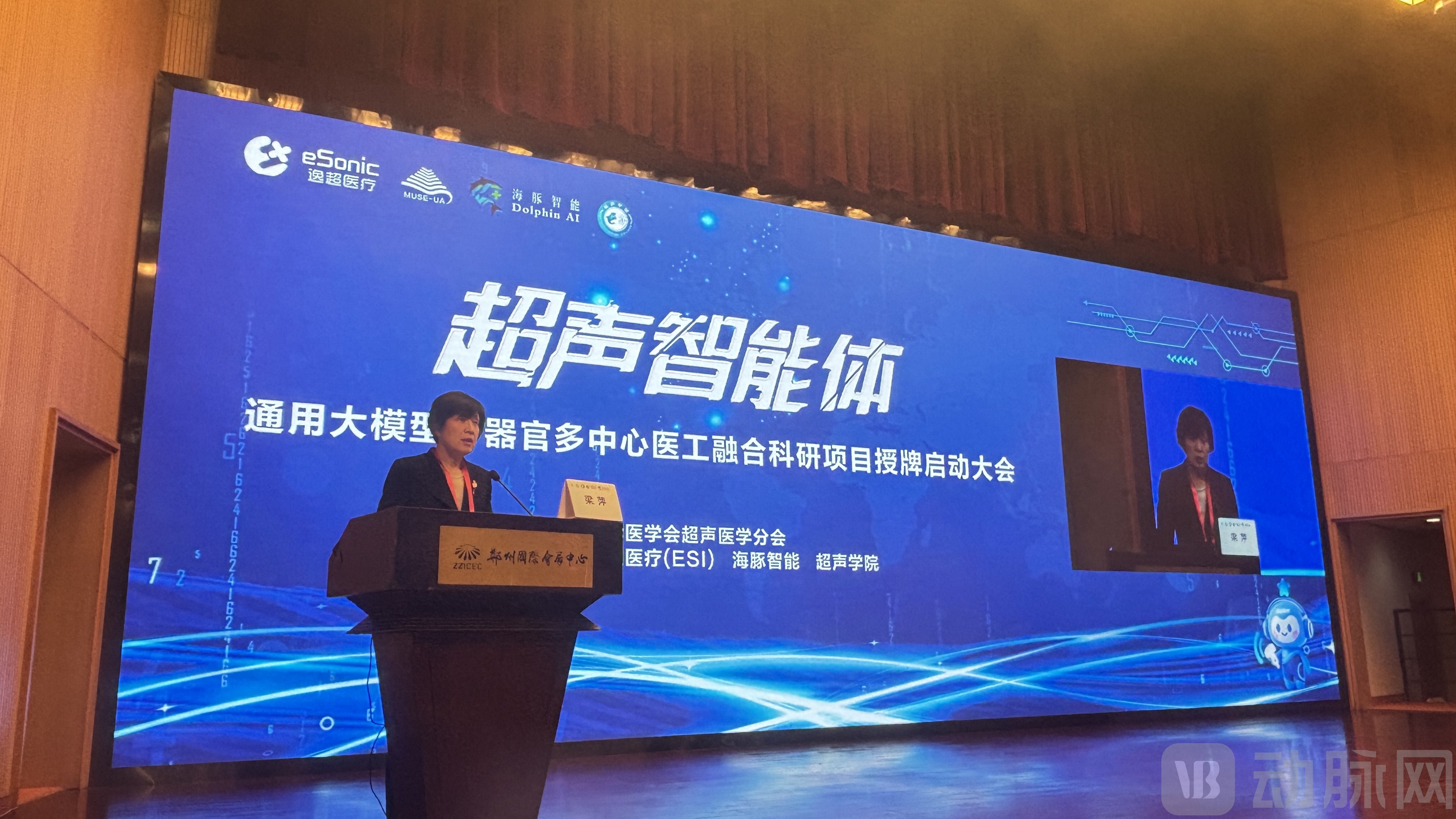
Professor Liang Ping, Chair of the Ultrasound Medicine Branch of the Chinese Medical Association and Director of the Department of Interventional Ultrasound, Chinese PLA General Hospital
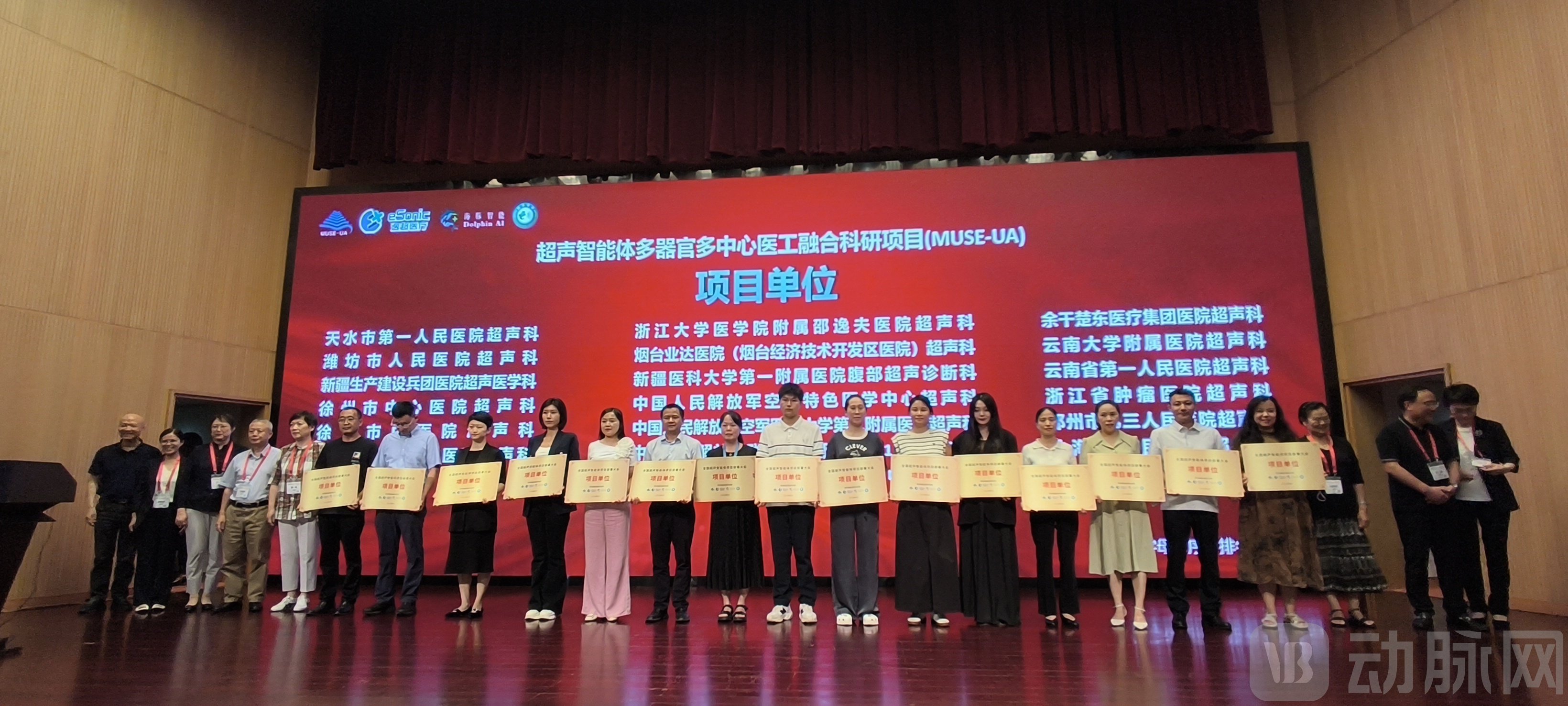
Plaque Unveiling Ceremony for the “MUSE-UA: Multi-Organ, Multi-Center Medical-Engineering Integration Research Project on Ultrasound Agents”
Looking back on the development of ultrasound medicine, “MUSE-UA” stands as a milestone in the deep integration of ultrasound medicine and artificial intelligence. It not only signifies the convergence of China’s top ultrasound expertise into a unified research force, driving the clinical application and scientific exploration of the Dolphin-V1.0 ultrasound intelligent agent toward greater depth, but also provides a reference model for intelligent development for the global field of ultrasound medicine.
Standing at the starting line of the “two-way rush” between artificial intelligence and ultrasound medicine, “MUSE-UA,” as a super engine for the integration of medicine and engineering, will be guided by clinical value, focusing on“Serving Clinical Practice, Serving Patients, Supporting Research”core positioning, injecting momentum into the intelligent revolution of ultrasound medicine, allowing technological innovation to truly take root in clinical practice and benefit countless patients.
In terms of short-term goals, “MUSE-UA” focuses on“Enhancing Quality and Efficiency, Standardizing Diagnosis and Treatment”—By accelerating the intelligent upgrade of ultrasound examination processes, we strive to achieve four major "real-time" breakthroughs, significantly improving examination efficiency, thereby promoting the standardization and homogenization of ultrasound quality, and enabling patients to enjoy faster and more reliable diagnostic services.
1. Real-time Comparison: AI-assisted rapid matching of standard section images with current examination results;
2. Real-time Diagnosis: Intelligently identify lesions and provide diagnostic recommendations;
3. Real-time Reporting: Automatically generates structured draft reports, significantly reducing report generation time;
4. Real-time Quality Control: Immediate assessment of procedural compliance and image quality with feedback.
In terms of long-term vision, “MUSE-UA” will“Empowering Research, Conquering Challenges”Guided by this direction, we will leverage a multi-organ, multi-center networked research platform built in collaboration with over 100 Grade A tertiary hospitals to unlock greater potential.
1. Accelerating Precision Diagnosis: Training on massive real-world data enables AI agents to master accurate diagnostic capabilities for complex and rare diseases;
2. Construct a Panoramic View: Break through the limitations of single-modality examinations by intelligently correlating multidimensional results from CT, MRI, laboratory reports, and more;
3. Integrate global knowledge: Curate authoritative online information and the latest research to provide comprehensive decision support for physicians;
4. Solving Clinical Challenges: Serving as a critical aid in the diagnosis and treatment of complex cases, providing key evidence for precise diagnosis through multidimensional information analysis, and contributing to the overall improvement of healthcare standards.
The launch of the “MUSE-UA” project and the release of Dolphin V1.0 represent not only technological advancements but also a reshaping of medical thinking, diagnostic and treatment models, and even doctor-patient relationships. The in-depth participation of more than 110 Grade A tertiary hospitals will provide abundant data and authoritative support for the research. Meanwhile, under the guidance of the Ultrasound Branch of the Chinese Medical Association, eSonic and Dolphin Intelligence have transformed their years of accumulated R&D achievements into replicable clinical tools, ultimately forming a sustainable innovation loop.
In the future, the “MUSE-UA” project will leverage the reshaping of ultrasound workflows as a fulcrum to comprehensively enhance physician efficiency and patient experience; utilize unified quality control standards as a key lever to elevate diagnostic standards across China; drive breakthrough scientific achievements in disease diagnosis and prognostic assessment through the synergy of multi-center big data and AI; and ultimately deliver intelligent solutions for tackling complex diseases to the clinical frontline, thereby maximizing the closed-loop value of “data–algorithm–clinical practice.”
The wave of AI in ultrasound has arrived. As a milestone project, the Ultrasound Agent will bring profound transformation to ultrasound medicine in China and the entire healthcare sector, making it an initiative worthy of our collective anticipation. Meanwhile, as a leading enterprise in the ultrasound equipment industry, eSonic will continue to deepen its engagement in the artificial intelligence arena. With “AI + Ultrasound” as its core strategy, the company will steadily increase R&D investment to build full-scenario solutions covering research and development, manufacturing, clinical practice, and education. In supporting the practical application efficacy of Dolphin-V1.0, eSonic is also accelerating the intelligent transformation of the industry.