

Going Global: The Essential Path for High-End Domestic Innovation in MedTech and Pharma
"Going global has become a key expansion path for domestically produced high-end medical devices and innovative drugs."
Behind this trajectory, various stakeholders in the healthcare innovation chain—namely government, industry, academia, research institutions, and medical providers—are leveraging the advantages of industrial clusters to jointly drive comprehensive upgrades across the entire value chain. By pooling their respective strengths, these entities are spontaneously committing to global expansion as a strategic breakthrough for business growth and development.
July 7,“Innovation-Led Navigation, Industrial-Financial Leap”The 2025 Changping Pharmaceutical and Health Finance Investment Innovation Forum Was Successfully Held at the Changping Petroleum Technology Exchange Center。This forum is hosted by the People's Government of Changping District, Beijing, and Beijing State-owned Capital Operation Management Co., Ltd., and co-organized by the Administrative Committee of Future Science City (Life Science Park Administrative Committee), the Development and Reform Commission of Changping District, Beijing, the Changping Future Venture Capital Alliance, the Administrative Committee of Zhongguancun Science Park Changping Park, Beijing Changping Science and Technology Park Development Group Co., Ltd. (Changfazhan Group), Beijing Changke Jin Investment Co., Ltd., and Chongqing Dongmaicheng Technology Co., Ltd. (VCBeat).
Focus on “Going Global””As a key development direction for Chinese healthcare enterprises, the conference has specially established a session titled “From License-out and Business Development to NewCo: Global Financial Cooperation and Practices for High-Quality Assets in China’s Pharmaceutical and Healthcare Sector””Pharma BD Forum and “Under the High Walls and Above the Blue Oceans for Medical Device Companies: Seeking ‘Export Channels’ and ‘Breakthrough Points’”“Medical Device Global Expansion Forum: Attendees Engaged in Two Insightful Panel Discussions. Content Edited by VCBeat for Our Readers.”
1How to Launch and Implement Business Development for Innovative Drugs in China?
Amid the wave of transformation sweeping the global pharmaceutical industry, Chinese innovative drugs are moving from “Domestically Developed”Moving Towards “Global Collaboration”: Expanding into International Markets Through Diversified Models. From license-out to business development (BD) and then to NewCo, the globalization pathway for high-quality assets in China’s pharmaceutical and healthcare sector is undergoing profound iteration. How can financial instruments serve as bridges and industrial value as anchors to achieve bidirectional empowerment of technology and capital in cross-border collaborations?
Moderated by Li Jiaan, Partner at Jiangyuan Investment, the panel featured an engaging discussion with Han Qifeng, Head of Global BD&L China at Boehringer Ingelheim; Ge Yongbin, Partner at Zhong Lun Law Firm; Liu Dan, Managing Partner at Pivotal bioVenture Partners; Liu Chen, Managing Director at Locust Walk; and Li Jing, Founder of Orange Sail Pharma.
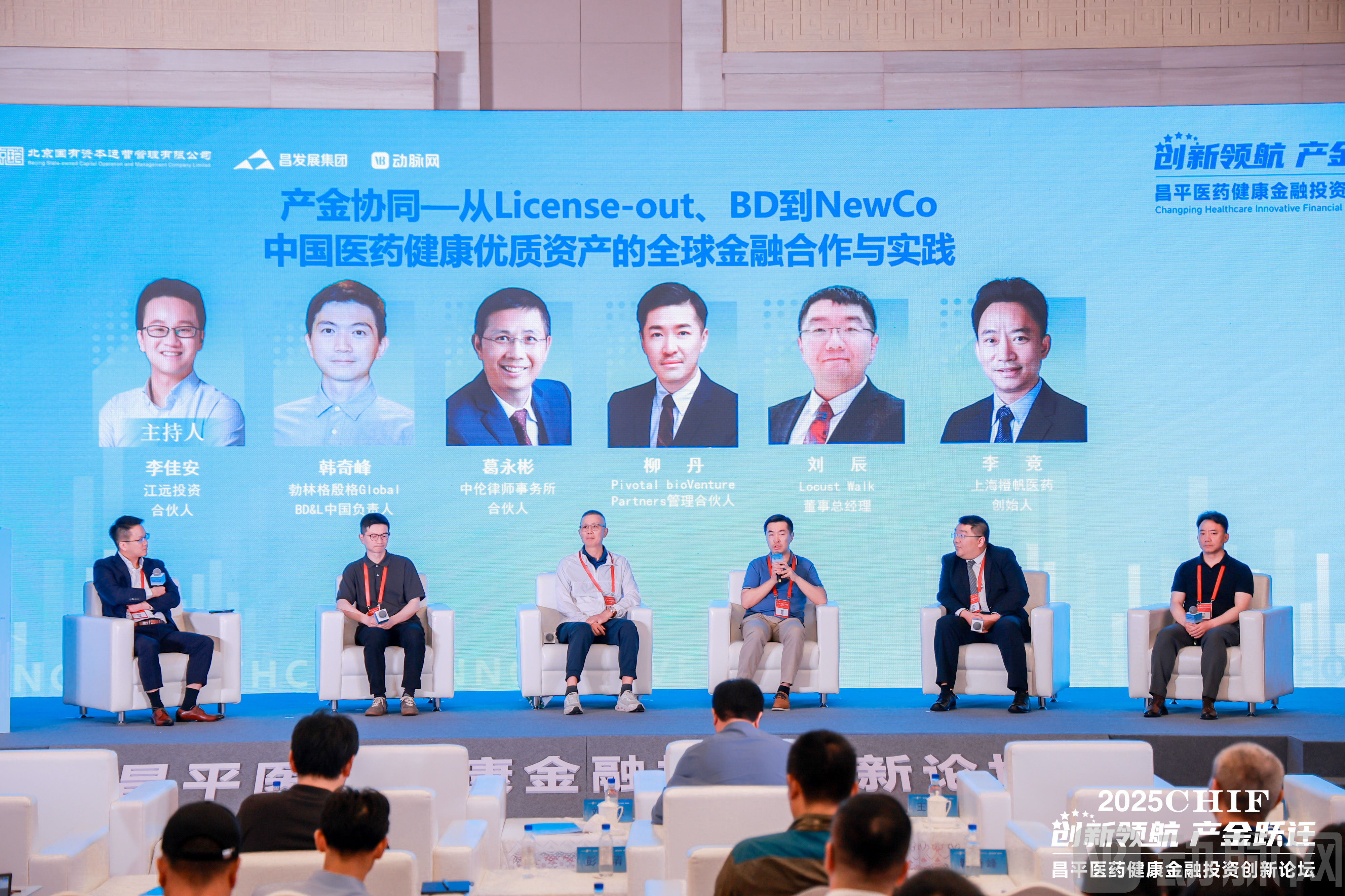
Han Qifeng, Head of Global BD&L China at Boehringer Ingelheim, stated,Last year, the BD market was dominated by a seller-driven model of proactive applications. This year, however, the industry ecosystem has heated up significantly, with biotech companies receiving increased partnership interest from VCs, MNCs, and other institutions. The stages of collaborative projects have expanded from late-stage clinical trials (Phase II/III) to preclinical and Phase I stages, demonstrating a dual expansion in both BD activity and coverage.
From the perspective of asset selection preferences, institutions represented by Boehringer Ingelheim are more inclined toward early-stage innovative projects, with a particular focus on First-in-class assets in the preclinical and Phase I stages. Their portfolio covers five core therapeutic areas: metabolism, autoimmune diseases, solid tumors, ophthalmology, and mental health. Starting this year, they have also prioritized neurological disorders such as Alzheimer’s disease and Parkinson’s disease in their strategic layout. In terms of project initiation criteria, greater emphasis is placed on exploring novel mechanisms or combination-based innovations, with an implicit requirement that approximately 75% of projects possess First-in-class mechanistic potential.
For buyers such as Biopharma or Localpharma, projects that lack distinct differentiation, have non-unified standards, or are non-confidential in nature may be filtered out due to insufficient competitiveness. In terms of communication channels, while domestic medical conferences provide access to the China teams of pharmaceutical companies, international academic congresses such as AACR and ASCO offer greater advantages—enabling in-depth exchanges with heads of medical affairs, R&D, and business development (BD) at pharmaceutical firms, thereby efficiently highlighting core project strengths and differentiators and accelerating decision-making efficiency.
Ge Yongbin, a partner at Zhong Lun Law Firm, mentioned thatIn current biopharmaceutical business development (BD) practices, there is a widespread industry tendency to “prioritize licensing over collaboration”—an excessive focus on validating the value of the license while neglecting the core role of collaboration throughout the asset’s entire lifecycle. From the perspective of internationally accepted contractual paradigms, English agreements are typically titled “License and Collaboration Agreement.” This nomenclature itself reveals a key logic: the license serves as an instantaneous value anchor at the time of deal execution, whereas collaboration constitutes a long-term synergistic mechanism that spans clinical development, regulatory submissions, commercialization, and other stages.
Regardless of whether a transaction is in the preclinical, clinical, or regulatory approval and commercialization stage, buyers’ decision-making always incorporates expectations of the asset’s long-term value. Despite impressive immediate data, a lengthy process of product iteration and market validation still follows the closure of a business development (BD) deal. Biotech companies need to shift their mindset by fully anticipating post-deal collaboration requirements, thereby reducing the industry’s current project return rate of approximately 40%. In practice, some deals fail because sellers make excessive promises to secure partnerships but lack the experience and planning necessary for effective post-deal execution, leading buyers to “shelve” projects or downgrade their priority. To avoid such passive outcomes, Biotech firms can use negotiations to clearly define key details in agreements, including clinical development timelines, resource allocation standards, and decision-making mechanisms.
Furthermore, as business development (BD) for Chinese innovative assets expands from the preclinical stage to late-stage clinical trials and regulatory approval, aligning Chinese data with regulatory standards in key markets such as Europe and the United States, meeting multinational review requirements, and ensuring compliant operations have become core issues that biotech companies must address proactively. This requires enterprises to adopt a global perspective from the early stages of projects, benchmarking international standards in data quality, trial design, and compliance systems to lay the foundation for unlocking the global value of their assets.
Liu Dan, Managing Partner at Pivotal bioVenture Partners, stated,China’s innovative drug market remains buyer-dominated. As sellers, to successfully “market” Chinese assets abroad, it is essential to build a targeted framework for understanding buyer profiles—by accurately capturing buyers’ strategic needs, risk appetites, and decision-making logic, thereby enhancing the efficiency of matching between both parties.
Meanwhile, as the bargaining power of buyers continues to strengthen, business development (BD) transactions are increasingly aligned with industry hotspots, and the flexibility of transaction terms has improved significantly. Consequently, investors’ decision-making is also influenced by a buyer’s market perspective, closely aligning with buyers’ interests and preferences. This may result in high-quality assets being overlooked if they do not match the strategic direction of potential buyers.
The role of investment institutions in business development (BD) has transcended that of mere “capital providers.” By facilitating resource matchmaking and other means, they help target biotech companies stand out in homogeneous competition and achieve substantial value appreciation. Even for high-quality targets that are ultimately not invested in due to buyer preferences, many investors are often willing to assist entrepreneurs in connecting with potential partners, thereby promoting the release of value from Chinese innovative assets within the global healthcare ecosystem.
Liu Chen, Managing Director of Locust Walk, emphasized,Four Core Dimensions Warrant Close Attention. First, biotech companies must deeply understand the risk appetite and target requirements of key decision-makers, including the global top 20 pharmaceutical companies, firms with market capitalizations of $1–2 billion, and specialized healthcare investors. The advantage is that industry communication is currently vibrant, making it relatively easy to gauge market demand. Second, although many Chinese biotech firms boast strong products and data, they still lack proficiency in “storytelling,” which hinders their ability to quickly establish a shared value perception with multinational corporations (MNCs).
Third, in cross-ocean communications involved in business development (BD), linguistic and technical accuracy serves as the foundation; however, the deeper challenge lies in “communication comfort,” which encompasses cultural adaptability, alignment of work rhythms, and the efficiency of trust-building. Fourth, while upfront payments for Chinese assets in BD deals remain lower than those in the U.S. market (approximately $50 million and 4.7 percentage points), the market landscape has undergone a pivotal shift: in 2024, only a few industry giants focused on Chinese assets, whereas now nearly all U.S. healthcare funds and mid-to-large-sized pharmaceutical companies have incorporated biotech layout into their strategic planning.
This shift not only creates room for negotiation (securing more favorable terms through competition and deal structure design) but also tests the BD team’s ability to accurately assess MNCs’ operational styles. Given the significant differences in financial strength, decision-making mechanisms, and resource integration capabilities across companies, cooperation proposals must be tailored accordingly. By organically combining upfront payments and milestone payments with MNCs’ “non-cash resources” (such as R&D expertise, scientific support, and global regulatory networks), companies can maximize value while simultaneously strengthening their own teams.
Furthermore, against the backdrop of intensifying homogeneous competition, the localized value of MNCs’ China teams has become increasingly prominent. By conducting in-depth due diligence on target assets and distilling key differentiators through offline channels, these teams can effectively streamline the decision-making process at MNC headquarters. For sell-side parties, securing the support of core business development (BD) personnel from the buy-side often serves as the decisive factor in closing transactions.
Li Jing, founder of Orange Sail Pharmaceuticals, believes thatThe commercial logic of business development (BD) for innovative drugs is, at its core, a dynamic balance between supply and demand. Stripping away the surface to examine the essence reveals that the fundamental basis for clinical project initiation always remains the unmet clinical needs of patients. If biotech companies can accurately capture or even proactively define this ultimate need, they may reverse-engineer the focus of investors and multinational corporations (MNCs). To some extent, market demand can be “created” through technological breakthroughs and scenario exploration, while investment trends can be “led” by innovative value. However, the prerequisite for all this is that drug developers and healthcare innovators possess sufficiently profound insights into patient needs.
From the perspective of scientific value, the quality of the target pipeline always serves as the core benchmark for transactions. However, high-quality assets alone are far from sufficient; it is also essential to establish a collaborative foundation with the buyer based on “aligned R&D logic.” This requires constructing a chain of evidence using scientific language and validation frameworks familiar to the buyer, ensuring consistency across all documentation systems and data presentations. Otherwise, even if the asset demonstrates outstanding potential, the buyer will struggle to assess its value and commercialization prospects.
In global transactions, negotiation strategies must be deeply aligned with the regulatory frameworks and business logic of overseas markets. Particularly in the design of financial terms, while industry conventions provide a foundational framework, specific approaches should be flexibly tailored to asset characteristics and buyer requirements. This balance maintains commonalities to reduce communication costs while preserving room for differentiation to highlight the unique value of the assets.
It is worth emphasizing that the essence of business development (BD) is not merely a “sell-off-to-survive” tactic, but rather requires building a synergistic “BD+VC” strategy: while realizing asset value through BD, biotech companies should leverage the capital and resource networks of venture capital (VC) to provide sustained momentum for products with genuine global competitiveness. When selecting investors, biotech firms should look beyond the scale of funding and also consider the BD resource networks and industrial ecosystem synergy capabilities behind them—indeed, they should proactively use BD as a bridge to connect with VC, and VC as a lever to drive BD.
2China’s High-End Medical Devices: Seeking “Export Channels” and “Breakthroughs”
On the other end, empowered by both technological breakthroughs and cost advantages, Chinese manufacturers of high-end innovative medical devices are actively embracing the global market. While international demand for innovative medical devices remains strong, it is accompanied by multiple challenges, including geopolitical influences, stringent regulatory standards, and intense competition. As “going global” becomes a critical step for Chinese high-end medical device companies to expand their footprint, how should these enterprises better plan their development to align with industrial upgrading and the trend of domestic substitution?
Moderated by Ren Peng, Chairman and General Manager of Beijing Shunxi Private Equity Fund Management Co., Ltd., the session featured an intense dialogue among Sun Xiaolu, Managing Partner of Proxima Ventures; Sheng Fei, Executive Director of the Innovation and Development Department at Terumo China; Gu Leimin, Partner at Yansheng Ventures; Yang Ying, Senior Vice President and Chief Investment Officer of the Medical Devices Business Unit at Fosun Pharma; and Du Xuanyuan, Head of Strategy and Business Development at Ruiqiao Dingke Group. The panelists engaged in vigorous discussions on topics including whether enterprises should expand overseas, the selection of target markets, shifts in internal and external policies, and AI-driven industrial upgrading.
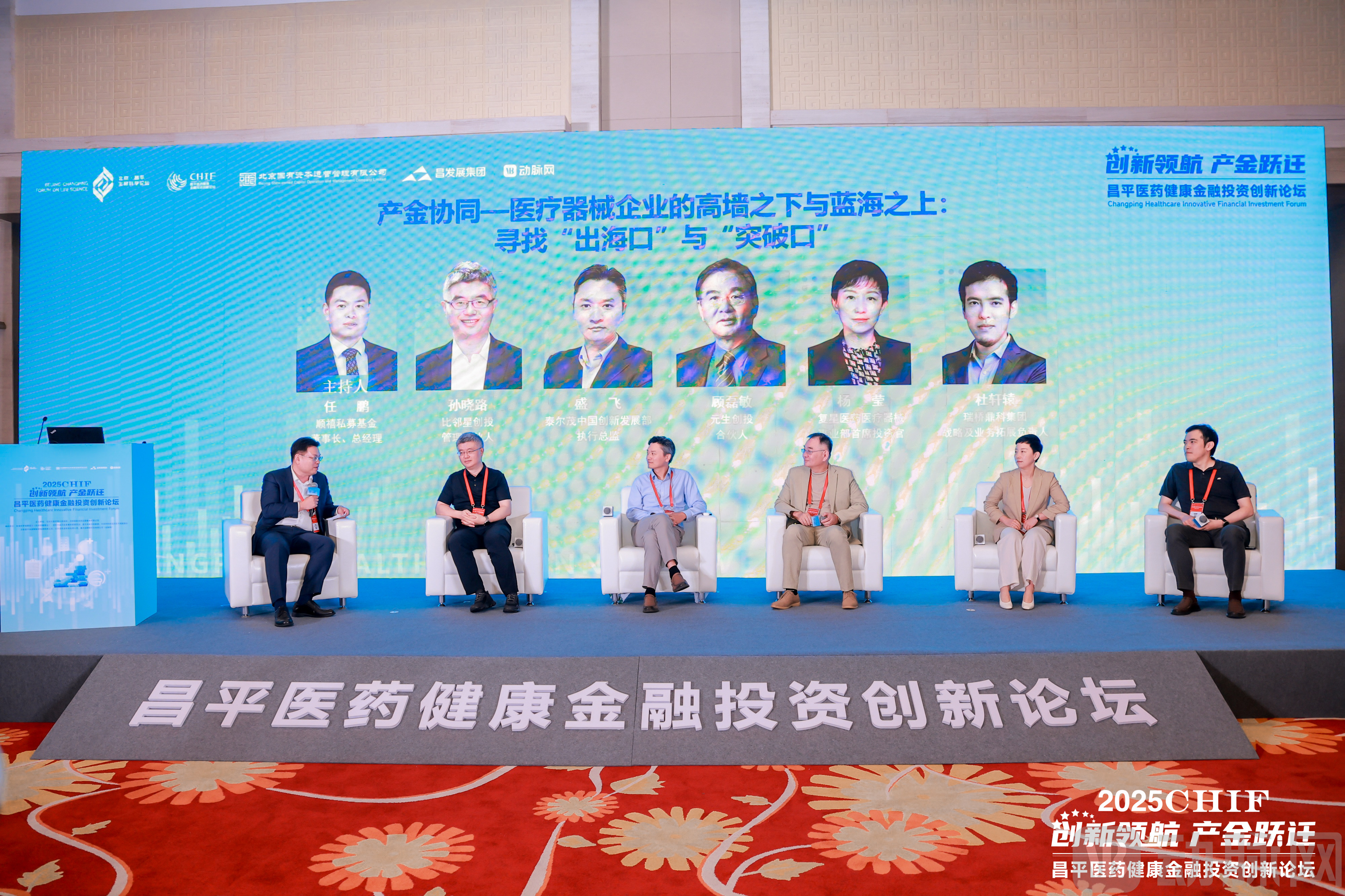
Sun Xiaolu, Managing Partner of Proxima Ventures, stated thatIn recent years, the domestic medical device market has undergone rapid changes, with swift follow-up innovations aimed at catching up with or even surpassing the United States through deep innovation. Many Chinese funds and enterprises now hold portfolios featuring multiple global-first products. Our fund has invested in 52 such global-first products; however, we have observed that overseas development is often too slow and costly. Meanwhile, financing difficulties and the impact of volume-based procurement (VBP) have accelerated trends toward mergers and acquisitions (M&A). The past two years have presented optimal opportunities for M&A consolidation, fostering a virtuous cycle through resource aggregation and independent innovation.
Currently, Proxima’s fund strategy has firmly shifted toward global expansion. The first principle is that Chinese medical device companies should now embrace this mission: we must go global, aiming to serve the entire world. We can outcompete rivals worldwide by providing high-quality, cost-effective, and clinically effective products. Beyond our advantages in cost and speed, we are also seeing strong acquisition interest from foreign companies for many of our single-product portfolios. In the next five to ten years, Chinese enterprises may become ubiquitous globally.
Global expansion is complex and constantly evolving. We once believed that innovative products should target European and American markets, but later discovered that the Middle East also offers promising opportunities for innovative medical devices. Meanwhile, while commodity products were initially directed toward “Belt and Road” countries and developing nations, we found that they achieve volume most easily in developed countries. Therefore, we must continuously experiment, remain steadfast in our efforts, plan strategically, persist over the long term, and explore every possible approach to succeed.
Guo Leimin, Partner at YuanSheng Venture Capital, emphasized,Centralized procurement and DRGs have significantly altered the investment logic for medical devices: shifting from a previous strategy of investing in any company with innovation or potential for domestic substitution, to now avoiding single-product companies and those offering only simple import substitution. This change is primarily due to the relatively small size of the medical device market, particularly its highly fragmented niche segments. Currently, Yuansheng Venture Capital evaluates projects based on three dimensions: innovation, global expansion, and capital integration capabilities, specifically mergers and acquisitions for rapid scaling.
Global expansion is not a one-size-fits-all approach where a single product targets a single market. Instead, it requires tailored strategies based on specific regional markets, the company’s development stage, and sales channel distribution. For instance, traditional low-end and high-end product lines should adopt distinct internationalization strategies, such as engaging in trade, establishing subsidiaries, or pursuing mergers and acquisitions.
Based on experience, building a successful medical device company requires the following: First, the team must have clearly defined goals, strong alignment with those goals, and well-articulated 5- and 10-year plans. Second, it is essential to become No. 1 in a niche segment, though this alone is insufficient. Third, the company should evolve into a platform-based enterprise by building a diversified product portfolio and multiple growth curves. Fourth, it must expand overseas; given the limited size of the domestic market, international markets offer relatively stable pricing structures and ample untapped potential and narrative value. Fifth, effective utilization of capital is indispensable.
Sheng Fei, Executive Director of Terumo China’s Innovation and Development Department, mentioned thatExpanding overseas is inherently about exploring a new market, a strategic consideration for any medical device company at all times, albeit with varying focuses across different stages. As a traditional Japanese corporation, Terumo faces multi-layered challenges in bringing a Chinese medical device product to the European and U.S. markets:
First, identify partners with complementary capabilities and competitive advantages based on market characteristics and experience. Second, products intended for international markets must address key considerations at the R&D stage—specifically, which markets to target and which clinical pain points to address; otherwise, even if product development is completed, there may be a lack of applicable clinical scenarios in the target market. Third, each local region may present unique market-specific challenges that can impact overseas market access and timelines.
Yang Ying, Senior Vice President of the Medical Device Business Unit and Chief Investment Officer at Fosun Pharma, believes that“Go global or go under, but reckless expansion will surely lead to failure.” Specifically, companies should adjust their strategies and dynamically allocate resources by integrating diverse technologies and considering the distinct attributes of their products.For instance, in the Southeast Asian market, one may choose to partner with local distributors or establish manufacturing facilities that leverage cost advantages and digitalized production, thereby helping to train local workers and create job opportunities.
Regarding premium products, if a product is backed by strong technological confidence and has established IP patent barriers, the United States is the preferred market for international expansion. However, numerous operational details must be considered, such as the timeline for evidence collection and FDA registration strategies. For Chinese startups, undertaking all these tasks independently poses significant challenges; therefore, we are exploring collaborations with large overseas companies to pioneer a new model of licensing out original Chinese technologies.
Furthermore, “leveraging existing platforms to expand overseas” represents another viable pathway. In April, Fosun Pharma entered into a strategic partnership with Saudi Arabia’s Fakeeh Care Group, introducing biosimilars, CAR-T therapies, self-developed medical devices, and diagnostic reagents to the Kingdom for local implementation. This initiative aims to use Saudi Arabia as a strategic foothold to unlock broader opportunities in the Middle Eastern healthcare market.
Du Xuanyuan, Head of Strategy and Business Development at Ruiqiao Dingke Group, observed thatGoing global has long been a strategic option, but the ever-evolving market landscape compels medical device innovators to continuously adjust their priorities. Currently, three core challenges hinder international expansion: first, the information gap, as significant differences in regulations and demands across markets require entrepreneurs to acquire critical insights at high costs; second, the channel gap, where transitioning from simple export trade to complex license-out arrangements necessitates decades of localized accumulation; and third, the trust gap, wherein cultural and communication barriers make building trust difficult, demanding long-term investment. Companies seeking to go global must bridge these three gaps while accurately identifying their positioning and development stage, thereby selecting the most suitable expansion model.