

Wandercraft Secures $137M Total Funding and Partners with NVIDIA to Advance Exoskeleton Robotics Across Medical, Consumer, and Industrial Markets

Wandercraft
Medical Technology Robot R&D Developer
On June 11, 2025, French exoskeleton robotics company Wandercraft announced the completion of a $75 million Series D financing round, with participation from institutions including Renault Group, the PSIM Fund under Bpifrance, Teampact Ventures, and Quadrant Management.
The funds will be used to advance the commercialization of its core product, the Eve system, the international deployment of Atalante X, and the mass-production validation of Calvin-40.
Since its establishment in 2012, Wandercraft has built a funding chain for technological R&D and market expansion through multiple rounds of financing, with cumulative fundraising reaching $137 million:
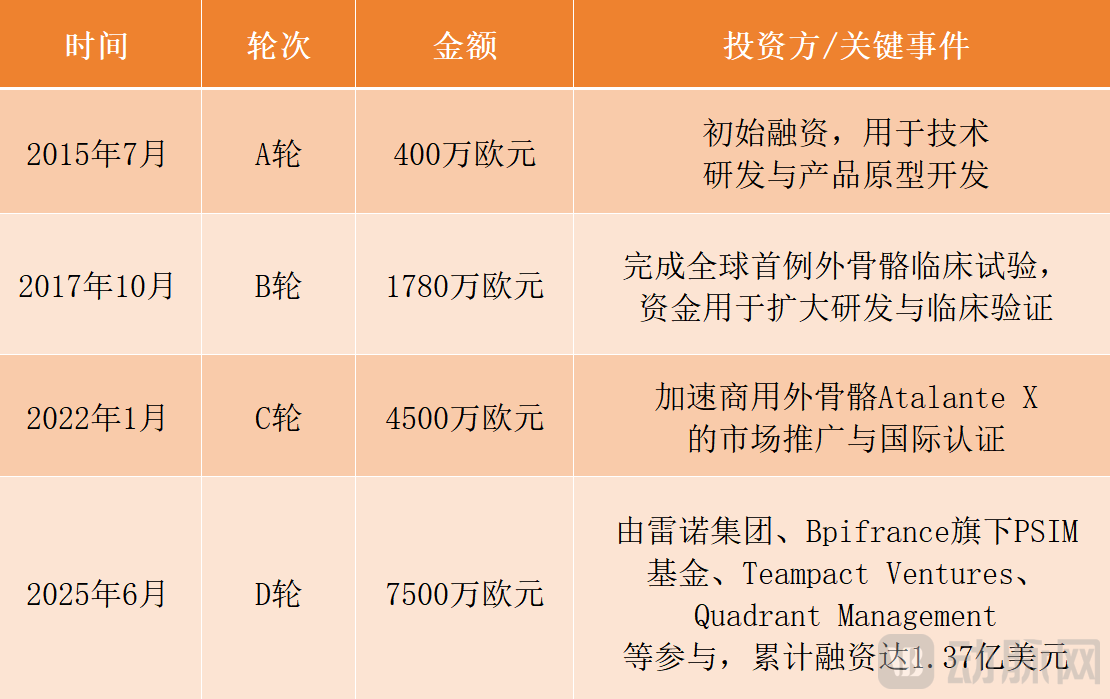
Overview of Wandercraft's Financing History
Exoskeleton robots are wearable intelligent mechanical devices. Inspired by the exoskeletal structures of insects in biology, they leverage the coordinated operation of motors, sensors, and control systems to provide power support similar to the exoskeletons of insects and shelled animals, thereby enhancing or restoring human motor function.

Overview of the Development History of Exoskeleton Robots
From the launch of the world’s first wearable individual device, “Hardiman,” by General Electric in 1960, which aimed to replace human hands with mechanical arms, to the shift of exoskeleton robots toward the medical field in the 1970s to help paraplegic patients stand and walk—gradually moving out of laboratories and into commercialization—and further into the 21st century, when exoskeleton-related technologies achieved significant breakthroughs, the exoskeleton robot industry has continued to develop and innovate, with product applications gradually expanding across military, medical, consumer, and industrial sectors.
Amid this technological wave, founders Matthieu Masselin, Nicolas Simon, and Alexandre Boulanger keenly identified a gap in the global rehabilitation market, recognizing the urgent needs of patients with mobility impairments—among the nearly 20 million individuals worldwide with spinal cord injuries, only a small fraction have access to effective rehabilitative treatment equipment. In response, Wandercraft was established in Paris in 2012.
After more than a decade of dedicated R&D, Wandercraft, driven by its corporate vision to “restore walking ability to wheelchair users,” has gradually evolved into a company holding over 30 core patents. Having achieved breakthroughs in dynamic balance control and gait neural network modeling, it has grown from a startup into an industry benchmark for exoskeleton technology.
Currently, Wandercraft has successfully developed three exoskeleton robots: Atalante X, Eve, and Calvin-40, targeting the medical, consumer, and industrial markets, respectively.
Atalante X: Designed for Patients with Mobility Impairments, One of the Few to Hold Dual Certifications in Europe and the United States
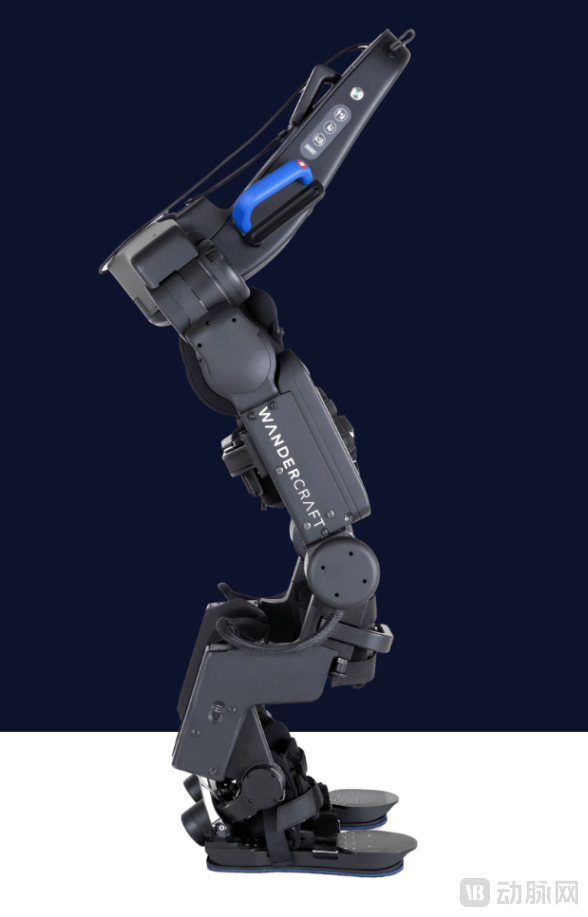
Atalante X Model Diagram Source: Wandercraft Official Website
Atalante X is a self-balancing exoskeleton system designed for rehabilitation medical institutions, specifically tailored for patients with mobility impairments caused by spinal cord injury, stroke, multiple sclerosis, and Parkinson’s disease., by combining ergonomic design with cutting-edge technology, it helps patients with mobility impairments safely carry out rehabilitation training. Specifically, it has the following unique advantages:
Intelligent Self-Balancing System, Adaptable to Different Patients.The Atalante X is equipped with a self-balancing system that employs high-precision sensors and feedback mechanisms to monitor body movements and shifts in the center of gravity in real time. By integrating algorithms based on the Zero Moment Point (ZMP), the system achieves dynamic balance control, enabling patients to stand independently without crutches. The device also features an EarlyGait mode, which utilizes a small step length of 5–10 cm along with customizable gait parameters to help individuals with severe gait impairments rapidly initiate their rehabilitation process.
Integrated design, 12-degree-of-freedom bionic actuation.Atalante X features a 12-degree-of-freedom electric drive system that precisely simulates the complex ankle movements involved in human gait. Working in synergy with sensory feedback and dynamic balance algorithms, it delivers a more natural and fluid walking experience. Furthermore, its integrated structural design ensures simple and convenient setup and donning, accommodating patients with varying body types, including those with spinal cord injuries and stroke. It also meets diverse rehabilitation needs, such as lower-limb training, postural correction, and upper-limb strengthening.
Dynamic Assistance Intensity Adjustment, Real-Time Patient Data Tracking.Atalante X features symmetric and asymmetric adjustable assistance capabilities, allowing for flexible adjustment of assistance intensity based on the patient’s rehabilitation progress, gradually reducing support from full mechanical assistance in the early stages. The system can also automatically generate optimized gait kinematic data tailored to the patient’s body size and abilities. Physicians can monitor parameters such as step length and joint angles in real time via the WanderTouch device to assess the patient’s functional recovery.
In terms of scope of application, Atalante X is indicated in the European Union for patients aged 18 years and older with complete or incomplete motor paraplegia, as well as hemiplegia resulting from brain injuries such as cerebrovascular accidents. In the United States, it is indicated for patients with hemiplegia due to cerebrovascular accidents and those with spinal cord injuries at levels T5–L5. However, it should be noted that this device is not suitable for activities such as running or climbing stairs.
Furthermore, Atalante X received CE certification in Europe in 2019, obtained FDA approval for stroke rehabilitation in early 2023, and gained further approval for spinal cord injury rehabilitation in February 2024, making it one of the few rehabilitation exoskeletons to hold both European and American certifications.
Currently, the system has been deployed across four continents and adopted by more than 100 rehabilitation centers worldwide. Prominent institutions such as the Kessler Foundation in the United States, Villa Beretta Neurorehabilitation Center in Italy, and Schön Klinik in Germany have all implemented the system. To date, it has served over 2,500 patients, facilitating more than 14 million walking steps during their gait training programs.
Eve: A Convenient Home Care Robot, with Its First Pilot Deployed in New York
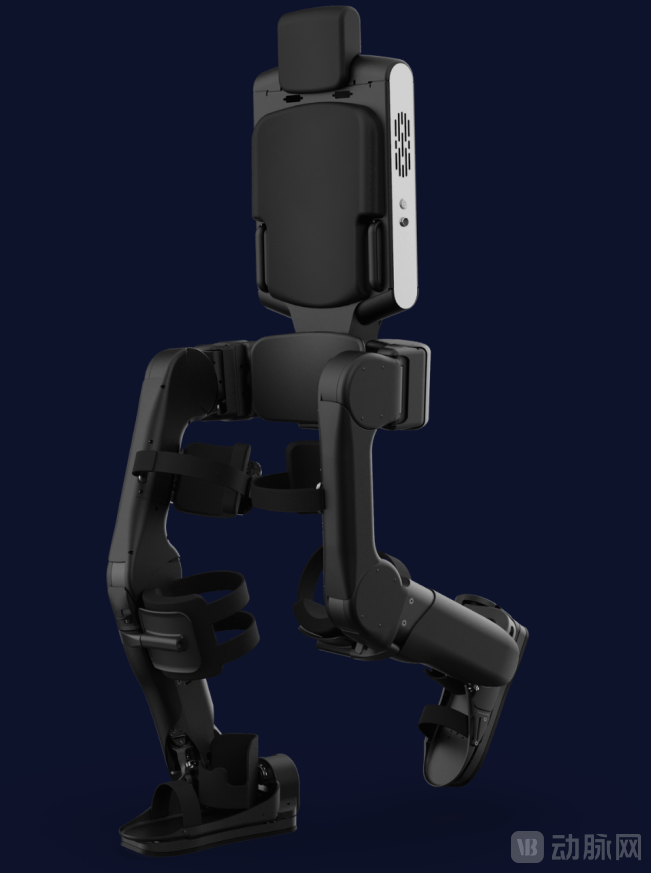
Eve Model Diagram Source: Wandercraft Official Website
Eve, targeting post-discharge rehabilitation scenarios, is Wandercraft’s strategic product for extending from medical institutions to home settings.. The device is equipped with an edge computing chip based on the NVIDIA Jetson platform and integrates the company’s proprietary neural network models, enabling it to simulate natural gait and dynamic balance responses. It features a self-balancing structural design that allows users to move independently without the aid of canes. With its lightweight construction, the device is easy to wear, operate, and carry, making it suitable for post-discharge continued rehabilitation or as an alternative to wheelchairs.
Eve is currently in the clinical trial phase, primarily recruiting patients with spinal cord injuries at T6 level or above who possess basic upper limb control and have healthy caregivers. The trials focus on verifying the device’s operational stability in home settings, wearability tolerance, and subjective user feedback. Based on clinical progress, Eve is scheduled to launch in the U.S. market in 2026 and has already established its first deployment pilot center, “Walk in New York,” in New York City.
Calvin-40: The First Humanoid Robot Designed for High-Risk Industrial Labor
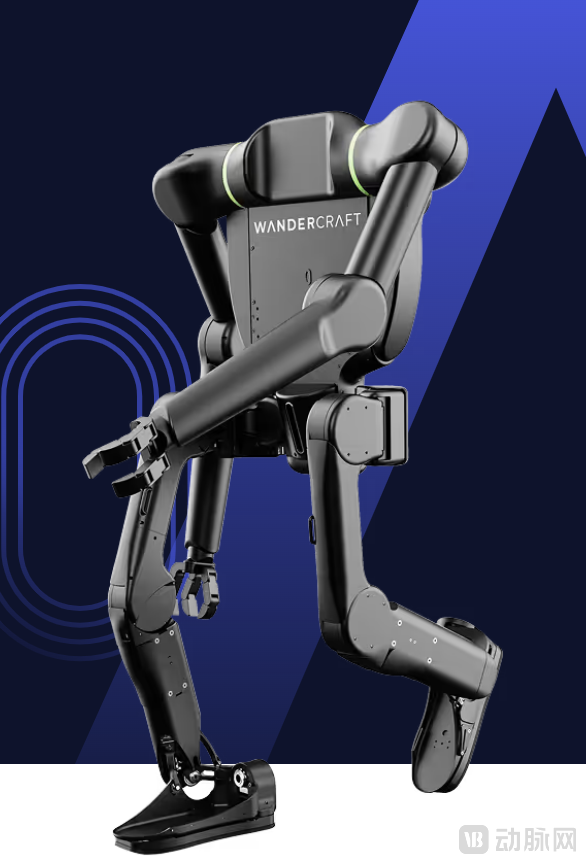
Calvin-40 Model Diagram Source: Wandercraft Official Website
Calvin-40 is the first humanoid robot developed by Wandercraft, designed for repetitive or high-risk physical labor tasks in industrial scenarios.. The robot inherits the gait control architecture of the Atalante platform, integrates NVIDIA Isaac GR00T with the Jetson control system, and features whole-body self-balancing and autonomous navigation capabilities. Its prototype development cycle took only 40 days, with initial deployment planned at Renault Group factories by the end of 2025. It is primarily intended to support manual roles in automotive manufacturing processes, thereby reducing the risk of musculoskeletal injuries among operators. Future versions are expected to expand into the field of caregiving service robots.
It is evident that these three product lines constitute Wandercraft’s comprehensive technological landscape across the medical, consumer, and industrial sectors: Atalante X solidifies its foundation in medical technology, Eve expands into the personal consumer market, and Calvin-40 explores industrial applications. This multi-scenario collaborative product strategy demonstrates unique commercial resilience in the global exoskeleton race, facilitating the formation of a synergistic ecosystem in the future.
In this round of financing, Renault Group’s participation has broken the traditional financial investment model in the exoskeleton robotics sector. As a global giant in automotive manufacturing, Renault has not only registered as an investor but also engaged as an industrial partner, providing Wandercraft with support ranging from factory pilots to manufacturing resources for its Calvin 40 humanoid robot, and becoming the first commercial user to facilitate the product’s commercial deployment.
Meanwhile, Wandercraft has also entered into a technical collaboration with NVIDIA to integrate their technologies for physical AI training, simulation, and deployment, thereby establishing a three-computer solution for its robot development.
This deep resonance between capital and industry has provided Wandercraft with an accelerated engine for technology commercialization. Leveraging Renault’s industrial orders and NVIDIA’s technical support, Wandercraft is gradually transforming from a manufacturer of single-purpose rehabilitation systems into a robotics platform enterprise oriented toward multi-scenario deployment.
In the medical device industry, the key to securing high valuations for companies often lies not only in the performance of individual products but also in the continuity and expansion potential of their product pipelines, as well as the clarity of their commercialization strategies. Wandercraft’s financing round exemplifies the industry’s recognition of this development model.
Turning our focus back to China, the application scenarios for exoskeleton robots have continued to expand in recent years, driven by the maturation of AI technology and the widespread adoption of lightweight materials such as carbon fiber. The Chinese exoskeleton robot market has demonstrated remarkable growth, with its market size projected to reach RMB 4.2 billion in 2025 and a compound annual growth rate (CAGR) of approximately 50% from 2023 to 2028. Exoskeleton robots have become one of the most high-potential niche segments within the intelligent rehabilitation equipment sector.
The competitive advantages of domestic enterprises are rooted in the unique characteristics of the local market. On one hand, according to a 2024 report by the National Health Commission of China, the total number of stroke patients (including cerebral infarction and cerebral hemorrhage) in the country has exceeded 28 million, with approximately 80% of stroke survivors experiencing various sequelae such as motor impairment. There are 3.74 million patients with spinal cord injury, including approximately 90,000 new cases annually, leading to an explosive growth in rehabilitation demand.
On the other hand, policies have provided strong support for the development of the exoskeleton robot industry from various aspects, including technology and the market. From the Ministry of Industry and Information Technology’s issuance of the 14th Five-Year Plan for the Development of the Robotics Industry in 2021 to its proposal of the Implementation Plan for the “Robotics+” Application Action in 2023, these initiatives have consistently classified exoskeleton robots as high-end medical equipment, using policy guidance to accelerate the implementation of technical standards for robotics and drive industrial empowerment.
Looking back at the industry’s development trajectory, the domestic rehabilitation robotics sector experienced a “hundred enterprises competing” landscape from 2015 to 2018 due to increased capital investment. Pioneering companies such as Fourier Intelligence and DaAi Robotics successively broke through bottlenecks in prototype development and launched the first generation of lower-limb rehabilitation robots. After 2018, as domestically produced exoskeleton robots sequentially obtained certification from the National Medical Products Administration (NMPA), the industry entered a phase of standardized development. Since 2021, approval processes have accelerated, and commercial competition among enterprises has become more intense.
Currently, Chinese enterprises are striving to achieve breakthroughs in niche segments. For instance, Vishee Medical has developed the X-walk series of single-limb exoskeletons specifically for stroke patients with hemiplegia; MaiBu Robotics’ RELAX focuses on rehabilitation training for children with cerebral palsy; and Chengtian Technology offers EasyGo, a lightweight standing-assist device tailored for disabled elderly individuals. These differentiated innovative products may become key breakthrough points for the development of China’s domestic industry.
1. The data on China’s exoskeleton robot market in this article is sourced from the VCBeat article “Fuxi Lab × VCBeat | Exoskeleton Robots 2025: Accelerating Commercialization Amid Breakthroughs in Medical Rehabilitation and Consumer Markets”