

Augustine Therapeutics Raises $84.8M Series A to Advance HDAC6 Inhibitor Pipeline for CMT and Beyond

Augustine Therapeutics
Small Molecule Drug Developer
On March 24, 2025, Belgian biotechnology company Augustine Therapeutics completed an oversubscribed Series A financing round of €77.7 million (approximately $84.8 million), led by Novo Holdings and Jeito Capital, with participation from existing investors including Asabys Partners, Eli Lilly, AdBio Partners, V-Bio Ventures, PMV, VIB, Gemma Frisius Fund, the Charcot-Marie-Tooth Research Foundation, and Newton Biocapital.
The company previously completed the first closing of its €17 million Series A financing round in 2024. The proceeds from this round will be used to advance the Phase 1/2 proof-of-concept clinical trial of its lead candidate, ACT-100216 (a peripherally restricted HDAC6 inhibitor), for Charcot-Marie-Tooth disease (CMT), and to support the research and development of two additional HDAC6 inhibitor programs targeting neurodegenerative diseases and cardiometabolic disorders.
Augustine Therapeutics, founded in 2019, is a spin-off company jointly incubated by VIB and the VIB-KU Leuven Center for Cancer Biology at KU Leuven in Belgium. The company focuses on developing novel therapies for neuromuscular disorders, neurodegenerative diseases, and cardiometabolic diseases.
The company’s name was inspired by a special patient treated by the 19th-century French neurologist Jean-Martin Charcot. The hereditary peripheral neuropathy affecting this patient was later systematically studied by the medical community and officially named Charcot-Marie-Tooth disease (CMT).
As one of the most common hereditary neurological disorders worldwide, Charcot-Marie-Tooth disease (CMT), also known as hereditary motor and sensory neuropathy, has a prevalence of approximately 1 in 2,500 and typically onset during childhood or adolescence. Its core pathological feature is the progressive degeneration of peripheral nerve axons or myelin sheaths, with clinical manifestations including muscle atrophy and weakness, sensory loss, severe pain, and foot deformities. Regrettably, there are currently no approved therapeutic options for this condition, which severely impacts patients’ quality of life. The naming of Augustine Therapeutics after this disease not only pays tribute to the pioneering spirit of medical explorers but also embodies its mission to transform the lives of patients.
Augustine boasts an experienced leadership team in biopharmaceuticals and a senior scientific research team, supported by an advisory board composed of internationally leading experts. Dr. Gerhard Koenig, Chief Executive Officer, has deep expertise in the field of neurodegenerative diseases. He previously founded Arkuda Therapeutics, which focuses on treating neurodegenerative disorders including Alzheimer’s disease and Parkinson’s disease, and has held key positions at Bayer and Fidelity Biosciences Group.
Chief Medical Officer Dr. Carl Bjartmar specializes in clinical development for neuromuscular, neurological, and oncology indications, has supported the R&D of multiple novel drugs for rare diseases, and previously served as Senior Medical Director at Genzyme, a Sanofi company. Chief Scientific Officer Rie Schultz Hansen brings over 20 years of experience in drug discovery and early-stage drug development; she previously served as Chief Scientific Officer at Aelin Therapeutics, where she played a pivotal role in developing an induced protein aggregation-based degrader platform designed to neutralize pathogenic proteins.
Led by Professor Ludo Van Den Bosch, the scientific advisory team is anchored by his groundbreaking research on “Addressing the Mechanisms of Peripheral Nerve Axonal Degeneration via Selective HDAC6 Inhibitors,” which lays the scientific foundation for the company’s HDAC6 inhibitory therapies. Co-founder Clara Campàs-Moya joins forces with Dr. Bart De Taeye, who brings two decades of expertise in pharmaceutical innovation, to provide comprehensive support spanning from R&D to commercialization, collectively advancing the development and implementation of innovative HDAC6-targeted therapies.
During research on motor neuron diseases (such as amyotrophic lateral sclerosis, ALS) and various neuropathies (such as Charcot-Marie-Tooth disease, CMT), Professor Van Den Bosch discovered that HDAC6 plays a key role in the pathogenesis and progression of these conditions.
HDAC6 is a class II histone deacetylase that, unlike other HDACs, is primarily located in the cytoplasm and can deacetylate non-histone proteins. In this manner, it regulates various cellular processes, including cell growth, cell migration, intracellular transport, and cell death. Furthermore, HDAC6 plays a role in the clearance of ubiquitinated proteins through its ubiquitin-binding domain.
Under normal physiological conditions, microtubules are polymers composed of α-tubulin and β-tubulin. They serve as vital conduits for intracellular transport, maintaining proper axonal transport to ensure nutrient supply and signal transduction in nerve cells.
However, in diseases such as CMT and ALS, HDAC6 is abnormally activated, leading to excessive deacetylation of α-tubulin. This results in microtubule structural instability and compromised integrity and continuity, thereby impairing axonal transport. Consequently, the nutrient supply and signal transduction pathways of neurons are disrupted, ultimately causing neuronal degeneration and loss of function.
Based on these findings, Professor Van Den Bosch proposed the use of selective HDAC6 inhibitors to intervene in disease progression. By inhibiting HDAC6 activity, excessive deacetylation of α-tubulin can be prevented, thereby preserving the acetylation status and structural stability of microtubules. This restores axonal transport function, promotes the repair and regeneration of neuronal cells, and delays neural injury, while its peripheral targeting profile minimizes potential side effects on other tissues and organs.
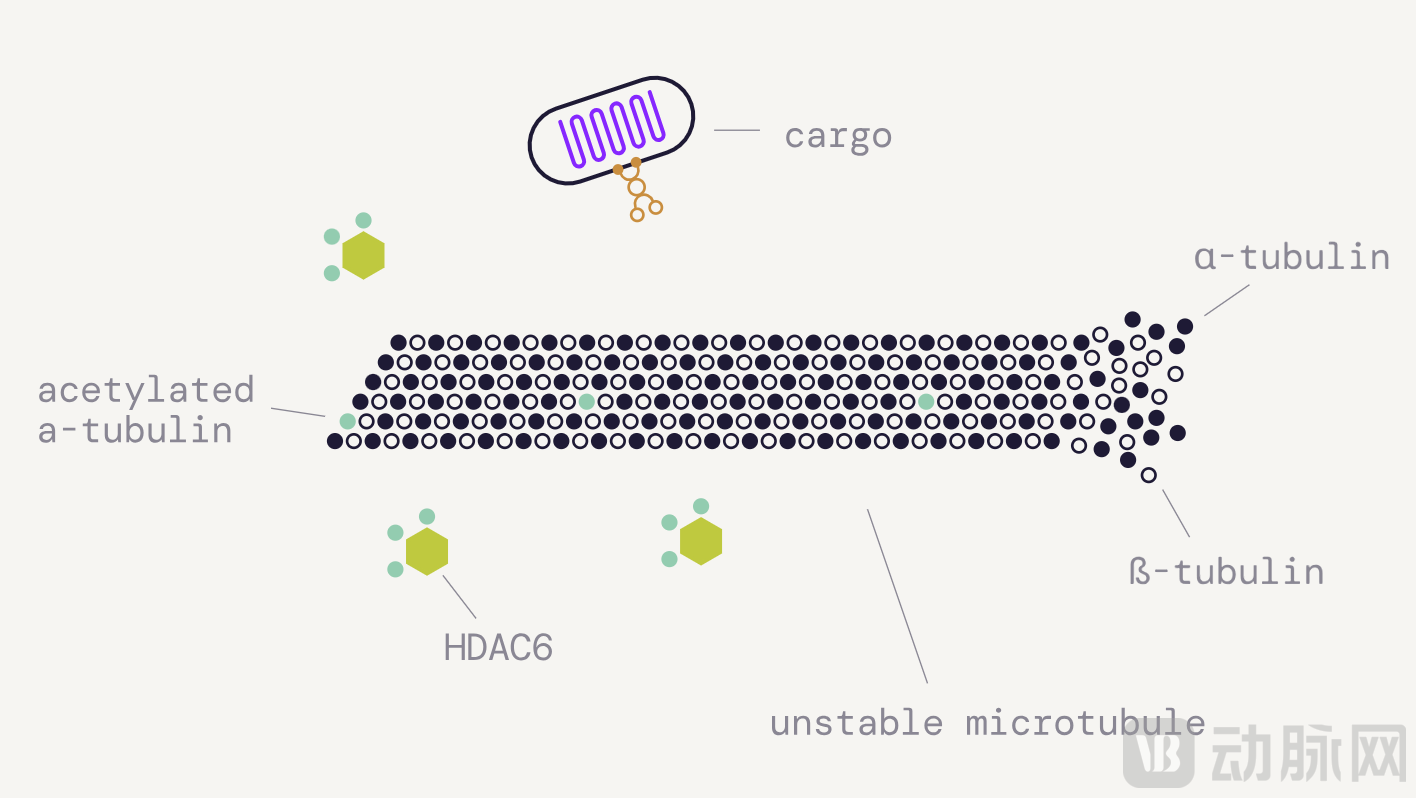
The Impact of HDAC6 on Microtubule Structure and Function Source: Augustine Official Website
Augustine Therapeutics’ R&D pipeline centers on HDAC6 as the core target, building a cross-disciplinary R&D matrix spanning three major therapeutic areas: peripheral neuropathy, central nervous system disorders, and cardiometabolic diseases.
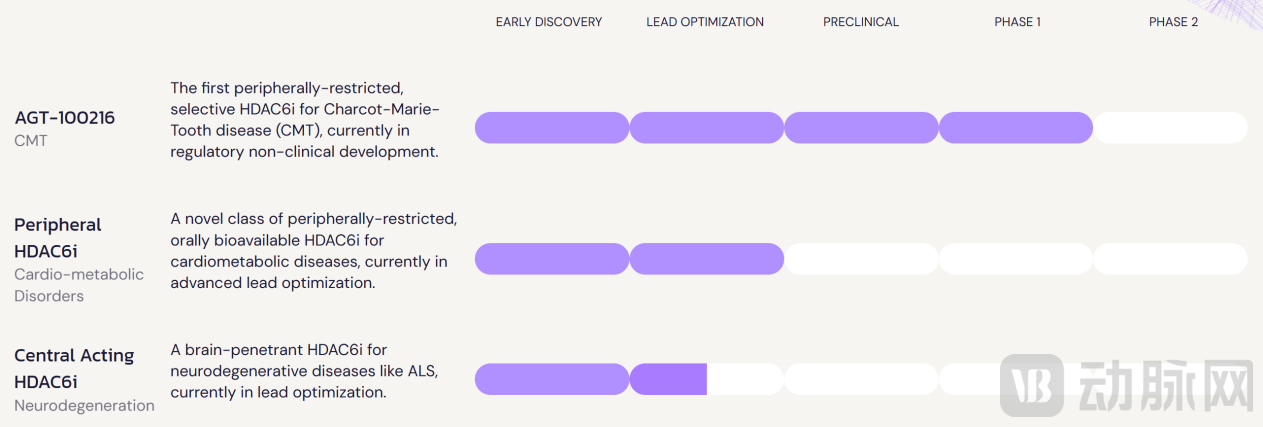
Augustine’s R&D Pipeline Progress Source: Augustine Official Website
- Peripheral Neuropathy Field: CMT Project (AGT-100216)
Preclinical studies have shown that HDAC6 inhibitors can reverse disease progression in CMT models. Meanwhile, for chemotherapy-induced peripheral neuropathy (CIPN), HDAC6 inhibitors not only exert a robust therapeutic effect on CIPN but also provide preventive benefits without compromising the anticancer activity of chemotherapy.
In light of these characteristics, Augustine Therapeutics has developed AGT-100216, a peripherally restricted, selective small-molecule HDAC6 inhibitor. Featuring a unique “non-hydroxamic acid, non-hydrazide” chemical structure, it is orally bioavailable and suitable for long-term treatment of chronic diseases.
Currently, Augustine has initiated a Phase I clinical trial for CMT. This trial is a randomized, double-blind, placebo-controlled first-in-human study designed to evaluate the safety, tolerability, pharmacokinetics, and exploratory pharmacodynamics of oral AGT-100216 in healthy adult volunteers.
- Central Nervous System Disease Area: Neurodegenerative Disease Drugs (Central-Acting HDAC6 Inhibitors)
Building on Professor Van Den Bosch’s research, aberrant activation of HDAC6 also plays a pivotal role in central neurodegenerative diseases such as Alzheimer’s disease (AD) and amyotrophic lateral sclerosis (ALS). Its excessive deacetylation of α-tubulin disrupts axonal transport in neurons within the brain, thereby exacerbating β-amyloid deposition in AD or motor neuron degeneration in ALS.
Based on this, Augustine Therapeutics has developed brain-penetrant HDAC6 inhibitors designed to target the pathological microenvironment of intracerebral neurons. These agents aim to selectively inhibit central HDAC6 after crossing the blood-brain barrier (BBB), thereby restoring neuronal axonal transport function and overcoming the limitation that peripheral drugs cannot act on the central nervous system.
Currently, the drug is in the “lead optimization” phase, requiring structural optimization to improve brain penetration efficiency and enhance target selectivity, in preparation for entering preclinical studies.
l Cardiometabolic Disease Area: Cardiometabolic Disease Drugs (Peripheral HDAC6i)
HDAC6 is highly expressed in cardiomyocytes and adipocytes, and its aberrant activation drives disease through two pathways: promoting microtubule depolymerization in cardiomyocytes, leading to left ventricular diastolic dysfunction (HFpEF); and inhibiting the insulin signaling pathway, exacerbating insulin resistance in adipocytes (type 2 diabetes).
Based on this, Augustine Therapeutics is concurrently developing peripherally restricted HDAC6 inhibitors, focusing on the two key pathological aspects of cardiovascular and metabolic diseases. By selectively inhibiting targets in peripheral tissues, the company aims to explore new avenues for improving cardiovascular function and regulating cardiac metabolism.
Currently, the drug is in the "advanced lead optimization" stage. Subsequent steps will advance preclinical studies and Investigational New Drug (IND) application, gradually entering clinical trials, with potential coverage for cardiometabolic diseases such as heart failure.
This demonstrates that Augustine Therapeutics has conducted in-depth development targeting HDAC6 as a single target, systematically exploring its cross-disease capabilities in neuroprotection and metabolic regulation., with the potential to provide the first mechanism-driven HDAC6-targeted therapy for refractory diseases such as CMT and ALS, thereby filling a clinical gap.
Currently, most HDAC inhibitors that are either on the market or in clinical trials are pan-HDAC inhibitors, lacking selectivity for specific HDAC isoforms and thus posing potential toxic side effects. As the largest member of the HDAC family, HDAC6 is a promising therapeutic target for various rare diseases. Given its significant potential, numerous pharmaceutical companies are actively investing in the development of HDAC6 inhibitors to accelerate their R&D progress.
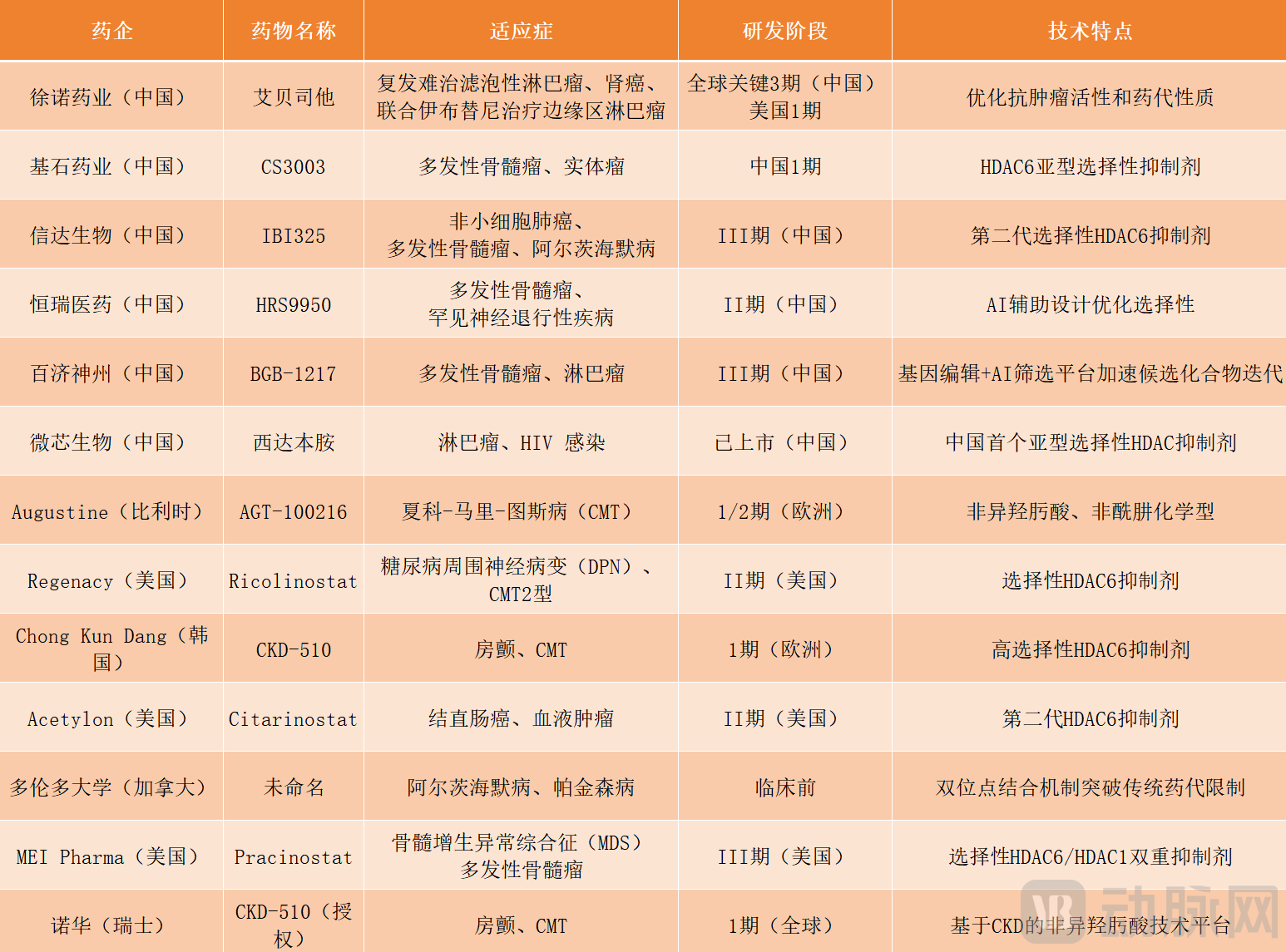
Overview of Global HDAC6 Pipelines in Development
Internationally, previously,Novartis and South Korean pharmaceutical company Chong Kun Dang (CKD) Reach $1.3 Billion Collaboration Agreement, Securing Exclusive Global Development and Commercialization Rights for HDAC6 Inhibitor CKD-510 Outside of South Korea. CKD-510 is a highly selective small-molecule inhibitor targeting HDAC6, which was granted Orphan Drug Designation by the FDA in March 2020.
In addition to the collaboration between Novartis and CKD, several other investigational new drugs targeting HDAC6 in China have drawn significant industry attention. For instance, Abexinostat from Shanghai Xunuo Pharmaceutical is being developed for various oncology indications, with clinical trials underway to accelerate its translation from clinical development to commercialization. Meanwhile, the team led by Zhu Yong and Lu Tao at China Pharmaceutical University is developing a selective inhibitor that targets HDAC6 degradation for the treatment of acute liver injury.