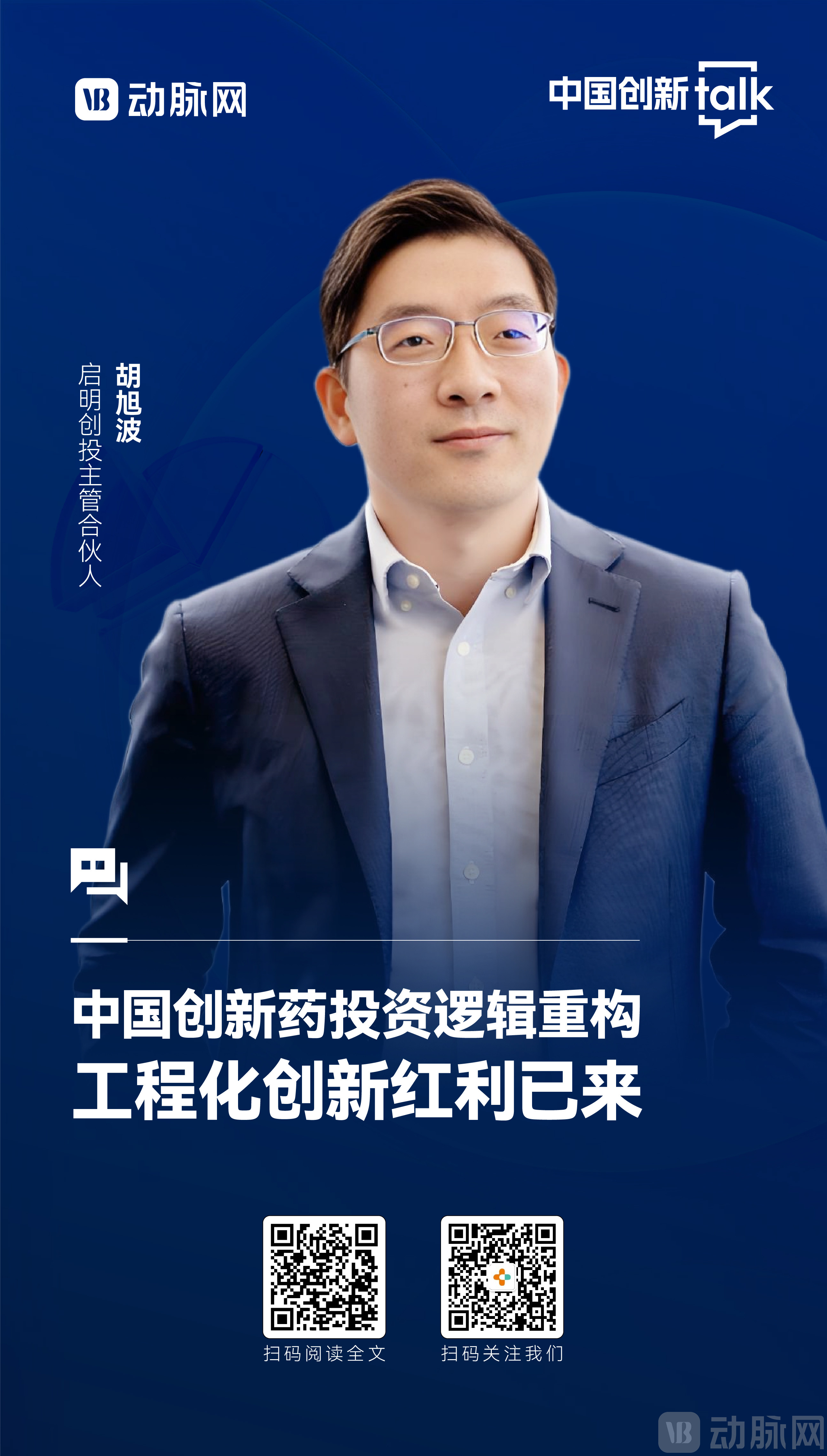
Qiming Venture Partners' Hu Xubo on China's Pharma Innovation: Shifting from 'Concept Hype' to 'Global Data Validation'
China’s Innovation: A Surging Tide, A New Landscape
China’s pharmaceutical industry is undergoing a profound transformation, shifting from “following” to “leading.” This wave of innovation is driven by the dual forces of immense and urgent clinical needs and the era’s call for independent control over core technologies. Firm national leadership has been pivotal in breaking through bottlenecks: reforms in review and approval systems have significantly accelerated R&D processes, sustained investment in strategic scientific and technological capabilities has strengthened the foundation, and inclusive capital market mechanisms have injected robust vitality into the industry. The powerful synergy of policy, capital, talent, demand, and technological advancement is reshaping the foundational ecosystem of pharmaceutical innovation in China.
Seizing the momentum, China’s innovative drug R&D is demonstrating unprecedented vitality and breadth. Deepening exploration in frontier areas has made the leap from fast-following to partial leadership clearly visible, as Chinese ingenuity actively integrates into and influences the global landscape of drug development. Responses to major public health challenges have further tempered the emergency response capabilities and innovative resilience of China’s pharmaceutical system. Nevertheless, beneath this prosperous landscape, challenges persist: the foundation for source innovation still needs strengthening; homogeneous competition in targets and indications calls for optimized resource allocation; complex barriers on the path to internationalization urgently need to be overcome; and balancing the return on innovative value with broad accessibility continues to test the wisdom of institutional design. China’s pharmaceutical innovation is at a critical stage of transition from scale accumulation to a qualitative leap.
The ultimate coordinate of innovation is always anchored in unmet clinical needs. China’s vast patient population and diverse disease spectrum provide a unique fertile ground for pharmaceutical innovation. Only by gaining deep insights into clinical pain points, courageously venturing into the “no-man’s land” at the scientific frontier, and focusing resources on truly breakthrough first-in-class novel drugs and improved new drugs that address major clinical bottlenecks, can China’s pharmaceutical innovation cultivate irreplaceable global value. Meanwhile, the continuous deepening of institutional innovation is committed to bridging the “last mile” in delivering innovative achievements to patients, ensuring that the light of technology warms every life’s expectations.
“China Innovation Talk” Column: Building a Platform for In-Depth DialogueWe will go to the front lines to listen to core “game-changers” from the investment community, academia, and industry, as they share their cutting-edge insights, strategies for breaking through barriers, and reflections on unresolved challenges. Their voices will help us more clearly grasp the pulse of industrial transformation and gain insight into the opportunities and challenges of future development. We believe that only by building consensus, deepening collaboration, and confronting challenges head-on can we steer the giant ship of China’s pharmaceutical innovation steadily and far, ultimately sailing toward a vast blue ocean that benefits patients worldwide. Stay tuned—join us in walking alongside the game-changers!
“Chinese innovative drugs have truly gained recognition from the global pharmaceutical industry, with their clinical data validated worldwide.” Said Hu Xubo, Managing Partner of Qiming Venture Partners, when discussing Chinese innovative drugs.
During the “winter” of innovative drug development, Hu Xubo led his team to make the strategic decision to continue prioritizing investments in China’s innovative pharmaceutical sector. This move has been validated by the significant recovery observed in the industry in 2025. The upturn is directly reflected in the capital markets: share prices of Hong Kong-listed innovative drug companies have repeatedly hit record highs, with most seeing gains of two to three times, and some even surging more than fivefold. Meanwhile, the primary market has shown a clear trend of capital returning to the sector.
“After the pandemic in 2022, we boldly predicted that Chinese innovative drugs would account for approximately 30% of the global market. However, the latest data on License-in/License-out and business development (BD) transactions show that the global share of Chinese innovative drugs has already approached 40%,” mentioned Hu Xubo. This breakthrough not only exceeded expectations but also marked the transition of Chinese innovative drugs from a “period of skepticism” to a “period of validation.” The shift in attitude among international investors is particularly critical; institutions that previously focused primarily on Nasdaq have significantly reallocated their portfolios toward Chinese innovative drug assets in the first half of 2025. “They regret missing out on opportunities in the Hong Kong stock market, which sends a strong positive signal.”
For Qiming Venture Partners, its counter-cyclical investment strategy has also been validated in this round of market recovery. From 2024 to June 2025, Qiming Venture Partners invested heavily in the fields of innovative drugs and medical devices, becoming the only Chinese venture capital firm ranked among the top five globally in terms of investment amount during the same period. “Only by acting when the market is cold can we capture truly valuable targets at reasonable valuations.” Hu Xubo cited an innovative pharmaceutical company as an example to VCBeat: when the company failed to secure financing for half a year, Qiming Venture Partners not only invested but also proactively added an additional RMB 100 million to the investment. At the time, this decision was widely questioned, but it now appears to have been a “key decision.”
Regarding the future of innovative drugs, Hu Xubo defines the development direction with three key phrases: “clinical value, global collaboration, and efficient operations.” China’s innovative drug industry has moved beyond the stage of “whether it can be done” and now faces the challenge of “who can do it better.” “The next five to ten years will be a golden period of development for China’s innovative drug sector, and Chinese companies will undoubtedly be among the top ten pharmaceutical companies globally.”
In a few years, this assessment may once again be validated.
01.
Reconstructing Innovation and Investment Logic
In 2024, which Hu Xubo regarded as “the optimal window for investing in innovation,” market sentiment was subdued and valuations had returned to rational levels. Yet Qiming Venture Partners made a bold decision: to invest approximately RMB 4 billion over 12 months, focusing on innovative drugs, medical devices, and related fields. “While most funds were paralyzed by fear, we saw a historic opportunity in the undervaluation of Chinese innovation.”
This steadiness stems from a judgment on the essence of the industry—innovative drug R&D is a long-cycle endeavor, and market sentiment fluctuations instead create opportunities for strategic positioning.
Qiming Venture Partners’ counter-cyclical investments in 2024 stemmed from a profound understanding of industry cycles. Investing in innovative drugs requires courage and foresight; investors who have weathered market fluctuations are better positioned to maintain rationality during market downturns.
Hu Xubo stated that investment requires courage and foresight; if one believes in a company’s innovative capabilities, then valuation deviations driven by market sentiment present the optimal investment opportunity.
It is understood that Qiming Venture Partners’ investment portfolio is primarily concentrated in the fields of innovative drugs and medical devices. Its current investment strategy allocates 40%–50% of capital to innovative drugs, 40%–50% to medical devices, and the remaining 10% to artificial intelligence applications in healthcare as well as emerging healthcare service models.
As for the screening of investment targets, Qiming Venture Partners has established a rigorous evaluation system.
First, clinical demand is the core consideration for investment. Hu Xubo believes that the research and development of innovative drugs and medical devices must be guided by clinical needs to address actual medical problems. For example, Qiming Venture Partners recently invested in a medical device company that had little reputation within the industry, yet its products received high recognition from clinicians. Qiming Venture Partners even recognized its potential global value and encouraged the company to boldly expand into the global market.
Meanwhile, Hu Xubo also emphasized that data support is key to validating the potential of innovative drugs. Qiming Venture Partners focuses not only on preliminary clinical data but also on comprehensive data that can demonstrate the efficacy and safety of products. The innovative drug industry is, fundamentally, a data-driven sector.
Furthermore, team capability is also a critical factor in investment decisions. In Hu Xubo’s view, an excellent team must possess R&D capabilities, corporate operational expertise, and market expansion abilities. Particularly in the field of innovative drugs, teams need to maintain resilience in challenging environments and continuously drive product development.
It is understood that during the so-called “winter period,” amid challenges in securing financing and declining valuations, Qiming Venture Partners adhered to the aforementioned criteria and other standards to persist in investing in many high-quality innovative enterprises, even increasing its investment commitments, thereby seizing valuable investment opportunities.
The valuation bubble of 2021 and the industry winter that followed in 2022 occurred at a time when R&D data for related innovative drugs were relatively scarce. Many investors chose to step back, which objectively accelerated industry consolidation. In Hu Xubo’s view, what remained after the retreat of speculative capital were long-term investors who truly understand innovative drug development. “Over the past year, many listed pharmaceutical companies have made significant progress with their products, and their stock prices have repeatedly hit new highs. A stable investor base has now taken shape in the secondary market; even if stock prices correct by 20%, professional institutions are unlikely to exit hastily, as they recognize the companies’ innovation capabilities. This stability provides a healthy capital foundation for the industry.”
In the past two years, as more clinical data have emerged and the industry has explored business models, BD transactions have gained momentum, injecting “fresh vitality” into China’s innovative drug sector.
Since the second half of 2024, the innovative drug sector in the Hong Kong stock market has seen sustained growth, with some companies’ stock prices surging by three to five times. In Hu Xubo’s view, business development (BD) deals have become a key catalyst for this rise, reflecting a restoration of investment confidence: “BD not only generates cash flow but also demonstrates that Chinese innovators are capable of collaborating with top global pharmaceutical companies, thereby proving the value of China’s innovative drugs to the market.”
As international investors deepen their involvement, the valuation framework for China’s innovative drugs is aligning with global standards. The valuations of innovative drug companies listed on the Hong Kong Stock Exchange, which had long been undervalued, gradually converged with those on the NASDAQ in 2025, signaling market maturity. Hu Xubo emphasizes that this alignment is not merely a rise in valuations but an optimization of underlying logic—shifting from “hype-driven” assessments to those grounded in clinical data, and from a focus on the domestic market to an evaluation of global potential.
It is worth noting that there has been controversy in the industry regarding BD (business development) transactions, often criticized as “selling green crops” (i.e., prematurely divesting early-stage assets). In response, Hu Xubo clearly stated: If the transaction price is reasonable, BD serves as a validation of value rather than “selling green crops.” For instance, in a deal exceeding $10 billion, with an upfront payment reaching hundreds of millions of dollars and substantial subsequent milestone payments, such transactions strongly propel corporate growth rather than merely enabling short-term monetization. More importantly, BD transactions help build a global innovation ecosystem—Chinese companies provide high-quality assets, while international pharmaceutical firms offer commercialization channels, creating a win-win scenario.
02.
Engineering Innovation Dividends
Hu Xubo believes that the most fundamental change in China’s innovative drug industry is the shift in R&D capabilities from “isolated breakthroughs” to “collective advancement.” “It is not just one or two companies performing well; rather, five to ten companies are all delivering impressive clinical data. In multiple specialized fields, Chinese innovative drugs have achieved global leadership. China leads the world in bispecific antibody development, ADC deal values continue to hit record highs, and CAR-T therapy has achieved groundbreaking global innovation. This collective breakthrough has shattered the longstanding skepticism about whether China can develop innovative drugs.”
“China is developing a unique dual-cycle innovation model: on one hand, leveraging engineering-driven innovation to rapidly lower the accessibility threshold for new drugs; on the other, building long-term technological barriers through foundational innovation,” pointed out Hu Xubo.
Hu Xubo analyzed that the capability and efficiency of Chinese R&D teams are among the key factors driving the rise of innovative drugs in China. “China’s engineering innovation capabilities are reflected not only in its strong technical prowess but also in its significant advantages in cost control and efficiency enhancement. In the United States, validating the early-stage concept of an innovative drug may require $100 million, whereas in China, the same process might cost only RMB 100 million. This cost advantage is systemic and unlikely to be surpassed in the short term.” Hu Xubo believes that this cost advantage makes Chinese innovative pharmaceutical companies more competitive in the global market.
Regarding this wave of engineering innovation dividends, Hu Xubo predicts that, for at least the next decade, China’s engineering innovation dividends will continue to serve as a critical pillar for the country’s innovative drug industry. This is due to China’s abundant reserve of biomedical engineering talent, its complete industrial chain covering everything from drug discovery to commercialization, and the government’s sustained investment in biopharmaceutical infrastructure.
Meanwhile, Hu Xubo also emphasized that, in addition to driving down costs and improving accessibility, China’s innovative pharmaceuticals are building long-term technological barriers through source innovation, and the next decade will certainly witness the emergence of more first-in-class drugs globally.
However, Hu Xubo also candidly acknowledged that although China has made certain progress in original innovation, true breakthroughs at the source require more extended periods of accumulation and validation: “Original innovation takes ten or even twenty years to validate; it is not achieved overnight. Currently, multiple teams in China are attempting original innovation, but successful cases remain relatively scarce. China needs more time to verify whether these original innovations can truly be translated into clinically effective drugs.”
03.
China's Innovation, Global Value
The Rise of China’s Innovative Pharmaceutical Companies: Not Just Domestic Success, but a Demonstration of Global Value. Through commercialization explorations in recent years, the global value of Chinese innovative pharmaceutical companies has been realized through various avenues, including collaborations with major international pharmaceutical firms, license-out transactions, and the establishment of independent global sales networks.
“We aim to propel Chinese innovations onto the global stage and benefit patients worldwide by investing in innovative Chinese pharmaceutical companies,” pointed out Hu Xubo. Qiming Venture Partners will continue to support the development of innovative Chinese pharmaceutical enterprises, facilitating the global expansion of Chinese innovations—embodied in the concept of “Chinese Innovation, Global Value.” This reflects Qiming Venture Partners’ investment philosophy in the healthcare sector.
Hu Xubo stated that the first step for Chinese innovative pharmaceutical companies to go global is to integrate into the global innovation ecosystem and become an important part of it. However, this does not mean that Chinese pharmaceutical companies must immediately become multinational corporations; instead, they can convert their R&D capabilities into tangible commercial value through collaboration with major international pharmaceutical companies. For instance, as mentioned above, through business development (BD) transactions, Chinese pharmaceutical companies can license out their compound development capabilities to international pharmaceutical giants, achieving a win-win outcome.
“For most Chinese innovative pharmaceutical companies, becoming a multinational pharmaceutical enterprise with global operations is a significant challenge. Building a global operational system behind this requires substantial organizational infrastructure, abundant human resources, and long-term capital investment. Currently, only a few Chinese companies have preliminarily established such systems. Through years of effort, they have made remarkable progress in global clinical research systems and product commercialization. Their market valuations have performed well, but this has come at a tremendous financial cost,” pointed out Hu Xubo. He noted that such success is not easily achieved; founding teams must demonstrate exceptional ability in seizing opportunities and strategic planning, yet such successful cases are rare.
Hu Xubo believes that mainstream pharmaceutical companies are more likely to focus on becoming an important part of the global innovation system, rather than rushing to establish a global operational system.
Hu Xubo also summarized the future development of China's innovative drugs with three key words: clinical value, global collaboration, and efficient operations.
Clinical value is the core of innovative drugs; that is, Chinese innovative pharmaceutical companies must be guided by clinical needs to address actual medical problems. Only products that truly meet clinical needs can gain recognition in the global market.
Global collaboration is a key trend for the future. Chinese innovative pharmaceutical companies need to develop global collaborative capabilities and engage in extensive partnerships with major international pharmaceutical firms and other innovative drug developers. Through such collaborations, Chinese innovative pharmaceutical companies can accelerate their entry into international markets and enhance their competitiveness.
Efficient Operations: The Core Competitiveness of China’s Innovative Pharmaceutical CompaniesHu Xubo pointed out that Chinese innovative pharmaceutical companies need to possess efficient operational capabilities to cope with intense market competition. “The competitive advantage of China’s innovative drugs is built upon efficient operations; without such efficiency, it would be difficult for Chinese innovative pharmaceutical companies to stand out in the global market.”
Hu Xubo believes that the next decade will be a critical period for Chinese innovative pharmaceutical companies to rise in the global market, with more of these enterprises continuing to demonstrate their strength on the international stage and contributing greater momentum to the development of the global pharmaceutical industry. “Qiming Venture Partners will continue to support this process, helping Chinese innovations go global. We believe that the rise of Chinese innovative pharmaceutical companies will reshape the landscape of the global pharmaceutical industry, bringing more choices and hope to patients worldwide.”
END
To drive technological breakthroughs, industrial integration, policy alignment, and international cooperation in China’s cell and gene therapy (CGT) sector, and to propel the Chinese CGT industry to the forefront of global competition, the China Society for Cell and Gene Therapy (CSGCT) Conference was established.
Leveraging its close collaboration with the American Society of Gene & Cell Therapy (ASGCT), the 2025 CSGCT Annual Meeting will bring together leading scientists, clinical experts, multinational pharmaceutical companies, and overseas investment institutions from around the world. The event will showcase the most cutting-edge scientific advances, technologies, and applications in the global cell and gene therapy field, provide insights on market access, highlight high-quality collaborative projects, and facilitate matchmaking between overseas investors and investment opportunities. It aims to build a platform for in-depth exchange and cooperation between China’s cell and gene therapy industry and the global value chain.
The 2025 CSGCT Conference will be held in Beijing on September 12–13, featuring one main forum and 18 parallel sessions, along with multiple financing project roadshows. The event is expected to attract over 300 leading industry experts from China and abroad, more than 500 investors and investment institutions, and 3,000+ attendees in person.
The CSGCT Congress has specially established a sub-forum on “CGT Investment and Financing Trends and BD Collaboration Opportunities,” which will attract more than 500 investment institutions and corporate investors from around the world, including top-tier firms such as Lilly Asia Ventures, Legend Capital, Longpan Investment, Yisheng Capital, and Sinopharm Capital; multinational corporations (MNCs) such as Bayer, Novo Nordisk, Pfizer, and Eli Lilly; as well as major Chinese pharmaceutical companies. The Congress will also feature exclusive investment roadshows and one-on-one matchmaking sessions, providing biotechnology companies with direct access to domestic and international capital. Strong financial support will empower CGT companies to overcome financing challenges, achieve technological breakthroughs, and accelerate market access.
September 12–13, 2025
2025 The 2nd China Society for Gene and Cell Therapy (CSGCT) Conference
Subforum on CGT Investment and Financing Trends and BD Collaboration Opportunities
For more details, scan the QR code to visit the official conference website.