

Tennr Files for IPO After $101M Series C to Fix America's 'Referral Black Hole' with AI

Tennr
Developer of Healthcare Workflow Automation Platform
In June 2025, U.S. healthcare AI startup Tennr announced the completion of a $101 million Series C financing round. The round was led by IVP, with continued participation from existing investors including a16z (Andreessen Horowitz), Lightspeed, and GV (formerly Google Ventures). Following the financing, Tennr’s valuation reached $605 million.
In recent years, AI has begun to make significant inroads in fields such as medical imaging and drug development. Tennr, however, has set its sights on another long-overlooked corner that profoundly impacts the healthcare experience of hundreds of millions of people—the referral system.
In the United States, approximately 100 million referral requests are initiated annually, yet studies indicate that more than 50% of these referrals are never completed.[1]Faxes, paper forms, handwritten records, and repeated telephone communications—practices that may seem somewhat “primitive” by today’s standards—remain widespread in the referral process, significantly undermining patients’ access to care efficiency and exacerbating resource waste within the healthcare system.
In this “efficiency depression,” Tennr leverages AI as its engine to reimagine the referral process. The referral system built by Tennr is gradually becoming one of the foundational infrastructures of the U.S. healthcare delivery system.
From Patient to Entrepreneur: An AI Startup Born from the “Referral Black Hole”
Tennr’s story began with a group of Stanford University engineering students who deeply empathized with the realities of the healthcare system.
Trey Holterman, the company’s co-founder and CEO, was born into a family of physicians; his mother is a family practitioner with many years of experience. In her clinic work, she had to handle a large volume of faxes, manual forms, and repetitive phone calls every day. Completing just one referral could involve dozens of steps and multiple handoffs, resulting in low efficiency and a high error rate. Holterman once described this phenomenon as the “black hole” (referral black hole)—a gray area in the healthcare system that appears simple on the surface but actually harbors systemic inefficiencies.
Co-founder Diego Baugh has paid the price for this “referral black hole”: a routine gastroenterology referral was delayed by procedural bottlenecks, forcing him to wait six weeks.
Co-founder Tyler Johnson is equally committed to addressing the “referral black hole” problem. He spearheaded the design of the platform’s core architecture and model development, and currently serves as the company’s Chief Technology Officer (CTO). During his computer science studies at Stanford University, he focused on artificial intelligence and Large Language Models (LLMs), playing a pivotal role in translating advanced AI capabilities into deployable products.
Guided by a dual perspective of “clinical pain points + engineering expertise,” the three founders co-founded Tennr in New York in 2021, leveraging AI to reshape the cumbersome and inefficient medical referral process.
Tennr’s origins may seem modest, yet they directly address the long-standing underlying “connectivity gap” in the U.S. healthcare system.
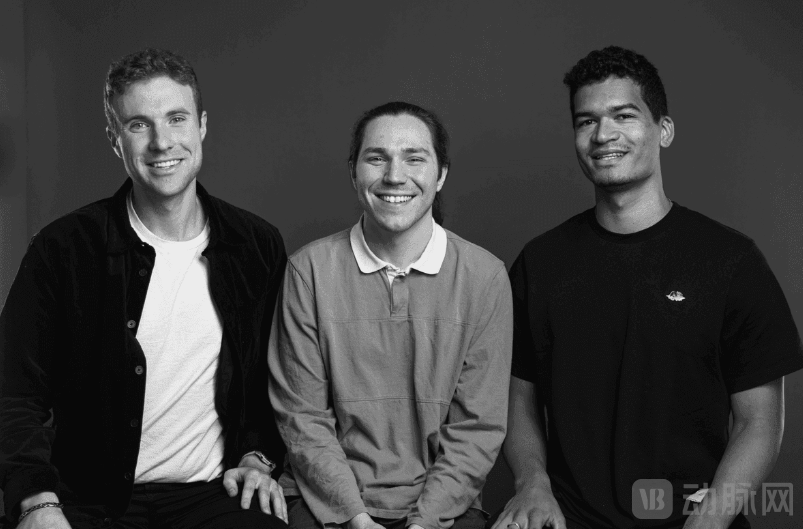
Figure 1: Founder profiles. Left: Trey Holterman; Center: Tyler Johnson; Right: Diego Baugh(Image source: Tennr official website)
Since its founding in 2021, Tennr has completed three rounds of financing: In March 2024, it closed an $18 million Series A round led by Andreessen Horowitz; in October of the same year, it secured a $37 million Series B round, raising its valuation to $200–250 million; and in June 2025, the company raised $101 million in its Series C round, with its valuation climbing to $605 million. To date, Tennr’s total funding has reached $162 million.
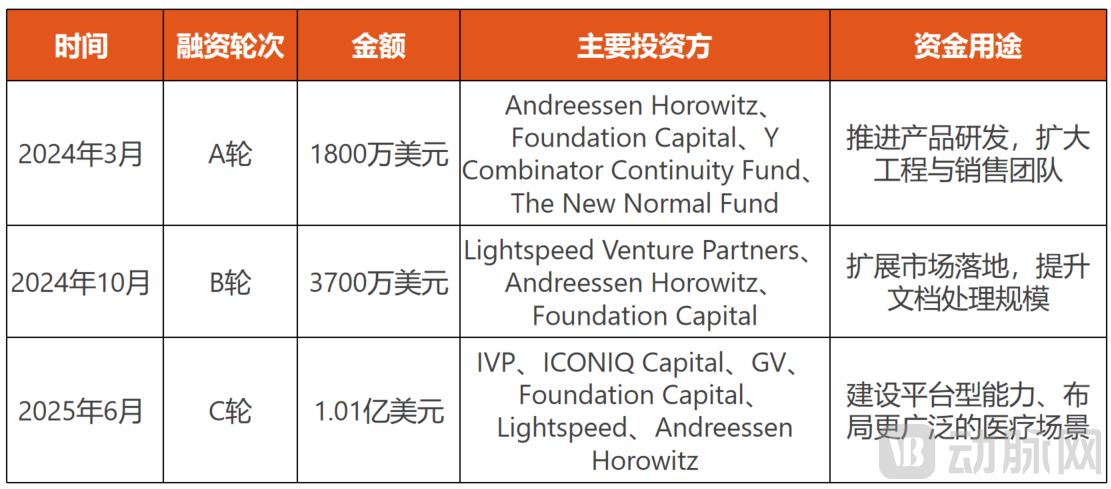
Table 1: Overview of Tennr’s Financing
It is not only investor confidence that has surged rapidly, but also the actual scale of business operations. According to Fierce Healthcare, as of early 2025, the Tennr platform was processing over 10 million medical documents per month, with its services covering a range of typical application scenarios including primary care, specialist referrals, and home healthcare. Its annual revenue has tripled since its Series B funding round.
AI-Powered Fax Reading, Speech Conversion, and Status Tracking: An Integrated Solution Truly Implemented
In traditional medical referral processes, information is difficult to track, exhibits low levels of structuring, is prone to errors, and relies heavily on manual operations. This not only delays patients’ access to care but also exposes healthcare institutions to systemic risks such as patient attrition and insurance claim denials.
Faxes, paper documents, and phone calls remain the most common carriers of information in patient referrals, as well as the most challenging unstructured data for AI to process. Addressing this practical dilemma, Tennr tackles the core pain point by leveraging its proprietary AI models to gradually transform such data into structured formats that are traceable, analyzable, and automatically processable. Ultimately, it aims to build a healthcare backend operating system capable of seamlessly integrating with hospitals’ existing systems, enabling rapid deployment into frontline workflows, and supporting large-scale cross-institutional applications.
1RaeLM: A Vision-Language Model Designed for Healthcare
Tennr’s technological core is RaeLM (Radiology-Aware Extraction Language Model), a proprietary multimodal model with 7 billion (7B) parameters. Its training data comprises over 100 million medical documents, 2.3 billion structured fields, and 8,000 categories of standardized form templates.
Compared with general-purpose large language models (LLMs), RaeLM offers the advantage of accurately “reading” clinical information from scanned documents, faxes, and handwritten forms in healthcare settings. For instance, RaeLM can recognize handwritten physician orders such as “rule out PE” (pulmonary embolism) and automatically map them to CPT (Current Procedural Terminology) codes, thereby supporting prior authorization and payment processes.
More importantly, RaeLM does not require hospitals to replace their existing Electronic Medical Record (EMR) systems or alter established operational workflows. Healthcare providers need only integrate the platform with their legacy systems or upload files to the platform, thereby automatically completing document classification, field extraction, information structuring, and audit preparation.
2T3 Module: Converting Call Logs into Structured Information
Another common scenario in medical referrals is telephone communication. Patients or nurses provide key information such as insurance numbers, chief complaints, and past medical history over the phone, but these details are often recorded by hand or relayed verbally, making them highly prone to errors.
Tennr’s T3 (Transcript Translation Technology) module can capture structured fields from call content in real time, such as names, policy numbers, and chief complaints, and automatically populate them into EHR or billing platforms, reducing manual entry and improving accuracy.
3Tennr Network: Make Referral Status Clear at a Glance
For a long time, the processes following fax transmission—such as receipt by healthcare providers, confirmation, and appointment scheduling—have lacked transparency, leading physicians to vividly refer to this phenomenon as an “information black box.”
Tennr Network, developed by Tennr, is designed to address this long-standing “process gap.” It provides a real-time, visualized process map that connects every key node in the referral workflow—from “sending, receiving, and confirmation” to “patient intake.” The system clearly displays whether the referral has been successfully delivered to the target institution, whether the recipient has completed acceptance and confirmation, and whether the patient has accepted the appointment and completed the intake process.
With this visualization interface, healthcare institutions can not only achieve efficient collaboration across departments and between facilities but also truly overcome the long-standing challenge of referrals disappearing without a trace, bringing unprecedented process transparency and observability to backend management for healthcare service providers.
4Integrated Platform: Rejection Rate Reduced by 98%, Document Processing Efficiency Increased by Over 6x
Tennr’s product is not a patchwork toolbox of disparate functions, but rather an “operating system-style platform” built around the circulation of medical documents and referral collaboration. The entire system is document-centric, integrating a series of back-office processes—including referrals, authorizations, billing, and compliance—into a single automated workflow.
The platform can automatically recognize input content such as faxes and scanned documents, and intelligently classify them based on patient information, document type, and urgency. Even when a single form involves multiple patients, Tennr’s “Multi Patient” module can accurately split and archive the data, ensuring that information is correctly distributed to the corresponding workflows.
The platform can also automatically populate complex orders, referral requests, and billing information into the EHR, significantly reducing the burden of manual data entry. Furthermore, the system can assess patient eligibility and data completeness in real time, issuing alerts when necessary to help healthcare organizations expedite the pre-authorization process. Its “Text-based Health Coding Extractor” (THCE) module extracts key clinical points from text and automatically maps them to standard medical codes such as ICD, CPT, and HCPCS, thereby bridging the critical gap between referrals and reimbursement. Meanwhile, all document management processes are fully auditable and traceable, ensuring compliance with regulatory requirements.
Identify faxes, understand voice, and track status—Tennr addresses the redundant, repetitive, yet critical back-office inefficiencies that plague healthcare systems day in and day out. Rather than attempting to disrupt existing workflows, it makes them run more smoothly, intelligently, and sustainably without requiring any changes to the processes themselves.
Furthermore, Tennr has moved beyond the stage of technical experimentation, having validated its implementation capabilities and systemic value through multiple real-world scenarios. Tennr has served numerous healthcare institutions, including Norco Inc., HomeMedix, and MPOWER Health, covering high-frequency service scenarios such as home care and orthopedic referrals.
Feedback from healthcare clients indicates that the platform saves them hundreds of hours of manual work each week, compresses the referral confirmation cycle from 3–5 days to 24 hours, and effectively reduces duplicate data entry caused by paper forms. According to disclosures on its official website, Tennr has helped clients reduce their rejection rate by 98% and improve document processing efficiency by more than sixfold, truly realizing AI empowerment characterized by “seamless deployment and tangible results.”
“Process Intelligence” Will Become a Long-Term Application Scenario for Medical AI
Tennr’s implementation pathway has opened up new possibilities for medical AI. Unlike approaches that focus on clinical settings and aim to assist physicians with diagnosis, Tennr has chosen a more universally applicable entry point—“process intelligence.” By concentrating on back-office operations such as document processing, data structuring, and referral tracking, Tennr serves as a key “lubricant” for enhancing the operational efficiency of healthcare systems.
“Process-oriented AI” is increasingly becoming one of the most practical, frequently used, and highly scalable applications in the industry.
China’s medical AI sector is also exhibiting a similar trend toward “process intelligence.” An increasing number of enterprises are no longer confining AI capabilities to single-point tasks such as imaging diagnosis; instead, they are focusing on high-frequency yet unstructured information flow processes, including health insurance claims review, patient management, and doctor-patient communication. Many domestic companies are accelerating the expansion of “process-oriented AI.”
For example, iFlytek Healthcare’s “Intelligent Health Insurance Audit System” has been deployed in multiple regions, leveraging natural language processing and knowledge graph technologies to enable automated alerts and intelligent auditing of medical records, thereby helping hospitals enhance health insurance compliance and operational efficiency. Meanwhile, Baidu Health drives its “Multi-Disease Patient Management” platform with large language models, utilizing speech recognition and conversational AI to convert daily doctor-patient communication records into structured data for follow-up care, early warning, and health management.
These explorations indicate that AI is expanding beyond “assisted diagnosis” to “operational empowerment,” with Chinese medical AI companies moving from “point-based intelligence” toward systemic collaboration. The exploration paths of Tennr and local enterprises also provide valuable insights for other innovative companies—AI still holds significant potential in addressing process redundancies, information silos, and inefficient collaboration.
References:
[1] Becker's Healthcare. "Nearly half of referrals go uncompleted" https://www.beckershospitalreview.com/patient-safety-outcomes/nearly-half-of-referrals-go-uncompleted.html