

ThinkSono Files for IPO Following $6M Funding to Accelerate FDA Approval and U.S. Commercialization of AI-Guided DVT Screening Platform
ThinkSono
Developer of Artificial Intelligence Solutions
In June 2025, UK-based medical AI company ThinkSono announced the completion of a new $6 million funding round, bringing its cumulative fundraising to $13 million.This round of funding will be primarily used to advance the clinical registration, FDA approval, and commercial launch of its core product, ThinkSono Guidance, in the United States. This move also marks the conclusion of its market entry exploration in Europe, as it begins to expand into the U.S. market, which features a more complex healthcare system.
ThinkSono focuses on a critical pain point prevalent in global emergency and primary care settings: rapid initial screening for deep vein thrombosis (DVT).. As a major precipitating factor for critical conditions such as pulmonary embolism and sudden cardiac death, the diagnosis of DVT is highly dependent on ultrasound operational skills; however, in emergency or primary care settings with constrained clinical resources, non-specialists often struggle to perform high-quality examinations.
ThinkSono targets precisely this clinical scenario—characterized by high frequency, a high skill threshold, yet technical potential for standardization—by embedding AI algorithms into portable ultrasound devices to guide frontline healthcare professionals in performing standardized scans for the initial screening of deep vein thrombosis (DVT).
From the Vision of “Scannable by Anyone,” AI Ultrasound Moves to the Frontline of Clinical Practice
ThinkSono, founded in 2016 and originating from the renowned European incubator Entrepreneur First (EF) program, is headquartered in London, UK.Founder Fouad AI-Noor (CEO) graduated from the University of Southampton with a Master of Engineering degree in Electronic Engineering and Nanotechnology; he previously worked as a software engineer at SAP and as a research assistant at Imperial College London. During the EF Bootcamp, he met Sven Mischkewitz (CTO), an engineer from Germany specializing in human-computer interaction design, and the two"Can Non-Professionals Perform Initial Ultrasound Screening?"consensus on this issue was reached, ultimately leading to the co-founding of ThinkSono.

Figure 1: Profile of ThinkSono's Founders
This starting point defines ThinkSono’s product roadmap: rather than merely positioning AI as a “physician’s assistant” for image-based diagnosis, it integrates AI earlier into the “image acquisition” phase. By providing real-time guidance and automated quality feedback, the system makes ultrasound operations more controllable and easier to learn, thereby expanding the boundaries of ultrasound applications.
ThinkSono’s Development Trajectory Is Clearly Visible: In November 2023, the company partnered with NYU Langone Health to launch clinical trials in the United States for AI-guided ultrasound for deep vein thrombosis (DVT). In March 2024, it completed approximately $2.7 million in financing and obtained its initial EU CE IIb certification in the same month, laying the foundation for market entry into Europe. Just one month later, ThinkSono joined forces with Clarius to launch a handheld ultrasound system integrated with AI, expanding the product’s application coverage within the EU. In June 2025, the company secured approximately $6 million in Series B financing, with the funds allocated for FDA registration and commercial deployment.
As of now,ThinkSono has raised nearly $13 million in cumulative funding and is steadily rolling out its AI-guided ultrasound products to the global market.
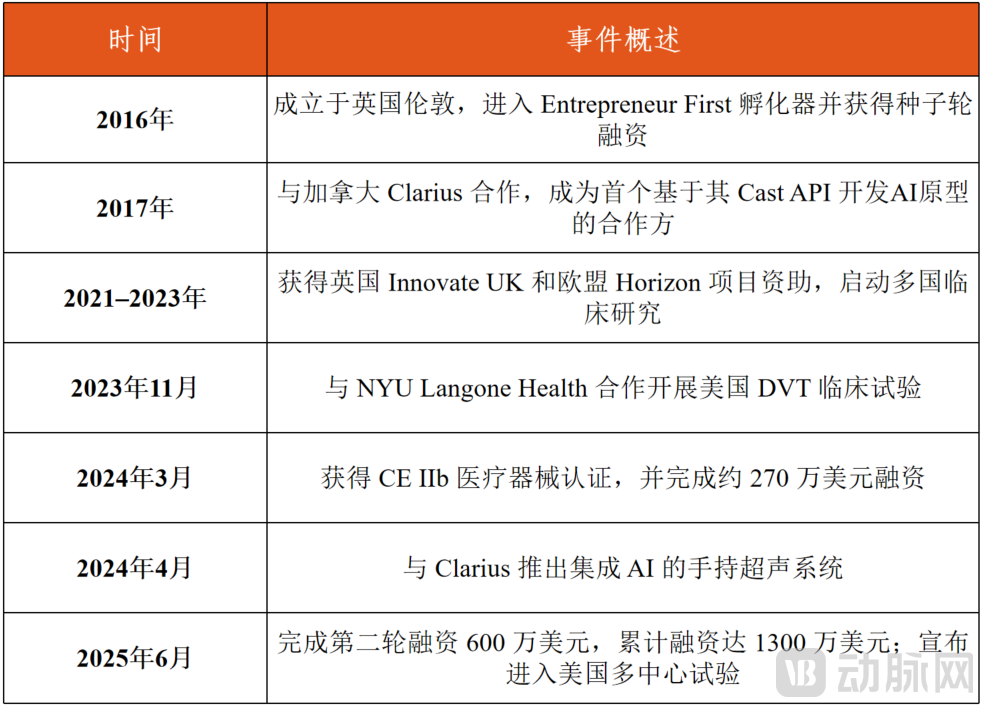
Table 1: Overview of ThinkSono Milestones
ThinkSono’s DVT solution has been trialed in hospitals across the UK and the EU, and is now expanding into the United States. The company is preparing for full-scale expansion in the U.S. following FDA approval by conducting clinical studies in partnership with leading American institutions such as NYU Langone Health and Temple Health.
Enabling Individuals Who “Cannot Scan” to Perform Qualified Ultrasound Examinations
ThinkSono’s flagship product, ThinkSono Guidance, is the world’s first AI-guided ultrasound software specifically designed for DVT screening to receive CE Class IIb certification in the European Union (EUDAMED SRN: DE-MF-000034914).ThinkSono targets frontline clinical healthcare professionals—including emergency physicians, general practitioners, nurses, and medical interns—who are “non-sonographers.”
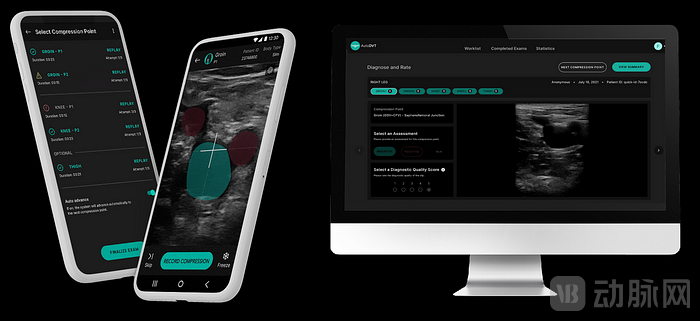
Figure 2: ThinkSono guidance app (Android, left) and ThinkSono dashboard for remote clinician review (right)
Unlike traditional DVT diagnosis, which relies on specialized sonographers, this product can often in actual deploymentEnabling general healthcare workers to complete initial screening without assistance from specialists, with a significantly simplified operational workflow.。
Users need only open the app on a tablet or smartphone and connect to wireless handheld ultrasound devices, such as Clarius or Butterfly, to complete the ultrasound scanning process under AI guidance. The system provides real-time prompts via image recognition algorithms, indicating whether the target venous segment is properly compressed and whether the image quality meets standards. Once the image is deemed acceptable, it is automatically captured and uploaded to a remote server for online review by radiologists or to assist in generating diagnostic reports.
This workflow enables frontline healthcare providers without ultrasound training to complete an ultrasound scan within 15 minutes, ensuring timely referral of initial DVT screening to specialists. This significantly improves screening efficiency, reduces patient waiting times, and achieves optimal integration of job competencies with equipment resources.
Clinical data show that 80% (n=304) of scans had sufficient diagnostic quality, with a sensitivity of 95–98% and a specificity of 74–84% for DVT screening.[1]. In prospective, double-blind, multicenter clinical trials conducted in the United Kingdom and the European Union, more than 1,000 patients have undergone scanning.
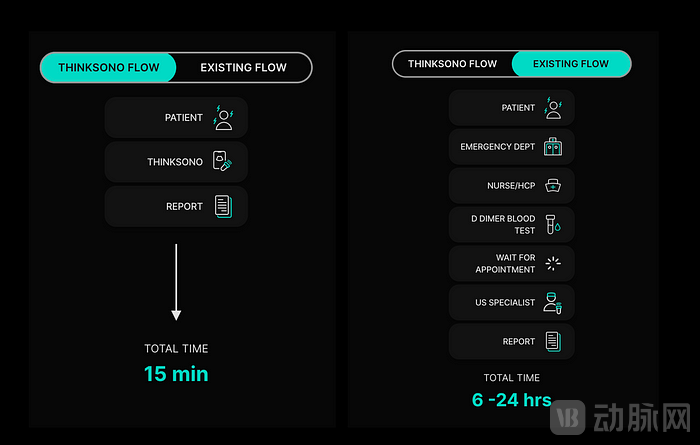
Figure 3: Differences between ThinkSono’s clinical pathway and existing clinical pathways
From AI Guidance to Remote Diagnosis: Bringing Ultrasound to the Frontline
The core technological breakthrough of ThinkSono Guidance lies in bringing AI capabilities to the very front end of ultrasound operations. Traditional AI in ultrasound has largely focused on image recognition—essentially, “AI reads after the scan is complete.” In contrast, ThinkSono takes the opposite approach: it intervenes from the initial step of “how to scan,” guiding operators through the process like a “coach” by real-time identification of vascular structures and providing feedback on probe position and image quality.
This means that,Even healthcare professionals without an ultrasound background can perform a standardized DVT examination under AI guidance.
First, the system incorporates built-in vein recognition algorithms and compression path planning modules, which can capture vein morphology in real time, dynamically guide operators to compress the correct anatomical locations, and simultaneously assess whether image quality meets diagnostic standards to ensure data usability. This mechanism effectively avoids the uncertainty associated with the traditional practice of “scanning based solely on tactile feedback,” while significantly enhancing the consistency and reproducibility of the examination process.
Furthermore, ThinkSono Guidance features comprehensive remote review and data traceability capabilities. All examination procedures are recorded in real time and automatically uploaded to the cloud, enabling remote radiologists to issue diagnoses and serving as training data to continuously optimize AI models. This bidirectional closed-loop design of “clinical application–AI iteration” ensures that the product continuously enhances its algorithmic performance with each deployment, combining practicality with scalability.
In terms of deployment, ThinkSono adopts an SDK embedding strategy and has successfully achieved compatibility with multiple handheld ultrasound devices from Clarius, Butterfly Network, and Healcerion. This “software-hardware integrated” approach significantly enhances the platform’s adaptability and commercial flexibility, enabling the product to serve not only large hospitals but also facilitating rapid expansion into multi-tiered scenarios such as community health centers and mobile clinics.
These technical advantages also enable ThinkSono Guidance to demonstrate high adaptability across multiple clinical scenarios.
In the emergency room, it enables physicians to perform initial DVT screening at the point of care, eliminating the bottleneck of “waiting in line for specialist scans” and buying valuable time for resuscitation and diagnosis. In inpatient wards, particularly for patients who are bedridden for prolonged periods or at high risk for thrombosis, ThinkSono reduces the additional risks associated with frequent patient transfers. In general outpatient clinics and primary care settings, even healthcare professionals without systematic training can quickly become proficient, conducting preliminary screening for suspected DVT cases and optimizing referral and diagnostic pathways. In nursing homes and rehabilitation centers, when used with handheld devices, ThinkSono Guidance serves as a vital tool to enhance early screening capabilities for individuals with limited mobility, thereby avoiding greater medical burdens resulting from delayed diagnosis.
Overall, the product logic represented by ThinkSono Guidance is no longer about “enabling AI to interpret images,” but rather “helping healthcare professionals acquire images more quickly.” This design does not aim to replace the judgment of radiology experts; instead, it focuses on streamlining the process of obtaining high-quality images, making ultrasound examinations truly practical in a wider range of scenarios.
Not “letting AI scan for you,” but “enabling everyone to scan”
ThinkSono Offers Three Key Insights for Chinese AI Healthcare Companies.
First, the value of AI lies not only in enhancing image interpretation capabilities but also in integrating deeply into workflow processes to guide decision-making pathways and improve clinical operability.
Secondly, rather than rushing to expand its product boundaries, ThinkSono chose to enter the market through DVT—a condition with high-frequency diagnostic needs and potential for standardization—focusing on establishing a complete user pathway of “device + guidance + review” to achieve a closed-loop workflow. For Chinese manufacturers, conditions such as pulmonary B-lines, pericardial effusion, and early-stage heart failure share similar characteristics and represent potential breakthrough points.
Finally, at the level of industrial collaboration, ThinkSono’s deployment model is also worthy of emulation. By embedding its AI modules via SDK integration, the company has established partnerships with multiple handheld ultrasound manufacturers, including Clarius and Butterfly, thereby promoting the implementation of integrated software-hardware solutions. This approach of embedding platform-based technologies into the device ecosystem offers AI startups an alternative path characterized by “asset-light operations and rapid deployment.”
The pathway represented by ThinkSono extends from “interpreting images” to “guiding image acquisition,” offering new perspectives for the real-world clinical application of AI. For the Chinese market, as handheld ultrasound devices continue to penetrate lower-tier markets,If AI can be effectively implemented at key stages of the workflow, such as procedural guidance, image quality control, and report generation, it holds the promise of resolving the “last mile” challenge of ensuring that equipment is not only usable but also accessible to all users.. It is foreseeable that the focus of AI healthcare development in China will gradually shift from “image intelligence” to “process intelligence”—that is, how to help doctors and nurses complete each medical task faster, more accurately, and more stably, rather than merely “interpreting images.”
References:
[1] Speranza G, Mischkewitz S, Al-Noor F, Kainz B. Value of clinical review for AI-guided deep vein thrombosis diagnosis with ultrasound imaging by non-expert operators. NPJ Digit Med. 2025 Mar 1;8(1):135. doi: 10.1038/s41746-025-01518-0. PMID: 40025255; PMCID: PMC11873262.