

Cracking the Chronic Disease Management Conundrum: How AI is Pioneering a New Pathway Across Prevention, Diagnosis, and Rehabilitation

With population aging and continuous changes in residents’ production and lifestyles, the overall incidence of chronic diseases such as cardiovascular and cerebrovascular diseases and cancer in China is on the rise. Data show that the number of people diagnosed with chronic diseases in China has exceeded 400 million; deaths from chronic diseases account for more than 80% of total resident mortality, and the disease burden represents 68.6% of the total disease burden. Behind these staggering figures lie immense health pressures on countless families and a heavy strain on social medical resources, posing significant challenges to traditional healthcare models. A 2024 survey by the National Health Commission revealed that over 38% of households have fallen into financial hardship due to chronic diseases. Global practice has demonstrated that scientific health management can reduce the incidence of chronic diseases by more than 20% and cut related treatment costs by 25%. Driven by the “Healthy China 2030” strategy, a paradigm shift from “disease treatment” to “health management” is underway, ranging from tiered diagnosis and treatment systems and payment-by-diagnosis reforms to the expansion of the RMB 655 billion digital chronic disease market and the deep integration of AI technologies.
Three Core Propositions: AI Tackles the Deep Waters of Chronic Disease Management
Construction of a Closed-Loop System for Full-Cycle Management The essence of chronic disease management lies in the precise control of the entire "prevention-diagnosis-treatment-rehabilitation" chain. How to leverage AI to break down information barriers between various stages and achieve seamless integration across the full care cycle is currently a focal point of industry attention. In the prevention stage, can AI analyze multi-source data—such as lifestyle and environmental factors—to predict the risk of chronic disease onset years or even decades in advance, thereby providing individuals with precise preventive recommendations? During treatment, how can AI be utilized to dynamically adjust medication dosages and personalize treatment plans to enhance therapeutic outcomes? In the rehabilitation and follow-up phase, how can AI technologies ensure that patients attend follow-up appointments on time and adhere to correct medication regimens, thus improving compliance and truly establishing a closed-loop, efficient management system? The answers to these questions will directly determine whether chronic disease management can evolve from fragmented services into a cohesive, closed-loop ecosystem.
Data Security and Privacy ProtectionThe application of AI technology in chronic disease management is highly data-dependent; however, data security and privacy protection face severe challenges during data collection, storage, transmission, and usage. Patients’ medical data contains a substantial amount of sensitive information, and any leakage would cause significant harm to patients’ rights and interests. A critical issue that the industry must address is how to ensure data security and privacy through encryption technologies, blockchain, and other means while fully leveraging data value, thereby establishing patient trust in digital therapeutics. Meanwhile, with the increase in cross-border medical collaborations, discrepancies in data regulatory policies across different countries and regions have emerged. Achieving compliant cross-border data flow and collaborative application is also an urgent area requiring exploration.
Universal Access to Primary Healthcare at the Grassroots LevelPrimary healthcare serves as the main battleground for chronic disease management, yet it has long grappled with challenges such as resource scarcity and talent shortages. A critical issue in achieving equitable and inclusive healthcare is determining how AI technology can be adapted for primary care settings in a low-cost, user-friendly manner, thereby enabling grassroots medical institutions to readily adopt digital therapeutics and enhance their chronic disease management capabilities. For instance, this involves developing lightweight AI diagnostic tools tailored for primary care, allowing general practitioners to achieve proficiency through minimal training; leveraging the integration of telemedicine and AI to facilitate real-time guidance and technical support from tertiary hospitals to primary care facilities; and exploring AI-assisted follow-up models suited to primary care contexts to reduce patient loss to follow-up. Only by ensuring the effective implementation and integration of AI technologies at the primary care level can comprehensive coverage of chronic disease management be truly realized.
Exploring Practical Pathways for AI-Enabled Chronic Disease Management
On August 15, 2025, held at the Hilton Haikou Meilan Lake Hotel in Haikou, Hainan2025 Digital Therapeutics ConferenceFocusing on Five Core Scenarios: Chronic Disease Management, Wellness and Elderly Care, Oncology, Mental Health and Psychological Well-being, and Nutrition-Based Weight Loss, among whichForum on AI Applications in Chronic Disease Management, will deeply explore three major practical directions:
Clinical Validation and Optimization of AI Prediction Models
❊ How can AI models integrate multimodal data—including genetics, lifestyle factors, and clinical indicators—to achieve ultra-early risk prediction for chronic diseases such as diabetes and cardiovascular disease, thereby gaining valuable time for disease prevention?
❊ Latest Research Findings and Practical Cases of AI Models in Predicting the Progression of Chronic Diseases and the Occurrence of Complications.
Implementation Strategy for Dynamic Intervention Closed-Loop
❊ How to leverage AI to develop personalized comprehensive treatment plans—including pharmacotherapy, dietary and exercise regimens, and psychological interventions—based on individual patient differences such as age, sex, disease severity, and treatment response?
❊ How to leverage smart wearable devices and home medical equipment to achieve real-time collection of patients' physiological parameters, analyze them promptly through AI algorithms, and automatically adjust intervention plans?
Promotion and Practice of Digital Therapeutics at the Primary Care Level
❊ How to Lower the Barrier to Adoption at the Primary Care Level and Develop Low-Cost, User-Friendly AI Tools for Chronic Disease Management Suitable for Primary Care Settings?
❊ How to enhance primary care physicians’ awareness and application capabilities of AI technologies through a blended online-offline training model, while establishing a remote technical support mechanism between tertiary hospitals and primary care facilities to ensure the correct application of AI technologies at the grassroots level.
Decoding the Chinese Solution for AI-Enabled Chronic Disease Management

Wang Tao
Professor, Department of Nephrology, Peking University Third Hospital
Jointly Appointed Professor, Institute for Global Health Development, Peking University

Yang Maojun
Tenured Professor, School of Life Sciences, Tsinghua University
Changjiang Scholar Distinguished Professor

Wu Hao
School of General Practice and Continuing Education, Capital Medical University
Deputy Secretary of the Party Committee, President

Ding Yipeng
Department of Respiratory and Critical Care Medicine, Hainan General Hospital
Director and Director of the Department of General Practice

Chen Kaining
Director, Department of Endocrinology, Hainan Provincial People's Hospital

He Da
Shanghai Health and Development Research Center
Associate Researcher
Director of the Editorial Department, Healthy Development and Policy Research

Wang Jun
Co-founder of Weimei Health
Leading Talent in Science and Technology Entrepreneurship of Beijing
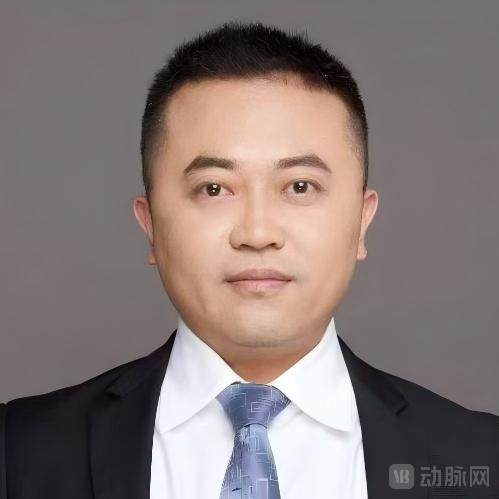
Feng Peigen
Chairman of Haihu Health
Founder of Haihu Health / Haicheng Digital Medical Industrial Park
*More speakers are being confirmed.
Peking University, Peking University Third Hospital, Tsinghua University, Capital Medical University, Hainan General Hospital, Shanghai Health and Development Research Center, Ping An Health, Weimei Health, Haihu Health, Gerui Technology, Aoshi MedicalUniversities, institutions, and enterprises will present their solutions and implementation models.
Conference Registration Portal
It is foreseeable that AI technology will unleash tremendous potential in the field of chronic disease management, delivering higher-quality, more efficient, and convenient health management services to hundreds of millions of patients worldwide, thereby reshaping the future landscape of chronic care. The AI + Chronic Disease Management Application Forum at the 2025 Digital Therapeutics Conference will showcase technological breakthroughs of AI in chronic disease management and outline a new vision for inclusive healthcare characterized by “accessible technology, accessible services, and affordable payment.” On August 15, we invite you to join us in Haikou to jointly define the future of chronic disease management.