

H6 World Files IPO Prospectus: Pioneering Clinical Big Data with University-Originated Technology, Serving Over 2,200 Institutions
With policies such as the “14th Five-Year Plan for National Health Informatization” and the “Action Plan to Promote High-Quality Development of Public Hospitals” listing the “construction of clinical data resource systems” as a mandatory performance indicator, the policy landscape has elevated medical big data from an “optional research component” to an “essential operational requirement.” Furthermore, factors such as accelerating population aging, growing demand for personalized medicine, rapid advancements in digital technologies, and the rise of telemedicine services have created broader development space and investment opportunities for the clinical big data industry.
According to Precedence Research, the global market size for big data analytics in healthcare was USD 56.47 billion in 2024, is projected to reach approximately USD 67.32 billion in 2025, and is expected to grow to around USD 327.57 billion by 2034, registering a robust compound annual growth rate (CAGR) of 19.21% during the forecast period from 2025 to 2034. Additionally, data from China Business Industry Research Institute indicates that the market size of big data solutions for medical services in China was approximately RMB 23.2 billion in 2023 and reached about RMB 28.1 billion in 2024.
However, behind the industry’s explosive growth, numerous challenges have emerged, including difficulties in unifying data standards, severe data silos, and a scarcity of interdisciplinary talent. As an observer of the healthcare industry, VCBeat has been closely tracking developments in the field of medical big data. In light of these phenomena and issues, VCBeat engaged in in-depth discussions with multiple industry experts from Beijing Liuyuan Space Information Technology Co., Ltd. (“Liuyuan Space”), aiming to provide valuable insights and recommendations for participants in the medical big data sector.
Facilitating the Commercialization of Interdisciplinary Medical-Engineering Technological Achievements in Universities,
Committed to Building a Rapidly Iterating and Continuously Stable Database
Official data shows that Liuyuan Space was established in 2014 as an innovative enterprise in China’s clinical database sector. However, the origins of its core technology date back to 2011.
In 2011, the Interdisciplinary Research Group on Clinical Data Management and Analysis was established at Peking University, with a primary focus on the development of medical big data and artificial intelligence technologies. Leveraging the National Key R&D Program’s Special Project on Chronic Diseases, the GCP Platform under the National Major Scientific and Technological Special Project for Significant New Drugs Development, and Peking University’s “Clinical + X” Initiative, the group developed a comprehensive platform for clinical data acquisition, management, and analysis. This platform provides functionalities including project management, data collection, quality control, data management, biospecimen management, data analysis, visualization, and sharing to various clinical departments, pharmaceutical manufacturers, contract research organizations (CROs), and research administration units. It has introduced new approaches to cost reduction and efficiency enhancement in fields such as medical research and development and clinical diagnosis and treatment.
Liuyuan Space was incubated through the equity investment of technological achievements from this research group and assists universities in the online operation of clinical big data platforms. Its core businesses include: clinical database development, EDC platforms, quality control platforms, multi-center network platforms, RCT central randomization systems, clinical research informatics, medical data analysis, specialized disease management, AI models for disease diagnosis, and technology transfer services for scientific research outcomes.
Under the leadership of its core team, Liuyuan Space was officially established in 2014; it commenced formal operations in 2019 by successfully hosting its inaugural Clinical Research Data Platform Promotion Conference; in 2022, Peking University injected new technology as capital investment into Liuyuan Space through the commercialization of scientific and technological achievements, with participation from the shareholding platform of Peking University Technology Development Co., Ltd.
On the other hand, unlike enterprises founded entirely by industry practitioners, Liuyuan Space was spun off from the commercialization of scientific and technological achievements. Its core team is more stable, and the clinical database it has developed offers advantages such as continuous stability and flexible, iterative updates. Leveraging these strengths, along with strong customer stickiness, Liuyuan Space has established differentiated technical barriers and industrial thresholds within the clinical big data ecosystem.
As the company has grown, Liuyuan Space has established a cross-functional, full-industry-chain team covering corporate operations, R&D, industrial partnerships, and market promotion, enabling scientists to focus on “science” and industry professionals to focus on “industry.” To date, Liuyuan Space has been committed to building a closed-loop model of “data + technology + platform + services,” providing standardized, scientific, high-quality comprehensive medical data solutions for medical institutions, clinical departments, pharmaceutical manufacturers, CROs, and research management agencies.
Based on the "flexible" and "universal" big data platform,
Serving over 2,200 institutions
With the development of clinical big data,Liuyuan Space has also encountered challenges common to the big data industry. For instance, the medical field involves multimodal data, and significant variations exist in patient behaviors and physicians’ diagnostic and treatment practices, leading to inconsistent quality of clinical big data. Furthermore, integrating data with differing standards into a single technical platform proves difficult. Additionally, within the medical big data sector, there is a lack of effective data-sharing mechanisms among hospital information systems, resulting in severe data silos.
Sun Guofeng, Head of Database Technology at Liuyuan Space, told VCBeat, “Liuyuan Space had already been contemplating and gradually addressing these pain points before they became widespread in the industry.”
To address the pain point of data silos, Liuyuan Space has established a "Trusted Medical Data Space."This product leverages advanced technologies such as blockchain and privacy-preserving computation to securely aggregate and enable trusted sharing of dispersed medical data. By breaking down barriers to clinical data sharing, it establishes a foundation for the trusted circulation of healthcare data, revitalizing data utility and providing standardized, secure, and high-quality data support for clinical diagnosis, treatment, and medical research.
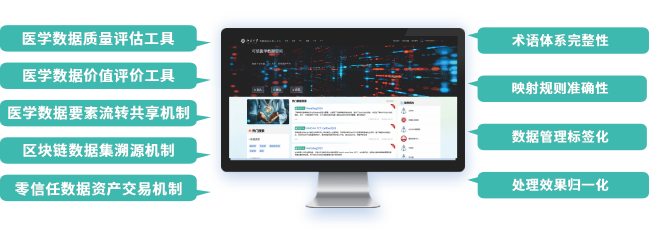
To address data from diverse sources and varying standards, Liuyuan Space has established the “Universal Flexible Specialized Disease Diagnosis and Treatment Data Platform.”This platform explores reconfigurable frameworks, scientific workflows, and computational engine framework technologies for cross-cohort studies. Centered on the core application features of “generalization” and “flexibility,” it has built a highly interactive, high-performance, easily scalable, flexible cloud-edge converged platform for the intersection, sharing, management, and online analysis of inter-cohort data.
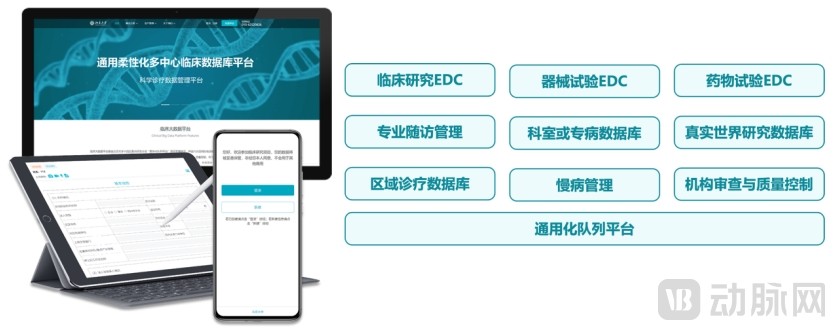
In terms of “versatility,” the platform, built on an advanced data architecture and flexible configuration capabilities, effectively integrates data from diverse sources and supports large-scale, highly complex research requirements. It ensures efficient management and sharing of research data, providing comprehensive, one-stop data management and technical support for various types of medical research. It is particularly well-suited for disease-specific registries, multicenter cohort studies, randomized controlled trials (RCTs), epidemiological surveys, and other study designs.
In terms of "flexible configuration," the platform leverages a high-performance, scalable cross-cohort research data middle-end architecture to provide flexible cohort database configurations. It comprehensively supports end-to-end management, covering database creation, informed consent signing, inclusion and exclusion criteria definition, enrollment workflows, patient follow-up, adverse event management, data quality control, and data export and analysis. Users can flexibly adjust configurations according to research requirements to establish databases that align with specific study protocols. The system supports personalized field collection and workflow settings (such as mandatory fields, logical controls, and automated scoring) and enables dynamic workflow adjustments, thereby ensuring the flexibility and precision of cohort studies.
During the development and promotion of the General Flexible Specialized Disease Diagnosis and Treatment Data Platform, Sun Guofeng shared an impressive case with VCBeat.“This client began building a specialized dermatology disease registry long ago, but during implementation, their ideas were constrained whether they collaborated with enterprises or commissioned custom solutions from individual teams. As this client is at the forefront of research and application in dermatology within China, many of their cutting-edge concepts could not be supported or met by ordinary teams. Due to numerous previous disappointments, they initially harbored doubts about the technology and products of Beijing Liuyuan Space Information Technology Co., Ltd. However, despite the client’s skepticism,”"Liuyuan Space took only two weeks to build and fully integrate the entire general-purpose flexible disease-specific system."
Sun Guofeng remarked with a smile, “After our formal system demonstration, both sides felt an immediate rapport. The client stated, ‘Liuyuan Space’s system can truly realize all our ideas.’ After using the system for some time, this client even helped promote it to other departments.” Currently, the system serves five major national disease centers, including the National Clinical Research Center for Dermatologic and Immunologic Diseases and the National Center for Stomatology; it is also deployed in more than 2,200 medical institutions, such as Peking University First Hospital, Peking University Third Hospital, Peking University Sixth Hospital, and the Chinese PLA General Hospital. The system encompasses over 3,000 databases and more than 23,000 scales, covering over 1.8 million patient cases.
In addition to the Trusted Medical Data Space and the General Flexible Disease-Specific Diagnosis and Treatment Data Platform, Liuyuan Space has also established multiple core products, including a Multi-Scenario Knowledge Base and Clinical Decision Support Platform, a Panoramic Analysis Platform for Patient Diagnosis and Treatment Models, an Intelligent Flexible Integrated EDC Platform, and an Intelligent HIS System. These related technologies and products are rapidly penetrating various segments of the healthcare industry, providing systematic solutions for clinical big data-driven diagnosis, treatment, and applications.

Future Catalysts:
Trusted Data Space, Multimodal Data Fusion and Management
When asked about the future development of the industry, the research team told VCBeat, “The future breakthroughs in clinical big data are likely to first materialize in areas such as trusted data spaces, multimodal data fusion, and management.”
On one hand, the national government has demonstrated its commitment to building trusted data spaces. On July 16, the Comprehensive Department of the National Data Administration officially released the “List of Pilot Projects for Innovative Development of Trusted Data Spaces in 2025,” which includes pilot initiatives in the healthcare sector. The announcement stated that, in the healthcare domain, efforts will be made to collaborate with leading medical institutions, research organizations, biopharmaceutical companies, and artificial intelligence enterprises to promote the sharing of multi-omics (including genomics), clinical medical, and public health data resources. These initiatives aim to develop application scenarios such as intelligent screening of new drug targets, R&D of large models for precision diagnosis and treatment, and regional allocation of medical resources, thereby fostering collaborative innovation across the entire pharmaceutical and healthcare value chain encompassing “data–R&D–services–industry.”
On the other hand, in the healthcare sector, the core challenge of multimodal data processing lies in achieving deep integration and analysis of content. This differs significantly from practices in many other industries, where multimodal data often refers to videos or images in different file formats, with technical efforts primarily focused on format conversion, compression, or optimization rather than in-depth content-level analysis and fusion. In healthcare data fusion, rigorous analytical methods are essential to enable precise integration and mutual complementarity of data, thereby supporting clinical decision-making. Currently, at the national level, there is active development of multimodal health and medical big data management platforms to promote high-quality integration and management of massive datasets.
Regarding the company’s future development, Sun Guofeng stated,“For over a decade, our team has been dedicated to refining and iterating our technology. Moving forward, Liuyuan Space will focus on product promotion, extending our services to more users and helping the industry and the nation address critical pain points in medical big data. In the future, Liuyuan Space will remain committed to its philosophy of ‘being guided by clinical needs and driven by technological innovation,’ continuously optimizing our products and services. We will collaborate with industry partners to jointly build an open, shared, and mutually beneficial digital healthcare ecosystem.”