

China-Malaysia Medical Device Regulatory Mutual Recognition Opens 30-Day Fast Track to ASEAN Market
A Kuala Lumpur Agreement Propels Chinese Medical Device Exports to Southeast Asia into the “Fast Lane”
According to an announcement published on the official website of the Medical Device Authority (MDA) of Malaysia, a “Medical Device Regulatory Cooperation Program,” set to reshape the landscape of medical device trade between China and Malaysia, is scheduled to officially launch on July 30. The announcement stated that discussions on this program commenced following the signing of the Memorandum of Understanding between the Medical Device Authority (MDA) of Malaysia and the National Medical Products Administration (NMPA) of China in November 2023, culminating in an agreement to mutually recognize each other’s pre-market approval regulations.
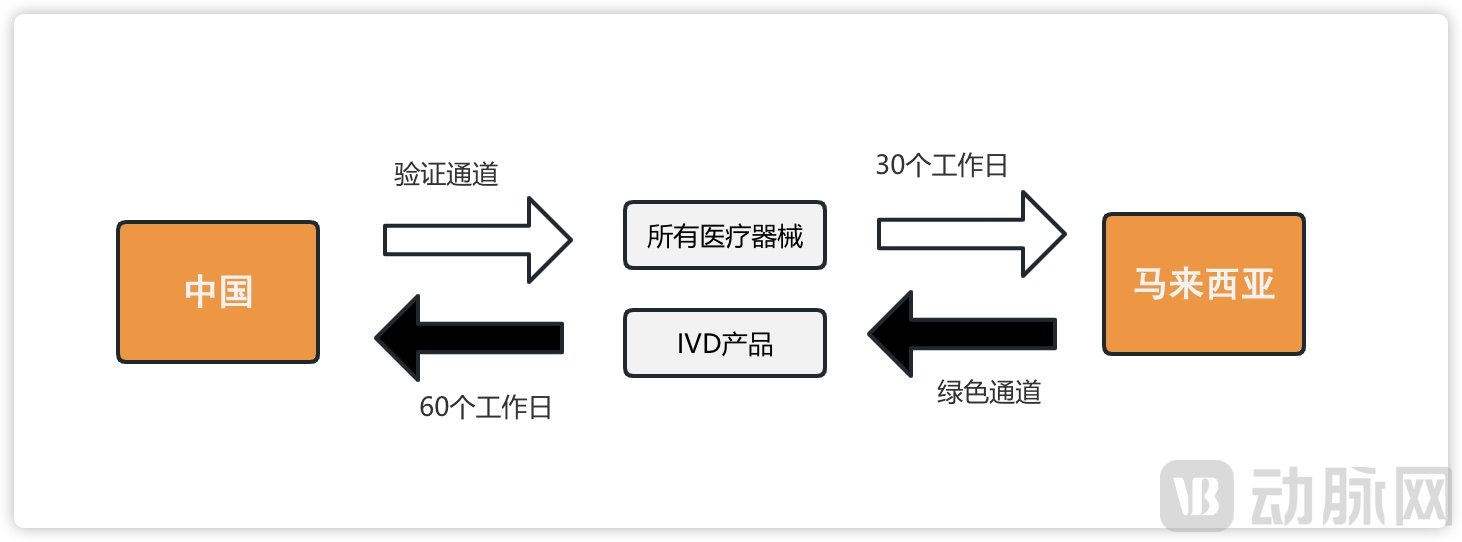
One Chart to Understand Two-Way Policies, Created by VCBeat Based on Policy Information
If the plan is ultimately implemented, it will not only be a win-win for both parties but also provide a convenient pathway for both companies to expand their markets. Under the new mechanism, the approval time for Malaysian IVD products entering the Chinese market has been compressed to approximately 60 working days, while the approval time for Chinese medical devices entering the Malaysian market has been reduced to about 30 working days, significantly improving product launch efficiency.
For Chinese medical device companies, expanding into Malaysia in the future:
30 working days to receive the certificate
No clinical trials required, no redundant testing
No changes to the design, materials, or indications are required for direct clearance.
Effective from July 30, 2025
For the first time in history, overseas markets have fully embraced China’s regulatory framework, reflecting the growing recognition of China’s medical device industry by foreign regulatory authorities after years of development.
China’s medical device industry is undergoing the growing pains of transformation and needs to expand into broader markets.
According to statistics from Huaan Securities, the high-value medical consumables segment saw a slight year-on-year increase in revenue in Q1 2025, but profits declined by approximately 5.81%, primarily due to the impact of centralized procurement and price wars, as domestic market competition has become increasingly intense. Subsequently, influenced by the broader macroeconomic environment, although the U.S. market remains vast, growing uncertainties have led companies to shift their overseas expansion focus toward Asia.
For instance, Mindray Medical provides customized healthcare solutions to Malaysia, Thailand, Indonesia, and other countries, while also launching hospital management training programs through partnerships to cultivate healthcare management talent. In the first quarter of 2025, its international market revenue accounted for approximately 47%, with growth in developing countries exceeding 20%, effectively offsetting domestic performance pressures.
Blue Sail Medical’s self-developed BA9 (Umirolimus)-coated coronary balloon dilation catheter has been successfully launched in Malaysia, Indonesia, and Thailand. The Cardiovascular and Cerebrovascular Business Unit achieved a year-on-year increase of approximately 21% in overseas sales revenue across the Asia-Pacific region in 2024, highlighting the growth potential of the Southeast Asian market.
According to data from the General Administration of Customs of China, in the first quarter of 2025, Asia accounted for the largest share of China’s medical device export value, reaching 32.75%, or approximately RMB 22.681 billion. Intensifying domestic competition, coupled with overcapacity, has made Southeast Asia—leveraging its geographical advantages and growth potential—the natural initial testing ground for Chinese companies expanding overseas, with Malaysia serving as the “bridgehead” of this market.
Malaysia, situated at the heart of Southeast Asia, boasts a mature multimodal transportation network spanning land, sea, and air. It serves as a vital gateway to the ASEAN market and a key connector to the Middle East, Australia, and New Zealand, earning it the reputation as the “transit hub” of the global supply chain. As the first ASEAN country to establish diplomatic relations with China, Malaysia has maintained steady growth in bilateral trade with China, which has remained Malaysia’s largest trading partner for 16 consecutive years.
The cooperation between China and Malaysia in the field of medical devices dates back to the 1997 Asian Harmonization Working Party (AHWP) on Medical Device Regulations. After nearly three decades of mutual understanding, this partnership has finally yielded the fruit of bilateral certification.
Malaysia’s medical device market is undergoing rapid expansion.
As a major producer of rubber-based medical devices, Malaysia supplies 60% of the world’s rubber gloves, 80% of catheters, and many other rubber medical consumables, thanks to its abundant rubber production. In 2022, the market size of Malaysia’s medical device industry already approached $3 billion, and the country continues to promote the upgrading of its healthcare sector.
In recent years, Malaysia’s sustained investment in the healthcare sector has ensured steady growth in its medical device market. In 2023, for instance, Malaysia increased its healthcare budget by 12.6% to reach $8.6 billion, with a portion allocated to upgrading medical facilities, thereby driving the expansion of the domestic medical device equipment market.
This intense commitment is driven, on one hand, by the rapidly aging population in China. It is projected that by 2030, individuals aged 65 and above will account for 15.3% of the total population. This demographic shift has led to a rise in the incidence of chronic diseases, particularly the high prevalence of obesity and diabetes. On the other hand, Malaysia is vigorously developing its medical tourism industry, attracting a large number of patients from neighboring Southeast Asian countries and even the Middle East.
Together, these factors have fueled an explosion in demand for medical devices in Malaysia and spurred the development of an offshore medical device manufacturing industry. Major brands such as Abbott, Boston Scientific, Smith & Nephew, Symmetry Medical, and Teleflex have all established manufacturing bases in the country.
Meanwhile, Malaysia has clearly recognized the weaknesses in its medical device industry and provided a detailed description of medical devices in its NIMP 2030 plan. Currently, there is particularly strong demand in the Malaysian market for cardiovascular intervention products, orthopedic implants, in vitro diagnostics (IVD), home medical equipment, and medical aesthetics-related products.
According to Meng Zhu, CEO of PureCert, the high-end diagnostic and therapeutic equipment market in Malaysia—such as imaging systems (CT, PET-CT), patient monitors, and radiotherapy devices—is currently dominated by Siemens, Medtronic, and Boston Scientific. In the segments of orthopedic and cardiovascular implants, including artificial joints, spinal implants, bioresorbable stents, and heart valves, the market is largely occupied by Medtronic, Johnson & Johnson, and Abbott, while Chinese manufacturers such as Blue Sail Medical and Weigao Orthopaedics have also made significant strides.
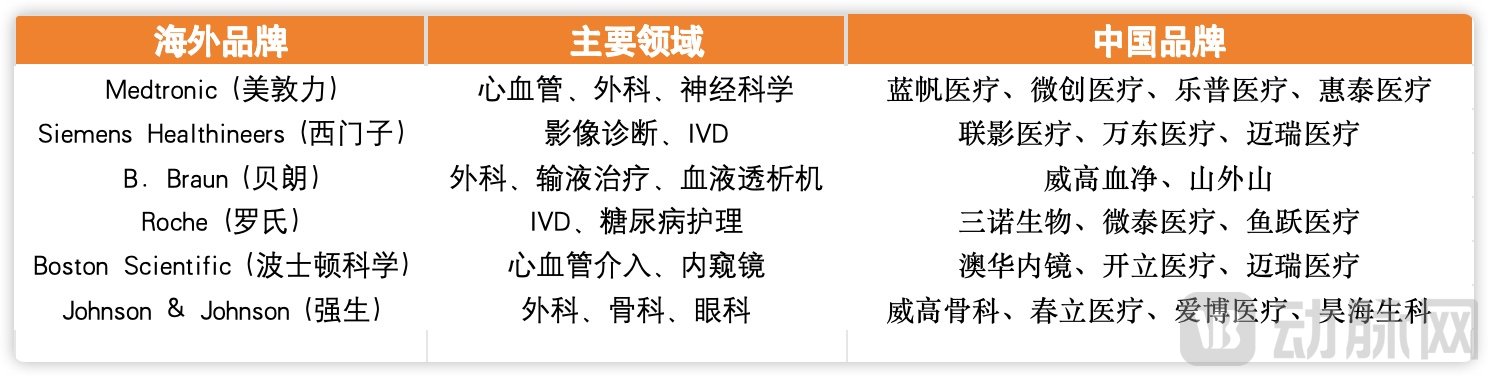
The Malaysian medical device market is currently dominated by multinational brands, according to data from PureCert.
Surgical instruments and consumables, such as staplers, trocars, medical dressings, syringes, and catheters, are dominated by 3M, Terumo, B. Braun, and Smith & Nephew. Chinese companies are also active participants in this space. For instance, Yuwell Medical holds a significant presence in home medical devices, including blood pressure monitors, glucometers, nebulizers, and oxygen concentrators. Mindray has secured a substantial market share in biochemical, immunological, and molecular diagnostic reagents, along with their supporting instruments and POCT products. Additionally, dental products have maintained high growth in the local market in recent years, with dental instruments—encompassing both surgical equipment and consumables—primarily sourced from China and the European Union.
As can be seen, although the Malaysian market is currently dominated by multinational brands, the wave of domestic substitution that has occurred in the Chinese market is highly likely to recur in Southeast Asia. Currently, Chinese-made medical devices have already entered the Malaysian market, leveraging their innovation and cost-effectiveness.
For instance, BGI Genomics’ COLOTECT 1.0 product obtained market access approval from the Medical Device Authority of Malaysia in 2023, aiming to address the discomfort associated with traditional colonoscopy procedures and the shortage of medical resources. It is worth noting that colorectal cancer is the most prevalent cancer among Malaysian men and the second most common cancer among Malaysian women. If detected at an early stage, the five-year survival rate can reach as high as 90.9%. Furthermore, BGI Genomics has established joint laboratories with local partners, dedicated to introducing advanced genetic technologies into the local healthcare system and providing health support to more families. Hong Xiaoming, Chairman of Haihe Biopharmaceutical Technology Group, stated that products with such strong practical significance are ideal candidates for international expansion.
Such a market, rich in symbolic significance and strategic value, naturally attracts numerous Chinese enterprises. However, prior to the announcement of this regulatory cooperation initiative, the path was fraught with challenges.
Enterprises No Longer Falter on the Path to Global Expansion.
Chinese-made medical devices expanding overseas face challenges stemming from discrepancies between domestic and international testing and inspection standards, as well as differing certification requirements for testing institutions. The Malaysian market previously presented similar issues. PureCert stated that Malaysia adopts a risk-based classification system, categorizing medical devices into four classes: A, B, C, and D.
Low-risk Class A devices may have their applications submitted directly to the regulatory authority; however, higher-risk Class B, C, and D products must first undergo a conformity assessment by a third-party Conformity Assessment Body (CAB) before registration applications can be submitted. Upon reviewing the technical documentation and the quality management system (which must comply with the ISO 13485 standard), the CAB will issue a certificate to the manufacturer. Meanwhile, the review timeline varies depending on the risk level, completeness of documentation, and the workload of the regulatory authorities, potentially extending up to 24 months.
Previously, Malaysia also introduced an expedited market access verification pathway for manufacturers approved in other countries. Specifically, for products that have already undergone conformity assessment and received approval in Australia, Canada, the European Union, Japan, the United States, and the United Kingdom, the Conformity Assessment Body (CAB) review process will be streamlined.
Chinese medical devices can now benefit from an expedited verification pathway, saving Chinese companies at least six months in the approval cycle and enabling them to bring their products to the Malaysian market as quickly as possible to compete with international brands. PureCert stated that, in addition to time savings, companies can also reduce costs by approximately 90% during the Conformity Assessment Body (CAB) stage.
“Nowadays, the biggest change lies in the controllability of time costs,” said Che Haoshuang, General Manager of Jinfey Pharmaceutical and Medical Device Technology Consulting Group, in an interview with VCBeat.
Previously, Chinese medical device manufacturers seeking to sell in Malaysia had to wait for registration approval before contacting local distributors or establishing their own sales teams for subsequent operations. However, with the mutual recognition of certifications between the two countries, the verification process now follows a relatively stable timeline. This allows companies to concurrently pursue registration and channel development, aligning all activities with product commercialization.
For medical device manufacturers, there is no need to undergo duplicate review processes for the same product, allowing for reasonable control over time and financial investments and significantly reducing compliance costs. The new policy not only reduces time costs but also accelerates the commercialization of products in Malaysia, serving as an example of how Chinese medical device companies benefit from the growing international recognition of China’s NMPA regulatory system.
For the small and medium-sized medical device enterprises that constitute the majority of the industry, avoiding bottlenecks in the registration process offers greater hope for survival and development.
The new policy is merely an appetizer; the main event is the medical device industry’s potential to establish a new ecosystem.
Previously, gaining access to the expedited pathway for medical device registration required obtaining certifications from the United States, Europe, Japan, Australia, and Canada. Now, China’s inclusion alongside these developed countries and regions by Malaysia carries significant symbolic weight. Although mutual recognition of medical device certifications does not exist within ASEAN, Malaysia’s regulatory system is widely recognized in the region, with its influence extending to neighboring countries such as Thailand, Indonesia, and Singapore.
As a key node in Southeast Asia and a core member of ASEAN, Malaysia is also promoting the alignment of ASEAN with the EU model in certain areas. Should ASEAN begin to explore mutual recognition of medical device certifications internally, the bilateral certification framework between China and Malaysia would become a strategic lever, potentially even marking the beginning of a new ecosystem for the medical device industry.
Hong Xiaoming, Chairman of Haihe Biopharmaceutical Technology Group, believes that taking the development of China’s innovative drugs as an example, after a decade of accumulation, the industry has finally ushered in an upgrade of its ecosystem. It has shifted from the past vicious cycle of “fundraising, cash burn, and price cuts” to a new path characterized by “source innovation, global business development (BD), and reinvestment in R&D,” with BD transactions playing an indispensable role in generating cash flow.
For Chinese medical device companies, which are characterized by a highly fragmented landscape across niche segments and generally small scale, the current capital winter has led to a sharp increase in financing difficulties. Consequently, these companies are compelled to downsize their R&D operations and strive to ensure the progress of their core products. However, even after products successfully obtain regulatory approval, there remains a lengthy cycle before they achieve commercial sales and generate cash flow.
Today, there is a market where market access approval can be obtained in as little as 30 days. This market is poised to expand to a scale of nearly 700 million people, a total area of 4.49 million square kilometers, a GDP of $3.6 trillion, and the status of the world’s fifth-largest economy. For small and medium-sized medical device companies, this equates to a new pathway for cash flow recovery, thereby naturally increasing their chances of survival and growth.
Moreover, niche sectors such as medical device CROs are poised to gain new growth momentum. In recent years, influenced by the broader macroeconomic environment, medical device companies have adopted a cautious approach toward entering the U.S. market, leading to a relative decline in the performance of medical device CROs.
Nowadays, it is foreseeable that a large number of Chinese medical device companies holding NMPA certificates will launch plans to enter the Malaysian market. This will directly translate into service orders for medical device CROs. Although the average transaction value per client may decrease due to the reduced scope of services, the next step after entering Malaysia will inevitably be expansion into the ASEAN market, which will generate additional demand for such services.
PureCert believes that local representatives will also need to expand their service capabilities in the future. This includes providing high-value-added strategic consulting services to help clients select the most suitable products from their portfolios for this fast-track pathway, planning how to leverage Malaysia as a springboard to reach the entire ASEAN market, and proactively positioning themselves in emerging fields such as AI-powered medical software that may be covered by new regulations in the future.
In the coming years, Malaysia will develop into a medical device market valued at over $4 billion and heavily reliant on imported products, offering substantial opportunities for Chinese products. If the demonstration effect of mutual recognition between the two sides can gradually facilitate access to the ASEAN market, the impact on China’s medical device industry will be immeasurable.