White Paper on Key Patent Technologies of Brain-Computer Interfaces
Brain-computer interfaces, serving as direct information channels connecting biological brains with intelligent machines, are becoming a focal point in the technology sector, while patents and intellectual property rights are emerging as new hotspots in international competition.
The Fudan University Center for Neuromodulation and Brain-Computer Interfaces, in collaboration with the Jiangsu Center of Patent Examination Cooperation under the Patent Office of the China National Intellectual Property Administration, has jointly authored and released the White Paper on Key Technologies for Brain-Computer Interface Patents. This paper provides an in-depth analysis of key BCI technologies and global patent trends. Let’s take a look!
Brain-Computer Interface (BCI) refers to a communication and control channel established between the brain and a computer or other external devices, through which users can directly express thoughts or manipulate devices via brain activity. With the advancement of BCI technology, its definition and scope have been continuously enriched and expanded. BCIs not only enable information output from the brain to external devices but also allow information input to the brain through stimuli in forms such as electrical, magnetic, optical, and acoustic signals. Therefore, a BCI establishes a direct channel for information exchange between the biological brain and intelligent machines. It can decode neural signals to control external devices and encode information for input into the brain, thereby replacing, repairing, enhancing, or improving brain functions, ultimately achieving bidirectional interaction, collaborative operation, and functional integration between the brain and intelligent machines.
■ Composition and Key Technologies of Brain-Computer Interface Systems
Brain-computer interfaces (BCIs) decode brain activity states or intentions by acquiring signals related to brain function and employing signal processing techniques such as preprocessing, feature extraction, and pattern recognition. Based on the decoding results, BCIs communicate with or control external devices. Meanwhile, they can provide feedback to users regarding brain activity states, decoding outcomes, and communication or control results, thereby modulating brain activity to achieve improved performance. Thus, the key technologies involved in BCIs include signal acquisition, signal decoding, brain-controlled peripheral devices, and neuromodulation. Additionally, BCI technology encompasses interface devices implemented via specialized or general-purpose chips, which are primarily used for front-end processing of acquired electroencephalogram (EEG) signals, including amplifiers, filters, and analog-to-digital converters.
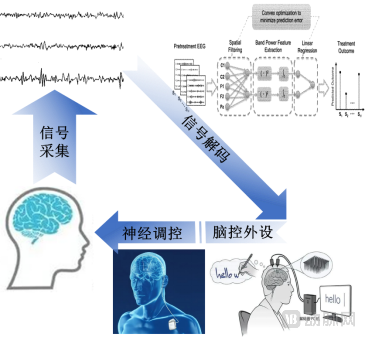
Figure 1: Composition of a Brain-Computer Interface System
1. Signal Acquisition
Signal acquisition is a core component, involving signal types such as electroencephalography (EEG), magnetoencephalography (MEG), functional magnetic resonance imaging (fMRI), functional near-infrared spectroscopy (fNIRS), and neurochemical signals. Among these, EEG signals are the most widely used and can be classified by acquisition method as follows:
● Non-invasive: Recorded via scalp surface electrodes, offering simple operation and high safety, making it suitable for long-term monitoring.
● Semi-invasive: Electrodes are placed epidurally or subdurally, in close proximity to the cerebral cortex without penetrating brain tissue, offering low surgical risk and high removability, making them suitable for short-term clinical monitoring.
● Invasive: Electrodes are surgically implanted directly into the cerebral cortex or deep brain structures, offering high spatiotemporal resolution and suitability for decoding complex neural activities.
2. Signal Decoding
Signal decoding comprises four steps: preprocessing, feature extraction, feature classification, and brain function interpretation.
● Preprocessing: Remove noise, eliminate artifacts, and improve the signal-to-noise ratio.
● Feature Extraction: Extract features based on the patterns of neural signals associated with specific brain functional tasks.
● Feature Classification: Train classification models using pattern recognition techniques or machine learning algorithms.
● Brain Function Decoding: Utilizing classification models to decode brain activity states or intentions for controlling external devices or conducting neuromodulation.
3. Brain-Computer Interface Peripherals
Brain-controlled peripherals are external devices that communicate with or can be controlled by brain-computer interfaces (BCIs). The system achieves control by reading neural signals and converting them into control commands. Currently, they are mainly applied in convenient user interface operations, automatic control of intelligent devices such as robots and autonomous vehicles, as well as scenarios including virtual reality, smart healthcare, and smart homes. Based on these application scenarios, the underlying technologies primarily encompass control techniques for robots, user interfaces, driving equipment, virtual reality devices, and medical health devices.
4. Neuromodulation
Neuromodulation is a biomedical engineering technology that employs non-invasive or invasive methods, utilizing physical (electrical, magnetic, optical, ultrasound, etc.) or chemical means to exert excitatory, inhibitory, or modulatory effects on neuronal or neural network signal transmission, thereby enhancing patients' neurological function and improving their quality of life.
(1) Non-invasive Neuromodulation
It primarily includes transcranial magnetic stimulation, transcranial ultrasound stimulation, and transcranial electrical stimulation. Traditional transcranial magnetic stimulation and transcranial electrical stimulation have been widely used in clinical practice to improve motor disorders and enhance motor function; however, they suffer from low spatial resolution and an inability to stimulate deep brain structures, making it difficult to meet the requirements for precise targeting. Transcranial ultrasound stimulation is still in the early stages of research and lacks long-term clinical data.
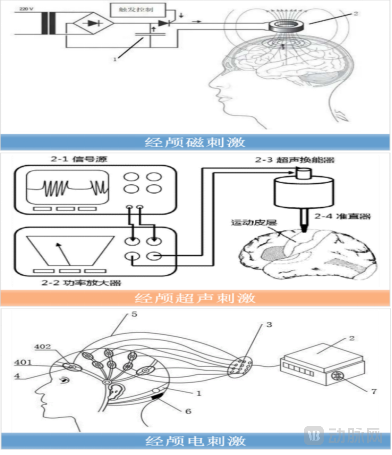
Figure 2: Non-invasive Neuromodulation
(2) Invasive Neuromodulation
Characterized by high spatial resolution and the ability to precisely target specific tissues, this field has developed rapidly in recent years. It primarily includes deep brain stimulation (DBS), spinal cord stimulation (SCS), sacral nerve stimulation (SNS), vagus nerve stimulation (VNS), cochlear implants, and retinal prostheses.
Among them, cochlear implants and retinal prostheses are classified as artificial prosthetics:
● Artificial Retina: Captures images via a camera and converts them into electrical signals, which are transmitted to electrodes implanted in the eye. Visual signals are conveyed to the brain through electrical stimulation of the optic nerve, thereby generating vision.
● Cochlear Implant: A microphone converts sound into electrical signals, which are encoded by a speech processor and transmitted to electrodes implanted in the ear. These electrodes bypass the damaged hair cells in the cochlea to directly stimulate the auditory nerve, thereby generating hearing. The technology is now relatively mature and serves as a standard treatment for severe to profound deafness.
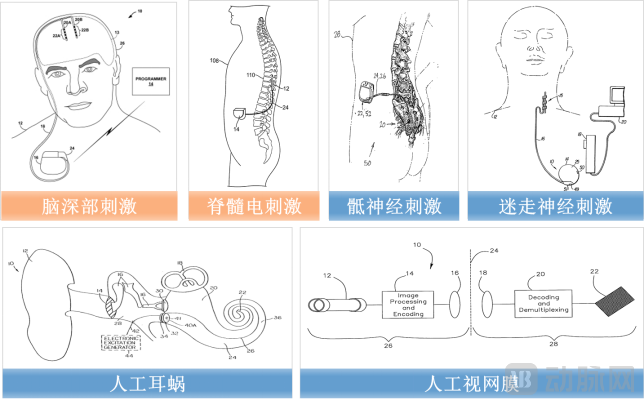
Figure 3: Invasive Neuromodulation
The structure of stimulators for deep brain stimulation, spinal cord stimulation, sacral nerve stimulation, and vagus nerve stimulation is fundamentally identical (comprising an implantable pulse generator and electrodes, connected by extension leads when the distance is significant). The primary differences lie in the electrode implantation sites and the conditions being treated, as detailed in the table below:
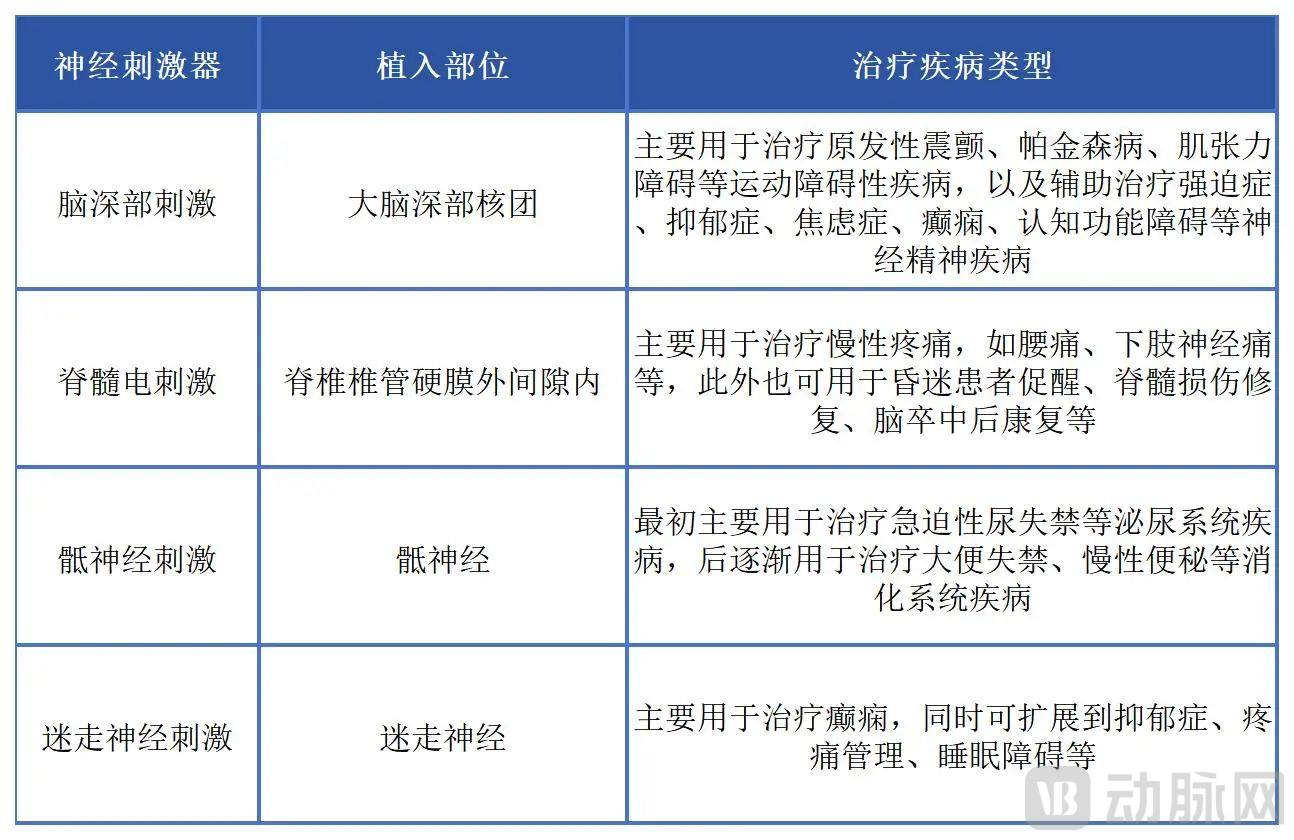
Table 1: Electrode Implantation Sites of Neurostimulators and Treated Conditions
Overall, in the various branches of brain-computer interface (BCI) technology—such as signal acquisition, signal decoding, brain-controlled peripherals, neuromodulation, and interface devices—signal acquisition and decoding, along with their corresponding interface components, constitute the technological foundation for industrial applications. Meanwhile, neuromodulation and brain-controlled peripherals directly serve downstream application markets and consumer endpoints. The prospects are promising for a development trajectory characterized by the “two-way convergence” of industrial demand and technological supply.
This white paper conducts a patent analysis of key technologies in brain-computer interfaces, with the main research contents as follows:
(1) Analyze the competitive landscape of domestic and international patents in the field of brain-computer interfaces, examining aspects such as application trends, geographic distribution of competition, key competitors, and technological layouts. This analysis aims to clarify innovation dynamics, identify core competitors, and highlight technological hotspots, while also assessing the current status of China’s industrial development, including its strengths and weaknesses.
(2) Analyze the evolution and development of key technologies in brain-computer interfaces (BCIs). Focusing on core technologies such as implantable electroencephalogram (EEG) signal acquisition, deep brain stimulation (DBS), and spinal cord stimulation (SCS), this section reviews the development of related patent technologies from the perspectives of technological iteration, major competitive entities, or key niche technologies. Furthermore, by correlating these findings with significant marketed products, it identifies patent layouts and development trends associated with core products.
(3) Systematically categorize the technological branches within the field of brain-computer interfaces (BCI), and construct a BCI technology decomposition diagram by performing structural or functional breakdowns of key technologies.
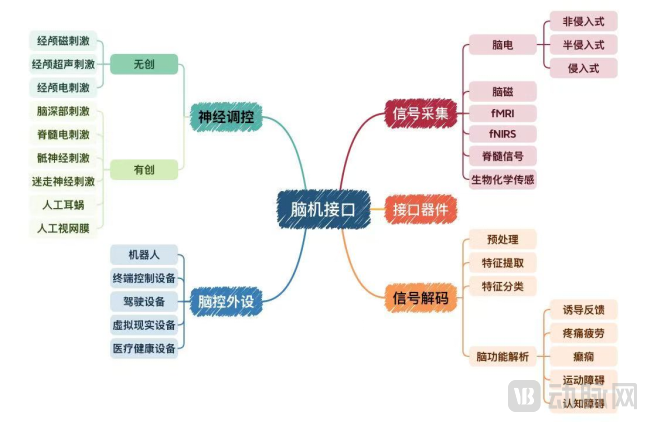
Figure 4: Breakdown of Brain-Computer Interface Technology
1. Overall Application Trend: Rapid Growth, with the Most Patents in Signal Decoding
Global patent application data indicate that the cumulative number of patent applications in the field of brain-computer interfaces (BCIs) has reached 66,615 (with deduplication across technical branches). Among these, there are 36,244 applications related to signal decoding, 18,226 for signal acquisition, 14,218 for neuromodulation, 10,473 for BCI-controlled peripheral devices, and 3,388 for interface components.
Since its inception in the 1970s, patent applications for brain-computer interfaces (BCIs) have continued to grow, with a particularly rapid increase over the past decade.
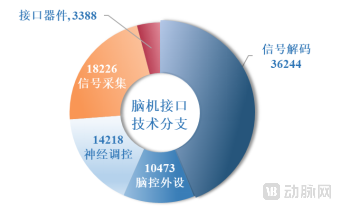
Figure 5: Global Patent Application Statistics for Brain-Computer Interfaces (by Technical Branch, Unit: Items)
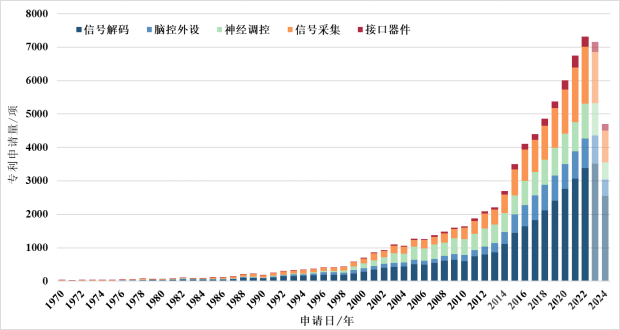
Figure 6: Global Trends in Brain-Computer Interface Patent Applications
Note: Patents may take up to 18 months from filing to publication; therefore, the data for 2023 and 2024 in the chart have been blurred to indicate that the actual figures are pending update.
2. Trends in Each Technical Branch Since 2000: Significant Growth in Signal Decoding, with Brain-Controlled Peripherals and Neuromodulation on Par
Since 2000, with the innovative development of related technologies such as intelligent algorithms and signal fusion, signal decoding, signal acquisition, and corresponding interface devices have become increasingly active, with signal decoding being particularly prominent. Over the past decade, neuromodulation has trended toward steady growth, while brain-controlled peripherals have gradually increased to a level comparable to that of neuromodulation.
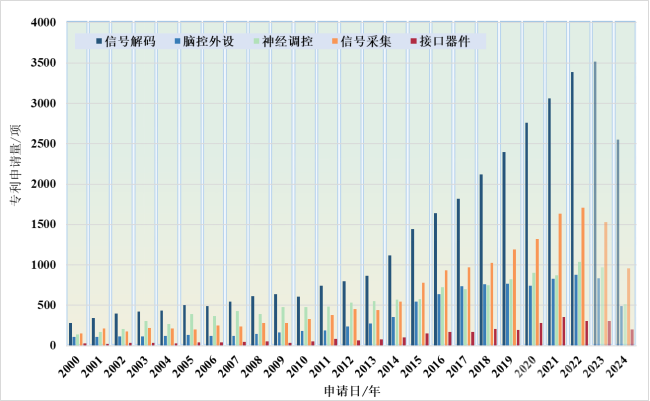
Figure 7: Global Patent Application Trends in Various Technical Branches of Brain-Computer Interfaces Since 2000
Note: Patents may take up to 18 months from application to publication; therefore, the data for 2023 and 2024 in the chart are presented as estimates to indicate that the actual figures are pending update.
3. Primary Sources of Technology: Driven by China and the U.S., with strong technology exports from the U.S. and Chinese leadership in its single domestic market
Based on the earliest priority country of each patent family, the United States had 19,107 patent applications filed initially, with an average of 3.87 global family members per application; China had 25,821 patent applications filed initially, with an average of 1.11 global family members per application. This indicates that the United States is a major source of technology, while China leads in patent filings within a single market.
Over the past decade, patent applications in China have surged, making it the leading global source of patent filings in four technical branches: signal acquisition, signal decoding, brain-controlled peripherals, and interface devices. In the field of neuromodulation, although domestic application volumes surpassed those of the United States starting in 2021, the U.S. remains the primary global source. Furthermore, South Korea and Japan rank high in patent application numbers, while Australia ranks third globally in the neuromodulation sector.
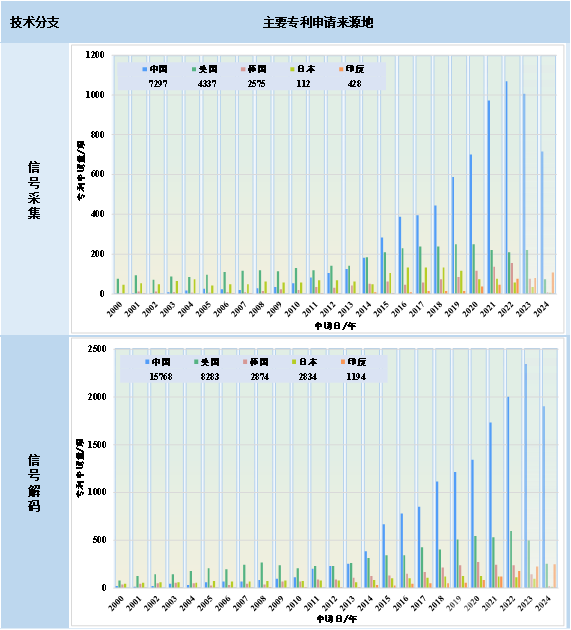
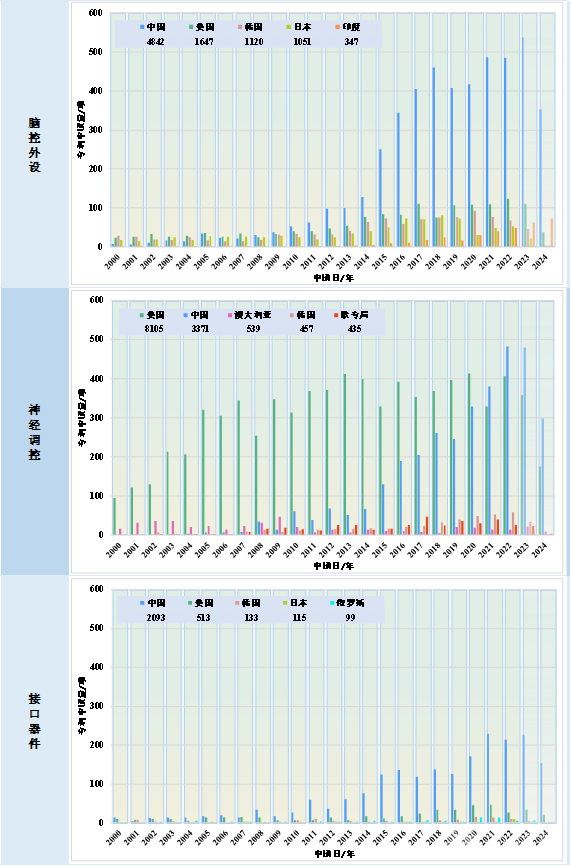
Figure 8: Application Trends of Major Technology Sources in Each Technical Branch Since 2000
Note: There can be an 18-month lag between patent application and publication; therefore, the data for 2023 and 2024 in the chart are presented as estimates to indicate that the actual figures are pending update.
4. Patent Transfers by Chinese Research Institutes: High Activity Over the Past Decade, with Neuromodulation Accounting for the Highest Share
Domestic research institutions hold a total of 5,347 authorized patents in the field of brain-computer interfaces (BCI), among which 473 have been transferred to enterprises, representing a transfer rate of 8.85%. This rate has shown an upward trend over the years, with significant activity observed in the past decade. The transfer rate stands at 8.85%.
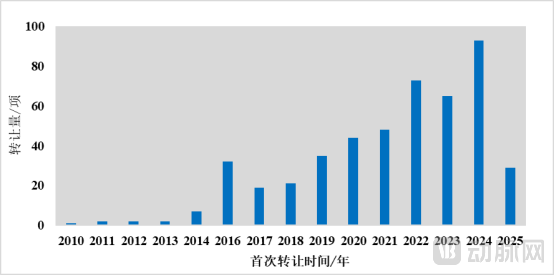
Figure 9: Trends in Patent Transfers from Chinese Research Institutes and Universities to Enterprises
Table 2 presents the status of patent transfers from research institutes to enterprises across various technical branches of brain-computer interfaces (BCIs) in China. Among these, neuromodulation exhibits the highest patent transfer rate at 10.37%, followed by brain-controlled peripherals at 7.04%. Although the total volume of patent transfers for signal decoding and signal acquisition is relatively high, their patent transfer rates remain comparatively lower due to a larger base of granted patents.
The transfer status of each technical branch is shown in the table below:
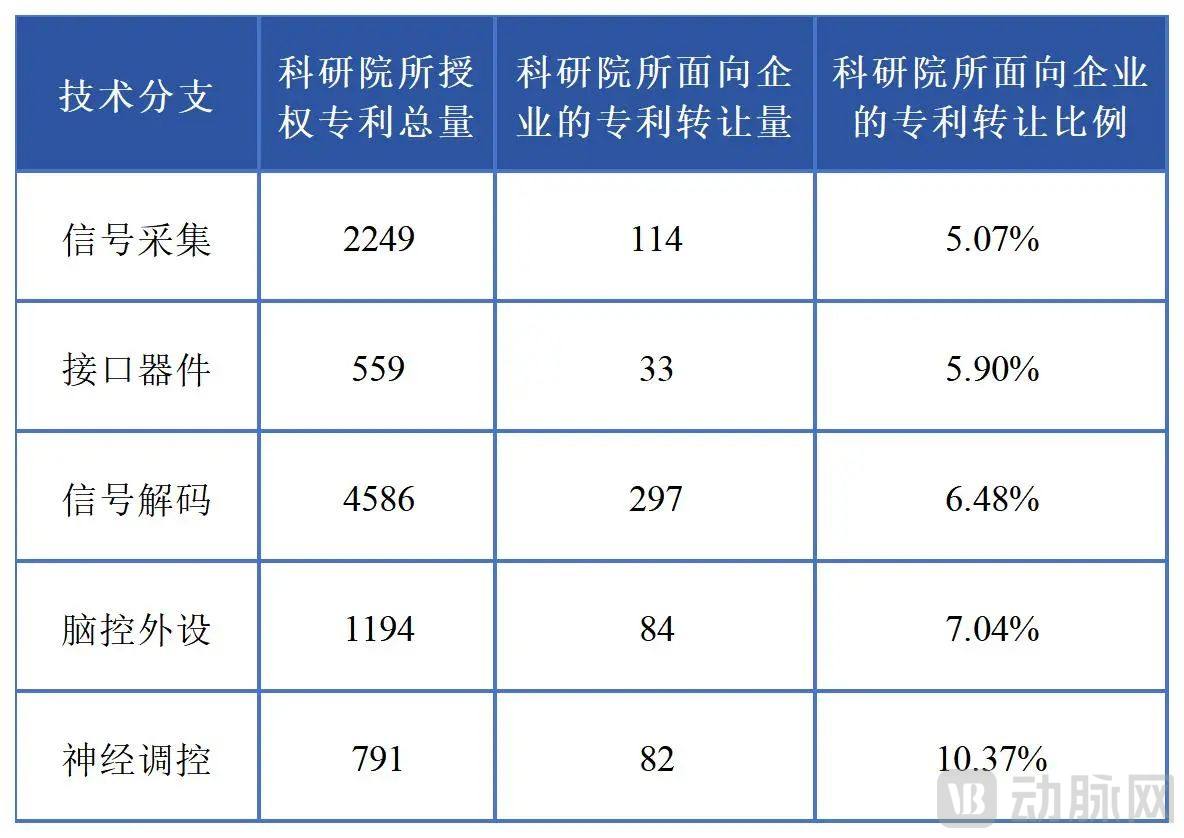
Table 2: Patent Transfers from Research Institutes to Enterprises in Various Technical Branches of Domestic Brain-Computer Interfaces (Unit: Items)
On the transferor side, the Shenzhen Institute of Advanced Technology had the highest number of patent transfers, with a total of 34 items, followed by Tsinghua University and South China University of Technology, which transferred 33 and 31 items, respectively. Specifically, the Shenzhen Institute of Advanced Technology, which led in transfer volume, engaged in joint technological research and development with multiple enterprises—including Shanghai United Imaging Healthcare Co., Ltd., Chongqing Yunnao Medical Technology Co., Ltd., and Shenzhen Weiling Medical Technology Co., Ltd.—through industry-academia-research collaborations, thereby creating a technology supply tailored to the needs of industrial innovation. In contrast, the patent transferees for Tsinghua University and South China University of Technology were primarily enterprises incubated by their own research teams. The main transferees for Tsinghua University were Beijing PINS Medical Co., Ltd. and Changzhou Ruishen’an, while the primary transferee for South China University of Technology was South China Brain-Control (Guangdong) Intelligent Technology Co., Ltd.
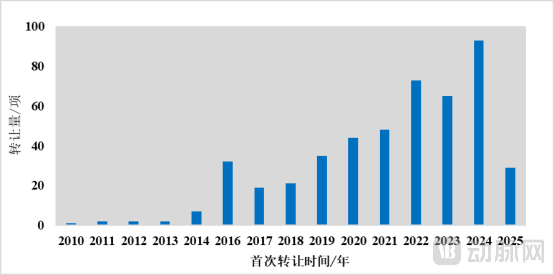
Figure 10: Trends in Patent Transfers from Domestic Research Institutes to Enterprises
Currently, brain-computer interface (BCI) patent technologies are flourishing, with vigorous technological innovation. China and the United States play a pivotal driving role in the global development of patented technologies. Domestic research institutes and sci-tech enterprises are developing rapidly, while leading overseas companies maintain significant advantages. Patent applications filed in China primarily pertain to the fields of neuromodulation and signal acquisition.
1. Signal Acquisition: EEG acquisition is the focus, with invasive methods growing faster
● EEG signal acquisition is a key focus of patent layout. Non-invasive methods, due to their non-traumatic nature and safety, account for the highest proportion of patent applications with stable growth; invasive methods, owing to their high resolution, have seen a faster increase in patent applications over the past decade. U.S. patent applications filed in China show a higher proportion of invasive EEG acquisition technologies.
● Invasive EEG Acquisition: Rigid electrodes remain important tools, with technical improvements focusing on enhancing biocompatibility and refining manufacturing processes. Flexible electrodes have become a research hotspot due to their favorable biocompatibility and flexibility, with studies emphasizing the use of composite materials to achieve mechanical compatibility with brain tissue. Multifunctional integrated electrodes (e.g., combining signal acquisition with neuromodulation) have emerged as a new focal point, offering broad space for innovation.
● Non-invasive EEG Acquisition: Electrodes include dry, wet, and semi-dry types. Performance is enhanced through increased density and improved materials, enabling device miniaturization and wearable integration. Key innovators are adopting differentiated strategies; for instance, Tianjin University has established a multi-level layout, while Royal Philips focuses on sleep monitoring.
2. Neuromodulation Field: Invasive Approaches Dominate, with Patent Barriers Surrounding Key Technologies
Invasive neuromodulation holds a patent advantage, with deep brain stimulation and spinal cord stimulation emerging as hotspots. Chinese innovators have entered the global top ten in patent applications, but overseas leaders such as Medtronic and Boston Scientific maintain a significant quantitative advantage.
● Spinal Cord Stimulation: Has entered the stage of closed-loop sensing and modulation, with evoked compound action potential (ECAP) signals as the key technology. However, core technologies are dominated by foreign companies, posing patent barriers for domestic players. The application of ECAP signals in deep brain stimulation and the expansion of indications (such as movement disorders and cognitive impairments) represent emerging trends where patent barriers have not yet been established, offering broad prospects.
● Deep Brain Stimulation: Precision stimulation is the mainstream direction, with Medtronic, Boston Scientific, and Neuropace each pursuing distinct technological pathways. Medtronic’s BrainSense technology focuses on breakthroughs in closed-loop modulation via brain signal analysis; Boston Scientific pioneered directional electrodes; and Neuropace specializes in seizure prediction. Induced resonant neural activity signals remain in the early stages of research and may serve as a technological entry point for China.
● AI Applications: Neuropace utilizes AI for epilepsy prediction, with its related patent portfolio still in the early stages. In China, there are mature achievements in combining AI with brain signal analysis for disease prediction, offering an opportunity to achieve leapfrog development through the integration of AI and brain-computer interfaces.
In the future, innovation entities in China need to identify the right direction, deepen research and development, promote industrial applications, enhance awareness of patent protection, strengthen layout capabilities, build a high-quality patent ecosystem, and gain advantages in international competition.
Scan the mini-program QR code to download the full text of the "White Paper on Key Technologies for Brain-Computer Interface Patents":