

Ant Group Accelerates AI Healthcare Expansion with 269 Doctor Agents and Launches First Hardware-Connected Academician Agent

Ant Group
Financial Services Institutions
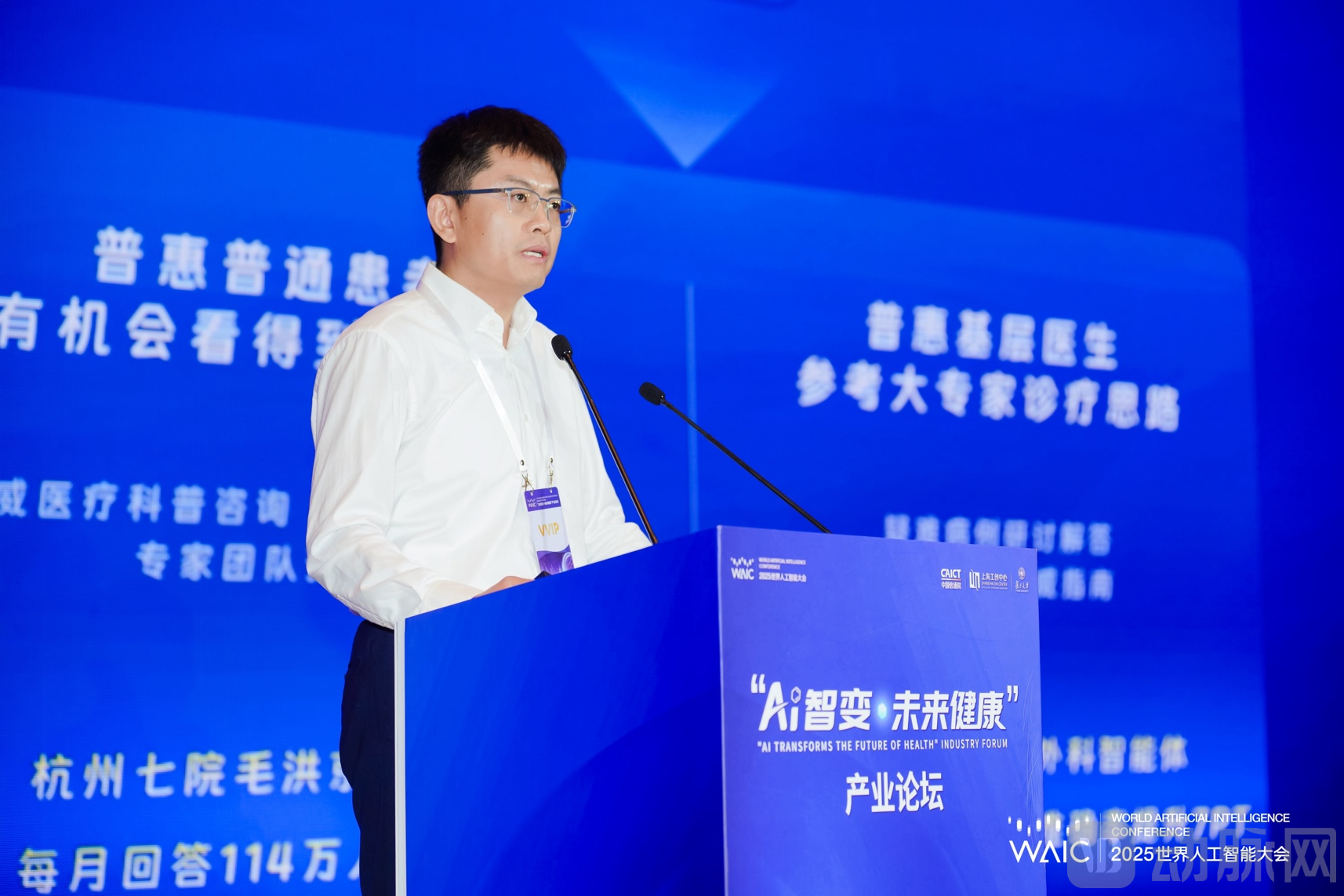
Ant Group Accelerates the Opening of Its AI Healthcare Ecosystem. On July 28, at the “AI Transformation · Future Health” Industry Forum held during the 2025 World Artificial Intelligence Conference, Ant Group’s AI health application AQ unveiled a series of collaborative achievements in co-development with physicians: it has integrated 269 physician AI agent services, created the first academician AI agent connected to smart hardware, launched China’s first standard system for “Healthcare Industry AI Physician Agents” in partnership with the China Academy of Information and Communications Technology (CAICT), and introduced an open platform for physicians.
The First Academician Agent Connected to Hardware
The “Healthy China Action (2019–2030)” explicitly states that China will launch prevention and control initiatives targeting four major chronic diseases: cardiovascular and cerebrovascular diseases, cancer, chronic respiratory diseases, and diabetes. These initiatives aim to promote the research, development, and application of technologies for chronic disease prevention and control through technological innovation. However, the characteristics of chronic diseases—such as their insidious onset, prolonged course, and high prevalence of complications—pose significant challenges for hospitals, physicians, and patients in establishing long-term disease management models.
“Take heart valve disease as an example. The Second Affiliated Hospital of Zhejiang University School of Medicine (SAHZU) sees thousands of new patients annually, a significant proportion of whom come from other regions. Long-term disease management is required after discharge, including monitoring for potential adverse reactions, ensuring medication adherence, and conducting regular check-ups. Telephone follow-ups alone are insufficient for effective tracking and timely intervention; both physicians and patients need better tools,” said Hu Wangxing, an attending physician at SAHZU and a core member of Academician Wang Jian’an’s Heart Valve Disease Team.
To address this issue, AQ has partnered with Academician of the Chinese Academy of Sciences and Wang Jian’an, Party Secretary of the Second Affiliated Hospital of Zhejiang University School of Medicine, along with his medical team, to jointly launch the “Jack Peace-of-Mind Agent.” This is the first professional AI agent dedicated to specialized disease management by connecting with smart hardware. Users can activate it simply by saying, “Help me find Dr. Wang Jian’an’s agent,” in the AQ chat interface. In addition to providing Q&A services on common symptoms of cardiovascular diseases, the agent allows users to connect devices such as Huawei watches and Yuwell blood pressure monitors. By integrating data on blood pressure, pulse, and ECG, the agent offers professional post-diagnosis management services for patients with heart valve disease, including health analysis, abnormality alerts, follow-up visit reminders, and assistance with requesting additional appointment slots.
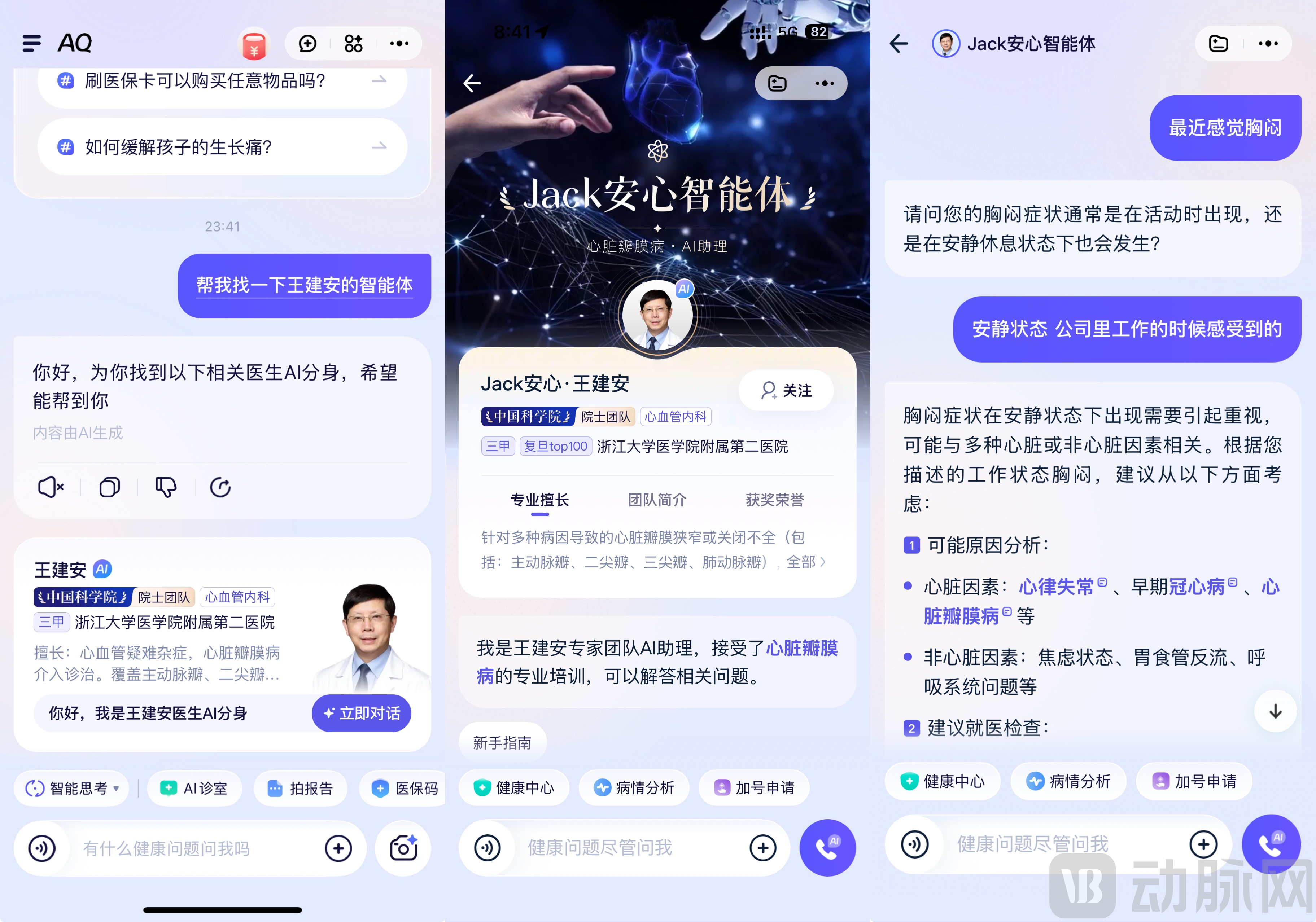
Public information indicates that Academician Wang Jian’an’s team specializes in the diagnosis and treatment of complex and refractory cardiovascular diseases, with a particular focus on interventional therapies for valvular heart disease. Their expertise encompasses the full spectrum of valvular disorders, including aortic and mitral valve diseases. As pioneers in China, they were among the first to successfully perform interventional cardiac valve procedures, and their related clinical research has been honored with awards such as the Second Prize of the National Science and Technology Progress Award.
“The unique advantage of AI technology lies in its ability to rapidly identify and summarize patterns hidden within vast amounts of data, particularly excelling at pinpointing feature patterns that are difficult for humans to detect. The Jack Anxin Intelligent Agent integrates AI, physicians, and hardware, fully leveraging AI technology in the management of valvular heart disease to provide patients with 24-hour timely protection. We believe this will bring about a revolutionary advancement in diagnostic methods, allowing technology to better safeguard the pulse of life,” stated Wang Jian’an at the event.
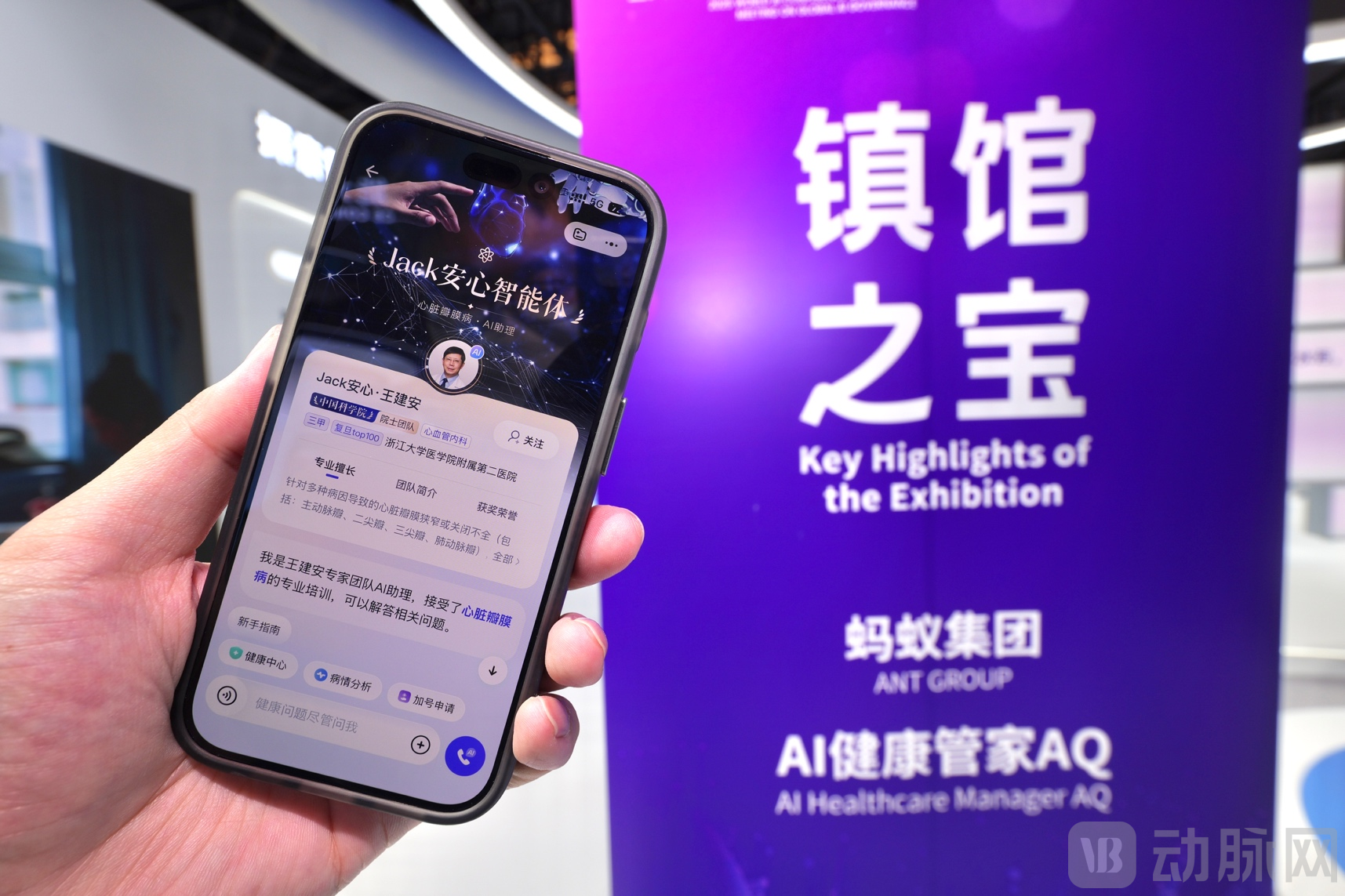
Reporters learned that during the development process, the agent studied an authoritative knowledge base on valvular heart disease, carefully curated and reviewed by a team of academicians. For over 300 typical clinical questions related to valvular heart disease, the academician team annotated and corrected the model’s outputs. This innovative integration of the academicians’ diagnostic and treatment logic with AI technology has made the agent more professional and trustworthy.
First Industry Standard for Doctor AI Agents Initiated
For each specialized AI agent integrated into AQ, it is akin to “installing” a team of top-tier specialists from across China into the user’s smartphone, providing 24/7 health support. However, as the healthcare industry is vital to national welfare and people’s livelihoods, and AI agent technology remains in an exploratory stage, standardization is particularly critical.
“Based on practical experience, physician AI agents must deliver high performance, high reliability, and high adaptability, pursuing technical stability and security while aligning with the medical specialties of specific disciplines and diseases,” said Liu Junwei, General Manager of AI Healthcare at Ant Group.
Based on this, AQ, in collaboration with the authoritative China Academy of Information and Communications Technology (CAICT, hereinafter referred to as “CAICT”), has officially released the first “Standard System for AI Doctor Agents in the Healthcare Industry.” This system addresses foundational, technical, application, and governance requirements for AI doctors, with the initial batch of standards developed around four key areas: technical performance, privacy and security, data governance, and specialty-specific applications. These efforts aim to promote the development and practical implementation of AI doctor agents. Derived from AQ’s practical experience, this “standard system” supports its pioneering professional service model for physician agents, which has been widely adopted across the industry. Currently, 269 physician agents are hosted on the AQ platform, with over 80% representing top-tier specialist teams or physicians from China’s Grade A tertiary hospitals.
“The initiation of the standard’s development signifies that medical AI agents are entering a new phase characterized by systematic and standardized practices, while also providing the industry with a professional and feasible benchmark for evaluation,” said Feng Tianyi, Director of the Digital Health Department at the Cloud and Big Data Institute of the China Academy of Information and Communications Technology (CAICT). This standard helps establish a verifiable industry reference for the development of AI in healthcare and marks China’s emergence as a driver of both innovation and regulation in the practical deployment of specialized AI agents.
The introduction of this innovative AI doctor agent is also making AQ a diagnostic and treatment assistant for township and community physicians. Wu Jingyi, a post-2000s village doctor from Tushan Village in Jiujiang, Jiangxi Province, is highly attuned to new technologies. Initially approaching it with a trial mindset, she uploaded the case of a patient with a skin condition to AQ. The diagnostic results were nearly identical to her own assessment. “The medication regimen was reasonable; the patient used a urea-containing corticosteroid cream and took antihistamines, leading to an improvement in symptoms.”
Now, she uses AQ to supplement her learning of the latest medical knowledge and leverages physician agents to understand the clinical reasoning of top-tier doctors, assisting her in diagnosing common ailments among villagers. She has also begun teaching elderly residents how to use AQ—taking photos of incomprehensible medical reports for instant queries and connecting with blood pressure monitors to facilitate chronic disease management. Wu Jingyi stated, “I hope AQ will release a dialect version, enabling elderly people in remote mountainous villages to access health tips anytime, anywhere.”
A growing number of physicians, such as Wang Jian’an and Wu Jingyi, are leveraging AI to serve patients, while AQ is further exploring initiatives to promote the openness of AI medical technologies. At the forum, AQ also launched a user-friendly open platform for intelligent agents, providing a suite of development and management tools. The aim is to empower more physicians to build their own intelligent agents, thereby enhancing the diagnostic and treatment experience for the general public and making healthcare services more inclusive through AI.