

MapLight Therapeutics Secures $372.5M in Oversubscribed Series D Financing, the Largest CNS Deal of 2025

MapLight Therapeutics
Developer of Treatment Methods for Central Nervous System Diseases
On July 28, 2025, local time, MapLight Therapeutics, a developer of treatments for central nervous system disorders, announced the completion of an oversubscribed Series D financing round totaling $372.5 million.
Co-led by Goldman Sachs Alternative Investment’s life sciences arm and Forbion, with participation from other new investors including Sanofi, T. Rowe Price Investment, and Avego BioScience Capital.
The financing also included participation from MapLight’s existing investors, including Novo Holdings, 5AM Ventures, and Blue Owl Healthcare Opportunities.
This round of financing serves as a supplement to the $225 million Series C funding round led by Novo Holdings in 2023.
According to VBInsight, the $372.5 million in financing made it the largest deal in the CNS sector and ranked among the top three in the primary market of the biopharmaceutical industry in 2025.
The financing will support the completion of Phase II clinical trials of the company’s lead candidate drug for schizophrenia and Alzheimer’s disease psychosis, and explore other potential indications for which ML-007C-MA may be suitable.
The new funding will also be used to advance other assets in MapLight’s pipeline: one candidate drug for autism spectrum disorder is in Phase II clinical trials, while programs targeting Parkinson’s disease and hyperactivity/impulsivity are in the preclinical development stage.
After 40 Years of Technological Accumulation, Reaching 100 Billion in Transactions
MapLight’s core product is an oral, fixed-dose investigational M1/M4 muscarinic agonist.
Historically, research into treating diseases by targeting muscarinic acetylcholine receptors has been ongoing for a long time, with significant breakthroughs only emerging in recent years.
Muscarinic acetylcholine receptors (mAChRs) are Class A G protein-coupled receptors (GPCRs) composed of seven transmembrane segments, featuring an extracellular N-terminus, an intracellular C-terminus, and a large intracellular loop between helix 5 and helix 6.
G protein-coupled receptors are the largest superfamily of membrane receptors, capable of sensing extracellular signals, including light, olfaction, taste, hormones, and neurotransmitters.
Given the critical roles of GPCRs in both physiological and pathological processes, they have emerged as prominent therapeutic targets, with one-third of all approved drugs acting on GPCRs.
mAChRs were first cloned and sequenced by Kubo et al. in 1986. They are encoded by the CHRM1 to CHRM5 genes, which give rise to five functionally distinct subtypes, M1–M5.
Among these, the M1, M3, and M5 receptor subtypes are excitatory and couple with Gq/G11 proteins, responsible for activating phospholipase C-β (PLC-β), leading to the production of the signaling molecules inositol trisphosphate (IP3) and diacylglycerol (DAG). In contrast, the M2 and M4 receptor subtypes are inhibitory and couple with Gi/Go proteins, resulting in the inhibition of adenylate cyclase and a reduction in cAMP levels. M2 receptors have also been shown to weakly couple with Gs and Gq proteins.
Muscarinic acetylcholine receptors (mAChRs) are the primary receptors for acetylcholine (ACh) binding and signal transduction. The M2 and M3 receptor subtypes are involved in regulating key “rest-and-digest” functions of the peripheral nervous system. In major central nervous system disorders, M1 is implicated in Alzheimer’s disease, M1 and M4 jointly contribute to schizophrenia, and M5 plays a role in drug addiction.
However, these five distinct subtypes are distributed across the central nervous system and peripheral tissues. Due to their structural similarities, mAChR-targeted therapies tend to affect receptor subtypes expressed in multiple different tissues, leading to severe side effects that have hindered further drug development.
In December 2023, Bristol Myers Squibb announced its $14 billion acquisition of Karuna Therapeutics, a neuroscience-focused pharmaceutical company, marking the second-largest pharmaceutical M&A deal of 2023. This move has signaled to the industry that the central nervous system (CNS) disease sector—once considered a “black hole” for new drug development—appears to be showing signs of recovery.
On the other hand, Karuna Therapeutics’ core product is the M1–M4 agonist KarXT, which had already entered the NDA stage at that time.
To this end, two articles published in Nature Reviews Drug Discovery point out that after more than 40 years of accumulation, the development of therapies targeting muscarinic acetylcholine receptors is poised to enter a "golden age," bringing treatment options with novel mechanisms for various difficult-to-treat neurological disorders such as Alzheimer's disease and schizophrenia.
Flagship Product Benchmarked Against $3 Billion Blockbuster Drugs
In September 2024, the U.S. FDA officially approved COBENFY (i.e., KarXT, xanomeline-trospium chloride) for the oral treatment of schizophrenia in adults, making KarXT the first drug with a novel mechanism of action approved by the FDA for the treatment of schizophrenia in decades.
According to Evaluate Pharma’s forecast, KarXT sales will reach $3.1 billion by 2030.
KarXT’s strategy of targeting mAChRs is not unique. MapLight Therapeutics’ core investigational therapy, ML-007/PAC, is also a combination therapy comprising agonists of the M1 and M4 subtypes of muscarinic acetylcholine receptors and a peripherally acting acetylcholine receptor antagonist.
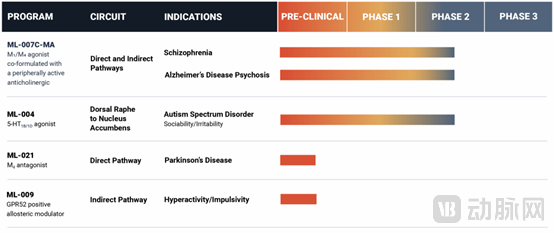
ML-007C-MA is an oral, fixed-dose investigational combination of the M1/M4 muscarinic agonist ML-007, co-formulated with a peripherally acting anticholinergic (PAC). ML-007C-MA is designed to activate M1 and M4 muscarinic receptors in the central nervous system to enhance efficacy, while synchronizing the pharmacokinetics of the agonist and antagonist components to mitigate peripheral cholinergic side effects.
In early July 2025, MapLight announced the initiation of a Phase II study to evaluate the efficacy, safety, and tolerability of the investigational novel agent ML-007C-MA as a potential treatment for schizophrenia.
The Phase II ZEPHYR study is a randomized, double-blind, placebo-controlled trial evaluating the efficacy of once-daily and twice-daily dosing of ML-007C-MA in adults with a preliminary diagnosis of schizophrenia experiencing acute exacerbation or relapse of symptoms. The study is expected to enroll approximately 300 patients in the United States.
The primary endpoint of this study was the change from baseline to Week 5 in the total score on the Positive and Negative Syndrome Scale (PANSS), a metric commonly used to assess treatment efficacy in patients with schizophrenia.
Previous Phase I clinical trials of ML-007C-MA in combination with peripherally acting anticholinergics (PACs) (i.e., ML-007/PAC) demonstrated favorable overall tolerability at the planned doses:
Most treatment-emergent adverse events (TEAEs) were mild and transient in nature, and no serious or severe adverse events were observed;
Plasma and cerebrospinal fluid exposures remained above the anticipated clinically relevant levels for both once-daily and twice-daily dosing regimens.
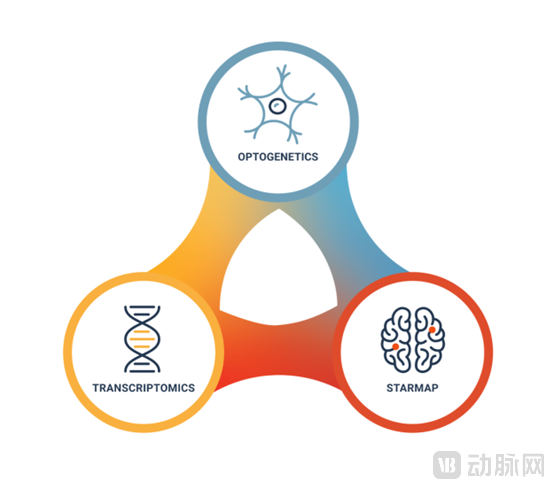
The development of ML-007C-MA is based on MapLight’s proprietary innovation discovery platform, which integrates three key technologies to provide unique insights into atypical neural circuits.
Optogenetics identifies the functions of key cell types in the brain, transcriptomics provides a library of potential therapeutic targets within these cells, and STARmap enables the visualization of these targets within the neural circuits of intact brain tissue.
These tools collectively drive the development of multiple first-in-class, highly targeted therapies for the most difficult-to-treat brain diseases and symptoms.
In addition to ML-007C-MA, MapLight currently has two other products in clinical development: ML-007 is being investigated for the treatment of movement disorders, and ML-004, a serotonin 1B receptor agonist, is currently in Phase II clinical trials for treating social communication deficits in patients with autism spectrum disorder.
In addition, MapLight’s preclinical assets include ML-016, an investigational GPR6 antagonist for Parkinson’s disease and depression, as well as ML-009, which is being developed to treat hyperactivity and impulsivity associated with attention-deficit/hyperactivity disorder.
Can MapLight Therapeutics Break Through the Competition?
Despite the positive clinical results for MapLight, the muscarinic drug frenzy ignited by Bristol Myers Squibb’s $14 billion acquisition of Karuna Therapeutics and AbbVie’s approximately $8.7 billion acquisition of Cerevel Therapeutics—along with its selective M4 muscarinic receptor modulator emraclidine—has failed to meet expected development prospects.
In November 2024, emraclidine failed in two Phase II schizophrenia studies, prompting AbbVie to record a $3.5 billion impairment charge.
In April 2025, the highly anticipated “global blockbuster” KarXT failed in its late-stage trial as an adjunctive therapy, lacking comparative data against existing schizophrenia treatments (rather than placebo alone). This outcome disappointed both investors and clinicians.
Nevertheless, muscarinic agents remain promising for avoiding antipsychotic-related side effects, such as weight gain, sedation, and neuromotor complications; coupled with their novel mechanism of action, some clinicians continue to support the innovation of muscarinic therapies.
MapLight’s current potential advantage lies in the co-formulation of ML-007C-MA with a peripherally acting anticholinergic agent, which ensures activation of M1 and M4 muscarinic receptors in the central nervous system while avoiding peripheral cholinergic side effects, thereby making it highly attractive to Sanofi.
As Phase II clinical trials get underway, MapLight’s product may well fire the opening shot in breaking through the therapeutic bottlenecks in CNS disorders.