

ZhongAn Insurance Launches 'Su Fu Kang' Rehabilitation Therapy Insurance to Address Post-Injury Recovery Concerns for Active Individuals
ZhongAn Insurance
Internet Insurance Service Provider
As public health awareness grows, sports rehabilitation is increasingly becoming an essential need. The White Paper on China’s Sports Rehabilitation Industry indicates that out of approximately 430 million people in China who maintain long-term exercise habits, around 100 million suffer from sports-related injuries. Currently, sports rehabilitation institutions across the country serve only about 400,000 to 500,000 individuals annually, meaning that only a small fraction of those with this essential need actually receive sports rehabilitation services.
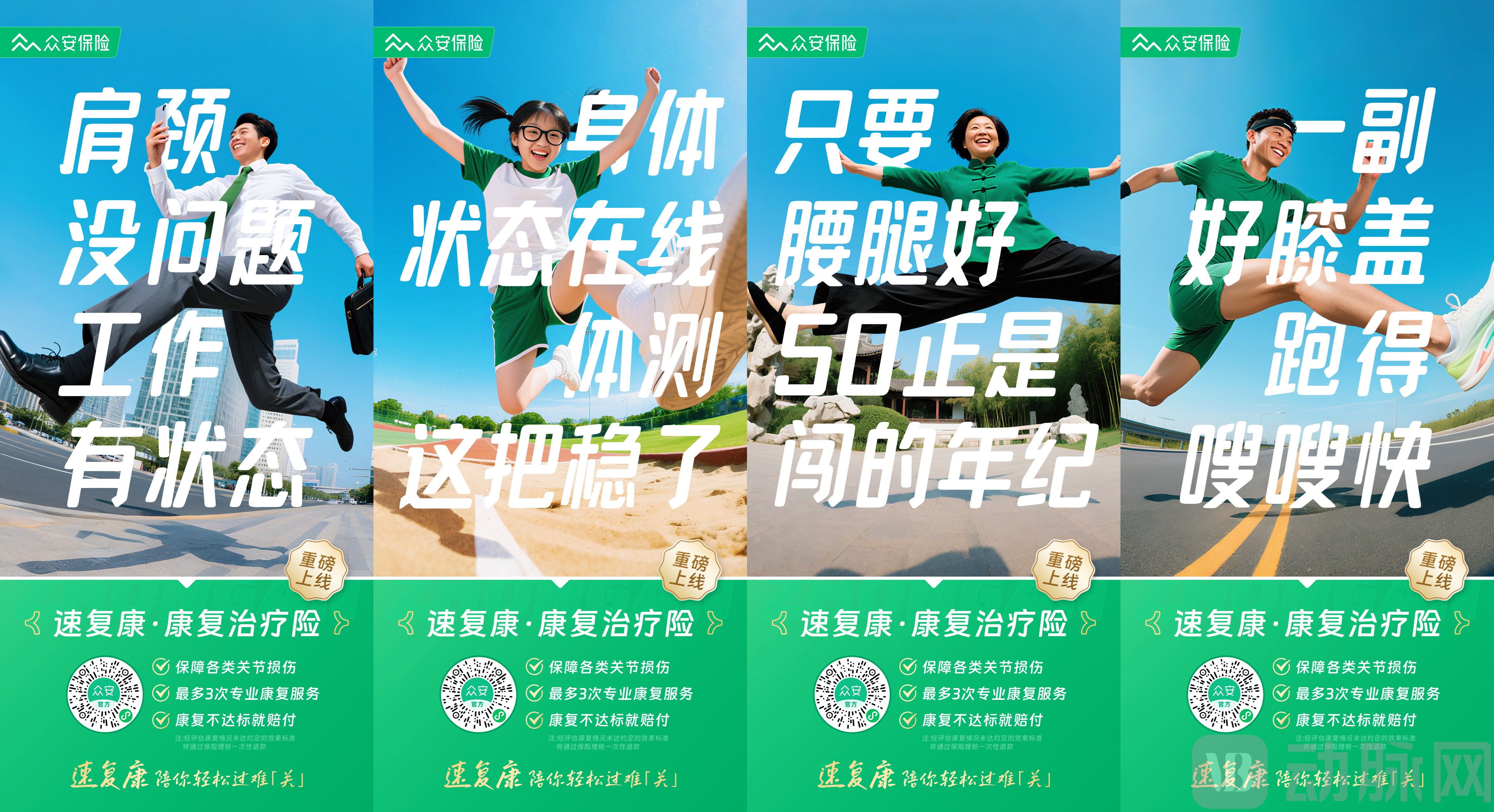
Recently, ZhongAn Insurance launched the “Su Fu Kang” Rehabilitation Therapy Insurance, tailored specifically for athletes and fitness enthusiasts with rehabilitation needs. Targeting scenarios requiring rehabilitative treatment due to sports-related or accidental injuries, the product offers dual coverage combining “tiered treatment” and “rehabilitation progress,” thereby safeguarding users’ long-term health.
Urgent Need for New Insurance Coverage to Fill the Gap
In the past, the prevailing medical philosophy in China tended to prioritize treatment over rehabilitation. Most individuals, after experiencing sports injuries or accidental trauma, opted for simple self-care or home-based recuperation following surgery. The lack of professional rehabilitative therapy not only hinders the physical recovery process but may also cause acute injuries to evolve into chronic, stubborn conditions, thereby exerting long-term adverse effects on physical activity.
In recent years, driven by growing public demand, the market size of China’s rehabilitation medical industry has gradually expanded. A series of policy documents have been issued to support the development of this sector, including measures to increase the supply of medical institutions and hospital beds, encourage private healthcare providers to participate in the establishment of chain rehabilitation medical centers, and cultivate more professional rehabilitation therapists.
In response to emerging market trends and evolving user needs, ZhongAn Insurance has launched the “Su Fu Kang” Rehabilitation Therapy Insurance, designed to help users mitigate treatment risks and ensure the efficacy of rehabilitation outcomes.
“SuFuKang” offers broad eligibility for insurance coverage, encompassing the primary sports-active population aged 6 to 55, from children to middle-aged and elderly individuals. Upon enrollment, if a policyholder unfortunately falls ill or sustains accidental injuries (such as cervical spondylosis, frozen shoulder, or joint sprains), they may undergo rehabilitation treatment at medical institutions designated by the insurer. Professional rehabilitation therapists will customize a rehabilitation plan consisting of 1–3 sessions based on the individual’s condition and monitor the therapeutic outcomes. If an assessment confirms that the recovery status meets the insurance claim criteria, the policyholder will receive a one-time full compensation. Currently, “SuFuKang” is available on the ZhongAn Insurance App, the ZhongAn Insurance Mini Program, and the ZhongAn Sports Mini Program.
Addressing the Pain Points of User Rehabilitation Therapy
ZhongAn Insurance has identified, through research, three common concerns among users undergoing rehabilitation therapy:
First, users' insufficient trust in the professionalism of rehabilitation therapy affects doctor-patient cooperation, thereby weakening therapeutic efficacy;
Second, due to a lack of professional knowledge and evaluation criteria, users often subjectively perceive rehabilitation progress as slow, which may even lead to discontinuation of treatment during the rehabilitation plateau phase, severely impairing physical recovery;
Third, users are also concerned that professional rehabilitation therapists and high-end therapeutic equipment may involve substantial costs, thereby deterring them from pursuing rehabilitation therapy.
A representative from ZhongAn Insurance stated that, addressing user pain points, “Su Fukang” innovatively introduces a dual protection model of “tiered treatment + rehabilitation progress.” In terms of tiered treatment, users can flexibly choose among three tiers of professional teams—Director-level, Expert-level, and Senior-level—based on the severity of their injury and stage of rehabilitation. Professional rehabilitation therapists customize 1–3 rehabilitation sessions for each user, providing greater clarity on the rehabilitation plan and treatment progress at each visit, thereby addressing the common issue of insufficient perception of therapeutic efficacy and progress. Additionally, “Su Fukang” records users’ rehabilitation status through a multi-session, objective, and professional efficacy assessment system, safeguarding rehabilitation expenditures and ensuring users can undergo rehabilitation with peace of mind, free from concerns about wasted spending.
The aforementioned executive stated that, unlike common health insurance products, ordinary users are less familiar with coverage for rehabilitation therapy scenarios; therefore, the scope of coverage needs to be simpler and easier to understand. Under the dual protection framework of “tiered diagnosis and treatment + rehabilitation progress,” users can more readily comprehend the policy terms, thereby stimulating the enthusiasm of patients undergoing rehabilitation therapy and ultimately contributing to improved rehabilitation outcomes.
Industry insiders stated that “Sufukang” rehabilitation therapy insurance is fundamentally designed to safeguard users’ long-term health. It demonstrates leadership and innovation in exploring new insurance scenarios, shifting the role of health insurance from mere coverage to promoting users’ health concepts and lifestyles, thereby contributing to the nation’s overall health.