

Accelerating Global Expansion of Smart Hospitals with a Systems Reconstruction Approach: The 'China Solution' Led by SenseTime Healthcare

SenseTime
Artificial Intelligence Software Developer
In November 2024, the National Health Commission, together with two other departments, jointly issued the “Guidelines for Reference on AI Application Scenarios in the Health Sector,” which clearly defined 84 AI application scenarios across four major domains. Shanghai promptly followed suit by releasing the “Work Plan for Developing Medical Artificial Intelligence (2025–2027),” proposing to promote the development of large medical models and smart hospitals through the technical paradigm of “integration of general-purpose and specialized capabilities,” thereby providing a clear blueprint for the advancement of medical AI in China.
As a leading enterprise deeply rooted in medical AI, SenseTime Medical leverages its self-developed large language model, “SenseTime Doctor”®”and multimodal technology architecture, building “SenseCare®“Smart Hospital” Comprehensive Solution: Implemented at Leading Shanghai Grade-A Tertiary Hospitals Including Ruijin Hospital, Xinhua Hospital, and Pulmonary Hospital, Comprehensively Empowering the Full-Chain Scenarios of “Medical Care, Patient Services, Management, and Research,” and Establishing a Replicable “Shanghai Model.”
To date, this solution has expanded to multiple provinces and cities across China, as well as the Hong Kong and Macao Special Administrative Regions, and has been successfully implemented in hundreds of hospitals, including West China Hospital of Sichuan University, Beijing Tsinghua Changgung Hospital, the First Affiliated Hospital of Zhengzhou University, and Kiang Wu Hospital in Macao. It has also gone global, being deployed at Parkway Hospitals under the IHH Healthcare Group in Singapore. With cumulative patient visits exceeding ten million, it has facilitated the scaled and systematic development of smart healthcare.
Cultivating Scenarios to Create the “Shanghai Model”
At the “AI Leading Healthcare, Creating the Future of Medicine” Medical Artificial Intelligence Forum of the 2025 World Artificial Intelligence Conference (WAIC), collaborative cases between SenseTime Healthcare and Xinhua Hospital, Ruijin Hospital, and Shanghai Pulmonary Hospital were selected as part of the “Core Achievements in Shanghai’s Health and AI Infrastructure.” These five major application scenarios demonstrated the capacity to systematically reshape healthcare processes, ranging from intelligent triage to assisted diagnosis and treatment for complex diseases.
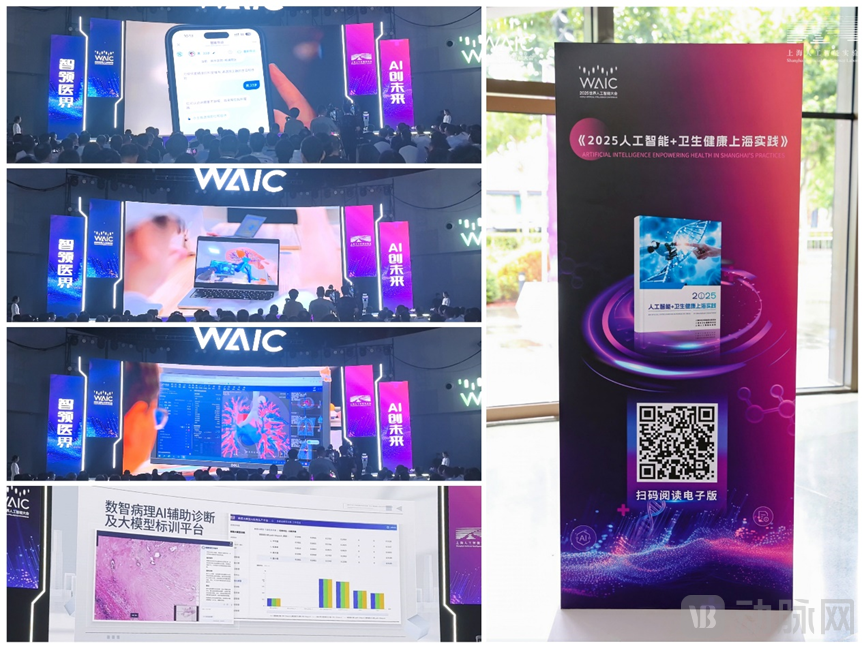
Shanghai Releases Case Compendium on AI Development in Healthcare: Five Key Scenarios from SenseTime Medical’s Collaborations with Leading Shanghai Hospitals Selected
Xinhua Hospital Affiliated to Shanghai Jiao Tong University School of MedicineBy partnering with SenseTime Medical, we are building a new smart service model driven by large language models (LLMs). At the strategic planning level, we are exploring a hospital architecture based on “digital twins + AI large models.” In terms of patient experience, we have launched services such as the “AI General Practitioner for Children” and “Intelligent Triage.” For clinical support, we have established a multi-disease AI-assisted diagnosis and treatment system. Meanwhile, in the research domain, we leverage an agent platform to promote the integration of medical education and research translation, thereby supporting regional collaborative healthcare.
Ruijin Hospital, Shanghai Jiao Tong University School of MedicineIt has engaged in in-depth cooperation with SenseTime Medical in the construction of an imaging cloud platform, leveraging multimodal medical foundation models to build a unified AI platform that enables end-to-end analysis and management of data across different modalities. Furthermore, it has achieved pathological data interoperability between its Northern Campus and Hainan Branch, establishing an efficient digital pathology system.
Shanghai Pulmonary HospitalThe pathology large-model AI application production platform and the pathology AI-assisted diagnostic system, developed by SenseTime Medical, have been launched. These systems enhance image review efficiency and initial screening accuracy, while reducing report generation time for certain diseases by nearly 50%, thereby providing key technical support for the closed-loop research and development of specialized pathology models.
During the report-sharing session of this forum,Distinguished Professor, Department of Computer Science, Rutgers University Dimitris N. MetaxasHighly praised SenseTime Medical’s recent implementation achievements, demonstrating how technological breakthroughs are translated into clinical value and scaled for broader adoption by integrating multimodal models with AI agent applications.
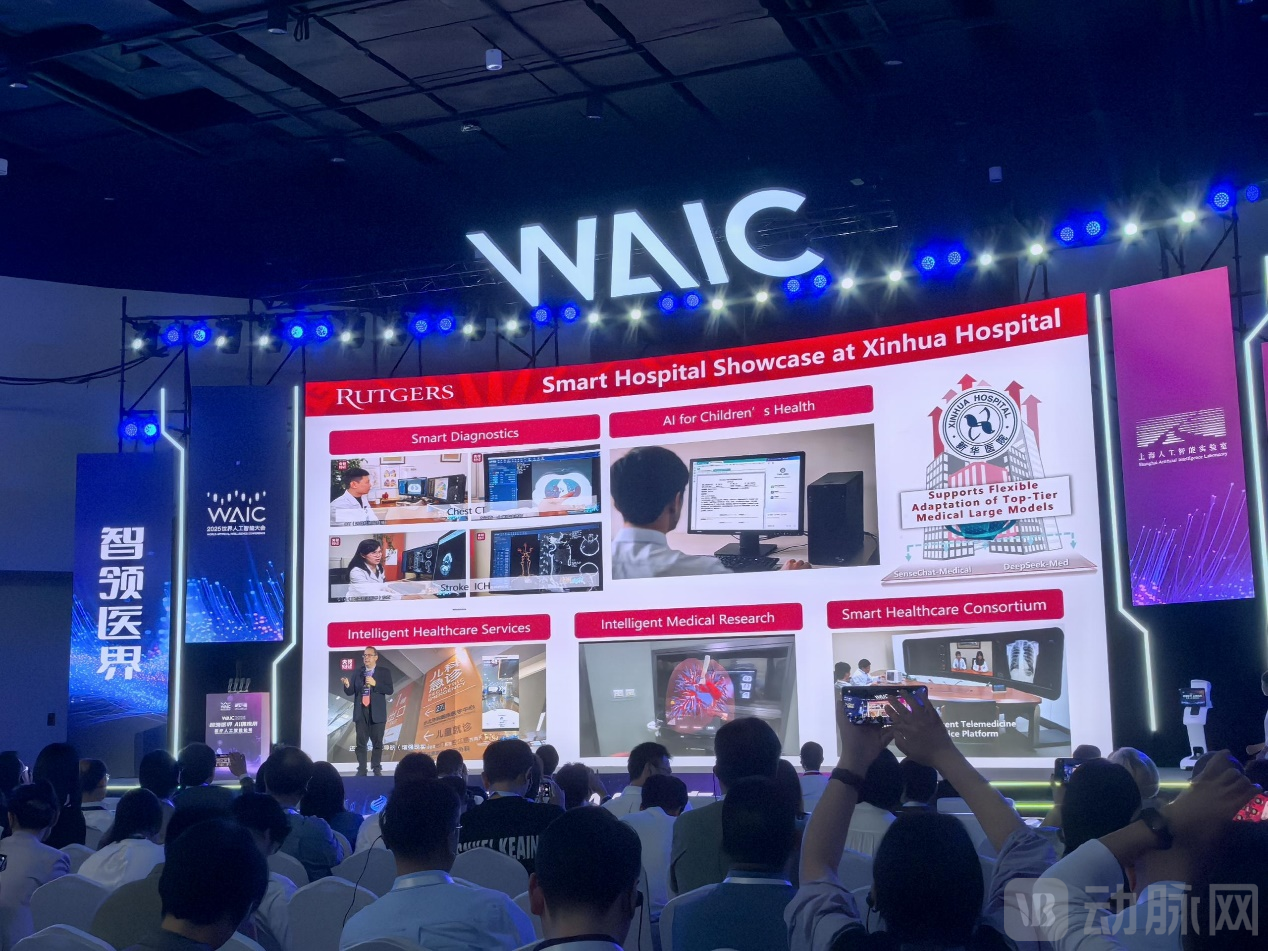
Dimitris N. Metaxas, Distinguished Professor in the Department of Computer Science at Rutgers University, has generously praised the implementation of AI in healthcare in Shanghai in recent years
Highlighting the Application Value of the “Chinese Solution” in Medical AI
Currently, SenseTime Healthcare’s nearly 100 AI-powered clinical decision support tools, patient lifecycle service systems, and intelligent agents for medical research have been deeply integrated and deployed in real-world scenarios. These solutions not only empower multiple leading Grade A tertiary hospitals in Shanghai but also drive comprehensive AI-enabled digital and intelligent transformation across China.
InBeijing Tsinghua Changgung Hospital, the team jointly developed “IDEAL,” a multimodal intelligent agent for precision diagnosis and treatment of liver cancer, enabling AI-assisted end-to-end support for liver surgery from preoperative planning to postoperative follow-up. InThe First Affiliated Hospital of Zhengzhou University, establish three major remote intelligent diagnostic platforms for imaging, pathology, and electrocardiography to meet the diagnosis and treatment needs of characteristic diseases at the primary care level and promote the decentralization of medical resources.
AtQingdao West Coast New Area, SenseTime assisted in building an AI-powered medical service platform, covering five hospitals within the healthcare consortium and over 20 primary care institutions, thereby facilitating convenient and intelligent upgrades to diagnosis and treatment. InChangzhou No. 1 People's Hospital, the two parties established a strategic partnership in 2024, deploying various AI applications such as digital and intelligent pathology, AI-assisted imaging, and preoperative planning for liver and thoracic procedures, thereby setting a benchmark for the smart transformation of prefecture-level hospitals.
At the industry-academia-research expert roundtable session of this forum, centered on the theme of “Building an Innovative Ecosystem for Medical AI,”Zhou Jun, President of Changzhou First People's HospitalHe also affirmed the collaboration at the conference, stating, “Leveraging SenseTime’s AI technology, we have launched many pioneering applications, such as AI-assisted imaging and digital-intelligent pathology. By continuously expanding functionalities and optimizing performance, we have significantly improved the experience of medical workflows, enhanced efficiency, and optimized the paradigm of medical services. These collaborations hold profound significance and will continue to expand into new scenarios.”
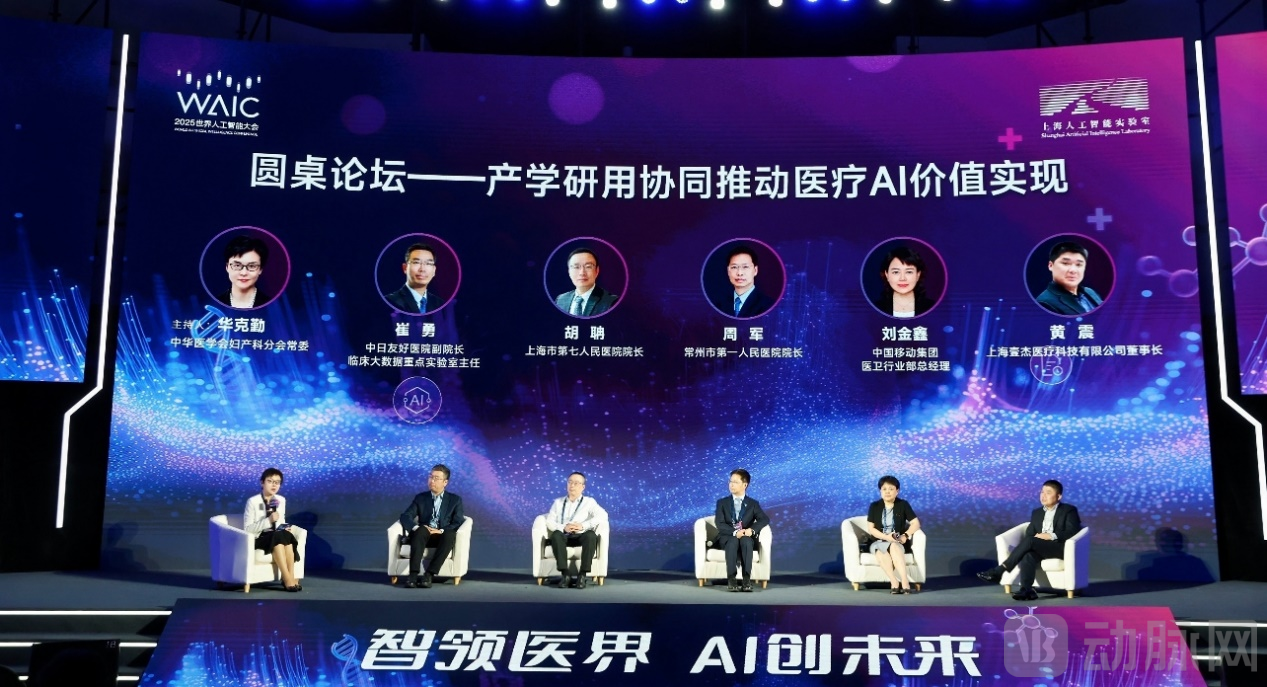
Zhou Jun, President of Changzhou No. 1 People's Hospital, Invited to Join Roundtable Discussion on Changzhou No. 1 People's Hospital’s Path to Smart Healthcare Development
It is worth mentioning that SenseCare®Smart hospital solutions have also expanded into overseas markets. Since 2024, Singapore’s IHH Healthcare Group has deployed SenseTime’s AI system for pulmonary nodule detection, supporting the entire workflow of intelligent detection, classification, and follow-up. This initiative provides a replicable transformation model for international private healthcare systems. As the sole medical case selected, it was featured in the case compendium “China’s Intelligence, Benefiting the World (2025)” at the opening ceremony of the World Artificial Intelligence Conference (WAIC), serving as a paradigm of China’s AI fostering global healthcare cooperation.
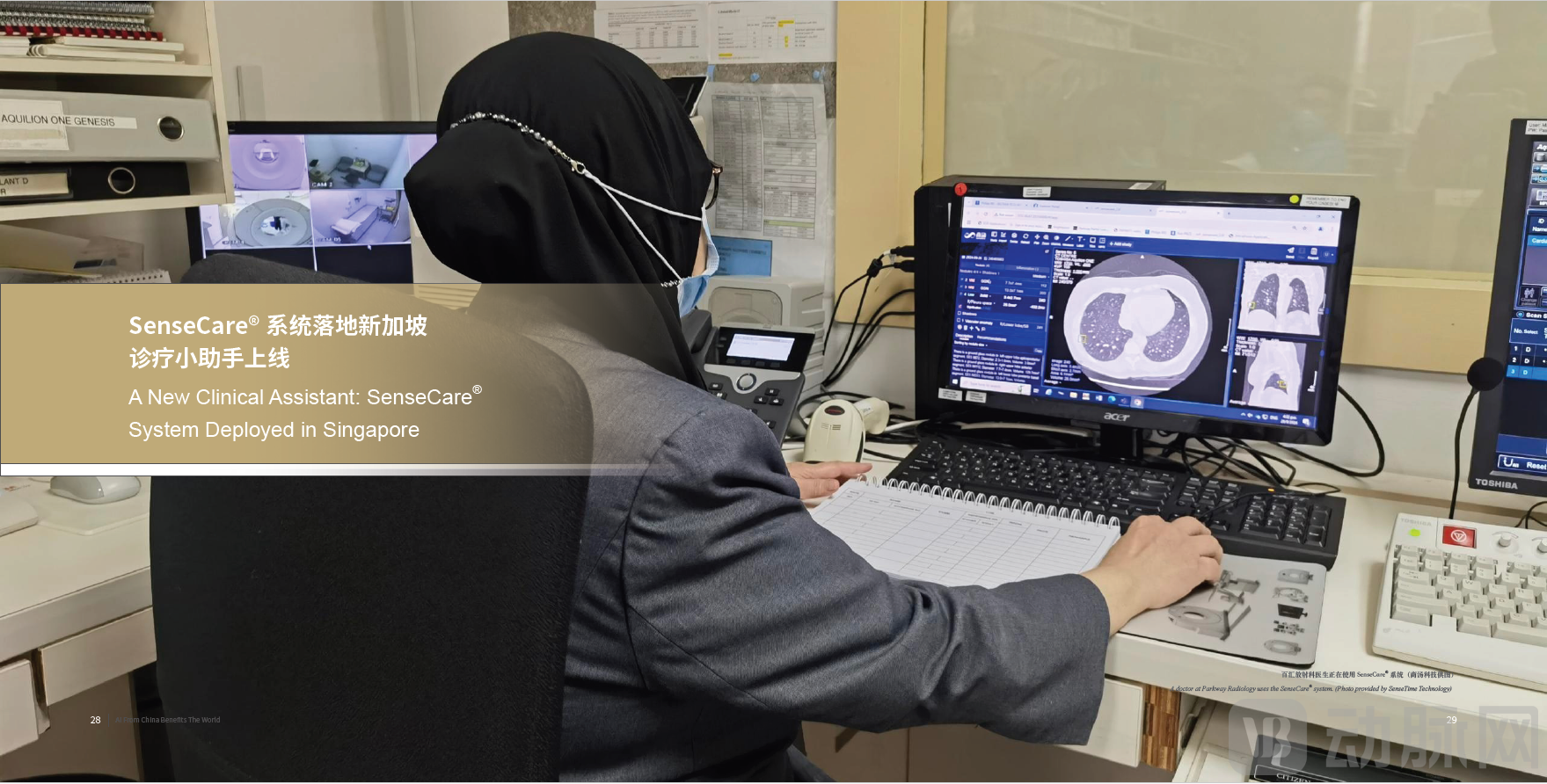
SenseCare®Deployed at Singapore’s IHH Healthcare, it was featured as a benchmark case of “AI + Healthcare” in the case compendium China Intelligence, Benefiting the World (2025) at the opening ceremony of the World Artificial Intelligence Conference (WAIC).
Dayi AI Agent + Multimodal Infrastructure
The comprehensive implementation of SenseTime’s medical solutions is attributed to its continuous deep engagement in the technology sector and the middle-platform capabilities provided by two innovatively constructed platforms. Centered on “hospital-led independent development,” the “Dayi Intelligent Agent Development Platform” enables hospitals to customize intelligent agent pathways based on their own disciplinary strengths. The platform integrates functions such as no-code intelligent agent orchestration, private knowledge base construction, unified multi-model scheduling, and cross-role collaboration. It supports seamless integration of self-developed Dayi large models with mainstream general-purpose models, thereby forming a scalable intelligent agent ecosystem.
Meanwhile, the multimodal foundation model training infrastructure focuses on modalities such as medical imaging and pathology images, supporting workflows including data preprocessing, model training, intelligent annotation, and research management. By integrating medical algorithm libraries with deep learning frameworks, and leveraging distributed training alongside a closed-loop research workflow, it strengthens the “foundational productivity” of healthcare AI.
The two major middle platforms form a closed-loop structure of “data–model–scenario–industry,” which not only enhances the deployment efficiency and adaptability of medical AI, but also grants healthcare institutions greater autonomy, truly enabling the transition from “tool-level AI” to “productivity-level AI.”
Promoting the Inclusive Development of Medical AI
Starting from Shanghai, serving China, and going global, SenseTime Healthcare is accelerating the construction of smart hospitals with a “systemic reconstruction” approach. In the future, SenseTime will continue to deepen its multimodal agent technologies, driving AI to transcend geographical, institutional, and resource barriers, and building an inclusive, efficient, and precise new healthcare system.
Under the guidance of the national strategy for “AI+,” SenseTime Medical will continue to drive medical AI from “application breakthroughs” toward “industry co-creation,” leveraging its solid technological foundation and extensive scenario-based experience to continuously inject new momentum into the high-quality development of the healthcare sector.