Pharma Digital Growth Report 2025: Patient-Centric Strategies Leveraging Content and Services to Forge a Second Growth Curve
Amid the broader trend of digital transformation, digital marketing in the pharmaceutical industry is no longer a priority initiative for leading companies alone, but has become a standard practice for all pharmaceutical enterprises.
As the information gap between doctors and patients narrows, health awareness among patients strengthens, and their engagement in health solutions increases, the importance of patient-centric digital marketing continues to rise. Patient education has evolved from an optional extra into an essential component.
The market size of digital marketing in the pharmaceutical industry has been steadily increasing, but capital interest has plummeted since 2022. This disparity may primarily stem from differing definitions of digital marketing and approaches to quantifying its value.
Narrowly defined digital marketing is merely the online migration of traditional marketing, which constitutes only a small fraction of digital marketing. True digital marketing is a pharmaceutical sales growth service that serves the entire post-launch lifecycle of drugs, spans the full spectrum of medical services, and organically integrates online and offline channels driven by data.
As the healthcare service chain becomes increasingly comprehensive, marketing touchpoints are multiplying. Each stage of the marketing process must be tightly integrated to collectively achieve the ultimate goal of driving growth. Therefore, marketing services require refined management supported by more granular quantitative metrics, rather than directly linking every activity to sales volume, thereby avoiding the misconception that investments yield no returns.
In the realm of tool-based products, pure information systems have become a red ocean market, with industry consolidation and dominance by leading players becoming evident. However, there remains competitive potential in digital performance; the future direction of competition lies in integrating systems with artificial intelligence applications and operational services.
In the service-oriented product sector, there is a scarcity of health content that genuinely resonates with B2C consumers’ minds, necessitating a stronger user perspective. Meanwhile, professional health management services are in short supply and require a more user-centric approach.
Solution-oriented products represent the most anticipated direction for future development. This sector demands that marketing enterprises possess a deeper understanding of physicians and end-users than pharmaceutical companies do, testing their capabilities in refined management, resource integration, AI convergence, and innovative thinking. There is an urgent need for more players to enter this space.
Overall, digital marketing is not merely traditional marketing plus digital tools; rather, it represents a novel marketing paradigm rooted in the digital realm. A company’s capabilities in data collection, application, and assetization will forge its core competitive advantage.
>>>>
Digital Marketing Market Size Steadily Grows
According to the annual “Statistical Analysis Report on the Operation of the Drug Circulation Industry” released by the Ministry of Commerce, China’s pharmaceutical market size has been steadily rising, growing at an average annual rate exceeding RMB 100 billion.
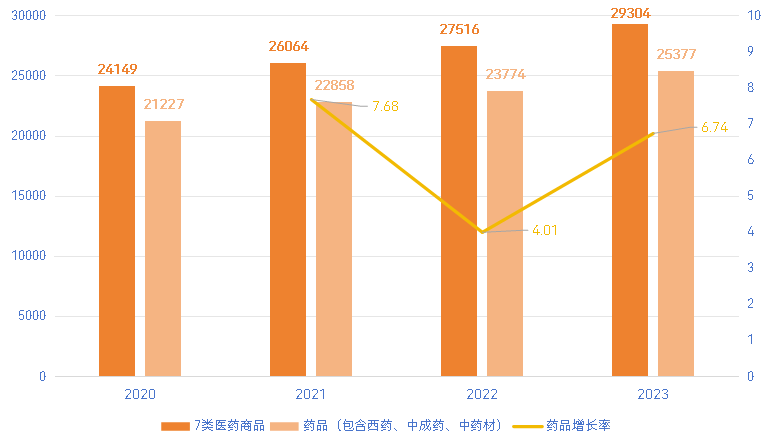
Total Sales and Growth Rate of Pharmaceutical Products in China (2020–2023) (Unit: RMB 100 Million; Source: Official Website of the Ministry of Commerce)
An analysis of the financial reports of leading domestic pharmaceutical companies and multinational corporations (MNCs) from 2020 to 2024 reveals that pharmaceutical sales expenses have generally trended upward, with an average growth rate exceeding that of the overall pharmaceutical market sales volume.
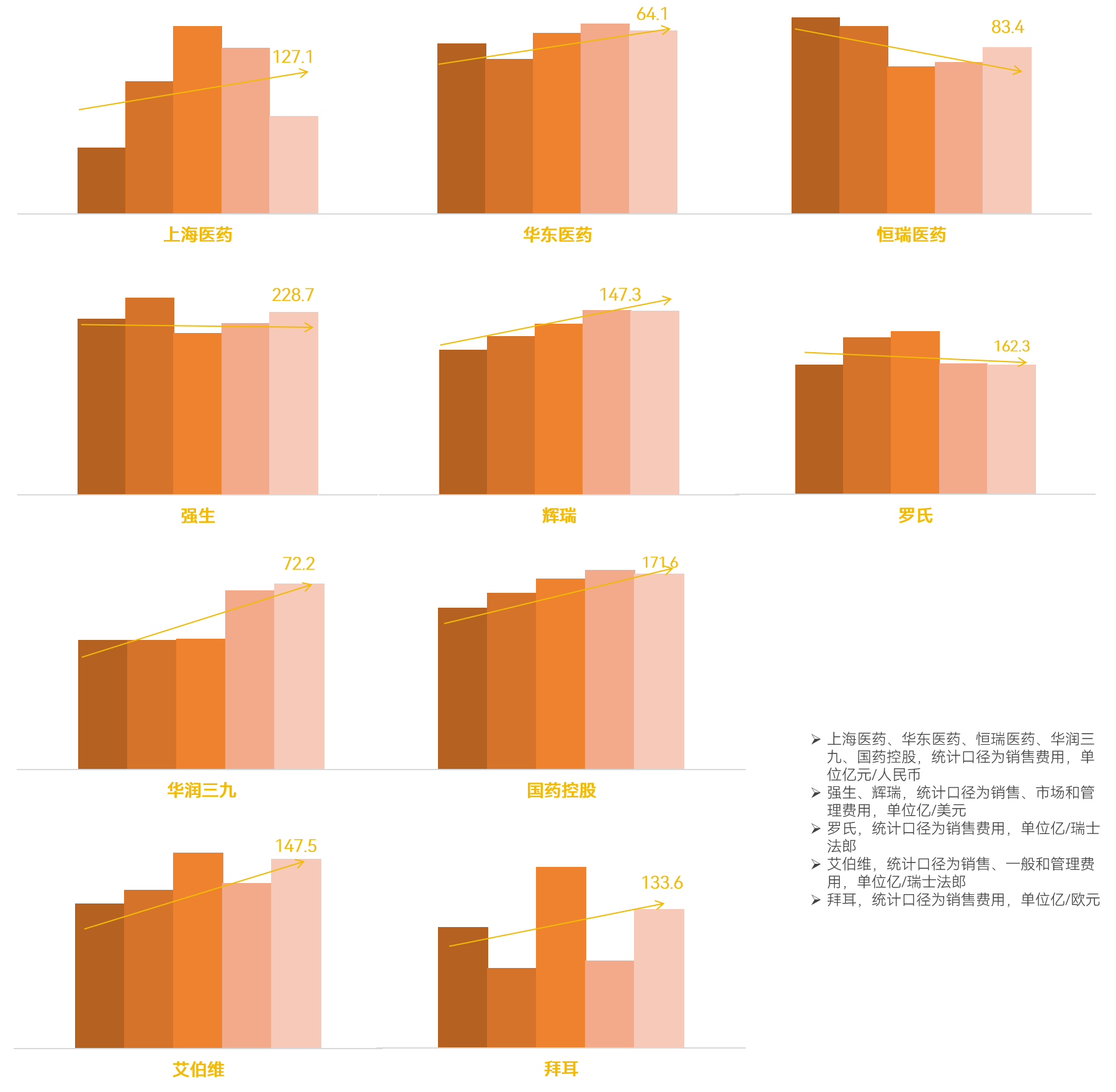
Trends in Sales Expenses of Pharmaceutical Companies from 2020 to 2024 (Data Source: Annual Reports of Each Company)
According to data from the report “The State Of Omnichannel In Biopharma 2024,” interviews with 96 biopharmaceutical company employees revealed that since 2019, corporate omnichannel digital marketing budgets have continued to increase, with digital marketing accounting for a growing share of total marketing expenditures, until a decline occurred in 2024, returning to 2020 levels.
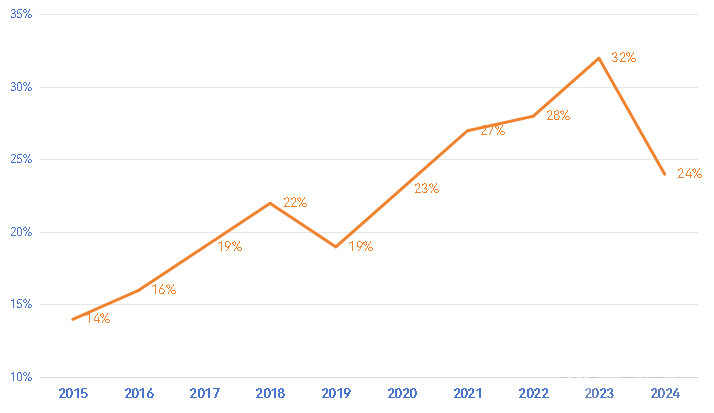
Trend in the Proportion of Digital Marketing Budgets for Biopharmaceutical Companies, 2015–2024 (Data Source: iYi Guan Shuzhi Marketing Research Institute)
From this, it can be roughly estimated that the overall market size of digital marketing in China is steadily growing. Taking biopharmaceutical companies as an example, even though the proportion of digital marketing expenses decreased in 2024, it still accounted for one-quarter of the total marketing expenditure.
The Capital Market's Enthusiasm for Digital Marketing Has Plummeted
We extracted historical financing data for companies related to digital marketing services from the VBInsight database and found that since the market boom in 2015, the number of investment deals in the pharmaceutical digital marketing sector remained at around 20 per year for seven consecutive years, before experiencing a precipitous decline in 2022.
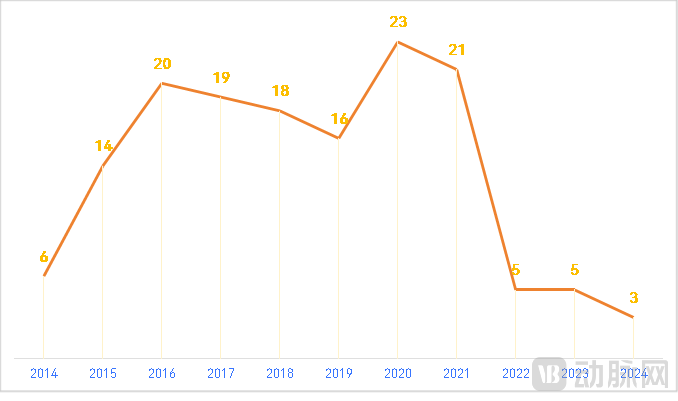
Trend in the Number of Investment Deals in the Pharmaceutical Digital Marketing Sector, 2014–2024 (Number of Deals) (Data Source: VBInsight)
In 2024, the three relevant financing events were the IPOs of Health Road, Taimei Medical Technology, and Fangzhou Jianke. According to data from their prospectuses, digital marketing accounted for 9.1% of Health Road’s revenue and 3.6% of Fangzhou Jianke’s revenue (based on the latest available year, 2023, as reported in the prospectuses). Furthermore, in 2025, as of June 25, no new investment or financing activities have been recorded in the pharmaceutical digital marketing sector.
Vague Definitions and Unquantified Value Are Key Bottlenecks in Digital Marketing
Against the backdrop of expanding market size and multiple factors driving the development of digital marketing, the future prospects of digital marketing have not matched the corresponding level of market optimism. This may be attributed to the ambiguous definition of digital marketing and the failure to reasonably quantify its value.
A narrow interpretation of digital marketing views it merely as the online migration of pharmaceutical sales representatives’ activities, or limits its scope to in-hospital marketing processes centered on academic promotion to physicians. Under this definition, volume-based procurement (VBP) and national reimbursement drug list (NRDL) negotiations would inevitably cause market turbulence, which is a significant factor undermining market confidence. However, digital marketing in a broader sense—or what should be considered true pharmaceutical digital marketing—ought to be defined as data-driven omnichannel marketing services. Such services should include:
1. Doctor-Patient Collaboration: Effectively reach and engage both doctors and patients.
2. End-to-End Services: Providing comprehensive support throughout the post-marketing lifecycle of pharmaceuticals, including scientific research, public science education, screening, clinical consultation, prescription, medication guidance, and health management.
3. Omnichannel Integration: It is necessary to integrate all online and offline channels of healthcare services, including offline clinical services, chain pharmacies, chronic disease management institutions, and primary care facilities; as well as online internet consultation platforms and pharmaceutical e-commerce.
4. Informatization: Establish robust IT infrastructure across all channels, serving not only as an output conduit for information but, more importantly, as a channel for data collection.
5. Digitalization: Based on drug characteristics and lifecycle, leverage model algorithms to determine the optimal omnichannel marketing mix and track marketing effectiveness through appropriate data dimensions.
6. Intelligence: Implement personalized marketing services driven by data to address the distinct needs of various target audiences, such as physicians and patients.
Another bottleneck hindering the value assessment of digital marketing may be its “quantifiability.”
Achieving ultimate growth in pharmaceutical sales is the aggregate result of effective information transmission across multiple touchpoints. Therefore, to quantify the effectiveness and value of digital marketing, each stage requires matching assessments with finer granularity, rather than directly linking all marketing activities to final sales volume. Such a direct linkage would inevitably lead to difficulties in quantification, thereby fostering misconceptions about ineffective investment.
In the past, due to the limited channels through which physicians received information and the underdeveloped state of health IT infrastructure, evaluating the effectiveness of academic promotion directly based on prescription volume was somewhat reasonable, albeit a matter of necessity. Currently, however, physicians have access to diverse information sources, and advancements in health IT now enable more granular assessment methods. It is therefore time to reevaluate and establish more rational performance metrics for each stage of pharmaceutical digital marketing.
With a comprehensive healthcare service chain, digital marketing has become an essential requirement.
In the past, limited medical resources drove patients directly to urban hospitals, where a medical encounter typically concluded with the dispensing of medication. The pharmaceutical distribution channel was also relatively simple, predominantly relying on a single pathway through hospitals. Furthermore, drug selection was not extensive.
In this context, it is reasonable to evaluate the effectiveness of pharmaceutical sales representatives, who serve as a professional bridge for drug information dissemination, based on final sales volume. Furthermore, in an era lacking an informational foundation and relevant data collection methods to assess the effectiveness of academic promotion, evaluating sales volume was a “second-best” option.
Today, as the healthcare service value chain becomes more comprehensive and marketing touchpoints multiply exponentially, ensuring incremental growth requires effective and efficient synergy across all links of omnichannel marketing. Given the numerous service stages and scenarios, traditional labor-intensive models are no longer adequate, making digital solutions an imperative for omnichannel marketing.
Furthermore, under the broader trend of digitalization, the rapid development and maturation of short-form video have disruptively reconstructed how people access information. Coupled with the “physical isolation” imposed by the pandemic, which has reshaped public perceptions of digital life, both patients and healthcare providers have now shifted their information-seeking habits online. Consequently, online channels have naturally become essential marketing necessities for all industry players, requiring not only strategic deployment but also effective integration with offline channels.
Therefore, in today’s era of a well-established healthcare service chain, digital pharmaceutical marketing is no longer a pioneering initiative undertaken by advanced enterprises, but an essential necessity driven by the demands of healthcare services.Zhang Jingchuan, Head of Marketing at Huahong Pharmaceutical, stated that digital marketing currently presents not only opportunities but also significant challenges, with outcomes likely to polarize into two extremes. The expanding healthcare service ecosystem enables digital marketing to reach consumers more comprehensively; however, it has also increased the complexity of information received by consumers, raising the threshold for comprehension and making it more difficult for companies to stand out.
Infrastructure is gradually being improved, requiring further meticulous refinement.
The industry’s growth has created opportunities for digital marketing, highlighting its essential nature; however, significant challenges have also emerged, requiring robust infrastructure and refined management.
As marketing touchpoints multiply, the volume of information requiring collection and dissemination naturally increases. Effective information output across these touchpoints depends on a thorough understanding of the target audience. Following this logic, collecting user data and building user profiles hold greater importance in digital marketing than the mere dissemination of professional information.
Once the data infrastructure is in place, the focus shifts to refined management. To ensure that each stage is seamlessly integrated to deliver final marketing outcomes, it is necessary to dynamically adjust parameters and continuously test algorithms. This requires not only extensive accumulation of project experience but also a systematic summary of strategic approaches, balancing the unique characteristics and commonalities of successful marketing cases.
This process represents the ultimate embodiment of “value quantification” mentioned in the previous chapter. Such meticulous refinement is crucial to the healthy development of both supply and demand sides, as well as the entire digital marketing market.
Only when both supply and demand sides reach a consensus on the expected outcomes at each marketing stage and the positive correlation between these outcomes and final sales can the industry shift away from the conventional expectation of directly linking individual marketing activities to final sales through causal relationships. This will help dispel the misconception of disproportionate return on investment and promote the healthy development of the industry.
Currently, the numerous products in this sector can be broadly categorized into three types: tool-based, service-based, and solution-based.
Tool-based Products: The Informatization Market Has Become a Red Ocean; Digitalization Plus Operations Is the Prevailing Trend
Tool-based products primarily provide software and hardware solutions centered on information technology, such as CRM systems, online physician operation platforms, virtual representative systems, online patient management systems, and academic live-video streaming systems.
Such products provide digital tools for traditional pharmaceutical marketing, migrating processes like academic promotion, user management, and workflow management online. This breaks through time and geographical constraints, leading to significant development and application during the pandemic. We define this capability as “digital functionality.”
Currently, the information technology functionality segment of such products has become a relatively uncontested market space. With product performance being largely homogeneous across vendors, the industry is witnessing a trend toward price wars, and a "winner-takes-all" effect is gradually emerging. However, significant unmet needs remain in the digital functionality sector. The key challenges for this segment lie in how to accumulate more valuable data and leverage it effectively to extract insights that empower digital marketing—enabling capabilities beyond the mere digitization of traditional marketing efforts.
As Li Sirui, Head of Digital Marketing at Tasly, noted, software infrastructure such as ad delivery systems, user tagging systems, and CRM platforms is relatively mature. Large enterprises respond and deliver services more quickly, giving them a competitive edge; consequently, they offer greater cost-effectiveness in partnerships and are often preferred collaborators. However, small startups still hold advantages in intelligent applications like AI plug-ins, thanks to their innovation and uniqueness.
Service-Oriented Products: Scarcity of Professional Content and Services
Service-oriented products build upon tool-based offerings to provide advanced digital marketing services centered around specific medical service segments or scenarios. Examples include public health education (e.g., physician IP development, online patient education), patient health management services (e.g., chronic disease management, post-operative care), pharmaceutical services (involving participants such as DTP pharmacies, pharmaceutical e-commerce platforms, and brick-and-mortar pharmacies), diagnosis and treatment services (involving participants such as internet hospitals and smart healthcare service providers), and professional content providers.
Content is an indispensable element across all stages. Regardless of the specific service stage, professional medication-related content and associated medical information are among the core components of digital pharmaceutical marketing.
Patients’ focal points and reading logic regarding health information differ fundamentally from those of physician experts. While physicians focus on pharmacoeconomic value and adverse reactions, patients are often less concerned with the drug itself and more interested in how to achieve a faster recovery. Therefore, merely providing an “accessible translation” of specialized pharmaceutical knowledge—while maintaining a high level of professional rigor—may yield suboptimal effectiveness in communication.
Professional health content that is created from the user’s perspective, with greater empathy for their viewpoint, and can truly resonate with them remains scarce in the industry.
Research has revealed that, in addition to content, professional health management services for patients are also scarce within the industry. In March 2025, Hengrui Medicine, in partnership with the Rehabilitation Branch of the China Anti-Cancer Association, launched the “Beyond Limits—Cancer Patient Rehabilitation Rally.” The initiative aims to identify professional patient management partners in the fields of prostate cancer, breast cancer, and hematologic malignancies, with the goal of promoting guideline-concordant, adequate-dose and full-course treatment for patients, continuously optimizing treatment regimens, and building an innovative and more effective patient management ecosystem.
High labor costs and the need for cross-functional team collaboration have long set a high barrier to entry in health management. Typically, health management requires a multi-to-one, long-term, real-time, companion-style service model involving physicians, dietitians, health managers, and even sports rehabilitation therapists and psychiatrists. Furthermore, the integration of convenient consultation and pharmaceutical services adds another layer of complexity, testing the resource integration capabilities of management teams. This may explain why such comprehensive health management services remain scarce.
However, we have also observed that digitally savvy marketing firms are actively positioning themselves to prioritize patient-centric health management services. In recent years, significant progress has been made with the support of artificial intelligence (AI); for instance, digital physicians and AI health managers have provided substantial assistance. Beyond directly reducing labor costs, these technologies have enhanced the standardization of health management services and established a stronger foundation for data collection and analysis.
For example, Huimei Digital Technology has launched AI agents for specialized disease case managers in the fields of oncology (covering all cancer types, including lung, breast, liver, and hematologic malignancies), central nervous system disorders, respiratory diseases, and immunology. These AI agents possess not only pharmaceutical knowledge but also deep expertise in disease management and health care. Leveraging patients’ health data and behavioral preferences, the agents deliver personalized health information and proactively provide tailored health guidance—such as proactive follow-ups and real-time responses—thereby helping to streamline medical processes and optimize treatment plans. Empowered by these AI agents, nurses and case managers can conduct patient management more flexibly and efficiently, significantly improving adherence and providing greater emotional support, ultimately delivering a better management experience and improved health outcomes for patients.
The core mission of patient-centered professional health management services in digital marketing is to assist physicians and help patients identify the most effective solutions, ultimately fulfilling the mandate of achieving optimal therapeutic outcomes for patients.
Driven by this mission, we have also observed the emergence of specialized patient service management entities from non-pharmaceutical sectors entering the digital pharmaceutical marketing space with similar intentions. For instance, Shangyong Technology, which initially built its reputation on facilitating intelligent underwriting for commercial insurance, has developed a value-based healthcare service model combining “medical cost advancement and health management” to better serve patients during claims processing. This approach not only advances treatment costs for oncology patients but also provides professional whole-course health management. The medical cost advancement service has earned Shangyong Technology significant trust and reliance from patients, resulting in highly comprehensive medical information data throughout the entire course of disease management. Leveraging its inherent strength in data analytics, Shangyong Technology utilizes complete and authentic health management data, combined with specialized disease research, to drive data-enabled real-time identification of health risks, proactive interventions, and recommendations for optimizing treatment plans. To date, Shangyong Technology has provided cost-advancement services to nearly 40,000 individuals and delivered professional health management services to over 1,000 patients with hematologic disorders.
In the future, as pharmaceutical marketing increasingly returns to its essence of “efficiently and effectively linking rational treatment regimens with patients,” the importance of patient-centered health management services will become even more prominent, and their scarcity will further intensify. We look forward to more cross-sector emerging forces sharing the same original aspiration joining us to jointly promote the healthy development of the field.
Solution: Demand is rising, pending the participation of more stakeholders
Solution-based products require enterprises to have a deeper understanding of their users. Building on the two aforementioned product types, solution-based products provide comprehensive digital marketing strategies for relevant products and deliver final results.
Our research reveals that, in the past, pharmaceutical companies’ marketing or market departments typically formulated clear marketing strategies and then engaged partner firms for execution. With the rapid development of the industry and the swift transformation of marketing models, pharmaceutical companies are not only expecting partners to efficiently execute their proprietary marketing plans but also increasingly demanding comprehensive, end-to-end solutions.
Such expectations are well-founded. Against the backdrop of rapidly advancing digitalization, online medical services are expanding quickly and continuously innovating. Companies with a digital health DNA often hold a competitive advantage in deploying marketing strategies tailored to online scenarios and integrating online and offline channels. Consequently, these companies are better positioned to develop innovative and effective digital marketing solutions.
JD Health has been consistently developing innovative digital marketing models with remarkable results. For novel and specialty drugs, JD Health leverages online platforms such as its internet hospital and pharmaceutical e-commerce channels. Empowered by “AI Jingyi” (including AI digital avatars of specialist physicians, AI pharmacists, AI nutritionists, and AI psychological counselors), it provides patient-centric, end-to-end digital pharmaceutical marketing services covering academic promotion, online consultations, pharmacist counseling, patient management, and creative marketing. In 2024, nearly 30 novel and specialty drugs developed for pharmaceutical companies such as Eli Lilly, Daiichi Sankyo Co., Ltd., and Novartis were launched online for the first time. Compared with traditional hospital admission pathways, this approach significantly shortened the time required for patients to access these novel and specialty drugs, thereby enhancing patient experience.
Pharmaceutical companies’ expectations for comprehensive solutions present both opportunities and challenges for digital marketing firms, attracting an increasing number of enterprises to enter this arena by leveraging their respective strengths. While comprehensive solutions can deliver greater value, they also require providers to possess a deeper understanding of physicians and patients than pharmaceutical companies themselves, and to efficiently integrate all stakeholders involved in omnichannel digital marketing.
For example, leveraging its extensive base of doctors and patients accumulated over many years, along with a solid foundation in information technology, Health Road has constructed a clear and traceable closed-loop marketing conversion system. This is achieved through deep insights into the pain points of various stakeholders, including clinical providers, patients, and pharmaceutical companies, by utilizing four core pathways (clinical pathway, pharmacy terminal pathway, third-terminal pathway, and traffic platform pathway) and two hub-type central carriers (Digital Specialty Alliance and Digital Disease-Specific Center). Over the years, relying on this efficient marketing pathway system, the company has integrated its core strengths with high-quality industry resources to continuously provide pharmaceutical companies with one-stop digital marketing services featuring higher returns through refined operational management. This approach not only improves conversion efficiency and product sales but also achieves multi-party win-win outcomes, such as enhanced clinical value and optimized patient experience. According to its financial reports, by the end of 2024, Health Road had partnered with 570 enterprises, providing them with one-stop digital marketing services.
Overall, the digital marketing industry looks forward to greater innovation in the future, deepening the digital capabilities of tool-based digital marketing products, enhancing content services and patient management for service-oriented offerings, and developing more effective and predictable comprehensive solution-based products.
The above is an excerpt from the report. The overall framework of the report is as follows:
Chapter 1: A Steadily Growing Market Urgently Needs to Break Through the Bottleneck of “Value Quantification”
1.1 Steady Growth in the Digital Marketing Market Size
1.2 Capital Market Enthusiasm for Digital Marketing Plummets Sharply
1.3 Vague Definitions and Unquantified Value Are Key Bottlenecks in Digital Marketing
Chapter 2: The Improvement of the Medical Service Chain Presents Both Opportunities and Challenges for Digital Marketing
2.1 A Comprehensive Healthcare Service Chain Makes Digital Marketing an Essential Need
2.2 Break Away from the Traditional Mindset of Moving Marketing Online: Digital Marketing Requires a Fresh, Integrated Strategy
2.3 Gradual Improvement of Infrastructure Requires Further Refinement
Chapter 3: Digital Marketing Requires Multi-Party Collaboration, Urgently Needs More Enterprises to Join
3.1 Tool-based Products: Informatization Has Become a Red Ocean; Digitalization + Operations Is the Prevailing Trend
3.2 Service-Oriented Products: Scarcity of Professional Content and Services
3.3 Solution: Demand on the Rise, Awaiting More Participants to Join
Chapter 4 Future Trends
4.1 Patient-Centricity Emerges as the Second Major Theme in Digital Marketing
4.2 Leveraging Data Assets Is the Core Competitiveness of Digital Marketing
4.3 Four Key Strategies to Accelerate the Development of Digital Marketing
Chapter 5 Corporate Case Studies
5.1 Health Road: Four Pathways and Two Centers—Building a New Model for Marketing Growth with AI
5.2 Shangyong Technology – Leveraging Technology, Data, and Payments to Innovate a Win-Win Closed Loop for “Providers–Patients–Payers”
5.3 JD Health: Large Models Empower the Upgrade of a Full-Cycle, Closed-Loop Digital Marketing Ecosystem
Special Acknowledgments (in order of research interviews):
Mr. Wang Jianfeng, Senior Manager of Digital Innovation in Oncology at Hengrui Medicine; Mr. Li Sirui, Assistant to the Chairman of the Board and Head of Digital Marketing at Tasly Health Industry Investment Group; Mr. Chen Jing, Executive Director and Senior Vice President of Health Road Group; Mr. Zhang Jingchuan, General Manager of the Marketing Center at Huahong Pharmaceutical Group; Ms. Zhang Xinyan, Founder and CEO of Huimei Digital Technology; Ms. Xing Jing, Founder and CEO of Shangyong Technology; Mr. Zhang Liang, Head of Solutions, Digital Marketing Department, JD Health.
Please scan the QR code to add our assistant and obtain the full report. If you have already added us, please initiate your inquiry proactively.