

Allergy Giant Launches AI Specialist Agent to Transform Whole-Cycle Allergy Management for Over 250 Million People in China
“The number of allergy sufferers in China has exceeded250 million: User demand is shifting from passive treatment to proactive management.”
Dr. Qin Yao, Chief Technology Officer of Beijing First Biotechnology Group Co., Ltd. (hereinafter referred to as “First Bio Group”), pointed out that the incidence of allergic diseases in China continues to rise. International guidelines emphasize a “four-in-one” approach to the management of allergic diseases, comprising patient education, environmental control, symptomatic pharmacotherapy, and immunotherapy (desensitization). However, in clinical practice, greater emphasis is placed on symptomatic pharmacotherapy and immunotherapy, while insufficient attention is paid to patient education and environmental control. Meanwhile, current treatment regimens are predominantly pharmacological and lack diversity, with a significant gap in patient health education. This constitutes the core challenge facing clinical practice.
On the other hand, there is a scarcity of specialized allergy care resources; over 90% of hospitals across China do not have dedicated departments of allergy or immunology, making allergy diagnosis highly dependent on physicians’ clinical experience and entailing a high risk of misdiagnosis.
As a company with nearly 70 years of deep expertise in the field of allergy, First Bio Group has established end-to-end capabilities encompassing “diagnostic reagents + desensitization drugs + specialized clinic chains (Junzhen Medical).” In this initiative, First Bio Group has partnered with Junzhen Medical, Liubo Intelligence (a pioneer in allergy big data and AI algorithm R&D), and multiple experts from the Allergy Departments of Grade A tertiary hospitals to launchThe AI-powered allergy agent “Tu Xiaomin” focuses on full-cycle allergy management encompassing “prevention, diagnosis, intervention, and rehabilitation,” aiming to establish itself as the preferred intelligent management platform for individuals with allergies by providing personalized, precision solutions.

AI Allergy Agent “Tu Xiaomin”: Long-press to Scan and Experience
Clinical experience of physicians + big data algorithms + authoritative guidelines,
Simulating the Clinical Reasoning of Allergy Specialists to Make High-Quality Allergy Diagnosis and Treatment Accessible
Tu Xiaomin is committed to becoming the preferred intelligent management platform for individuals with allergies and pan-allergic conditions. Positioned as an AI-powered allergic disease specialist assistant, it aims to deliver an intelligent, closed-loop service covering the entire cycle of “prevention → symptom tracking → allergy screening → personalized recommendations → intervention → outcome monitoring → continuous management.” By deeply simulating the clinical reasoning of specialist physicians, it provides users with personalized services ranging from self-assessment of symptoms and etiological analysis to recommended diagnostic and treatment plans.
During the prevention phase, Tu Xiaomin provides science-based education on common allergy triggers and offers preventive guidance. During acute allergic episodes, it conducts stratified analysis based on user-reported symptoms and delivers professional recommendations along with precise referral guidance. In the allergy management phase, it enables long-term tracking of symptom dynamics and dynamically adjusts intervention plans based on feedback to achieve continuous care.
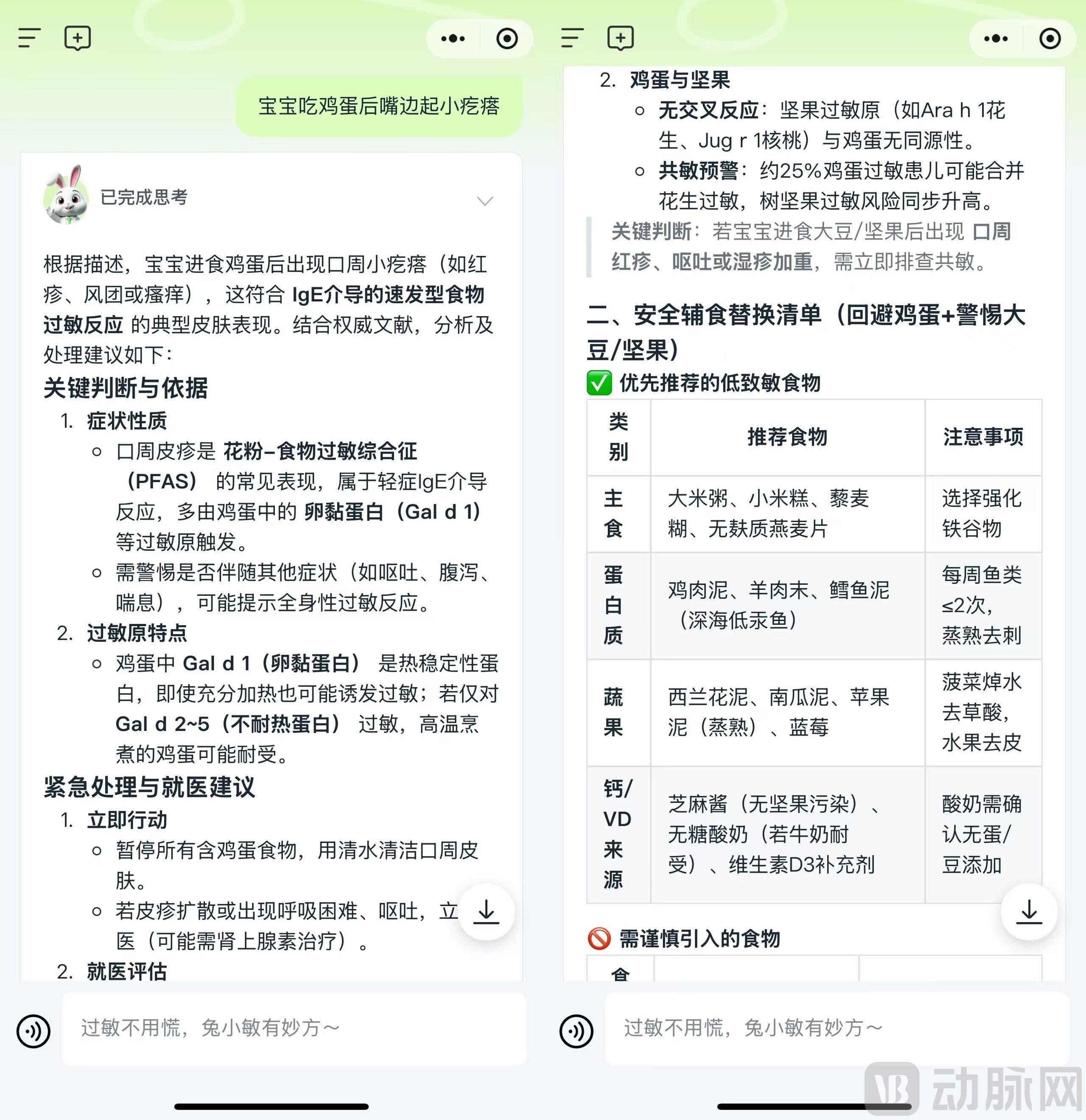
A user entered: "My baby developed small bumps around the mouth after eating eggs." Tu Xiaomin not only flagged "egg white allergy" but also noted potential cross-reactivity with soy and nuts, providing a list of alternative complementary foods.
Addressing the pain point of misdiagnosis due to similar allergy symptoms, Tu Xiaomin significantly reduces misdiagnosis rates through medical-grade intelligent algorithms.
First, its algorithm training is based on domestic and international allergy consensus statements, guidelines, and millions of authoritative publications from the past 3–5 years, with full-process guidance and review by experts from top-tier tertiary hospitals such as Peking Union Medical College Hospital and Peking University People’s Hospital.Ensure the medical, scientific, and authoritative nature of the assessment;
Secondly,Tu Xiaomin will deeply simulate the clinical reasoning process of an allergist, going beyond superficial symptom analysis.For example, when determining whether sneezing and rhinorrhea are allergic in origin, a comprehensive assessment is made based on paroxysmal features (e.g., consecutive coughing >3 times) and associated signs (such as nasal pruritus, nose-rubbing maneuvers, and allergic shiners), enabling precise differentiation from common conditions like the common cold.
Upon guiding users to identify dangerous signs such as dyspnea, immediately trigger first-aid alerts or urgent referral recommendations to effectively mitigate the risk of delayed treatment.
“General-purpose large language models like DeepSeek and GPT are akin to ‘know-it-alls’; their training data is sourced from surface-level public internet information, offering broad coverage but lacking depth. In contrast, TuXiaoMin focuses on the vertical domain of ‘allergy,’ delivering specialized and in-depth expertise.” Dr. Qin Yao pointed out, “TuXiaoMin does not rely on generic internet data; its professional capabilities are built upon a robust chain of medical evidence—”By integrating collaborative resources from top-tier experts, a repository of millions of authoritative medical publications, and core guidelines and consensus documents in the field of allergy/immunology from both domestic and international sources over the past three to five years, it achieves a level of professional depth and credibility far surpassing that of general-purpose models.
Furthermore, Tu Xiaomin adopts its self-developed MedChain Dynamic Perception Engine as the core architecture. This technology breaks through traditional information retrieval models by deeply simulating the clinical diagnostic thinking pathways of specialist physicians, enabling context-aware dynamic reasoning. It emphasizes the analysis of medical reasoning processes, such as the characteristics of paroxysmal symptoms and associated signs, rather than simply retrieving surface-level data. Its innovation lies in establishing a mapping model between the physical world and medical knowledge, ensuring that AI outputs possess both professional depth and clinical practicality, thereby truly becoming a "digital expert" in the field of allergology.
More importantly,“Tu Xiaomin” leverages First Bio Group’s offline clinics, collaborative medical resources, and pharmaceutical service system to build a closed-loop ecosystem covering the entire process of “diagnosis-treatment-medication-management.” This comprehensive capability, spanning from professional depth to commercial implementation, constitutes a core barrier that general-purpose large language models and other similar products cannot replicate.
Prior to the launch of Tu Xiaomin, First Biology Group had already established a solid business foundation in the field of allergies, possessingAllergic Rhinitis Testing, Spleen Aminopeptide Oral Solution(Non-specific immunotherapy drugs for allergic rhinitis),Stem Cell Injection(Indications include the treatment of atopic dermatitis and severe allergic rhinitis),Junzhen Medical(Allergy Specialty Chain Clinics).

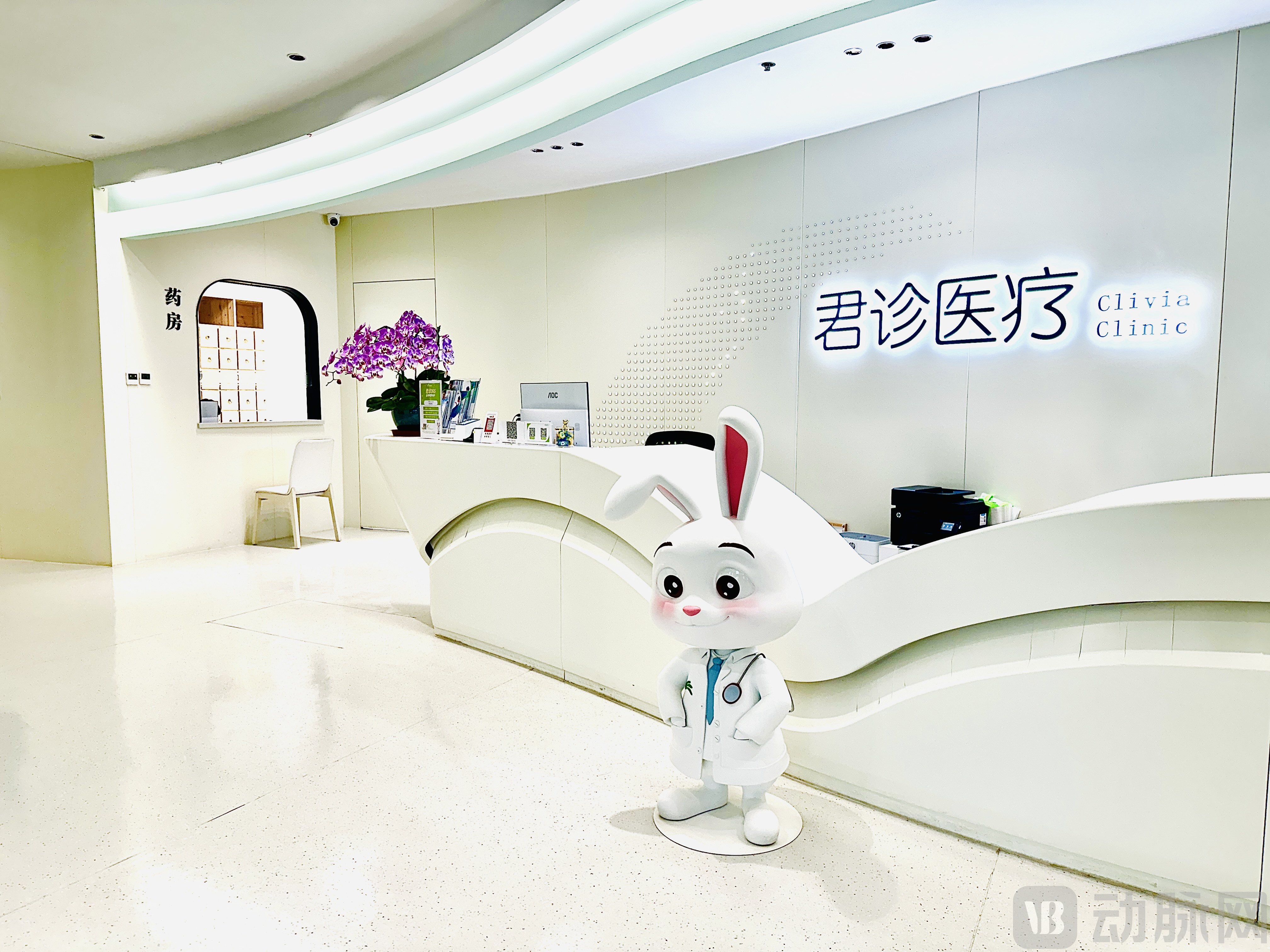
The launch of "Tu Xiaomin" marks a critical completion of the Group’s business portfolio. By deeply synergizing with the Group’s existing operations, it successfully establishes a closed-loop service ecosystem covering the entire cycle of “diagnosis, treatment, medication, and management,” thereby driving the upgrade of allergy management from “single-mode treatment” to “full-cycle services.”
As the core carrier of the ecological closed loop, the TuXiaoMin AI Agent establishes service access points through a free mini-program, effectively attracting and retaining potential users with allergies by offering services such as symptom self-assessment and specialized screening (e.g., pediatric adenoid allergy testing). Leveraging the MedChain dynamic perception engine to simulate the diagnostic logic of specialist physicians, it provides professional assessment recommendations. Based on AI evaluation results, the system intelligently recommends authoritative medical institutions and standardized testing items, while collaborating with Junzhen Medical Chain Clinics to provide offline diagnosis and treatment support. Users can complete test appointments, medication purchases, and follow-up consultations online, with the system automatically recording clinical data to form personal health records. This "intelligent recommendation + online fulfillment + health management" model not only enhances user stickiness but also continuously optimizes service precision through data accumulation, thereby forming a closed-loop business model of "front-end traffic acquisition – terminal service delivery – back-end conversion."
It is worth emphasizing that, in the recommendation phase at end-user medical institutions,Tu Xiaomin’s algorithm design strictly adheres to the principle of neutrality, encompassing both proprietary medical service resources and prioritizing recommendations for leading institutions that are clinically validated and well-regarded by patients.. By modeling multi-dimensional data, such as disciplinary rankings, scientific research strength, and patient reviews, the recommendation results ensure both professionalism and user trust.
Regarding the commercialization pathway, First Bio Group has formulated a clear "three-step" strategy:Initially focus on the C-end,Centered on free services, it precisely addresses the needs of allergy sufferers through symptom self-assessment and diagnostic and treatment recommendations, thereby building a user base and establishing a professional reputation to complete the layout of tool-oriented functionalities;In the medium term, focus on expanding B-side business.Expand enterprise-side collaborations based on user scale, such as partnering with insurance institutions to provide allergy risk assessment models and health management services, thereby facilitating the precise design of insurance products; or collaborating with pharmaceutical companies to deliver patient insight data and clinical feedback required for new drug development.Ultimately build an intelligent comprehensive allergy management ecosystem,Evolution from a single tool to an all-in-one platform, creating diversified business value such as data services and customized solutions by integrating consumer-facing services, business-side partnerships, and proprietary resources.
At the level of technological extension, the Group plans to engage in deep collaboration with hardware equipment and sensor manufacturers, expanding into the fields of the Internet of Things (IoT) and wearable devices. By integrating real-time environmental data and user physiological metrics, it aims to further enhance diagnostic accuracy and service personalization, ultimately building a comprehensive intelligent ecosystem in the field of allergy management.