

Arima Genomics Secures $22M Series C Funding to Advance Clinical Translation of 3D Genomics

Arima Genomics
3D Genomics Solutions Provider
In June 2025, U.S. 3D genomics platform company Arima Genomics announced the completion ofLed by Illumina Ventures$22 million Series C financing round. This round included participation from genomics pioneers John Stuelpnagel and Dr. Mostafa Ronaghi, as well as existing investors Co-Win Ventures and Berkeley Catalyst Fund. The proceeds from this financing will be primarily used to launch the “Focused Pipeline of Clinical Assays,” leveraging its sequencing-based approach to determine 3D genome structures, such as gene fusions and rearrangements.
As a venture capital firm focused on genomics and precision medicine, Illumina Ventures leverages the existing strategic partnerships of global sequencing giant Illumina (NASDAQ: ILMN) to transform breakthrough science and technologies into market-leading companies. By leading this investment round, Illumina Ventures aims to further strengthen its position in cutting-edge applications such as 3D genomics, spatial omics, and structural variant detection. Furthermore, Aventa has appointed Dr. Tom Willis, a former executive at Illumina, as CEO, underscoring its strategic focus on tumor structural variant detection.
This round of financing sends a clear signal of the trend:Following spatial transcriptomics and single-cell sequencing, three-dimensional genomics (3D Genomics) is gradually emerging as a new focal point at the intersection of basic scientific research and precision medicine.
As one of the representative enterprises in this field,Arima is pursuing a path of “standardized kits + modular analysis workflows”, driving the commercialization of complex technologies such as Hi-C (High-throughput Chromosome Conformation Capture), aiming to break through the limitations of laboratory settings and truly bring three-dimensional genomics into scalable, commercially viable research and clinical practices.
One Sample Transforms a Company: From Research to the Clinical Frontline
Arima Genomics was founded in 2015, initially focusing on developing standardized tools to help researchers decipher the three-dimensional folding structure of DNA, thereby opening new avenues for chromatin interaction studies.
The turning point came in 2022. A biopsy sample from a patient with glioblastoma (GBM) was sent to Arima Genomics. This patient had previously undergone multiple rounds of DNA and RNA testing, yet the underlying pathogenic mechanism remained elusive. Leveraging its 3D genomics platform, the Arima team identified structural rearrangements that had been missed by conventional methods, enabling the formulation of a new targeted treatment plan that yielded positive therapeutic outcomes.
This experience made Arima realize:It is difficult to capture pathogenic variants hidden within three-dimensional structures based solely on linear sequences, which is precisely the key to precision medicine.Since then, Arima has expanded beyond providing research services to enter the clinical testing arena, reconstructing a more “complete” genomic map for each patient.
In Arima’s view, the significance of technology lies not in a research paper, but in a report capable of changing patients’ fates. This culture combines scientific rigor with clinical empathy., also driving Arima’s transformation from a single-product tool developer and kit supplier into a spatial genomics platform enterprise.Meanwhile, its financing pace has not only sustained the continuous expansion of its product line but also signaled its ambition to advance into clinical settings.
In 2022, Arima completed a $7 million Series B financing round, with the funds primarily allocated to expanding its product portfolio and building a bioinformatics platform, laying the foundation for its transition toward clinical applications. In 2023, the company joined the U.S. BRAIN Initiative, venturing into spatial omics research of the nervous system, and co-established the Aventa Genomics laboratory with Protean, a precision oncology diagnostics company, thereby entering the clinical testing sector. In October of the same year, Aventa launched FusionPlus, a product supporting fusion gene detection in FFPE tumor samples.
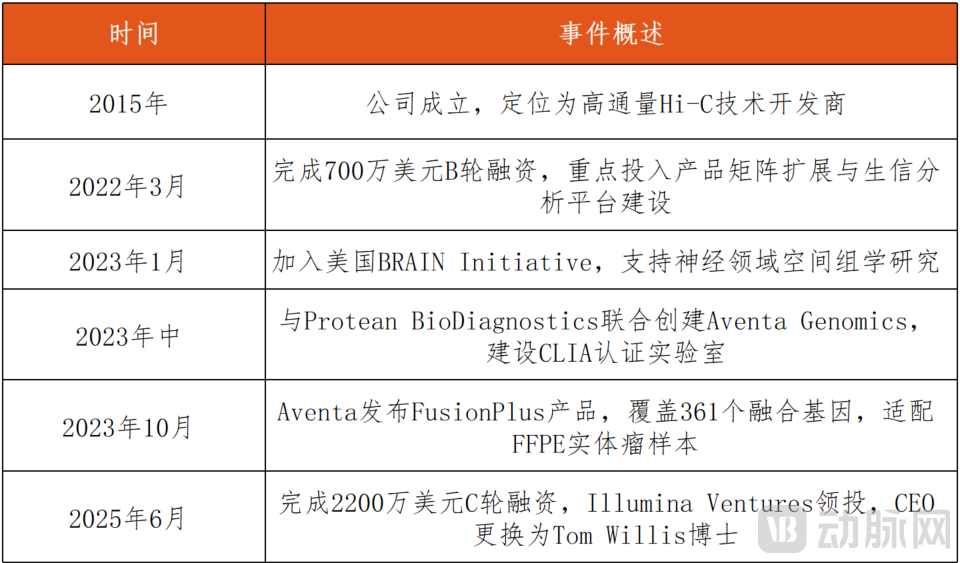
Table 1: Key Financing and Industrialization Timeline for Arima Genomics
Multi-Product Matrix: Building a Diverse Toolkit for Spatial Omics with a Single Kit
DNA is not laid out flat within the cell nucleus; instead, it is coiled and folded like a ball of yarn. This three-dimensional structure influences which genes are activated or silenced, thereby determining cellular functional phenotypes. Three-dimensional genomics (3D Genomics) is the scientific discipline dedicated to studying these chromatin folding patterns, with Hi-C technology being the most widely used method for generating genome-wide spatial contact maps.
In the cutting-edge field of spatial omics, Arima Genomics’ product portfolio is not merely a combination of several kits, but rather a comprehensive suite built around three-dimensional genomics (Hi-C) technology.Comprehensive Tool Platform——The product portfolio comprises three core modules: Research Products, Clinical Services, and Bioinformatics Services, covering a diverse range of applications from chromatin interactions, structural variations, and viral integration to protein regulation and epigenetics.
1Encapsulating Experiments in a “Box”: The Standardized Starting Point for Hi-C Library Preparation
Arima’s initial flagship product was a laboratory kit called Arima-HiC+, which modularized and pre-formulated multiple time-consuming, error-prone steps in traditional Hi-C experiments. This enabled researchers to obtain reproducible results through a rapid, 6-hour automation-friendly protocol—similar to performing an RNA-seq experiment—thereby accelerating the generation of research insights.This also makes three-dimensional genome maps, once “exclusive to top-tier laboratories,” replicable and scalable for the first time.
With the expansion of sample types, Arima has launched a version compatible with clinical formalin-fixed paraffin-embedded (FFPE) tissues—Arima-HiC+ FFPE. This version improves signal recovery efficiency from degraded tissue samples while maintaining map completeness, making it suitable for detecting and discovering structural variations from archived or clinical samples.
If HiC+ is considered a general-purpose version, Arima also offers Promoter Capture Hi-C and Custom Capture Hi-C solutions for in-depth analysis of interactions within specific regions. These solutions enable targeted capture of promoters, enhancers, or specific disease-causing gene regions, helping scientists conduct in-depth research on gene regulatory logic and identify potential targets.
For scenarios requiring high resolution, such as studying complex cancer models or organ development, Arima’s High Coverage Hi-C provides enhanced data coverage capabilities, enabling more detailed and hierarchically rich spatial structural maps.
Notably,All kits are compatible with mainstream sequencing platforms, including Illumina, PacBio, and Oxford Nanopore., offering strong technical compatibility and process portability. This not only broadens its applicability across diverse experimental scenarios but also facilitates seamless integration into existing sequencing workflows.
2Serving Clinical Practice: Building a Spatial Molecular Perspective for Pathological Samples
Through its CLIA (Clinical Laboratory Improvement Amendments)-certified Aventa clinical testing laboratory, Arima Genomics has launched Aventa, a structural variation detection service dedicated to clinical samples. This service is now widely used in early-stage clinical research by pharmaceutical companies and in supporting precision medicine decision-making, marking the first step for Hi-C technology into translational medicine.
Among these, Aventa FusionPlus focuses on fusion genes and chromosomal rearrangements in FFPE samples of solid tumors, providing auxiliary evidence for cancer subtyping and targeted drug screening; Aventa Lymphoma is specifically designed for lymphoma to identify complex yet biologically significant chromatin rearrangement events.
3Outsourcing and Integration Services: Making Spatial Omics an Accessible Tool for All
For institutional users who lack the necessary experimental infrastructure or wish to rapidly initiate 3D genomics research, Arima also provides comprehensive “turnkey” outsourcing services. Users need only submit their samples, while Arima manages the entire workflow—from library preparation and sequencing to data processing and map analysis—ultimately delivering structural interaction maps and downstream analysis results directly.
To meet advanced research needs, Arima has also launched the Single Cell Methyl-3C service, which integrates methylation and 3D interaction data to decipher epigenetic regulatory networks at the single-cell level, paving the way for a new direction in spatial multi-omics integration.
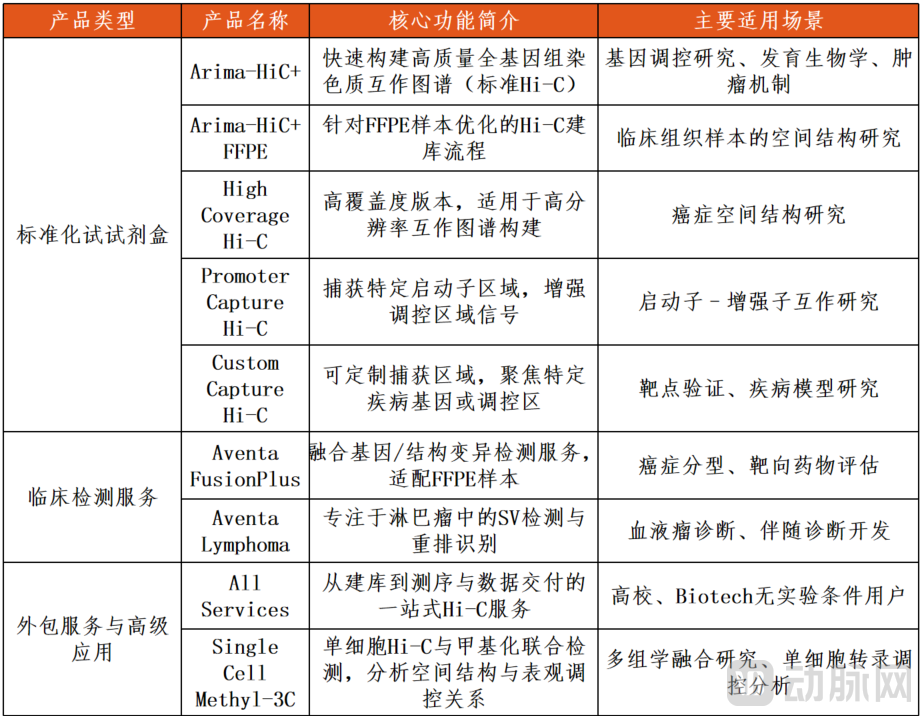
Table 2: Overview of Arima Products
From boxed products to clinical testing solutions, and further to one-stop outsourcing, Arima has completed a closed-loop pathway from basic research to clinical validation through a “modular” approach.
When 3D Genomics Enters the Clinic
The value of a technology lies not only in elucidating the unknown but also in shaping reality. As product performance continues to be optimized, the 3D Genomics technology represented by Arima Genomics is gradually moving from the academic “ivory tower” into the real world—entering highly application-oriented scenarios such as tumor diagnosis, safety assessment of gene editing, and detection of viral integration. It has become a “bridging link” between research on gene regulatory mechanisms and studies of disease-associated variants.
Arima Genomics’ 3D genomics platform has gradually expanded beyond the realm of basic scientific research into multiple high-value application scenarios.
In epigenetics, this platform leverages tools such as HiC+ and HiChIP to help researchers map the three-dimensional distribution of key transcription factors within chromatin, elucidating long-range regulatory mechanisms involving DNA methylation and histone modifications. It is widely applied in research on stem cell differentiation, developmental biology, and tumor transformation.
In tumor genomics, the Arima-SV module addresses the limitations of traditional whole-genome sequencing (WGS) in resolving complex structural variants (SVs), demonstrating particular prominence in research on virus-associated tumors. For instance, teams from the NIH and Harvard University have leveraged its platform to elucidate the spatial association mechanisms between HPV integration and oncogene activation.
Furthermore, in the safety assessment of gene editing, Hi-C provides a novel approach for monitoring “off-target effects” at the structural level, and is increasingly becoming part of the quality control process for projects such as CRISPR therapies and cell therapies.
Arima has also launched a viral integration detection tool to identify insertion sites of viruses such as HPV and HBV, and to analyze their oncogenic mechanisms in three-dimensional structures, with applications extended to vaccine evaluation and research on viral latency.
In the realm of genome assembly, Hi-C, serving as an auxiliary scaffolding tool, can be combined with long-read sequencing platforms such as PacBio and Oxford Nanopore Technologies (ONT) to construct chromosome-level reference genomes. This approach is widely utilized in agricultural breeding, studies of species evolution, and gene mapping for rare diseases. These applications, spanning both basic research and translational medicine, are transforming “spatial information” from a laboratory variable into a key determinant in precision medicine.
The Hi-C standardization platform built by Arima Genomics is quietly transforming the way spatial omics is utilized. In the future landscape of precision medicine, the “spatial” dimension will no longer serve merely as a technical modifier, but will become critical infrastructure linking mechanistic understanding with diagnostic and therapeutic practice. In this sense, Arima is not just developing products; it is reshaping the usage logic and implementation pathways of an emerging field.
China’s 3D Genomics Engineering Enters a Window of Opportunity
In recent years, with iterative breakthroughs in multi-omics technologies, Chinese enterprises have made steady progress in exploring the field of 3D genomics. For instance, Novogene offers genome assembly and spatial interaction analysis combining Hi-C with long-read sequencing, which is widely applied in scenarios such as human sample research and crop breeding. Annoroad has integrated Hi-C into its scientific research service system and is exploring fused analysis with other multi-omics technologies, such as spatial transcriptomics. These practices are driving China’s spatial omics sector from research services toward applied research in precision medicine.
Arima’s Development Path Offers Three Key Lessons for Chinese Companies:
First, it has bridged the gap in the practical implementation of 3D genomics technologies by applying product engineering principles—Modular packaging standardizes and replicates complex experimental workflows, lowering the barrier to entry.Secondly, Arima focuses on high-clinical-value scenarios such as structural variations and viral integration, successfully driving the adoption of spatial omics in real-world applications like tumor diagnosis and quality control for gene editing. Finally, it expands its commercial boundaries through a “platform + collaboration” model, serving not only research institutions but also integrating into the R&D processes of pharmaceutical companies and CDMOs, thereby fostering extensive industry synergy.
In the future, as China continues to build its capabilities in spatial multi-omics and bioinformatics analysis platforms, 3D genomics is poised to forge a development path characterized by “independent innovation plus engineering implementation.” In this process, Arima Genomics may not be the “only answer,” but it is undoubtedly an engineering model worthy of reference.