

Vivodyne Files IPO Amid FDA Shift Away from Animal Testing, Leveraging AI-Powered Organoid Platform

Vivodyne
Drug Discovery Platform Developer
May 29,Frontier Biotech Startup Vivodyne Announces Completion of $40 Million Series A Funding Round Led by Khosla Ventures, the funds will be used to expand the robotics laboratory located in southern San Francisco and further enhance the “organoid + artificial intelligence (AI)” automated drug screening platform.
This financing round is not only substantial in amount but also strategically timed to capture a critical window of opportunity.—On April 11, 2025, the FDA announced a phased phase-out of traditional animal models reliant on mice and primates, shifting toward in vitro modeling approaches represented by organoids and organ-on-a-chip technologies for drug toxicity and efficacy assessment. This reform is expected to enhance the accuracy of drug predictions, accelerate evaluation processes, reduce the number of animals used, lower R&D costs, and ultimately contribute to a decline in drug prices.
As a company specializing in human-like tissue platforms and AI analytics, Vivodyne’s market entry is perfectly timed. With theThe FDA’s Policy Push to Gradually “Decentralize” Animal Testing, Vivodyne’s platform aligns precisely with the “human-derived data-first” drug development pathway, becoming a key technological option for pharmaceutical companies in early-stage assessment.
From Penn Labs: A Biotech Startup Born in a Garage
Vivodyne’s journey began in a bioengineering laboratory at the University of Pennsylvania (UPenn)—the very place where its two founders first converged on their shared vision.
During his doctoral studies, Vivodyne CEO Andrei Georgescu joined Professor Dan Huh’s Organ-on-a-Chip research group, focusing on in vitro tissue modeling and drug response prediction. Dan Huh is a recognized pioneer in the organ-on-a-chip field. As early as 2010, during his postdoctoral fellowship at Harvard University, he published the world’s first “lung-on-a-chip” model as the first author in Science.[1], we have constructed for the first time a three-dimensional human alveolar model featuring respiratory mechanical dynamics and immune transmembrane functions.
Initially, Georgescu was not entirely convinced of the feasibility of these complex models, until one day he witnessed under the microscope how cells self-organized into human tissue models with microvascular structures—“How is this possible? How did the cells build these things without us?” This striking observation prompted him to shift his focus toward exploring how to scale up these models and truly apply them for preclinical efficacy prediction.
This goal aligns perfectly with Dan Huh’s vision. While Huh excels in constructing physiological systems, he encountered bottlenecks in engineering scale-up; Georgescu, on the other hand, specializes in system integration and the development of automated platforms. The two found immediate common ground. In the spring of 2021, they officially founded Vivodyne in a modest garage in the suburbs of Philadelphia, aiming to propel this technology platform—spanning biology and engineering, data and experimentation—to the forefront of the industry. Their objective is simple yet clear: to build a scalable and predictable “human-like tissue” platform that can “pre-screen” drug responses in humans through in vitro simulation systems before entering clinical trials.
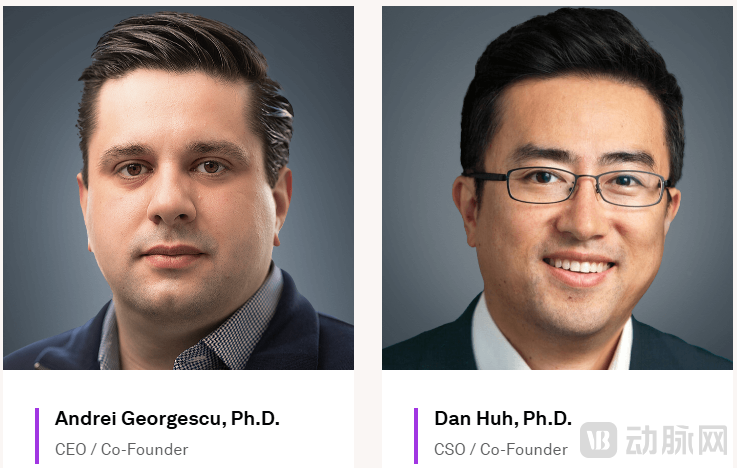
Figure 1: Co-founder Profile
In just two years, Vivodyne has grown from a “garage project” into an innovative enterprise that has raised a cumulative $78 million in financing, earning rapid recognition and support from prominent investors—including Khosla Ventures, Silicon Valley’s most prestigious technology-driven VC firm and one of OpenAI’s earliest institutional investors. As early as 2023, Vivodyne completed a $38 million seed round led by Khosla Ventures; in May 2025, Khosla once again led a $40 million Series A financing round.
In addition to Khosla, Vivodyne has also secured backing from early-stage deep-tech funds such as Kairos Ventures and CS Ventures. This capital consortium not only reflects long-term confidence in the “organoids + automation + AI” approach but also demonstrates industry trust in the commercialization potential of its technology.
“Vivodyne’s products are not imitations; rather, they establish a system of authentic, predictable human models, transforming the starting point of drug development,” said CEO Georgescu in an interview with Freethink.
Modeling Tens of Thousands of Human Tissue Samples to Reconstruct Preclinical Trial Logic with Robotics and AI
New Drug Development Is a High-Stakes Gamble with Low Success Rates and High Investment. The traditional process often begins with human cells on flat (2D) surfaces, proceeds to animal experiments, and finally enters clinical trials. However, the biggest problem with this pathway is the "disconnection between stages": there is a high degree of inconsistency between animal models and human responses, ultimately leading to the failure of approximately 90% of candidate drugs after they enter human trials.[2]。
Furthermore, according to estimates by the U.S. Congressional Budget Office (CBO),The average development cost of a new drug from project initiation to market launch approaches $2 billion.. The high R&D costs, lengthy development cycles, and extremely high failure rates constitute the high-risk nature of innovative drug development.
Vivodyne’s solution addresses the structural challenge of “high investment with limited extrapolatability” by leveraging “human-like models” to significantly advance the prediction of “clinical responses in humans” during the early stages of drug discovery and development. Its core product is an automated platform integrating organoids, organ-on-a-chip technology, and robotic systems, where nearly the entire workflow—from tissue growth and drug treatment to microscopy imaging and data acquisition—is executed by robotic systems.
1Restoring the Tissue Microenvironment to Build Organ Models That More Closely Mimic “Real Human” Physiology
Vivodyne’s core advantage lies in its ability to highly replicate the human tissue microenvironment.. Traditional drug screening largely relies on two-dimensional cell culture; while this approach is simple, the planar growth state of cells differs significantly from the three-dimensional architecture in the human body, thereby limiting the accuracy of predicting drug responses.
In contrast, Vivodyne leverages organ-on-a-chip and organoid technologies to create human-like tissue models featuring authentic three-dimensional structures, microvascular networks, and select immune cells, thereby making each “living microenvironment” more closely resemble the actual physiological state of the human body.
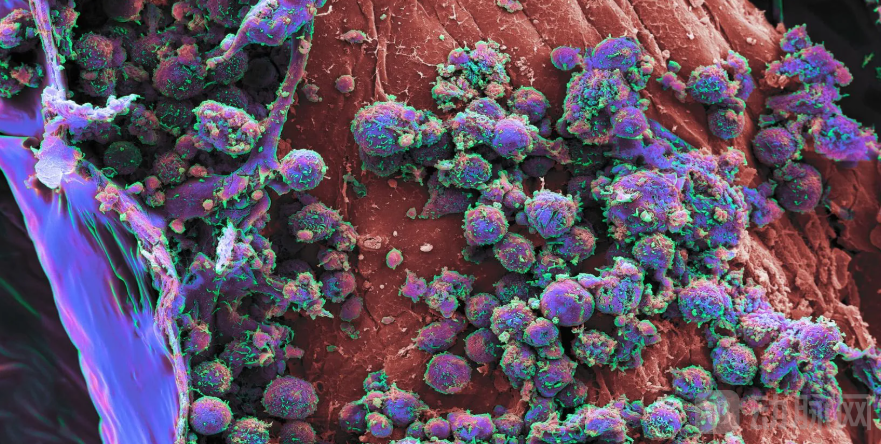
Figure 2: Schematic diagram of organoid models simulating human immune function
Currently,Vivodyne has successfully built over 20 human tissue models., including cardiomyocytes, alveolar cells, bone marrow, neurons, hepatocytes, and renal tubular epithelial cells, covering the key stages of drug ADME (absorption, distribution, metabolism, and excretion).
Vivodyne demonstrates significant advantages in model throughput and human-source heterogeneity. Its platform enables the parallel testing of over 10,000 tissue models in a single experiment, constructing diverse human tissue structures using primary cells from different human donors, thereby significantly enhancing the simulation capability for individual variability.
Unlike traditional platforms that primarily rely on standardized cell lines or animal models, Vivodyne’s platform products more accurately reflect inter-individual variability in genetic background, disease status, and drug response, thereby providing a more clinically relevant foundation for improving the accuracy of drug screening.
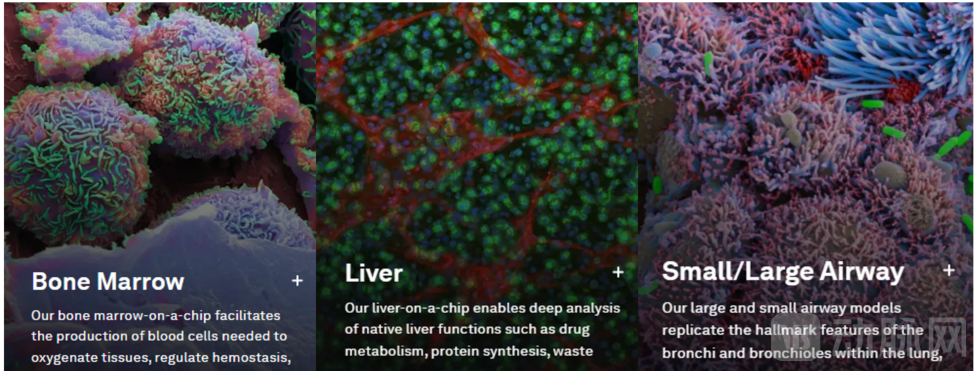
Figure 3: Schematic diagram of bone marrow, liver, and trachea models
2Robotics + Predictive AI: From Reactive Analysis to “Co-Creators” in Collaborative Therapy Design
In addition to breakthroughs in biological models,Another major highlight of Vivodyne is its AI-driven analytics platform.. Through automated robotic systems, the platform can simultaneously culture and monitor tens of thousands of tissue samples in a single experiment, generating large volumes of high-dimensional data, such as changes in cell morphology, protein expression, and single-cell sequencing.
Vivodyne’s AI platform not only accurately identifies and quantifies drug-induced cellular phenotypic changes, but also continuously optimizes experimental design through Active Learning algorithms, automatically identifying the most informative tissue model conditions to enhance the precision of clinical predictions and experimental efficiency.
More importantly, this AI system is evolving from a passive data-processing tool into a “think tank” for drug development. It not only helps scientists elucidate mechanisms of action and predict potential adverse effects, but also identifies synergistic effects in drug combinations, thereby advancing the discovery and optimization of new therapies. As data accumulation continues to enrich, the system’s predictive capabilities are increasingly approximating real human physiological responses, enabling R&D teams to identify potential efficacy and safety risks early on and significantly improving the success rate of new drug development.
Although organoid platforms still have limitations in simulating complex immune mechanisms, there are also ethical discussions such as the "quasi-consciousness" of brain organoids or the compliance of stem cell sources. However,Globally, regulatory policies are increasingly favoring innovative alternatives to animal testing.
As early as the 1980s, the OECD (Organisation for Economic Co-operation and Development) began employing in vitro assays for genotoxicity testing, subsequently incorporating methods based on in vitro alternative models into its Test Guidelines Programme, thereby encouraging the use of non-animal methods for toxicity and safety assessment.
The U.S. National Toxicology Program (NTP), in conjunction with New Approach Methodologies (NAMs), advocates for the replacement of traditional animal testing with human-derived cell models. In late 2022, the United States enacted the FDA Modernization Act 2.0, formally eliminating the statutory requirement for mandatory animal testing in all new drug applications and establishing “human-based or AI-based models” as acceptable alternatives. Subsequently, during 2024–2025, the FDA further released the “Roadmap for Reducing Animal Testing,” prioritizing pilot programs for non-animal methods in the field of monoclonal antibodies and establishing an expedited review pathway for NAMs.
During the same period, the European Union supported alternative technologies through the “HCA|Organoid” initiative (2020) and the Organ-on-a-Chip Standardization Roadmap (2024). The European Medicines Agency (EMA) also revised its guidelines in 2023 to explicitly accept data derived from complex in vitro models based on human cells.
Overall, Vivodyne leverages organoid and fluid dynamics modeling technologies to construct high-throughput, functional human model systems. In the early stages of drug efficacy screening and toxicity assessment, these systems can partially replace traditional animal experiments, enhance human predictive relevance, significantly shorten development cycles, reduce upfront costs, and are poised for broader application in future regulatory environments.
China Accelerates the Development of Organoid-Based Drug Discovery Infrastructure
As China’s drug regulatory authorities increasingly recognize Investigational New Drug (IND) applications based on in vitro data, the country is building a solid R&D foundation in organoid and organ-on-a-chip technology platforms and gradually advancing industrialization efforts.
Currently,Chinese universities and incubated startups are actively deploying organ-on-chip technology, with their R&D systems beginning to take shape.
In 2024, Shanghai Jiao Tong University, in collaboration with the Shanghai Municipal Health Commission and the Caohejing Park, jointly established the “Medical Chip Innovation and Translation Center.” The center focuses on the translational application of organ-on-chip technology, aiming to bridge critical gaps from laboratory research to industrial implementation, foster collaborative breakthroughs between universities and enterprises, and accelerate the development of platform-based capabilities.
In June 2025, Liu Peng’s team at Tsinghua University published a “gel–liquid interface” (GLI) immune co-culture model in Cell Stem Cell, which simulates the tumor microenvironment and enables prediction of immune responses.
Furthermore, universities such as Fudan University and Southern University of Science and Technology are also conducting research on organ-on-a-chip technologies in areas including the liver, brain, and tumors. The domestic ecosystem for organoid technology is gradually expanding and accelerating its evolution toward automation, scalability, and data-driven intelligence.
On the other hand, the regulatory and standards framework is gradually becoming clearer.In April 2025, the Ministry of Industry and Information Technology and six other departments issued the "Implementation Plan for the Digital and Intelligent Transformation of the Pharmaceutical Industry (2025–2030)," proposing to strengthen the integration of AI with pharmaceutical R&D and build new digital-intelligent platforms, thereby laying the policy foundation for the large-scale application of non-animal models.
Vivodyne’s practices demonstrate that a human-like modeling platform with high predictive power requires deep integration of bioengineering, automated robotics, and machine learning technologies to achieve a high level of synergy among biology, engineering, and data.
Looking ahead, driven by the dual forces of favorable policies and industrial upgrading, AI-enabled organoid drug development platforms are rapidly maturing, accelerating the advancement of technologies that replace animal testing.
References:
[1] Huh D, Matthews BD, Mammoto A, Montoya-Zavala M, Hsin HY, Ingber DE. Reconstituting organ-level lung functions on a chip. Science. 2010 Jun 25;328(5986):1662-8.
[2] Sun D, Gao W, Hu H, Zhou S. Why 90% of clinical drug development fails and how to improve it? Acta Pharm Sin B. 2022 Jul;12(7):3049-3062.