Soaring Profits and Deep Losses: Divergent Performance Among China's Agrochemical Firms in H1 2025
Agrochemical Companies Have Released Semi-Annual Reports or Earnings Forecasts, Revealing a “Divergent” Performance Landscape: Some Report Profit Surges of Over 170-Fold, While Others Incur Half-Year Losses Exceeding RMB 100 Million
On August 15, Limin Group, a leading domestic fungicide manufacturer, released its semi-annual report. In the first half of 2025, Limin Group achieved revenue of RMB 2.45 billion, representing a year-on-year increase of 6.69%; net profit reached RMB 270 million, surging by 747.13%; and net profit excluding non-recurring items amounted to RMB 260 million, up by 804.41%.
On August 11, Changqing Shares, a listed company specializing in chemical pesticides, released its semi-annual report. In the first half of the year, the company achieved operating revenue of RMB 2.08 billion, representing a year-on-year increase of 7.28%; net profit amounted to RMB 42.28 million, up 117%; and net profit excluding non-recurring items reached RMB 39.56 million, an increase of 90.28%.
Xianda Shares also released its earnings forecast, indicating an expected net profit of RMB 130 million to RMB 150 million for the first half of 2025, representing a year-on-year increase of 2,443.43% to 2,834.73%. The net profit after deducting non-recurring gains and losses is projected to range from RMB 124.7 million to RMB 144.7 million, a year-on-year surge of 15,239.01% to 17,667.08%, with the highest growth reaching 176-fold.
In sharp contrast to the aforementioned three companies that achieved doubled growth, leading crop protection company Adama is expected to report a first-half loss of RMB 123 million to RMB 177 million, representing a year-on-year narrowing of 81.3%–87.0% compared with the RMB 947 million loss recorded in the same period of 2024.
Red Sun, a listed company specializing in eco-friendly pesticides, swung from profit to loss, with an estimated net loss of RMB 168 million to RMB 228 million for the first half of the year, compared to a net profit of RMB 21.232 million in the same period last year.
Notably, Harbin Flaming Sun Health Industry Group Co., Ltd. reported a net profit of RMB 29.26 million in the first quarter of 2025, indicating a precipitous decline in performance for the second quarter, with potential single-quarter losses ranging from RMB 197 million to RMB 257 million.
01. “Some Laugh, Some Cry”
Behind the fragmented pesticide market, whether it is growth or loss, one key factor remains indispensable: price.
Xian Da Shares stated that the significant growth in performance was mainly due to the increase in market price of its flagship product, clethodim, which drove up the product's gross profit margin, as well as the launch of its innovative product pyraflufen-ethyl into the market this year.
Limin Shares also pointed out that the main reasons for the year-on-year increase in performance were factors such as the year-on-year rise in sales volume and prices of major products.
It is understood that Limin Group’s product portfolio covers the full range of fungicides, insecticides, and herbicides, including key varieties such as mancozeb, abamectin, emamectin benzoate, and glufosinate-ammonium.
According to relevant reports, the market price of mancozeb rose from RMB 23,500 per ton in March 2025 to RMB 25,000 per ton by mid-year, an increase of approximately 6.4%, while the price of ethylenediamine, a key raw material, declined.
Regarding abamectin, the price of refined powder was RMB 510,000 per ton in June 2025, compared to approximately RMB 350,000 per ton at the beginning of the year.
Meanwhile, the price of chlorothalonil produced by Xinhe Chemical, a company in which Limin Group holds an equity stake, rose from RMB 18,000 per ton to RMB 30,000 per ton.
Xianda Shares' flagship product is clethodim, which has seen a more pronounced increase in its market price.
In July 2025, the quoted price surpassed RMB 140,000 per ton, with some export orders reaching RMB 160,000 per ton. In early April 2025, the price of this product was only RMB 70,000–80,000 per ton.
The surge is attributed to the production halt at Yifan Biotech’s Ningxia plant, the industry leader, which has created a 30% global capacity shortfall. This has led to severe shortages of key intermediates, propionyltriketone and chloroamine, with inventory levels rapidly depleting. Furthermore, there are no viable alternatives for this product in the field of soybean herbicides.
For the losses incurred by Red Sun and Adama, price was also a significant factor.
Red Sun stated that the losses were mainly due to multiple factors, including fierce competition in the domestic and international pesticide markets, accelerated expansion of supply-side production capacity, continuous issuance of product registrations, and intensifying industry competition, as well as the fact that prices for some major products remained at low levels.
Adama pointed out in its announcement that in the first half of 2025, declining product prices had a certain adverse impact. The primary reasons for the weak pricing were low technical material (TC) prices due to oversupply, as well as generally high interest rates in overseas markets and relatively sluggish prices for bulk agricultural commodities, which placed pressure on distributors and farmers.
In March 2025, Adama noted in its annual report that persistently low prices for major bulk agricultural commodities were putting pressure on farmers’ incomes, and the overall sales volume of the global crop protection industry was expected to decline year-on-year.
Inventory pressure from plant protection products accumulated in global channels over the past few years has continued to ease. However, persistently high interest rates in overseas markets, coupled with an oversupply of plant protection products—particularly abundant supply of technical-grade active ingredients from the Chinese market—have kept prices for these materials hovering near historic lows. As a result, distributors continue to adopt just-in-time procurement strategies.
02. Behind Market Fragmentation: Severe Homogenization and Intense Cutthroat Competition
“Success and failure both hinge on price,” a phrase that reflects the recent “turmoil” in the pesticide market—marked by significant market segmentation and drastic price fluctuations.
According to a research report by Minsheng Securities, since 2024, the market for pesticide technical materials has remained in a bottom-range oscillation and consolidation phase. From the perspective of subcategories, product prices have shown significant divergence.
In 2024, prices for three herbicide products rose—namely clethodim, sethoxydim, and 2,4-D—while prices for other varieties remained stable or declined to varying degrees.
Among the 10 pesticide varieties that experienced price increases, the top five in terms of percentage gain were cartap (61.54%), thiocyclam (52%), pyridaben (30%), abamectin (27.03%), and emamectin benzoate (24.27%).
Four fungicides saw price increases: chlorothalonil (47.22%), dimethomorph (18.18%), prochloraz (6.25%), and kresoxim-methyl (5.26%).
Meanwhile, price volatility was significant. Taking 2024 as an example, according to data compiled by Harbin Flaming Sun Health Industry Group Co., Ltd.: in the first quarter, product prices and inventory levels were already at historic lows, with substantial upstream cost pressure; in January, the year-on-year decline in technical material prices reached 36.5%. By the end of December 2024, prices for 65% of products had fallen, reflecting dramatic price fluctuations throughout the year.
Behind the price differentiation and volatility, it may be related to the characteristics and development stage of the current domestic pesticide market.
It is understood that the global plant protection products industry exhibits a high degree of market concentration, whereas the Chinese market remains relatively fragmented.
According to AgbioInvestor statistics, the five major groups—Syngenta Group, Bayer, BASF, Corteva, and UPL—collectively account for 75% of the global market share, indicating a high degree of market concentration.
In contrast, according to the China Crop Protection Industry Association (CCPIA), the combined sales of the top ten Chinese companies accounted for only 36.5% of the total sales of the top 100 enterprises. Further data from the CCPIA and CIC Consulting reveal that in 2021, Syngenta Group ranked first with a market share of 11%, while domestic companies generally held market shares in the range of 3%–4%.
Market fragmentation has led to homogeneous competition and even “involution.”
Harbin Flaming Sun stated that China's pesticide industry has long suffered from low market concentration, with numerous small-scale enterprises exhibiting weak competitiveness and severe product homogenization. Although policies have consistently promoted industry consolidation, it will take considerable time to establish a scaled-up and highly concentrated industry landscape.
Particularly from 2023 to 2024, following two years of booming and rapid development, the pesticide industry has seen increasingly prominent overcapacity, severe product homogenization, and markedly intensified involutionary market competition, with overall profitability entering a downward trajectory. In 2024, overall demand in China’s pesticide market remained sluggish, and prices continued to decline.
However, beyond these industry challenges, it is also important to recognize that China’s pesticide industry possesses distinct competitive advantages in the international market.
Industry data shows that 70% of the global production capacity for technical-grade pesticides is concentrated in China. In 2024, China’s output of chemical pesticide technical materials (calculated at 100% active ingredient) reached 3.675 million metric tons. In the same year, the export value of Chinese pesticide formulations amounted to US$8.999 billion, representing an 11% year-on-year increase. With a comprehensive product portfolio, high quality, and competitive pricing, China’s pesticides are currently exported to more than 180 countries across six continents, including North and South America.
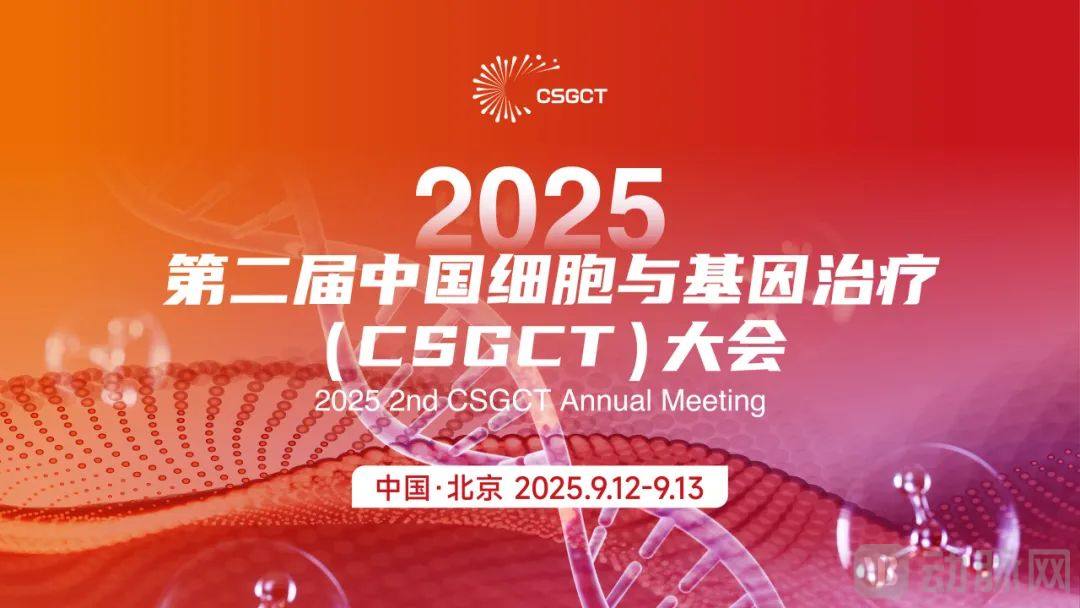
To drive technological breakthroughs, industrial integration, policy alignment, and international cooperation in China’s cell and gene therapy (CGT) sector, and to propel the Chinese CGT industry to the forefront of global competition, the China Society for Gene and Cell Therapy (CSGCT) Conference was established.
Leveraging its close ties with the American Society of Gene & Cell Therapy (ASGCT), the 2025 CSGCT Conference will bring together leading scientists, clinical experts, multinational pharmaceutical companies, and overseas investment institutions from around the world. The event will showcase the most advanced scientific progress, technologies, applications, and market access information in the global cell and gene therapy field, while facilitating connections between high-quality collaborative projects and overseas investors with investment needs. It aims to build a platform for in-depth exchange and cooperation between China’s cell and gene therapy industry and the global industrial chain.
The conference closely addressed the industry’s hotspots, pain points, and bottlenecks, featuring1 Main Forum + 18 High-End Sub-Forums, coveringLatest Advances in Global Gene Therapy, Immune Cell Therapy, In Vivo CAR-T, Adult Stem Cells and Exosomes, iPSC-Derived Cell Therapies, Small Nucleic Acid Drugs, Gene Editing, Oncolytic Viruses, and Tumor Vaccines, as well as CMC and Testing, AI-Driven Drug Discovery, Registration and Regulation, Investment and Financing, and BD Matchmakingcomprehensive coverage across the entire industry chain.
2025 CSGCT ConferenceThe main forum, themed “Global Market, Chinese Power" as the theme, inviting multiple international leaders in the field of CGT, as well as domesticDeep involvement of founders, CEOs, and other senior executives from leading innovative enterprises, as well as regulatory policymakers, will explore the opportunities and challenges facing China's CGT industry from an international perspective, promoting the global development of China's cell and gene therapy sector。
Related Issues:
Unite the Full Industry Force to Drive the Global Development of China’s Cell and Gene Therapy Sector Promoting Collaborative Innovation in Medicine and Health, Providing Full-Chain Support for the Development of the CGT Industry Integrate the Strengths of Government, Industry, Academia, Research, Clinical Practice, and Investment to Drive Innovative Development in the Pharmaceutical and Health Industries Promotion of Support Policies for the Cell and Gene Therapy Industry in Haidian District, Beijing "Inaugural Release of the Blue Book on the Development and Regulatory Policy Interpretation of China's Cell and Gene Therapy Industry" NMPA Review and Approval Facilitates the Standardized Development of Cell and Gene Therapies Opportunities and Challenges in Global CGT Therapies ASGCT and CSGCT Jointly Drive Innovation and Development in the Global Cell and Gene Therapy Industry Precision Delivery and Novel Editing Systems: The Potential and Path Forward for In Vivo CGT Therapies History of HEK 293 cells From “China’s First” to “Global Paradigm”: The Global Breakthrough of China’s Original Cell Therapies Ecosystem Practices in China’s CGT Sector and the Building of Global Competitiveness
Confirmed Attendees:
Qi Fei, Legend Capital, Executive Director
Wu Zhenhua, Founder and Chairman of the CSGCT Alliance Representatives of the Beijing Municipal Science & Technology Commission and the Zhongguancun Administrative Committee Representative of the Haidian District People's Government, Beijing Representative of the Center for Drug Evaluation, National Medical Products Administration R. Jude Samulski, Founder of AskBio Mark Kay, Founding Member and Former President of ASGCT Winston Yan, Co-founder of Arbor Biotechnologies Frank Graham, Founder of the HEK 293 Cell Line Xu Huji, Director of the Department of Rheumatology and Immunology, Shanghai Changzheng Hospital Liu Xiao, Vice President of Business and Marketing at Xingcheng Bio Xiao Xiao, Co-founder, Chairman and Chief Scientist of Belief Medicine Li Zonghai, Founder of CARsgen Therapeutics Fu Sheng, Director, Hainan Boao Lecheng International Medical Tourism Pilot Zone Administration Li Ning, Vice President, Cancer Hospital of the Chinese Academy of Medical Sciences Liang Zicai, Ribobio, Chairman and CEO Wei Chunyan, Vice President of External Affairs, Danaher Corporation (Listed in the order of guest speakers; no ranking implied)
More speakers to be announced!
September 12-13, 2025
2025 The 2nd China Cell and Gene Therapy (CSGCT) Conference
For more details, scan the QR code to visit the official conference website.