

High-Load, Large-Space, and Shared Technology Platforms: How Old Factories Are Revitalizing Medical Innovation
Currently, China's high-end medical device industry has entered a period of explosive innovation, yet the contradiction between the lagging supply of specialized carriers in core regions and the demands of industrial upgrading is becoming increasingly prominent.
Represented by industrially developed regions such as Beijing and Shanghai, these areas boast robust innovation vitality and substantial industrial scale. However, constrained by the scarcity of land resources, they struggle to meet enterprises’ specialized spatial requirements for R&D, production, testing, and other stages. How to revitalize existing spatial resources and increase specialized carriers that align with the needs of the medical industry has become an urgent challenge to address.
In the face of this common challenge,Industrial Transformation of Aging Factory Buildings Is Becoming a Strategic Choice to Overcome Spatial Constraints. With their large-span structures, high load-bearing capacity, and flexible adaptability, these vessels of industrial memory are being endowed with new missions.
As the core area of Beijing’s International Science and Technology Innovation Center, Haidian District serves as a typical example of this transformation. Through government-enterprise collaboration, BBMG Corporation and the Haidian District People’s Government have transformed the former factory premises of BBMG Tiantan Furniture Company into the BBMG Smart Manufacturing Hub, focusing on three key sectors: high-end medical devices, intelligent manufacturing, and quantum information. Building on the successful clustering of high-end medical device enterprises, both parties have further established the BBMG Life Sciences Innovation Center, creating a development model characterized by “dual-platform synergy and complementary industrial chains.” This initiative provides specialized infrastructure support and industrial momentum for the upgrading of the regional pharmaceutical industry.
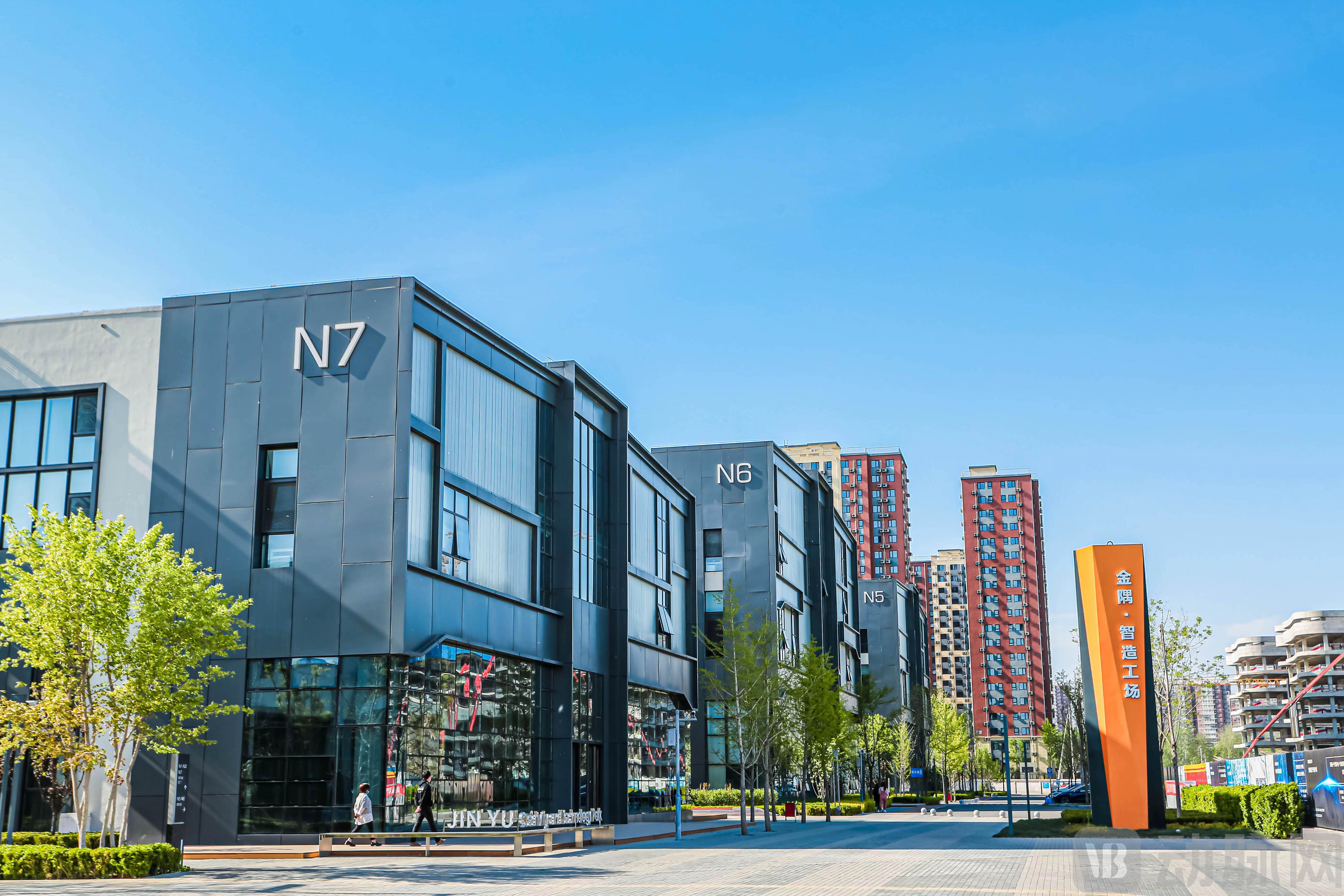
BBMG Smart Manufacturing Factory
Integrating Industrial DNA with Medical Innovation to Attract Multiple High-End Medical Device Companies
The predecessor of BBMG Smart Manufacturing Factory was the production base of BBMG Tiantan Furniture Company, a subsidiary of BBMG Corporation.
In 2016, to support the development of Beijing’s “Four Centers,” BBMG Corporation initiated the relocation and upgrading of production capacity for its subsidiary, BBMG Tiantan Furniture Company. In partnership with the Haidian District Government, it launched a public-private collaboration to jointly establish an International Intelligent Manufacturing Innovation Center. Rather than demolishing the old factory site, the project leveraged the former production base of BBMG Tiantan Furniture Company as its foundation, undertaking the renovation and upgrading of existing aging industrial facilities to createJinyu Intelligent Manufacturing Factory: An Innovative Science and Technology Park Focused on High-End Medical Devices, Intelligent Manufacturing, and Quantum Information。
The research and development and production of high-end medical devices impose stringent requirements on spatial conditions, such as a load-bearing capacity of over 5 tons per square meter, ceiling heights exceeding 6 meters, and customized cleanroom environments. Leveraging these factors, BBMG Corporation capitalized on the spatial advantages of the existing factory buildings during the renovation process,Retains over 85% of high-ceiling, high-load-capacity industrial space, aligning with the development needs of medical device enterprises in stages such as small-scale and pilot trials, inspection and testing, and small-batch production transfer., providing scarce hardware support for corporate innovation, R&D, and industrial commercialization.
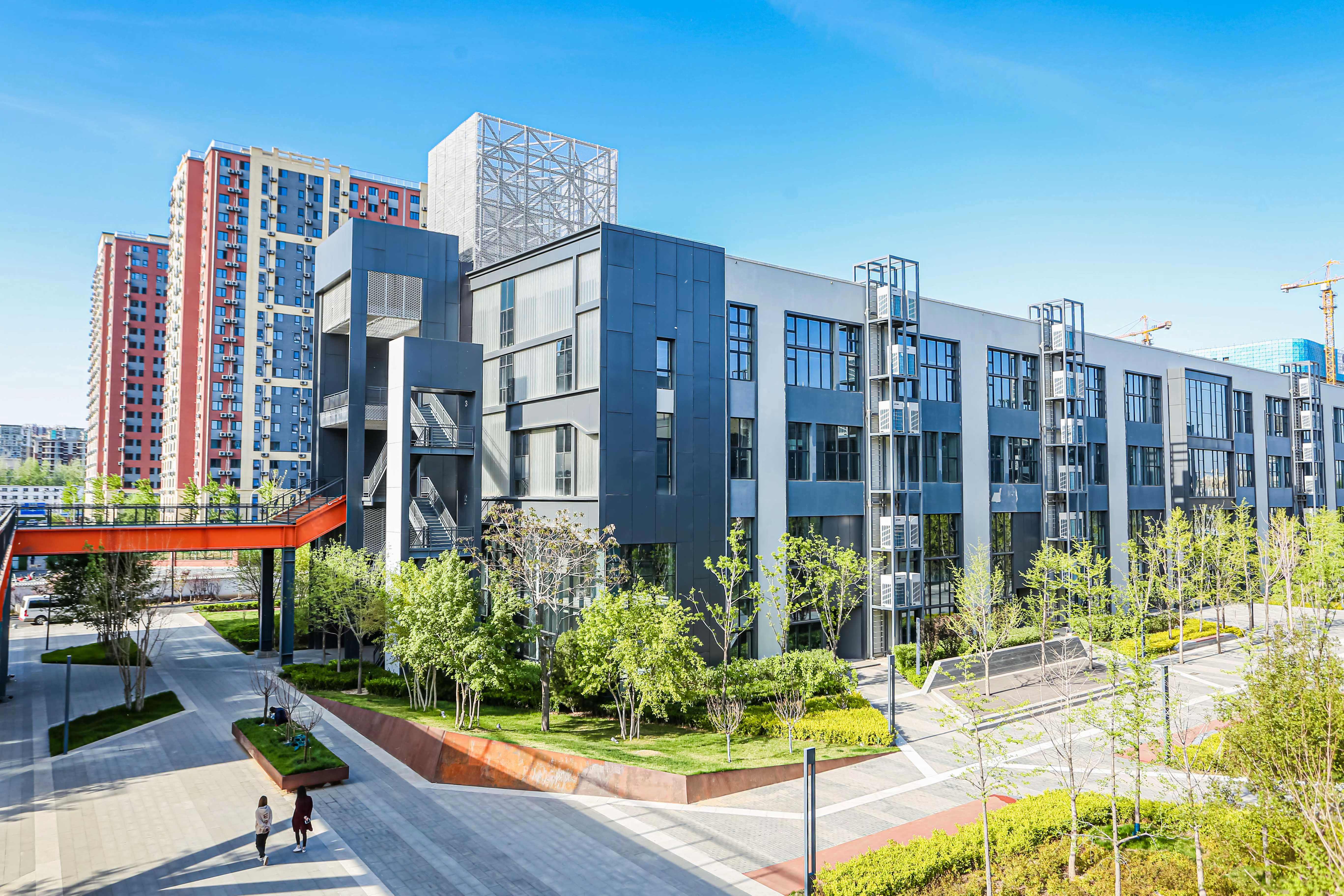
BBMG Smart Manufacturing Factory
Currently, the BBMG Smart Manufacturing Factory covers a land area of 20 hectares, with a building area of 120,000 square meters. In addition to its robust physical infrastructure, the park has also established"Physical Space Leasing + Industrial Investment (Incubation) + Innovative Industry Services" Operational Service ModelThis model not only provides basic space leasing services to enterprises but also accelerates their rapid growth through industrial investment and incubation, while creating a favorable development environment via innovative industrial services. This full-chain industrial service system has become the core competitiveness of BBMG Smart Manufacturing Factory, enabling it to stand out among numerous industrial parks and emerge as a new engine for regional industrial development.
Leveraging the park’s specialized infrastructure and integrated services, it has attracted numerous innovative medical device companies to establish their presence, includingShuimu Dongfang’s high-end medical device CDMO platform, Huawei Hengyuan, Weici Technology, Beiqi Medical, Qitan Technology, and others have gradually formed a distinctive cluster centered on high-end medical devices.. These enterprises cover all aspects of medical device research and development, production, and sales, forming a complete industrial ecosystem.
Generic Technology Platforms Build “Soft Power” to Address Common Pain Points in Medical Innovation
For high-end medical device companies, physical space is merely a foundational support; the common technical bottlenecks in the R&D translation process are the key barriers constraining innovation. Specifically, when building technology platforms, medical device innovation enterprises often face common pain points such as high costs and low resource utilization.
To address these issues,BBMG Smart Manufacturing Factory actively introduces medical device CDMO platforms and biotechnology common technology platforms.
The high-end medical device CDMO platform is built and operated by Beijing Shuimu Dongfang Medical Robot Technology Innovation Center Co., Ltd. It is the first CDMO platform in China to obtain certification for “contract manufacturing of active medical devices.” The platform provides full-lifecycle services—from concept validation, product development, engineering maturation, pilot-scale production, and mass production to international market launch—for high-end medical equipment, including medical robots, advanced medical imaging systems, in vitro diagnostic products, radiotherapy and nuclear medicine products, and implantable and interventional consumables.
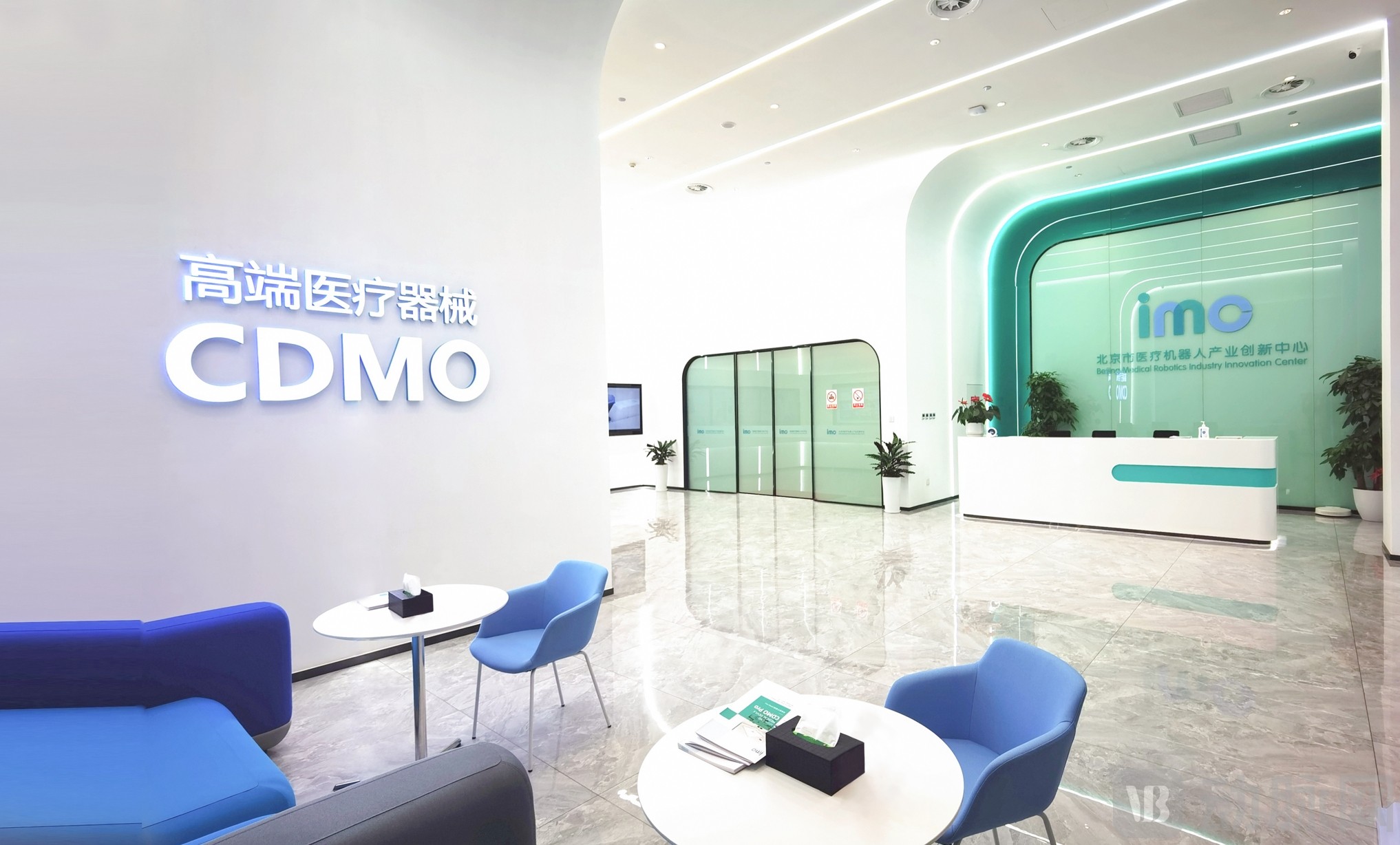
High-End Medical Device CDMO Platform
This platform addresses challenges encountered when translating scientific and technological achievements into industrial applications, such as technological immaturity, unclear market positioning, unstable manufacturing processes, and inadequate quality control. Through in-depth technical validation and optimization, it tests and enhances product functionality, performance, and stability. By comprehensively optimizing manufacturing processes, it facilitates the transition of research outcomes from laboratory-scale prototyping to large-scale production. Furthermore, by establishing a robust quality management system with compliant quality control standards and testing procedures, it ensures that products meet required quality specifications.
Taking a medical imaging equipment project as an example, this platform helped the enterprise reduce its production cycle from one year to within three months and its registration cycle from six months to one month, significantly shortening the time-to-market. It also saved costs related to factory construction, equipment procurement, and team building, thereby reducing upfront investment by more than 90%.
Qitan Biotechnology’s Shared Platform focuses on the field of gene technology, creating an open R&D infrastructure. Integrating experimentation, production, and storage, the platform is equipped with biosafety laboratories, advanced instrumentation, and specialized functional zones, meeting the needs of various fields including molecular biology, biochemistry, drug development, and pilot-scale production.
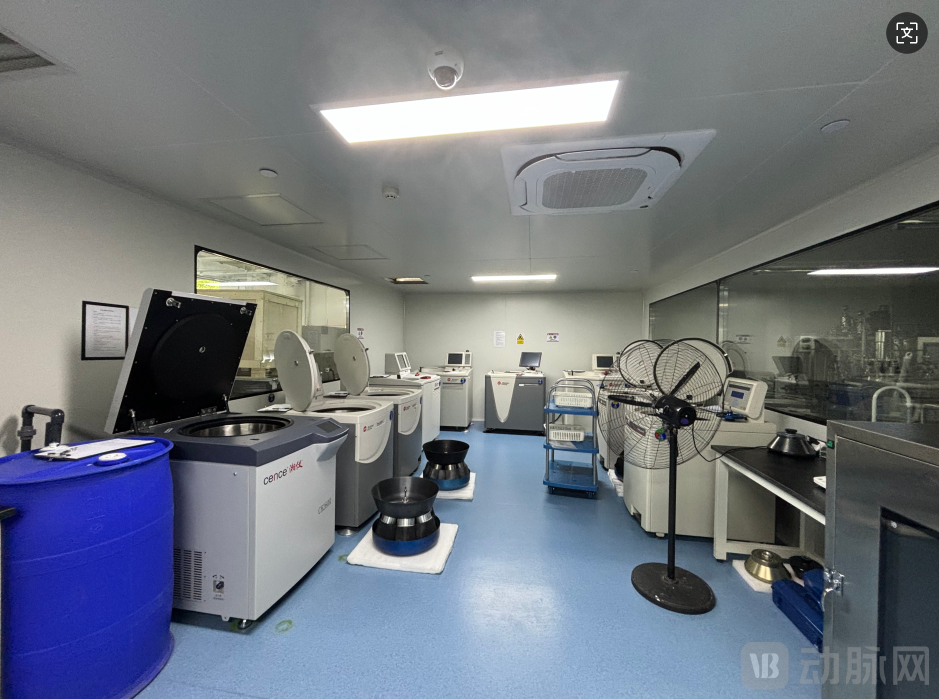
Qitan Technology Laboratory
The platform features high-throughput processing capabilities, precise analytical technologies, and production-grade equipment to meet users’ customized needs. It ensures regulatory compliance, holds comprehensive laboratory accreditations, and is supported by a professional team that performs regular equipment maintenance. Additionally, the platform offers value-added services tailored to user requirements, including technical training, procurement support for consumables, and EHS (Environment, Health, and Safety) guidance.
Taking a resident enterprise’s development of an early cancer screening kit as an example, the company reduced its R&D cycle from 18 months to 7 months by leveraging Qitan Technology’s sequencing services. The platform is also equipped with a professional EHS (Environment, Health, and Safety) team that provides laboratory waste disposal solutions and biosafety protection guidance, systematically addressing compliance risks faced by users.
The introduction of these shared technology platforms not onlyIt reduces corporate R&D costs, improves resource utilization efficiency, and effectively addresses the common needs of medical device companies in research, development, and commercialization., providing strong support for the innovative development of enterprises. Empowered by these platforms, companies within the BBMG Smart Manufacturing Factory can focus more on core technological innovation and accelerate product time-to-market, thereby securing a competitive advantage in the fiercely competitive market.
Accelerate Industrial Extension and Precise Focus to Drive Collaborative Upgrading of Regional Industries
The wave of innovation in medical devices is often closely intertwined with breakthroughs in frontier fields such as biopharmaceuticals and artificial intelligence (AI), which impose more stringent and specialized requirements on R&D environments. BBMG Corporation has keenly recognized the deeper development needs of biopharmaceutical enterprises.
To fill this professional platform gap and achieve deep synergy with the medical device cluster at BBMG Smart Manufacturing Factory, BBMG Corporation, in partnership with the Haidian District Government, has leveraged the existing industrial heritage at the production site of its subsidiary, Beijing Keshi Hardware Co., Ltd., to create another urban renewal project.“BBMG Life Sciences Innovation Center”。
BBMG Life Sciences Innovation Center covers an area of 96,000 square meters, with a total floor area of 53,000 square meters, comprising 18 individual buildings. The project is divided into three zones: Zone A serves as the supporting operational area, while Zones B and C are designated for R&D and office use in the biopharmaceutical industry. Leveraging the former site of Beijing Keshi Hardware Co., Ltd., the park has been upgraded through urban renewal initiatives. This transformation preserves the industrial heritage aesthetic while meeting the demands of modern R&D facilities.
In terms of industrial direction, the BBMG Life Sciences Innovation Center precisely targets frontier fields such as biopharmaceuticals, high-end medical devices, cell and gene therapy (CGT), and synthetic biology as its core focus. Leveraging the rich resources of top-tier universities and medical research institutions in Haidian District, it provides robust support for subsequent medical, scientific research, and innovation activities. Guided by this industrial orientation, the center has purposefully built"AI and Biomedical Technology Innovation Center", with“AI-Enabled Innovative Drug R&D”and“Medical Device R&D”As a starting point, we will build a digital R&D platform and an engineered manufacturing platform to create China’s first new-type science park and industrial ecosystem integrating artificial intelligence with life sciences, thereby supporting the high-quality development of Beijing as an international center for scientific and technological innovation.
In terms of spatial structure, the BBMG Life Science Innovation Center features a unique design with high ceilings, high load-bearing capacity, and no underground space, specifically tailored for R&D and testing in the biopharmaceutical industry. The parkOver 65% of the space has a ceiling height exceeding 6 meters, with a maximum single-story ceiling height of 10 meters., a top observation port can be reserved to facilitate the vertical hoisting of large-scale equipment, accommodating the installation of special equipment such as tank bodies, experimental setups, radiation shielding layers, GMP laboratories, and complex ductwork systems.Over 70% of the floor area has a load-bearing capacity exceeding 800 kg, with a maximum floor load capacity of 1.6 tons., capable of supporting large-scale precision instruments, automated production lines, and more.The park has no underground space or rail transit., supports the installation of ultra-large equipment and meets the precision requirements for measuring instruments. The park’s environmental impact assessment complies with the relevant requirements for the production of biochemical pharmaceuticals in the biotechnology sector.
The BBMG Life Science Innovation Center, with its flexible industrial spaces and bespoke designs such as customized environmental impact assessments and micro-vibration-proof laboratories, has created a more precise industrial platform for biopharmaceutical R&D enterprises. This effectively meets the stringent requirements for specialized spaces during the R&D processes of AI-driven innovative drug development and high-end medical device companies.
In addition, the park is equipped with supporting commercial amenities such as coffee shops, convenience stores, staff canteens, and healthy dining options. It also offers supporting services including shuttle buses, talent apartments, and star-rated hotels. The surrounding area boasts abundant and well-developed living facilities, such as shopping malls, schools, hospitals, and post offices, creating a high-quality, livable, and business-friendly environment that integrates industry and urban life. In the future, the BBMG Life Science Innovation Center will leverage the comprehensive service platform of the Zhongguancun Xisanqi (BBMG) Science Park and the strong state-owned enterprise resources of BBMG Corporation to improve the park’s service ecosystem and provide comprehensive support for enterprises.
Final Thoughts
In the long run, the successful establishment of BBMG Smart Manufacturing Factory and BBMG Life Sciences Innovation Center is far more than a simple case of physical renewal of old factory buildings; it represents an ecological solution that breaks through the dual “space-technology” bottlenecks in high-end medical devices and biopharmaceuticals.
Confronted with the core contradiction between the scarcity of specialized carriers in key areas during the innovation explosion period and the surging demand for industrial upgrading, the BBMG model has accurately identified the industry’s pain points: what is scarce is not merely physical space, but rather the generic technological capabilities and collaborative ecosystems that support innovation.
Through its strategic layout of “dual-carrier synergy and industrial chain complementarity,” BBMG Corporation has not only efficiently revitalized existing industrial plant resources, providing customized physical spaces that meet the stringent requirements of the medical device and life sciences sectors, but also proactively established key industrial infrastructure centered on medical device CDMO services and shared biotechnology platforms. These platform-based, open-access “soft capabilities” have effectively lowered barriers to innovation and reduced trial-and-error costs for enterprises, accelerating the translation of laboratory achievements into market-ready products and addressing the industry’s chronic inefficiencies and resource waste associated with fragmented, siloed operations.
Looking ahead, BBMG Corporation will leverage its first-mover advantages and continuous deepening in space transformation, platform development, and ecosystem operations to drive the core area of Beijing’s International Science and Technology Innovation Center toward becoming a globally influential source of innovation for medical devices and life sciences. Its exploration not only injects strong momentum into the collaborative upgrading of regional industries but also sets a replicable and scalable benchmark for China’s high-end medical device industry to break through common technological bottlenecks and achieve high-quality cluster development.
And this is precisely the mission of future-oriented industrial innovation that the rebirth of old factory buildings embodies.