

SenseTime Health Unveils Multimodal Foundation Model-Powered Smart Pathology Suite at CSP 2025
From August 21 to 24, 2025, the 30th Academic Conference of the Chinese Society of Pathology and the 14th Annual Meeting of Pathology (CSP 2025), hosted by the Chinese Medical Association and its Branch of Pathology, was grandly held at the Shanghai World Expo Center. As a leading event in China’s pathology communityHighest Specifications, Widest Coverage, Deepest ImpactThis annual academic gathering brings together top scholars and clinical experts from home and abroad, including numerous academicians of the Chinese Academy of Sciences and the Chinese Academy of Engineering. Centered on the theme “Inheritance · Innovation · Development,” the conference focuses on frontier breakthroughs, integrated applications, and collaborative innovations in pathology amidst the wave of artificial intelligence. It aims to promote high-level dialogue and practice in global pathological academia and industry, jointly exploring a new paradigm for smart pathology.
SenseTime Medical, as a pioneer in the field of AI healthcare,Implementing Smart Pathology“Integrated Intelligence and Digitalization, Full-Chain Convergence”” development philosophy,With "MedicalMultimodalLarge Model-DrivenSensecare® “Smart Pathology Integrated Solution” UnveiledVenue,By comprehensively showcasing three major technological platforms—the “AI Application Production Platform for Large Pathology Models,” the “Digital Pathology Slide Management Platform,” and the “Intelligent AI-Assisted Pathology Diagnosis Platform”—we aim to help build a new ecosystem of integrated intelligent pathology that spans the entire “clinical–research–teaching” continuum. This initiative drives the pathology discipline to break through traditional diagnostic boundaries, achieving a paradigm shift from foundational digitalization to intelligent, precision decision-making, thereby injecting AI momentum into precision medicine and the high-quality development of healthcare.
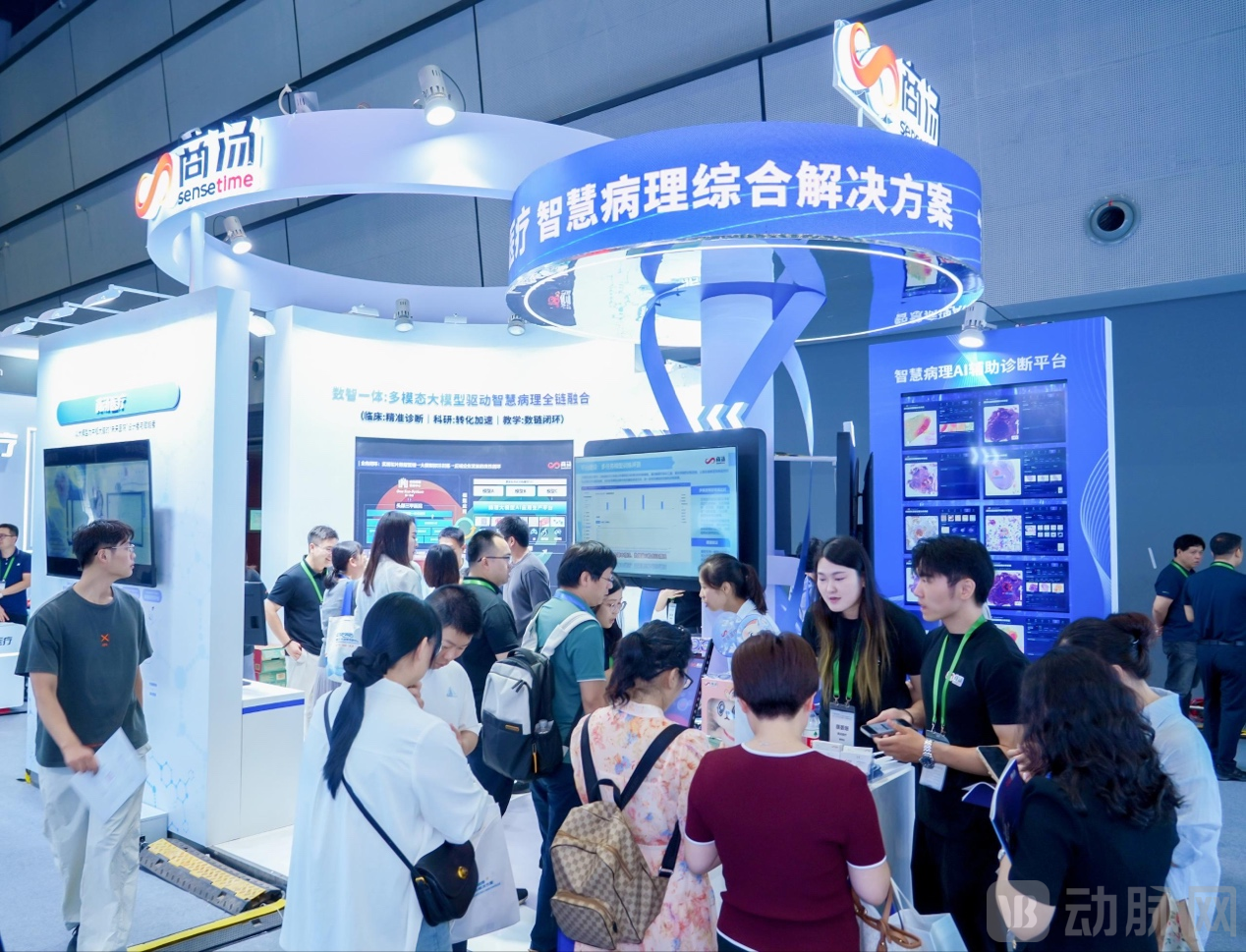
SenseTime Medical’s Multimodal Large Model-Driven Smart Pathology Comprehensive Solution Debuts at the Venue
Refined by Top-Tier Hospitals: Validating the Clinical Value of “Digital-Intelligence Integration” in Real-World Settings
As “AI + Healthcare” becomes an industry-wide consensus, the pathology diagnostic system, regarded as the “gold standard” for disease diagnosis, is also revitalized amid the wave of digital and intelligent transformation. Artificial intelligence is emerging as a key force driving the transition of pathology departments from traditional models to digital and intelligent paradigms, yet the complexities of technology implementation are becoming increasingly apparent. “Excellent performance of AI technologies in laboratory settings does not necessarily translate to effectiveness in complex and dynamic real-world clinical scenarios. Factors such as physicians’ operational habits, variations in data quality, and the characteristics of clinical workflows can all impact outcomes,” emphasized Shen Tian, COO of SenseTime Medical.The core of smart pathology solutions lies not merely in the algorithms themselves, but in their deep integration with clinical workflows to enable effective application in real-world settings.。
To this end, SenseTime Medical has partnered with top-tier medical institutions, including Shanghai Ruijin Hospital, which ranks among the leading hospitals in China for pathological diagnosis volume, and Shanghai Pulmonary Hospital, renowned for its expertise in respiratory specialty care. Focusing on core needs such as improving pathological diagnostic efficiency, assisting in the evaluation of complex cases, and unlocking the value of research data, we have conducted long-term clinical refinement and optimization. By enabling technology to iterate within real-world diagnostic and treatment scenarios, we truly achieve“Technical Adaptation Requirements and Solutions to Address Pain Points”, to translate SenseTime's integrated smart pathology solution into tangible clinical value.
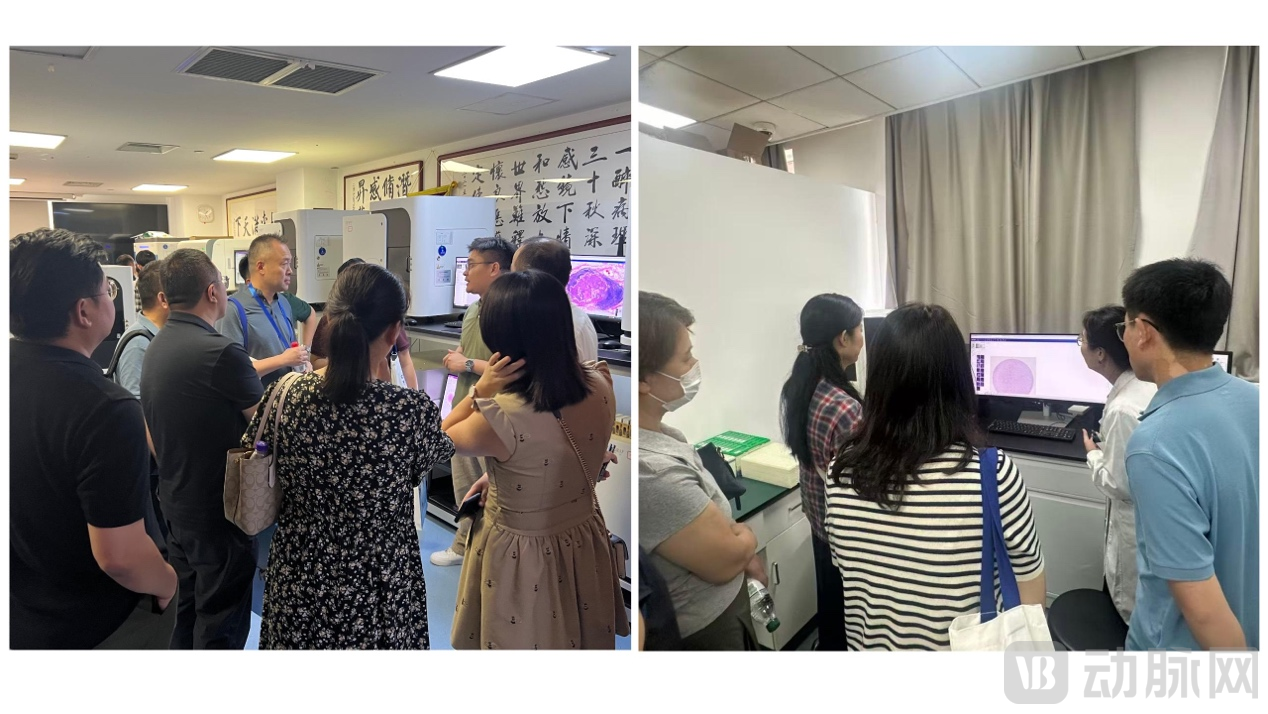
During the exhibition, SenseTime Medical organized attendees to visit Ruijin Hospital and Shanghai Pulmonary Hospital for on-site inspections and exchanges.
At the Department of Pathology, Ruijin Hospital, Shanghai, SenseCare®The launch of the AI-assisted smart pathology diagnosis and treatment platform has helped departments reshape intelligent workflows: the time required for diagnosing gastrointestinal biopsies has been reduced from one minute for traditional microscopic examination to under 10 seconds, saving over 10,000 labor hours annually. The application of AI-based quantitative analysis in breast immunohistochemistry has shifted diagnostic basis from “experience-dependent” to fully “data-supported.” Furthermore, continuous 24/7 AI scanning and analysis have driven a comprehensive digital and intelligent transformation across the entire workflow, compressing the overall pathology reporting cycle by 50% and reducing patients’ average waiting time from 3–5 days to just 2 days. Meanwhile, at Shanghai Pulmonary Hospital, PathOrchestra, China’s first large pathology model, is demonstrating the profound value of this technology. By integrating tools such as AI-assisted cytological diagnosis of pleural and ascitic fluids and quantitative PD-L1 analysis, it has achieved dual optimization of report generation efficiency and initial screening accuracy. Notably, its open model training capabilities support hospitals in independently developing algorithms for detecting “frozen nodules,” which have now passed preliminary clinical validation. This effectively promotes the closed-loop translation from “scientific innovation to clinical application,” providing a sustainable development path for specialized pathological technological innovation.
During this annual conference, SenseTime MedicalAlso particularlyOrganized multiple on-site hospital visits and exchange activities, inviting participating experts to the frontlines of the aforementioned clinical collaborations to experience SenseCare firsthand.® Smart PathologyComprehensive solutions such asHow to integrate into diagnostic workflows, empower research translation and teaching training,Experience firsthand the tangible transformation that artificial intelligence brings to modern pathology. Through this “what you see is what you get” approach, SenseTime Medical aims to more widely deploy its proven AI technologies across clinical and research settings in healthcare institutions at all levels, continuously driving innovation in smart pathology technology and practice.
Multimodal Engine-Driven: Providing Sustainable Momentum for the “Full-Chain Integration” of Smart Pathology
The core engine driving sustainable innovation is PathoEngine, specially presented by SenseTime Medical at this year’s annual conference.®AI Production Platform for Pathology Large Models and Its Proprietary Pathology Large Model, PathOrchestra.
As China’s first large language model dedicated to pathology, PathOrchestra was trained on 300,000 whole-slide images, leveraging self-supervised learning mechanisms to overcome the traditional reliance on manual annotations and achieve cross-disease generalized understanding of cellular morphology, tissue architecture, and staining characteristics. It is PathoEngine that truly translates this capability into clinical value.®The “Zero-Code AI Application Factory” model built by the platform—Enables hospitals to independently develop, train, and deploy pathology AI models without requiring coding expertise., significantly lowering the barrier to AI adoption and accelerating the iteration of diagnostic tools. The platform also deeply integrates PathOrchestra with the “Dayi” large language model, offering features such as a multimodal research assistant and intelligent annotation, thereby driving SenseTime Medical’s comprehensive smart pathology solution to achieve full-scenario coverage across “clinical practice, research, and teaching.”
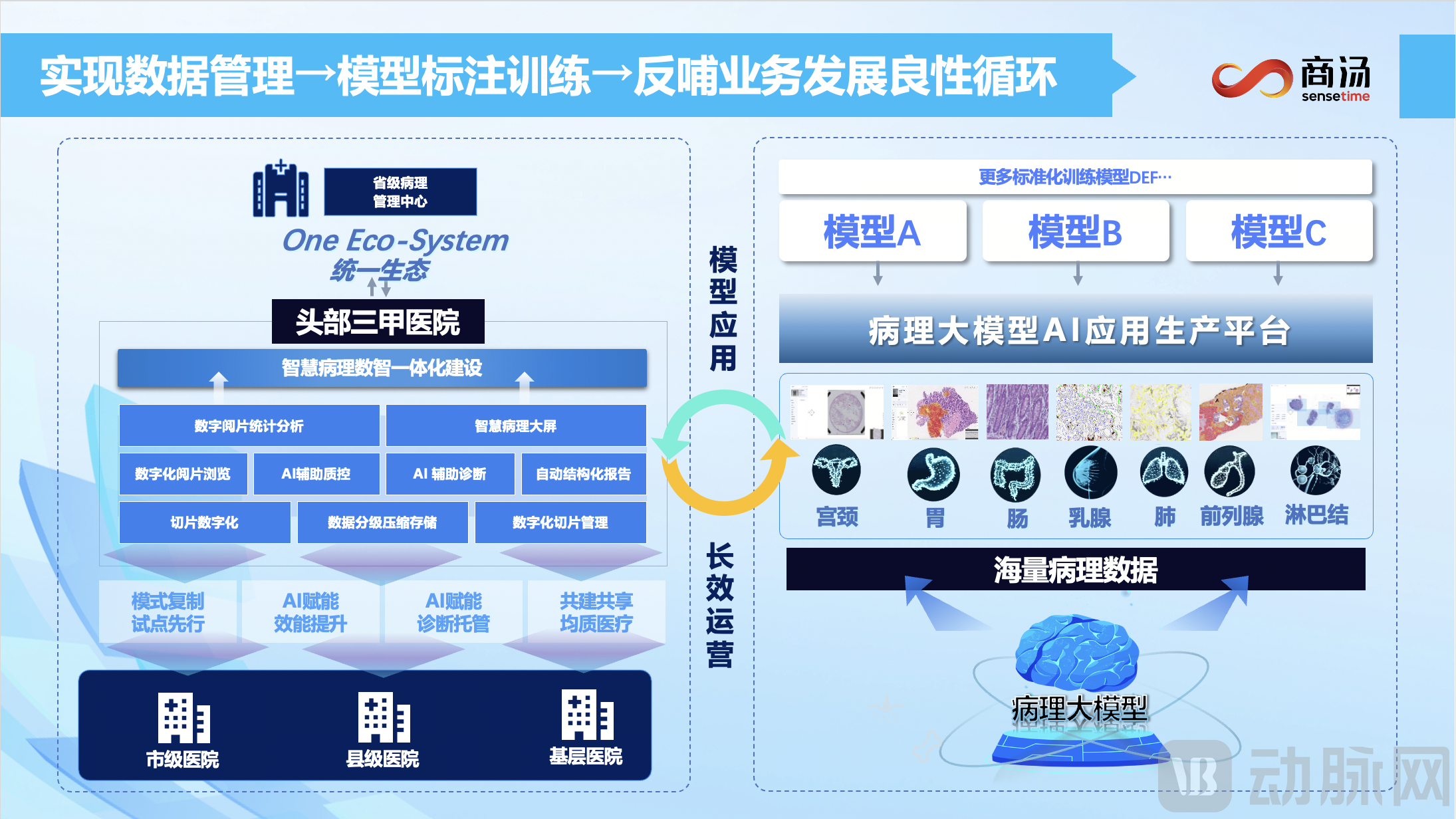
The deeper value lies in end-to-end integration: the digital pathology slide management platform serves as"Data Hub", aggregating high-quality standardized slide data to provide “nourishment” for the evolution of large models; the intelligent pathology AI-assisted diagnostic platform serves as"Clinical Interface", collect difficult cases annotated by physicians (such as rare lymphoma subtypes and complex metastatic lesions) into a repository of typical cases, and feed the data back to the central hub; the AI application production platform for large pathology models serves as“Evolution Engine”Leveraging its self-developed pathological large model, PathOrchestra, to enable the rapid production of downstream vertical models, it ensures that clinical practice at every hospital becomes a “living sample” driving model evolution. Meanwhile, common questions arising from teaching scenarios guide the direction of model optimization. As the boundaries between industry, academia, and research are broken down, technology, clinical practice, and medical education form an integrated, self-reinforcing cognitive flywheel, making AI increasingly precise with use.
Moreover, the dynamically evolving technological architecture has given rise to diverse application values:On the research front, the pathology large model-enabled algorithmic framework allows for the construction of diagnostic-grade tools with only hundreds of annotated cases, facilitating the development of specialized models that are multi-tasking, high-precision, and require zero coding;At the clinical level, multimodal collaborative capabilities enable full-process automation of "image analysis–guideline retrieval–report generation," achieving dual improvements in diagnostic efficiency and accuracy;On the teaching side, the digital slide management platform automatically integrates typical cases and expert consensus to build a dynamically updated teaching resource library, providing real-time decision support for primary care physicians. From data governance to model deployment, and from scientific innovation to clinical implementation, SenseTime Medical’s comprehensive smart pathology solution is continuously driving the evolution of smart pathology toward “greater precision, higher efficiency, and broader accessibility” through a closed-loop technological framework. By adopting the strategy of “model foundation – platform empowerment – full-chain integration,” it provides sustained innovative momentum for the “digital-intelligence integrated” smart pathology ecosystem.
A New Ecosystem for Comprehensive Implementation: Driving the Systemic Upgrade of Smart Pathology Toward the Future
From tertiary Grade-A general hospitals to primary healthcare institutions, and from regional medical hubs to international service windows,SenseTimeMedicalSmart Pathology Integrated SolutionBreaking Down Geographic and Hierarchical Boundaries in Healthcare Settings Through a Multi-Layered Implementation Roadmap, Unlocking the Value of Systemic Development。
At Changzhou No. 1 People’s Hospital, leveraging “digital intelligence in pathology” as the entry point, 12 AI-assisted pathological diagnosis modules were sequentially deployed. Within six months of launch, the total volume of scanned slides exceeded 30,000, and the AI application adoption rate rose to 70%. For certain gastrointestinal endoscopic pathology cases, “same-day testing and next-day reporting” was achieved, improving digital-intelligent workflow efficiency by 30% and establishing a model for digital-intelligent transformation of pathology in prefecture-level hospitals. In Qingdao West Coast New Area, the Regional AI-Assisted Pathological Diagnosis Center covers five medical institutions within the Health Community, the District Maternal and Child Health Hospital, and 25 primary healthcare centers, constructing a tiered diagnosis and treatment system characterized by “primary-level examination and superior-level diagnosis.” This initiative not only completed 25,000 screenings for breast and cervical cancer annually, enhancing regional diagnostic consistency, but also enabled patients to access high-quality medical services locally, truly achieving inclusive healthcare at the grassroots level. At Kiang Wu Hospital in Macau, the Smart Pathology AI system supports early screening for digestive tract diseases. By leveraging the precise localization and quantitative analysis capabilities of multimodal large models for pathological cells, it has completed clinical validation aligned with international standards within the private healthcare system. As the business layout expands in a multi-dimensional manner, the universal value and ecological resilience of China’s smart healthcare solutions continue to be demonstrated.
Although the exchanges at the Chinese Society of Pathology Annual Conference have temporarily concluded, SenseTime Healthcare’s journey continues to advance. As the light of technology penetrates the fog of diagnosis and treatment, and as data flows integrate the fabric of life, we will continue to leverage our self-developed multimodal large models as the core engine. This will drive the transformation in the field of pathology—initiated by the integration of digital intelligence and full-chain convergence—to greater depths and broader scopes. In alignment with the conference theme of “Inheritance, Innovation, and Development,” we are committed to injecting sustainable AI momentum into the construction and upgrading of a new ecosystem for smart pathology.