

Can Large Models Rescue the Slumping Medical IT Sector? Insights from the DMHC Conference
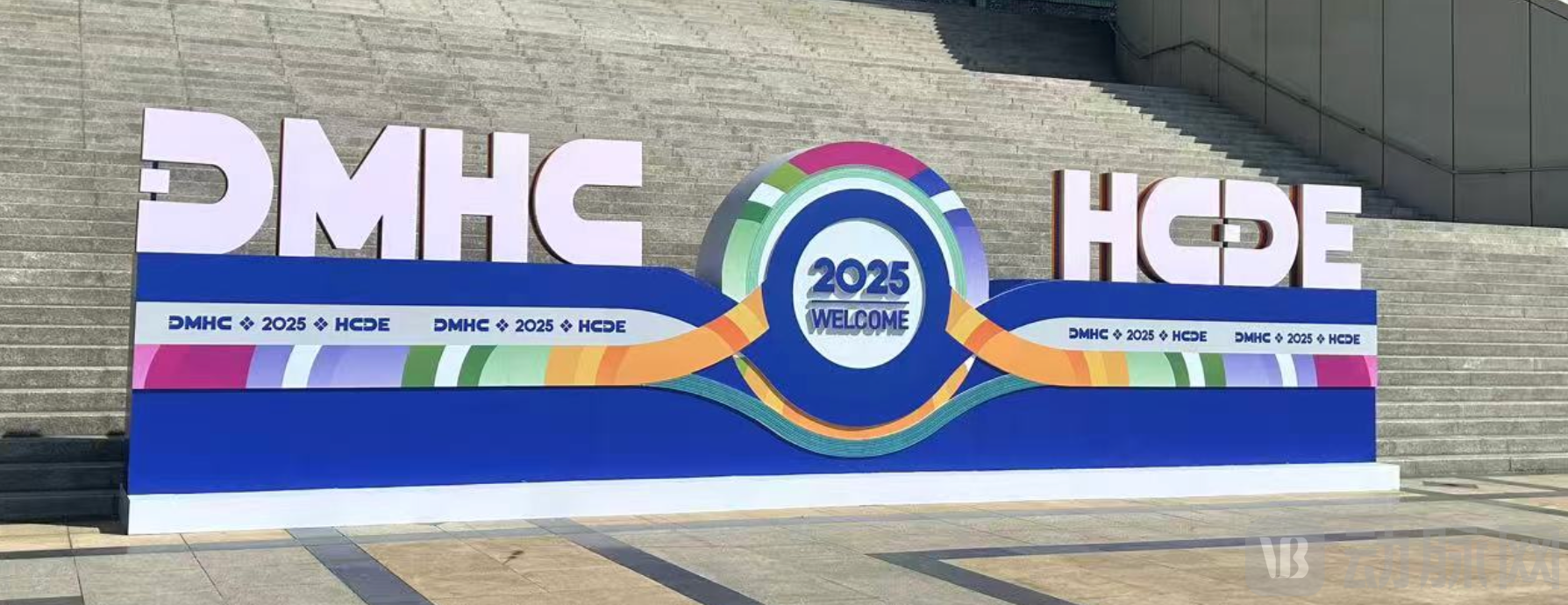
CHINC has always been the bellwether for the development of healthcare IT, but after its rebranding to DMHC this year, the venue in Nanjing felt somewhat subdued.
Among the long-established listed HIT companies, only Donghua Medical and Rongke Technology were present on-site; the three major telecom operators were collectively absent, with iFlytek Healthcare and Ant Group’s AQ taking center stage in the exhibition area.
The sluggish state of trade shows is a microcosm of the entire medical IT market. On one hand, although new policies have yet to be implemented, large hospitals have already fully met the informatization requirements set by previous regulations, and the construction of medical consortia is scheduled to conclude within the next two years. During this policy vacuum period, the conventional informatization market has contracted significantly.
On the other hand, the economic downturn and changes in hospital profitability models have caused some hospitals to put high-level information construction plans on hold. The economic benefits of such projects accumulate rapidly over time, but in the short term, difficult operating conditions have limited their investment in the future.
In the face of such a landscape, the industry typically pins its hopes on breakthrough technological innovations. Since DeepSeek swept across the entire sector at the beginning of the year, the term “large language models” has been imbued with new meaning within the medical IT industry.
So, can healthcare IT really find a turning point by leveraging large language models?
Since GPT-3.5 swept across the internet in October 2022, numerous healthcare technology companies have actively entered the field to develop their own large language model (LLM) applications. Within less than a year, companies such as Winning Health and iFlytek Medical have successfully integrated LLMs into their proprietary healthcare solutions.
However, constrained by the limitations of large language models’ reasoning capabilities, this technology failed to take deep root within hospitals or serve consumer-facing (C-end) users, until DeepSeek broke the deadlock.
The breakthrough brought by DeepSeek takes into account both business models and model capabilities.
First is model capability. DeepSeek has systematically enhanced the chain-of-thought capabilities of its corresponding vertical models through technologies such as hybrid reasoning architecture, Mixture of Experts (MoE) collaboration, reinforcement learning, and multimodal fusion. For example, prior to 2025, large language model-supported applications such as medical record quality control and automated case note generation existed, but the content they generated lacked sufficient precision, often requiring physicians to make manual corrections, resulting in a poor user experience. After redefining the chain-of-thought process, the accuracy of these applications has approached 1, meeting the daily operational needs of physicians.
Next is the business model. In the past, hospitals deploying large language models (LLMs) needed to purchase computing hardware and build the models themselves, allowing many companies to profit by simply selling pre-built models to hospitals. Today, DeepSeek has not only significantly reduced the costs of model deployment and inference but also offers a user-friendly MIT license, permitting users to deploy the model locally and freely use, copy, modify, and distribute the software. This means that companies’ business models will gradually shift from selling general-purpose LLMs to fine-tuning LLMs and selling specialized, vertical-specific smaller models. While this raises the bar for commercialization, it also opens up new market opportunities.
Changes in these two key factors are also driving companies to optimize their R&D logic, each seeking quality-improvement and efficiency-enhancement strategies aligned with their own strategic layouts. At the DMHC exhibition area, AI agents are ubiquitous, each offering unique strengths.
Companies such as iFlytek Healthcare, Donghua Medical, Shukun Technology, and Fuxin Kechuang share similar overarching strategies: they all seek to leverage large language models to reimplement AI applications that have already achieved mature deployment, thereby upgrading their capabilities and performance. However, there are differences in their specific implementation approaches.
iFlytek Medical provides hospitals with a full-stack toolchain, emphasizing the development of a core support platform that enables hospitals to build autonomous and controllable intelligent capabilities. It currently offers 20 specialized medical AI agents, including automatic medical record generation, semantic quality control of medical records, intelligent follow-up, and report interpretation. The goal is to establish an exclusive AI capability hub for hospitals, achieving efficient construction of intelligent services and a closed-loop value system, thereby comprehensively empowering hospitals to enhance quality and efficiency in their core operations.
Shukun Technology has accumulated extensive experience in medical image data processing, enabling it to leverage multimodal data to build greater competitive advantages. For instance, beyond text-based analysis, the company empowers imaging and ultrasound examinations by deploying specialized AI agents that provide real-time assistance to physicians during diagnostic decision-making. Furthermore, these agents facilitate the automated generation of imaging reports post-diagnosis, effectively reducing the time required for each individual diagnostic encounter.
Fuxin Kechuang has a deep understanding of policies and physicians’ daily operational practices, applying large language models to scenarios closely tied to hospital revenue, such as health insurance claim audits and DRG/DIP payment systems. Fuxin Kechuang told VCBeat that medical coders are in short supply in China; many tertiary hospitals have only one or two coders on staff, while numerous hospitals below the tertiary level have altogether ceased recruiting for this position. In Nanjing, some hospitals are offering annual salaries of RMB 300,000 to attract medical coders.
Empowering coders with large language models can help address this issue to a certain extent. According to Fuxin Kechuang, by enabling coders to collaborate with DRG/DIP intelligent agents, a single coder can increase their daily coding volume from approximately 200 cases to 800, while significantly reducing the likelihood of coding errors. One tertiary hospital reported annual savings of around RMB 6 million after implementing this large language model.
Deepwise Medical, Xiruan Technology, and Meichuang Technology have adopted more focused strategies, establishing differentiated competition within the AI agent landscape.
Shenrui Medical’s big data business focuses on the integration, governance, and application of multimodal data. Currently, the volume of clinical data available in hospitals is only barely sufficient to support the training of vertical large language models. If hospitals can reduce data governance costs and improve development efficiency, multimodal data integration and governance can generate substantial value from the perspective of hospital-based scientific research.
Deepwise’s newly released Deepwise TrioData X may address the aforementioned challenges by leveraging large model technologies to achieve multi-modal data fusion and governance, cross-modal data alignment, and generative data augmentation, thereby establishing a high-quality, trustworthy medical data asset center. It comprehensively upgrades the AI Capability Innovation Center into an intelligent hub equipped with large model training and inference capabilities, enabling unified multi-modal pretraining and joint cross-modal reasoning with large models.
Previously, Deepwise Medical’s smart imaging business had been upgraded into the Deepwise MetAI X large-model open capability platform. With this development, Deepwise Medical’s two core business segments—smart imaging and healthcare big data—have established a dual advantage of “technological foundation innovation + business scenario empowerment,” supporting hospitals’ high-quality development across clinical care, scientific research, management, and AI innovation, and achieving a leap from “single-point assistance” to “end-to-end, all-scenario empowerment.”
Xiruan Technology focuses on smart hospital operations and has developed an intelligent agent for hospital operational management. According to Xiruan, this intelligent agent aims to build a multi-dimensional, multi-domain collaborative system with precise judgment and continuous intelligence capabilities. It comprises four main layers: intelligent interaction, intelligent connectivity, intelligent core, and smart applications. Together, these four layers form a system that enables full-factor coordination of personnel, finances, and materials, as well as comprehensive intelligence across all scenarios in medical care, services, and management. This system fully supports strategic control efforts by managers, such as optimizing business processes, rationally allocating resources, and formulating sound plans, thereby creating value through AI-enabled refined hospital management.
Meichuang Technology’s approach stands out among information technology enterprises. As data security governance systems continue to evolve, intelligent data classification and grading technologies have become essential tools for enhancing data management efficiency. However, the trust barrier between humans and machines remains a key bottleneck limiting improvements in classification and grading efficiency. Multi-industry surveys indicate that even with advanced AI models, companies still need to allocate 60%–70% of total labor hours to manually review classification and grading results.
To address the aforementioned challenges, DBAppSecurity’s strategy is to establish a collaborative verification mechanism based on dual AI models, enabling both single-model self-inspection and cross-validation between the two models, thereby reconstructing the quality assurance system for data classification and grading. Currently, this application has achieved notable results at Jiaxing Maternity and Child Health Care Hospital. According to data provided by DBAppSecurity, the new mechanism, powered by large language models, achieves a data identification and classification/grading rate of over 99%, with a classification and grading accuracy exceeding 90%. Compared with traditional classification and grading methods, it reduces labor costs by more than 90%.
The newly established Ant AQ in June primarily introduces specialist physician agents. The event showcased products such as the Jack Anxin Agent, the Mao Hongjing Sleep Specialist Agent, and the Renji Hospital Urology Department Agent. These agents share a common feature: they have learned the diagnostic experience and habits of their respective physicians, enabling patients to interact with these digital “avatars” online. Through such interactions, patients can access services including health analysis, abnormality alerts, follow-up reminders, and improvement plans.
When it comes to hospitals, the value proposition of physician agents varies across different specialties. The urology agent at Renji Hospital assists with patient triage and helps primary care physicians improve diagnostic accuracy. In contrast, the thoracic surgery agent developed under Academician Wang Jun directly integrates with appointment registration systems at partner hospitals such as Peking Union Medical College Hospital, thereby enhancing patient access. According to on-site staff, Ant AQ has already created more than 300 “physician avatars,” empowering agents across multiple specialties.
Dajing TCM is one of the few companies in the exhibition area dedicated to building AI agents around Traditional Chinese Medicine (TCM). Currently, its “Qihuang Wendao” TCM Large Language Model has been developed by leveraging tens of millions of high-quality TCM knowledge graph data points accumulated over many years. The company selected an appropriate foundation model and fine-tuned it through collaborative efforts by its cross-disciplinary team of TCM and AI experts. In deep partnership with Huawei, Dajing TCM harnessed the computational power advantages of Huawei’s Ascend full-stack AI software and hardware platform. This model holds significant value for promoting the application of TCM knowledge and expertise in both serious medical settings and general health and wellness scenarios.
However, it is also important to note that the surge in AI agents is not directly correlated with the industry’s prospects. The development of a mature model merely represents the first step; whether hospitals will recognize its value and whether commercial monetization can be achieved remain unresolved questions.
In terms of total market size, the hospital sector surpasses other healthcare IT scenarios in scale; however, at this juncture, more promising payers for large language models may be found within the public health sector.
During DMHC, iFlytek Healthcare released its interim report, which may demonstrate the payment capacity of the public health sector. In the first half of 2025, iFlytek Healthcare’s revenue grew by 30%, with its To-G primary care solutions and regional solutions serving as the main growth drivers.
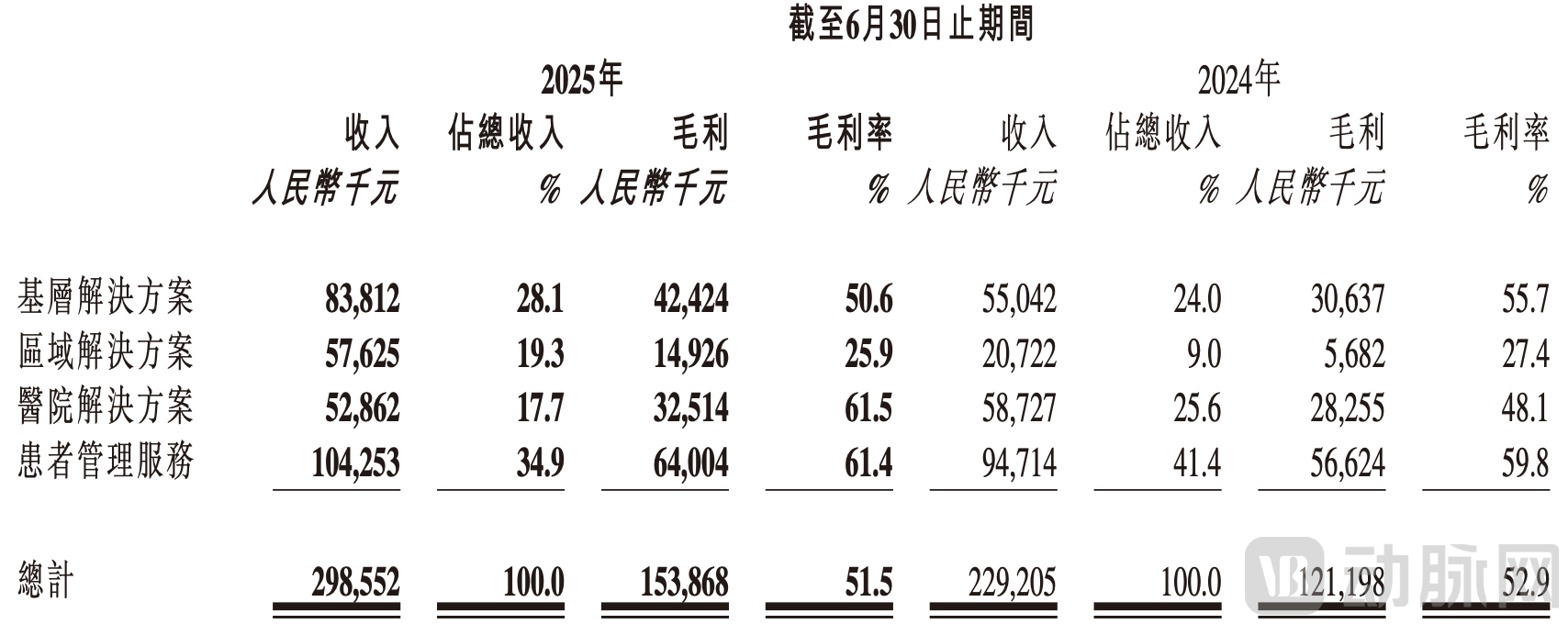
iFlytek Healthcare 2025 Interim Performance Data
However, deploying large language models in these scenarios is not a simple task.
The market’s resilience stems from primary care infrastructure failing to meet policy expectations. Although the state has introduced a series of policies targeting primary healthcare—such as enhancing diagnostic and treatment capabilities through medical equipment upgrades, and improving service capacity and patient recognition via closely integrated medical consortia—the actual pace of “upgrading” in primary healthcare remains excessively slow.
The core issue lies in the hindered flow of patient data. The healthcare informatics market is highly fragmented; even within a single Medical Community, primary care facilities may utilize multiple Hospital Information Systems (HIS) and Electronic Medical Record (EMR) systems. This makes it difficult to standardize related textual data, thereby limiting the value of AI.
Therefore, the large language models that have been implemented tend to focus on improving the diagnostic efficiency and capabilities of physicians in individual medical institutions, as well as accelerating their professional development, but have failed to deliver significant value to systemic frameworks such as medical consortia.
Under these circumstances, large language models may still need to await a “centralized procurement in the field of informatization” for primary healthcare to break the deadlock and achieve systemic unification.
Despite the explosive growth of vertical large language models both within and outside DMHC, few have managed to sustain their presence after the initial hype subsided.
While many AI agents demonstrate significant improvements in quality and efficiency within specific segments of healthcare services, their impact on overall quality may fall short of the threshold required to persuade hospital administrators when integrated into the entire workflow. In fact, numerous companies have candidly admitted that they are “crossing the river by feeling the stones,” having yet to identify a clear and definitive path forward.
Therefore, before evolving into genuine productive forces, large models may generate some revenue but are likely unable to bring about a systemic turnaround for medical IT systems.
However, upon reviewing all the large language models surveyed at the conference, we still observe numerous highly promising scenarios and their corresponding AI agents. For instance, applications closely aligned with executive decision-making—such as DRG/DIP payment systems and smart hospital operations—enable AI to deliver value more rapidly, potentially accelerating commercialization. Meanwhile, areas like multimodal big data centers and data security generate significant cumulative value over the long term; their deployment is expected to accelerate as hospitals’ operational performance improves in the future.
Overall, AI has demonstrated its capabilities across multiple industries and is certain to find its value proposition within hospitals. It is important to note that, regardless of how the capabilities and forms of large models evolve, their core must remain firmly anchored to “cost reduction,” “efficiency improvement,” “quality,” and “safety.”
Many untapped potential scenarios remain. As time progresses, pioneers will inevitably identify and validate those that meet the requirements, breaking through bottlenecks with appropriate digital-intelligence models.