

iFLYTEK Health Surges Ahead as AI+ Healthcare Leader with 30% H1 Revenue Growth and Breakthrough Medical Large Model Platform
Yesterday, the State Council issued the “Opinions on Deepening the Implementation of the ‘AI+’ Initiative.” The policy clarifies the application value of artificial intelligence in scenarios such as assisted diagnosis and treatment, health management, and medical insurance services, as well as in enhancing the capacity and efficiency of primary healthcare services. It sets a target to achieve deep integration of AI in these areas by 2027, with the penetration rate of next-generation intelligent terminals and AI agents exceeding 70%.
This indicates that the urgency for adopting large language models has reached a historic high, and future market demand is poised for explosive growth. AI companies, which have long struggled with commercialization, now have a more solid foothold.
As the industry leader, iFlytek Healthcare has anchored its development strategy to the aforementioned directions since its inception. Starting from the pain points in primary healthcare, it has gradually established four major business segments: primary care solutions, regional solutions, hospital solutions, and patient management services.
Today, the company has achieved breakthroughs from general practice to specialized care, and from mainland China to Hong Kong, realizing dual growth in revenue and profit. In the first half of 2025, the company’s revenue reached RMB 299 million (a year-on-year increase of 30%), with gross profit amounting to RMB 154 million (a year-on-year increase of 27%). The gross profit margin remained stable at a high level of 51.5%, demonstrating a growth trajectory consistent with long-term technological commitment.
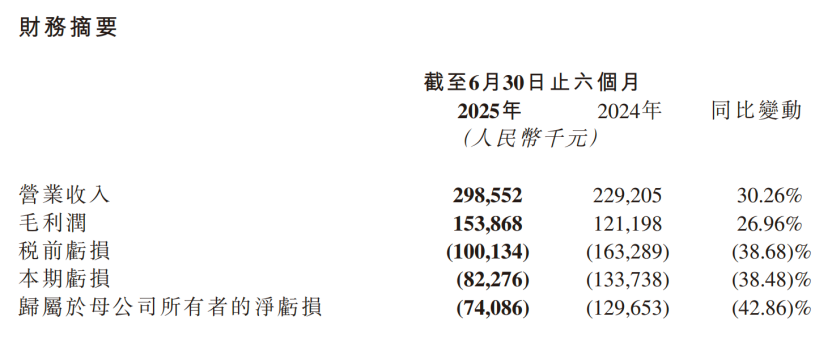
iFlytek Healthcare: Financial Summary for the First Half of 2025
In this context, iFlytek Healthcare, with its innate genetic advantage in medical AI technology, has been endowed with new significance.
Large medical language models can rapidly penetrate the healthcare system, driving large-scale deployment by hospitals, enterprises, and government agencies, with their technical value being self-evident.
However,To truly bring a product to market, companies must still address five core questions.Specifically, whether the product can address the “want to use” demand through pain point validation; whether there is a sufficiently large market size to provide the motivation for “willing to pursue”; whether the enterprise possesses robust technological and data foundations to support the “capable of doing” ability; whether credibility and value validation can ensure a “user-friendly” experience; and whether policy support exists to resolve the “enabled for use” issue.
In the short term, this poses challenges to medical AI companies to varying degrees. The reason why iFlytek Healthcare has managed to break through may be inseparable from itsAccumulation of vast professional knowledge and data in the medical field, fully self-developed large model technology foundation and continuous innovation capabilities, as well as close alignment with clinical practice and policy guidelinessuch innate advantages.
As early as 2016, iFlytek Healthcare leveraged AI technology at its core to develop a new generation of General Practice Clinical Decision Support System (CDSS), accumulating core capabilities in accurate speech recognition, natural language processing, and deep learning. In collaboration with health commissions in multiple regions, it achieved large-scale deployment of its general practice CDSS product, the “Intelligent Medical Assistant.”
Thanks toThe Data Flywheel Effect Generated by Massive Applications and the Continuous Innovation of Core Algorithms for Large Medical Models, in 2023, iFlytek Healthcare launched the Spark Medical Large Language Model, which is alsoThe industry’s only large language model trained entirely on domestically produced computing power,Continuously achieve breakthroughs and maintain a leading position in key clinical technologies such as specialized in-depth diagnostic reasoning, with comprehensive diagnostic and treatment capabilities reaching the level of attending physicians at Grade 3A hospitals.
By building high-quality datasets, developing hospital-specific models, and researching and developing medical professional agents, iFlytek Healthcare continues to expand its technological advantages, achieving breakthroughs in key technical areas such as evidence-based medical reasoning and health interaction, thereby enhancing the accuracy and professionalism of applications in medical scenarios.
It is on this basis that the company has upgradedAI Diagnostic and Treatment Assistant, AI Health AssistantTwo product families, meeting the diversified needs of governments, hospitals, and patients, to buildEmpowering GBC clients’ product matrix with AI, ultimately achieving a 30.3% year-over-year revenue growth.
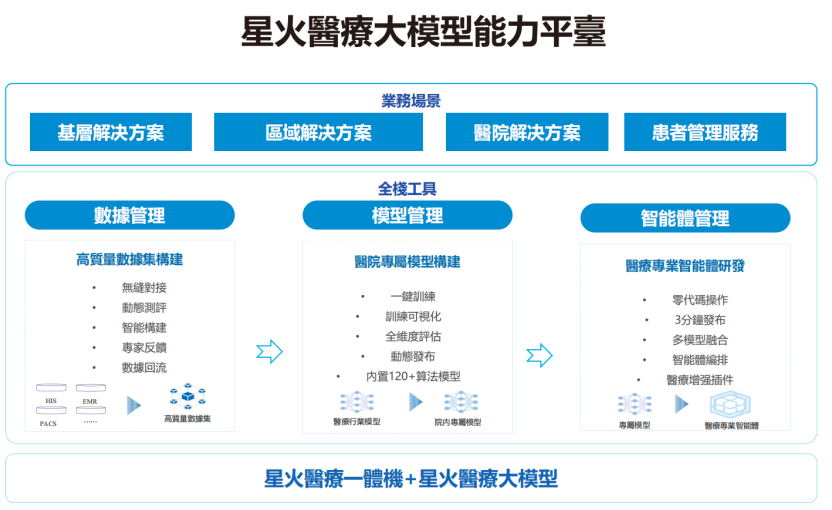
iFlytek Medical Spark Large Model Capability Platform
iFlytek Healthcare’s strategic path at the forefront of medical AI has always remained clear.
namely,ToGLeveraging its core business as a foundation, the company provides AI solutions to help governments strengthen primary healthcare services, enhance disease prevention and control capabilities, and improve regional medical collaboration and population health. Meanwhile, it carries outToBbusiness, by deeply accumulating insights into hospital scenarios and user needs, systematically building data governance capabilities and generating high-quality datasets, while simultaneously strengthening privacy and security systems. After solidifying the technical foundation, gradually extending service scenarios toToCfield, leveraging mature technological accumulation to unlock product value and fill the gap in “medical-grade proactive intervention.”
Certainly, in addition to addressing core issues such as pain point validation, technological and data capabilities, performance verification, and policy support and regulation, iFlytek Healthcare has jointly led efforts with the China Academy of Information and Communications Technology (CAICT), collaborating with multiple domestic medical institutions to formulate numerous standards. This has established a comprehensive standard system for large models in the healthcare industry, covering dimensions such as security management, data governance, and clinical application. Furthermore, this year, in partnership with the Artificial Intelligence Industry Development Alliance and the Smart Healthcare Professional Committee of the Chinese Medical Doctor Association, it has initiated research on the “Standard System for Agents in the Healthcare Industry,” furtherAddressing the challenges of difficult implementation and regulatory oversight in the industry caused by the lack of unified standards.
With the market penetration rate of large medical models remaining below 10%–20%, iFlytek Healthcare has identified a pathway to address the challenges associated with the practical implementation of these models.
Reviewing the Development of Large Medical Models in 2025: Health Management Services Emerge as One of the Most Compelling Application Scenarios. Today, this sector has attracted numerous internet giants and AI healthcare companies to enter the market.
The core reasons lie not only in the fact that large language model (LLM) technology has acquired the capability to integrate the closed-loop process of “monitoring, assessment, and intervention” in health management, thereby effectively addressing the longstanding issue where health management remains stuck at the stage of “passive response to disease” and making “proactive health management” difficult to achieve, but also in the increasingly pronounced market-oriented characteristics of this sector.
OnlyCurrently, industry solutions primarily focus on generalized proactive health for consumers (C-end), such as health reminders or data logging, with limited engagement in proactive health management, leaving a significant gap in “medical-grade proactive health management.”。
This year, iFlytek Healthcare has achieved numerous breakthroughs in addressing this industry pain point.
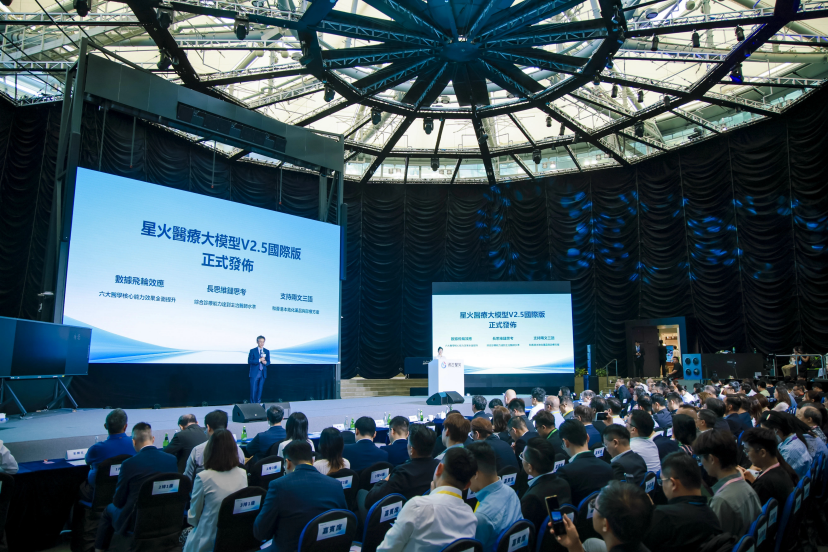
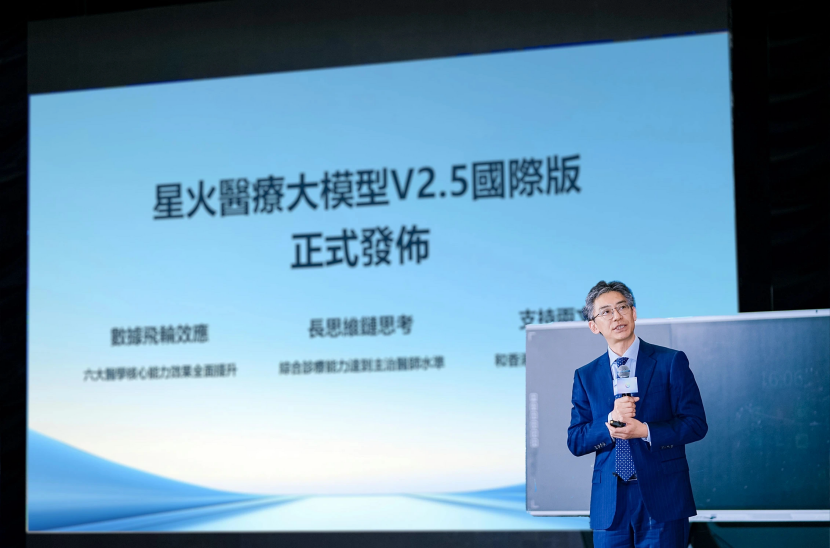
Two months ago, iFlytek Health released the international version of its Spark Medical Large Model V2.5, along with the comprehensively upgraded AI health assistant, the “iFlytek Xiaoyi APP,” which not onlyReleased the Hong Kong version, supporting switching between two scripts and three languages, suitable for diverse communication scenarios.. More importantly, itsTruly Propelling Health Management into a New Era of Proactive Health Management. Currently, the number of downloads for the iFlytek Xiaoyi APP has exceeded24 million, with a cumulative total of over140 million timesAI Consultation Volume, User Satisfaction Reached98%。
Although achieving this series of breakthroughs is no small feat, iFlytek Healthcare, leveraging its inherent AI technological DNA and its deep integration with clinical practice, has made a clear choice characterized by distinct medical-grade attributes. This choice,Distinct from the pan-health platform model, it places greater emphasis on the depth of medical intervention and a closed-loop system for proactive health management.
The health management service system is a cyclical framework composed of three core components: health monitoring, health assessment, and health intervention. Specifically, health issues are first identified through health monitoring; their underlying nature is then understood via health assessment; and subsequently, these issues are addressed through health intervention. The process then returns to the monitoring phase, initiating new cycles of assessment and intervention, thereby establishing a continuously operating loop.
In the past, this process struggled to function effectively due to data silos inherent in traditional technologies, the limitations of superficial analysis, and the fragmentation of service ecosystems. iFlytek Healthcare has been able to streamline this process by achieving breakthroughs across the entire health management workflow.
Health monitoring serves as both the source of data and the foundation for value extraction. iFlytek Healthcare initially focuses on this segment,Upgrade the iFlytek Xiaoyi APP to integrate joint report interpretation and health hardware data connectivity, enabling real-time monitoring of users' physical conditions while enhancing privacy protection.
On one hand, the product covers more than 6,000 common examination and test indicators. With a medical OCR recognition rate of 97% and a 98% coverage rate of mainstream laboratory report formats in mainland China, it enhances data integration efficiency, thereby generating precise health profiles to support personalized self-management of diseases. On the other hand, by integrating multi-channel health data from sources such as Huawei Health and third-party connected devices, it generates actionable intervention recommendations aimed at improving health indicators. It also regularly tracks data changes to assess the risk of potential damage to organs such as the heart and kidneys, enabling early screening and prevention.
Leveraging its capabilities in multimodal data integration and in-depth analysis, the iFlytek Xiaoyi APP furtherAchieve dynamic monitoring of users' physical conditions and health assessments, and launch features for record-based proactive health management, risk assessment, and intervention recommendations.
By continuously tracking health metrics in real time and integrating model-based analysis, this system interprets individual health trends, triggers intelligent alerts promptly, and generates precise diagnostic plans. For instance, for individuals with hypertension or hyperglycemia, it automatically links to key monitoring indicators specified by clinical guidelines, regularly tracks data changes, and assesses the risk of potential organ damage to enable early screening and prevention. Additionally, it provides actionable intervention recommendations for improving health metrics based on users’ personal health records.
It is worth mentioning that the iFlytek Xiaoyi APP also achievesDeeply integrate users' past medical history, personal history, and family historyA major breakthrough in personalized information. By generating diagnostic responses based on specific circumstances, it not only reduces result bias at the source, but also allows the system to synchronizeSimulating Doctor Consultation Logic, progressively narrowing down the etiology through stepwise interaction to enhance the precision of recommendations and reduce the risk of misdiagnosis. More importantly, during this process, the system willDynamic Extraction of Interactive Information for Continuous Training and Learning, continuously enriching the health knowledge base to enhance model accuracy and iterative capabilities, thereby enabling personalized health guidance.
In addition, the iFlytek Xiaoyi App has achieved a comprehensive upgrade from functionality to service scope, expanding the breadth and depth of coverage for disease and health scenarios, while synchronouslySupports multi-scenario consultations, medication information queries, and risk mitigation for combination drug therapy.. By leveraging technological innovations such as instant query via photo upload, the cumbersome process of users previously having to consult package inserts and search for information across multiple channels is significantly simplified, thereby reducing healthcare management costs.
The core breakthrough of this product lies in its departure from the broad scope of proactive health services for consumers, such as health reminders and data tracking, and insteadBuilt on medical-grade data, centered on AI-clinician collaborative decision-making, and driven by dynamic interventionsegment, achieving full-cycle proactive health management and precisely filling the gap in "medical-grade proactive health management."
Behind this breakthrough lies iFlytek Healthcare’s deep accumulation of medical data. The company has amassed hundreds of thousands of long-chain-of-thought data samples that closely align with real-world clinical workflows and diagnostic scenarios, while conforming to physicians’ evidence-based reasoning. Furthermore, in collaboration with medical experts, it has constructed hundreds of thousands of reinforcement learning data entries tailored to key healthcare application scenarios, thereby further enhancing the professionalism and accuracy of its large language models.
This product logic and value have clearly gained recognition from multiple parties.
Currently, the iFlytek Xiaoyi APP has been integrated with multiple official institutions, including the Health Commission of Anhui Province and the Health Commission of Hainan Province, and provides physical examination report interpretation services for users undergoing check-ups at Peking Union Medical College Hospital and the First Affiliated Hospital of University of Science and Technology of China (Anhui Provincial Hospital).
Assessing a company’s growth potential ultimately comes down to evaluating its inherent advantages and acquired strategies. As large medical models enter the second half of their development cycle, answering these questions becomes crucial.
For iFlytek Healthcare, its greatest inherent advantages undoubtedly lie in its technology, data, deep clinical integration, and independently controllable capabilities in both software and hardware.
Medical-grade data and knowledge accumulation have helped iFlytek Healthcare build a rare data flywheel in the industry. Its fully self-developed large model technology foundation further endows it with core competitiveness. Unlike pure technology companies, iFlytek Healthcare has been deeply embedded in clinical scenarios since its establishment. The closed loop from clinical needs and technological R&D to implementation and validation enables it to precisely identify industry pain points. Moreover, its characteristics of full domestication of software and hardware, along with autonomous controllability, further align with the industry’s stringent compliance requirements.
Leveraging its inherent advantages, iFlytek Healthcare is well-positioned to withstand macroeconomic pressures and achieve rapid growth within its vertical sector. Its acquired strategies, meanwhile, serve as the key to continuously expanding its boundaries. Today, iFlytek Healthcare has provided comprehensive solutions across business layout, technological iteration strategies, and ecosystem partnerships.
iFlytek Healthcare’s development strategy has always revolved around“An AI Diagnostic and Treatment Assistant for Every Doctor, an AI Health Companion for Everyone”: Building a Full-Chain Business Ecosystem Covering Governments, Hospitals, and Patients. This strategy not only breaks the limitations of single-ended business, bringing more possibilities for its business growth, but also effectivelyIt addresses the three major pain points of medical AI: difficulties in practical implementation, data compliance, and commercial monetization.
Certainly. In terms of technical strategy, iFlytek Healthcare continuously iterates its technologies while promoting deep integration between technology and the healthcare industry. Regarding cooperation strategy, it leverages partnerships among government, enterprises, hospitals, and cross-sector collaborators to break down scenario-based barriers and further expand its competitive advantages. As aA Company Involved in Developing Technical Evaluation Systems and Standard Specifications for Large Medical Models, which enables it to establish technical barriers within the industry, enhance compliance competitiveness, and secure a first-mover advantage in market access.
The current growth trajectory of iFlytek Healthcare’s performance may well serve as the strongest testament to the validity of its inherent advantages and post-launch strategies. Building on this foundation, iFlytek Healthcare has undoubtedly amassed the momentum necessary for its next phase of growth.