

Exo Imaging Files for IPO Following FDA Clearance of AI-Powered Handheld Ultrasound and Over $320M in Total Funding

Exo
High-Performance Handheld Ultrasound Platform and AI Developer
In June 2025, Exo Imaging (hereinafter referred to as “Exo”), a medical technology company headquartered in Santa Clara, California, USA, announced that two artificial intelligence (AI)-powered lung features within its handheld ultrasound platform, Exo Iris, had received U.S. FDA 510(k) clearance. These features are designed to detect two common pulmonary conditions: pleural effusion (fluid accumulation between the lungs and the chest wall) and lung consolidation/atelectasis (collapse of lung tissue).
Not long ago, news emerged that Exo was raising financing: led by Sands Capital, Bold Capital, and Qubit Health Capital, with Samsung’s investment arm, Samsung Ventures Investment Corp., also potentially participating. The round was expected to raise up to $100 million for the imaging startup. However, this has not yet been officially confirmed.
The dual tailwinds of successful fundraising and regulatory approval reflect Exo’s strong growth momentum. What industry signals does this send? Why has Exo’s technological value earned dual recognition from both capital markets and regulators? And what development trends will the portable imaging industry witness?
Exo was co-founded by Janusz Bryzek, a seasoned MEMS (Micro-Electro-Mechanical Systems) expert from Silicon Valley, and Sandeep Akkaraju. Its inception stemmed from a profound insight into the global inequity in healthcare resource allocation: in most regions, high-quality ultrasound equipment is either prohibitively expensive or too complex to operate without specialized professionals, causing patients to frequently miss opportunities for timely diagnosis.
Exo’s core mission is to ensure that every healthcare professional worldwide has access to affordable, easy-to-use, diagnostic-grade medical imaging equipment, thereby supporting clinical decision-making with real-time, high-quality images and ultimately improving patient outcomes. By integrating technologies such as nanomaterials, MEMS sensors, and advanced signal processing, Exo revolutionizes device performance at the foundational architecture level, overcoming portability challenges. Furthermore, by leveraging the economies of scale in semiconductor manufacturing and achieving cost reduction through standardized mass production, Exo establishes a significant cost advantage.
The realization of this technological roadmap is made possible by Exo’s core team, which brings together senior experts from the fields of medical technology, semiconductor engineering, and artificial intelligence. Many team members hail from industry leaders such as Apple, Google, GE Healthcare, Philips, Intel, and Qualcomm, bringing extensive experience in semiconductor design, AI algorithms, and medical device development. This expertise provides a solid foundation for “reimagining ultrasound devices through a semiconductor mindset.”
Currently, Exo’s core product, Exo Iris, leverages semiconductor technology as its foundation and integrates SweepAI intelligent technology with Exo Works workflow tools to create a complete “hardware + AI + workflow” closed loop, enabling seamless coverage of ultrasound applications across all scenarios.
Exo Iris Handheld Ultrasound System: Miniaturization and High Performance Achieved Through Semiconductor Technology
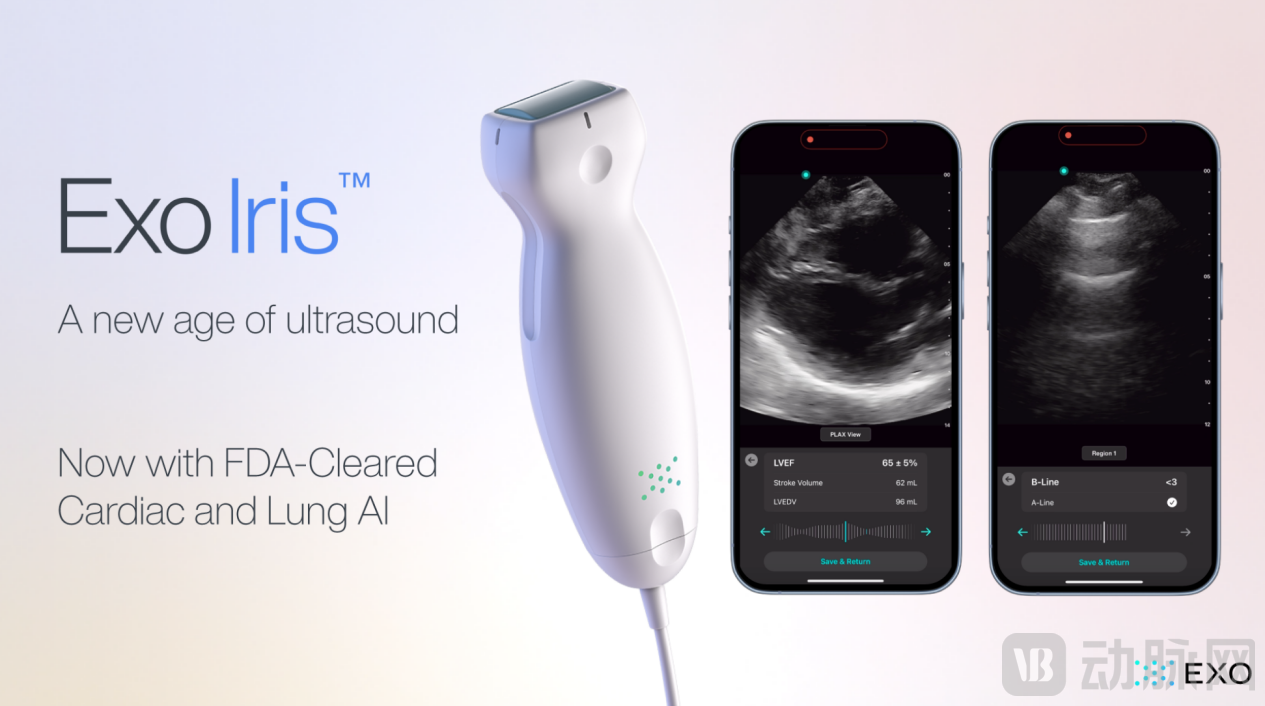
Schematic Diagram of the Exo Iris Handheld Ultrasound System Source: Exo Official Website
As the culmination of Exo’s technological philosophy, Exo Iris breaks away from the traditional reliance on multiple probes in ultrasound equipment through its design featuring a single probe for whole-body imaging. The core of its hardware innovation lies in pMUT technology, which integrates thousands of micro-transducer arrays on silicon wafers using semiconductor micromachining processes to transmit and receive multi-frequency acoustic waves. This design delivers three major breakthroughs:
1. Miniaturization and High Integration.The device is only pocket-sized and weighs a few hundred grams, allowing for one-handed operation, yet it covers the functions of traditional multi-probe systems.Second, broadband high-frequency performance.Overcoming the trade-off between high resolution and deep penetration, it captures fine structures of superficial organs while enabling deep-tissue imaging of the abdomen and heart. It supports multi-region whole-body scanning, allowing for multi-scenario examinations without the need to change probes.3. Cost and Mass Production Advantages.Leveraging mature semiconductor manufacturing processes, Exo enables large-scale mass production, significantly boosting production efficiency and substantially reducing hardware costs, thereby laying the foundation for widespread adoption.
From a clinical usability perspective, Exo Iris thoroughly streamlines the workflow: scanning the patient’s barcode quickly initiates the examination, and simple touch interactions allow switching between examination sites without the need for frequent probe changes. It also supports direct connection to smartphones or tablets, enabling mobile control and image processing, which makes point-of-care imaging feasible in emergency departments, pre-hospital emergency settings, community clinics, and even home care scenarios.
As Exo CEO Sandeep Akkaraju stated, “It is designed to be as simple as taking a picture with a smartphone, making it accessible to all healthcare professionals, and will save lives, improve care, and reduce costs.”
SweepAI Deep Empowerment: The “Intelligent Engine” from Real-Time Imaging to Precise Diagnosis

Schematic Diagram of the SweepAI Platform Source: Exo Official Website
Exo’s application of AI is not a mere addition of features, but rather integrates it as the core engine of imaging. The company’s self-developed SweepAI technology epitomizes this philosophy and has become an indispensable intelligent aid in clinical decision-making. It breaks through the operational and diagnostic bottlenecks of traditional ultrasound via algorithmic advancements, while leveraging hardware portability and high performance to enable real-world clinical deployment.
SweepAI’s core strengths stem from its deep technical expertise. Its training dataset comprises over 100,000 real-world clinical images spanning diverse scenarios such as emergency departments and intensive care units (ICUs), and has undergone rigorous FDA validation. In 2024 alone, Exo secured FDA approval for four additional AI indications, bringing its total number of cleared indications to nine. This combination of large-scale real-world data and authoritative regulatory endorsement ensures accurate identification of internal anatomical structures even in “imperfect scans,” laying a reliable foundation for subsequent clinical implementation.
Leveraging AI algorithms, SweepAI significantly reduces the professional dependency associated with ultrasound operations. It automatically identifies optimal imaging angles and optimizes scanning paths by tracking healthcare providers’ wrist movements, thereby substantially lowering operational reliance and enabling novices to rapidly acquire standardized images.
Furthermore, SweepAI features a built-in automatic capture tool that enables real-time monitoring of the scanning process. The device does not need to be restarted even if the patient moves. By leveraging AI assistance, it reduces the learning curve and operational burden for users, ensuring accurate and reliable diagnostic results.
From a clinical practice perspective, SweepAI’s value spans the entire imaging workflow. In diagnostics, it provides real-time responses, accurately identifying myocardial dysfunction (such as chemotherapy-induced cardiotoxicity) before changes in ejection fraction occur. It automatically captures cardiac and pulmonary views and quantifies key indicators including heart failure, decompensation, and ventricular hypertrophy. More importantly, all AI analyses are performed locally on the device without relying on network connectivity, making it ideally suited for remote areas or emergency scenarios.
SweepAI’s rapid iteration pace further underscores its competitive advantage. Within less than a year, it has undergone three major updates, adding multiple FDA-cleared indications and integrating features such as automated flow characterization and enhanced imaging clarity, thereby continuously expanding its clinical coverage from cardiac to pulmonary applications and from acute care to chronic disease management. This capacity for rapid evolution enables Exo Iris to continually push the boundaries of intelligence beyond its hardware foundation.
Exo Works: The “End-to-End Tool” for Reimagining the Ultrasound Workflow
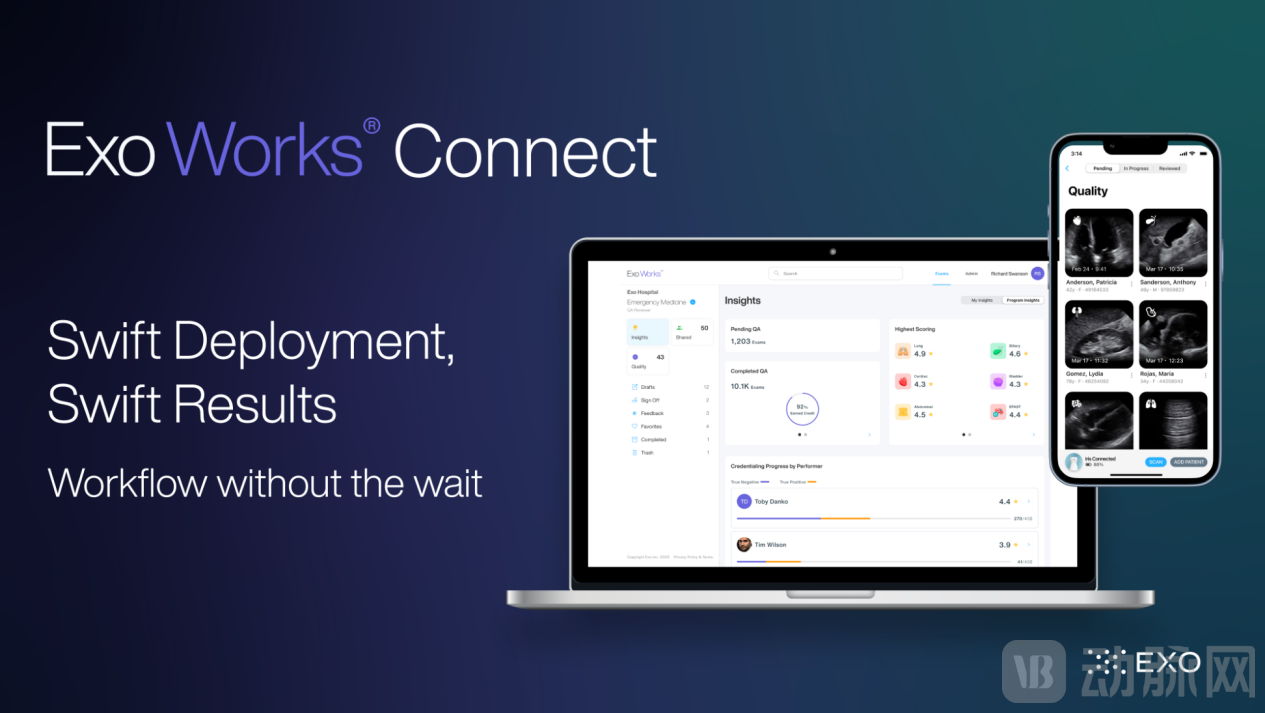
Exo Works Schematic Diagram Source: Exo Official Website
Exo Works, as the workflow management tool built by Exo, deeply integrates with Exo Iris hardware and AI systems to form an integrated architecture. It enables seamless connectivity for patient data acquisition, image archiving, examination report generation, and hospital PACS systems, ensuring a highly efficient and smooth end-to-end ultrasound examination process.
Its functionality directly addresses critical clinical pain points: in the realms of immediate documentation and storage, it eliminates traditional, time-consuming manual operations, enabling examination records to be completed within seconds. Through DICOM standards, images and data can be effortlessly stored with a single click to the Exo Works cloud platform, hospital Picture Archiving and Communication Systems (PACS), or Vendor Neutral Archives (VNA), thereby obviating the need for repetitive procedures.
In terms of collaboration and sharing, the platform supports anonymous sharing of images and diagnostic results via email, SMS, and secure URLs, facilitating rapid access to second opinions and cross-team collaboration, which is particularly well-suited for remote consultation scenarios. Regarding system compatibility and security, it seamlessly integrates with existing hospital IT systems while adhering to the highest security standards, such as HITRUST and HIPAA, thereby breaking down integration barriers while ensuring data compliance.
As Exo positions the tool—“saving time for healthcare professionals and returning them to patients’ sides by integrating processes such as examination documentation, archiving, and billing”—Exo Works liberates medical staff from cumbersome administrative tasks by streamlining these workflows, enabling them to devote more energy to patient diagnosis and treatment. This also makes it a key link within the Exo ecosystem, connecting hardware, AI, and clinical scenarios.
Full-Scenario Penetration: "Borderless Imaging" from the Emergency Room to the Home
Exo Iris’s ultra-portability, high performance, and intelligence make it indispensable across multiple clinical scenarios. In emergency and critical care settings, it enables rapid assessment of trauma, fluid accumulation, and cardiac function, while precisely guiding puncture procedures, thereby securing the golden window for treating critically ill patients with conditions such as shock and heart failure. In primary care and general practice clinics, community physicians can conveniently perform preliminary screenings of the abdomen, thyroid, joints, and other areas, significantly reducing reliance on specialists and enhancing diagnostic and treatment efficiency at the grassroots level.
For pre-hospital emergency care and resource-limited settings, this “pocket-sized” device serves as a valuable tool for ambulances, battlefields, and remote medical sites, effectively addressing the shortage of traditional equipment. In chronic disease management, it provides home monitoring support for patients with heart failure or cancer (such as assessing chemotherapy-induced cardiotoxicity), enabling continuous tracking and intervention through telemedicine.
Behind this pervasive, all-scenario penetration lies Exo’s technological advantage rooted in the deep integration of “hardware + AI + workflow.” From hardware innovation to AI empowerment and further to all-scenario adaptability, Exo has established a complete closed-loop ecosystem. By putting into practice its mission to “make ultrasound imaging simple, reliable, and ubiquitous,” Exo is driving medical imaging from a specialty-exclusive domain toward universal accessibility, writing a new chapter in the equitable distribution of global healthcare resources.
Since its founding in 2015, Exo Imaging’s financing has continuously paved the way for technological R&D and commercialization. As of the completion of its Series C round, Exo’s total funding has exceeded $320 million (approximately RMB 2.09 billion). Its financing history is as follows:
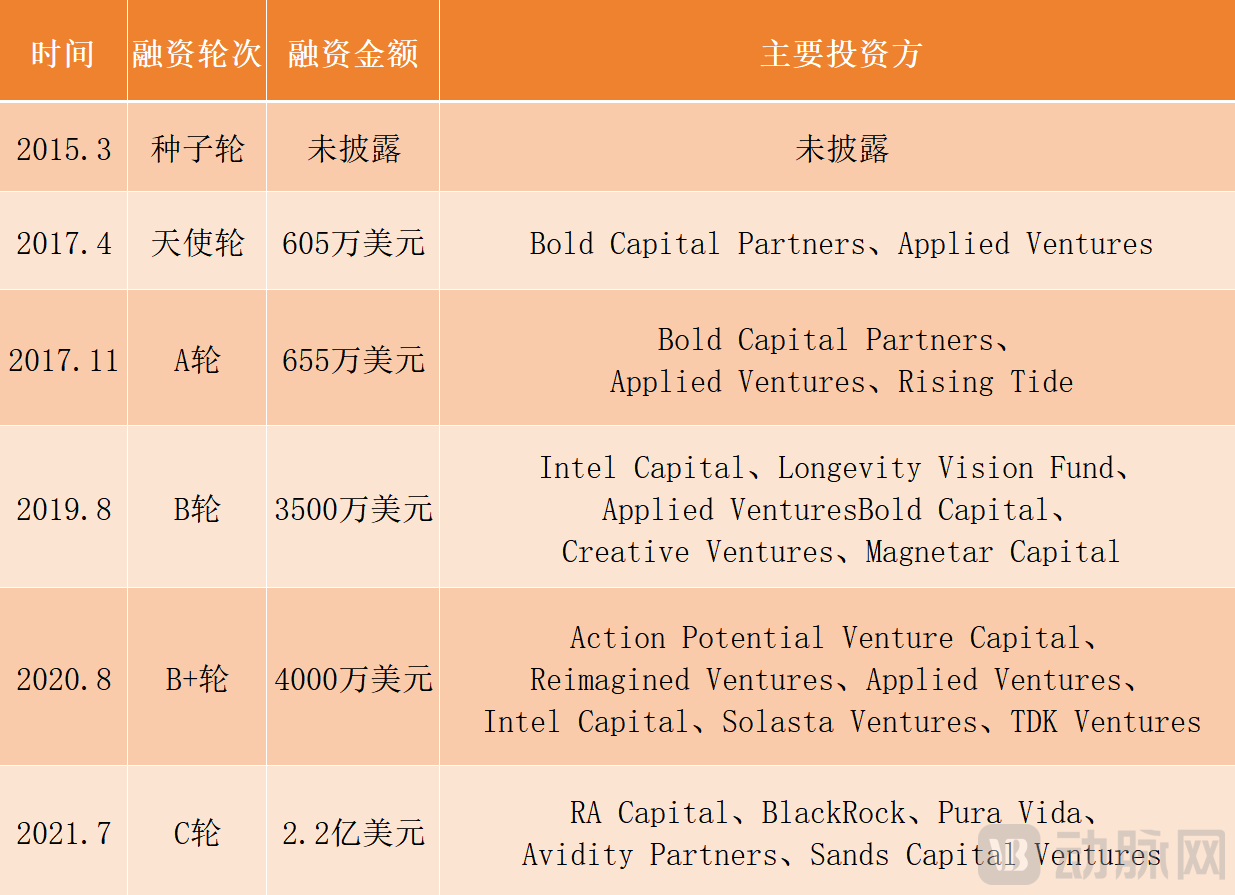
Exo’s Funding Journey at a Glance
Capital infusion has not only provided financial support but also facilitated resource synergy. Leveraging dual support from regulatory approvals and capital, Exo has adopted a “developed markets first, emerging markets later” strategy to advance commercialization. Currently, in developed markets such as Europe and the United States, Exo Iris has been deployed in emergency departments, general practice, and obstetrics and gynecology units. At the 2023 American College of Emergency Physicians (ACEP) Annual Scientific Assembly, the clinical performance of Exo Iris was affirmed by multiple experts, validating its practicality in clinical settings.
Despite the broad prospects of the ultrasound market, Exo still needs to overcome multiple hurdles. In terms of productization, it must translate its technological advantages into stably mass-produced devices, ensuring reliable operation in complex clinical environments. On the regulatory front, approval processes for medical AI functionalities are becoming increasingly stringent; its AI imaging engine and future computer-aided diagnosis features must continuously undergo rigorous validation. Regarding market education, more clinical cases are needed to persuade physicians to adopt new ultrasound devices that rely on AI. Cost control is key to achieving “universal accessibility”—Exo must truly leverage the mass-production advantages of semiconductor manufacturing processes and formulate pricing strategies that are both competitive and sustainable.
As a key participant in the revolution of medical imaging technology, Exo stands at the crossroads of this transformation. pMUT semiconductor technology is reshaping the “senses” of ultrasound, while AI is reconstructing its “brain.” Dual support from capital and regulatory bodies is driving Exo from technical blueprints to clinical practice. Whether Exo can bridge the chasm of product commercialization and transform the landscape of primary care and emergency treatment remains to be seen, warranting continued attention from the industry.