

Stablecoins Enter Healthcare: Medical Firms Turn to RWA Tokenization for Next-Gen Financing
How Should Enterprises Align with the Wave of Blockchain-Enabled Digitalization of Medical Assets?
Recently, numerous domestic medical enterprises have attempted to tokenize their assets through the Real-World Asset (RWA) model, thereby exploring new pathways for financing. For instance, in late July, Huajian Medical released a series of announcements regarding the advancement of an RWA exchange ecosystem for innovative pharmaceuticals and its supporting stablecoin system. In August, Hybio Pharmaceutical, Baicheng Medicine, and Berry Genomics also successively announced their exploration of RWA model applications.
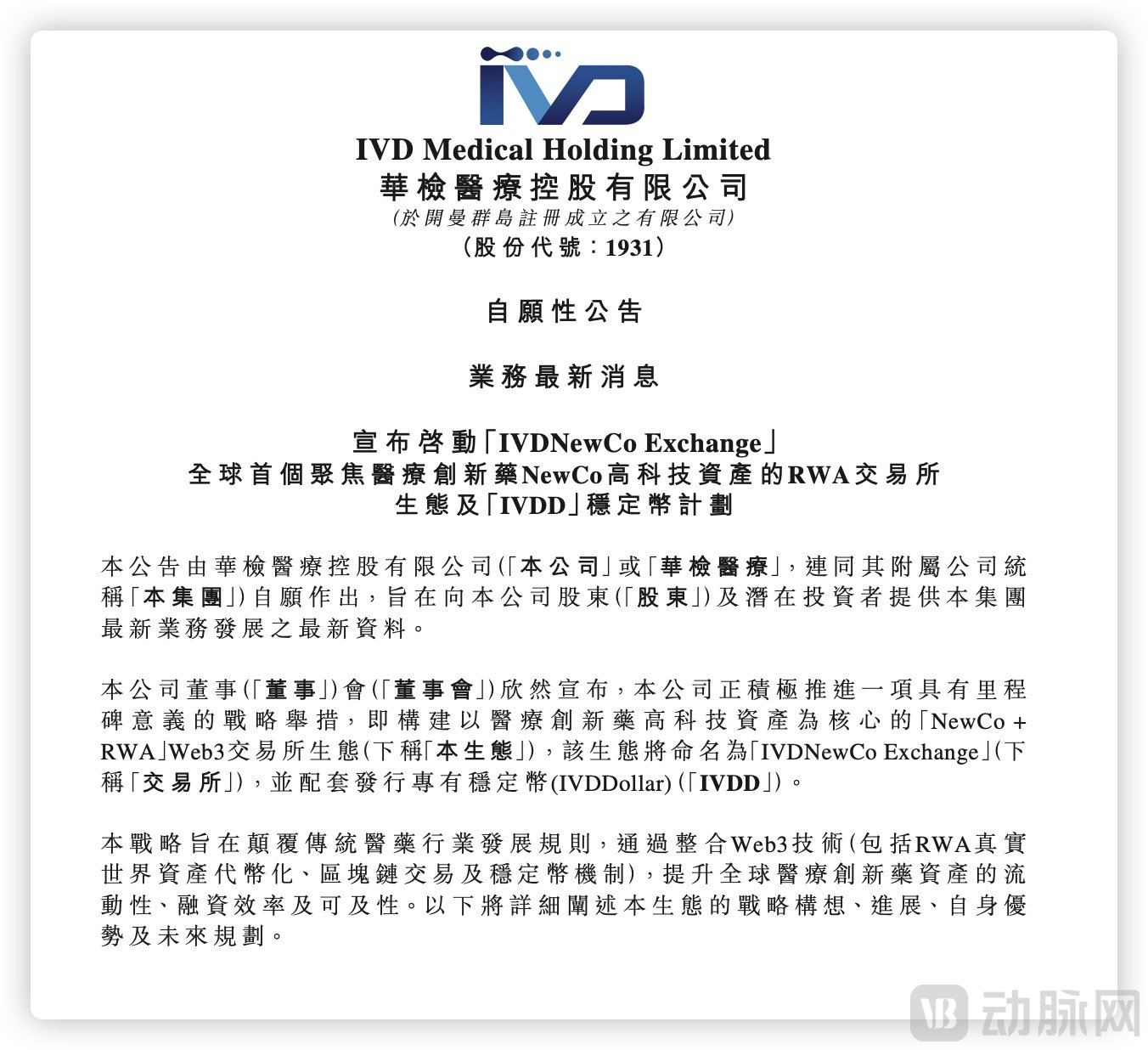
Corporate Announcement: Exploring RWA, Image Source: Corporate Official Website
RWA (Real World Assets) emerged in 2017, initially serving as a financial instrument to address the “poor liquidity” of traditional financial assets. Its evolution ranged from early attempts to tokenize stocks and bonds on blockchains to later digitizing and on-chain recording of assets such as real estate and new energy vehicle charging stations. By the end of 2024, the Malu Grape RWA project was successfully implemented, becoming China’s first agricultural brand RWA project.
Today, the RWA trend has reached the healthcare and wellness industry.
According to the announcement released by Hybio Pharmaceutical, the underlying asset tied to this RWA (Real World Asset) project exploration is the future right to earnings from its drug pipeline. Specifically, the future earnings rights of Hybio’s core GLP-1 pipeline have been converted into digital assets, which are then fractionalized and made available for subscription and trading by global investors via stablecoins. This model shifts corporate financing from “selling equity” to “selling revenue rights,” thereby reshaping the value chain linking R&D outcomes with capital market valuation.
While innovators in the biopharmaceutical sector are still exploring the next revolutionary molecule in laboratories, a profound transformation in capital and digital trust systems has already taken place quietly.
"Will We No Longer Need to Be Friends with Time?"
RWA leverages blockchain technology to tokenize physical healthcare assets, representing an attempt to shift from traditional financing models to an equity-option-based model. If successful, this approach will not only address the long-standing challenges of “difficult and expensive financing” in the healthcare industry but also holds the promise of achieving a qualitative leap in capital allocation efficiency through technology-driven innovation.
The essence of RWA is to address the industry’s liquidity crunch through blockchain technology and asset fractionalization.
Taking medical device companies as an example, their traditional financing structures are relatively singular. However, the medical device industry is characterized by its dual nature of being both technology-intensive and capital-intensive. It features long R&D cycles, substantial capital requirements, complex production lines, and the need to obtain multiple stringent certifications. This inevitably requires medical device enterprises to maintain a certain level of fixed assets (such as factories and equipment) and sustain long-term investment in R&D. Although not as “asset-heavy” as traditional manufacturing industries like the automotive sector, it can still be considered a “moderately asset-heavy” model.
Although the pharmaceutical industry is relatively asset-light, the staggering R&D investments often reaching $1 billion, an average development cycle of 10 years, and a success rate of less than 10% leave every company walking a tightrope, perpetually on the brink of crisis. The emergence of the license-out model has provided pharmaceutical companies with a channel for early capital recovery; however, this is insufficient for biotech firms, which still face long-term liquidity crunches. Furthermore, in license-out deals, the downward pressure on pipeline valuations exerted by overseas pharmaceutical companies is a tangible reality.
It is evident that, for both medical devices and pharmaceuticals, the traditional financing model exacerbates operational risks due to excessively long development cycles and delayed capital recovery. The innovative value of the Real-World Asset (RWA) model lies not only in broadening corporate financing channels while retaining intellectual property (IP) ownership, but more importantly, in enabling rapid capital reinvestment. This accelerated cash flow is expected to propel companies into their next growth stage more quickly, thereby shortening their overall development cycle.
This model inevitably holds a natural appeal for innovative healthcare companies, though it imposes requirements on these enterprises that differ significantly from the traditional R&D-driven approach.
The RWA model enables an intuitive assessment of the quality of healthcare assets.
Currently, RWA assets recognized in the Hong Kong region can be broadly categorized into four types: fixed-income assets, quantifiable energy assets, physical metal assets, and copyright/brand assets. Among these, the categories most suitable for medical assets are primarily fixed-income assets and copyright/brand assets.
According to Hybio Pharmaceutical’s announcement, the underlying assets underpinning its RWA project primarily consist of three components. First are GLP-1-related products, including: the first generic liraglutide in the U.S., developed in collaboration with Hikma and Mullan, with Hybio entitled to 50% of the revenue share; semaglutide injection (indicated for weight management), developed in partnership with Shengsheng Mandi; and HY3003, a triple-target receptor agonist acting on GLP-1R, GIPR, and GCGR, identified through AI-powered peptide chip technology, with development directions encompassing weekly formulations, ultra-long-acting monthly formulations, and oral formulations. Second are dozens of pipeline candidates currently under investigation. Third is a supply network covering more than 20 countries worldwide.
On the other hand, according to the semi-annual report released by Hybio Pharmaceutical, its revenue for the first half of 2025 reached RMB 550 million, a year-on-year increase of 114.86%; net profit amounted to RMB 145 million, representing a substantial year-on-year surge of 1,504.3%. This indicates that the underlying assets targeted by Hybio Pharmaceutical have generated or are about to generate more predictable cash flows, characterized by stable returns.
For enterprises, selecting an appropriate project is no easy task. Since the RWA model targets the general public, the key lies in how the project can appeal to the investor community. As a pioneer, Hybio Pharmaceutical chose the widely recognized GLP-1 project as its core asset—a strategic move that not only leverages the growth potential sparked by the rise of semaglutide but also eliminates the need for market education.
However, few projects can achieve comparable effects. Even the recently surging PD-(L)1 bispecific antibodies face fierce competition from domestic pipelines. How can they gain market recognition for their prospects? Moreover, there are numerous niche therapeutic areas. For these pipelines, the market ceiling is lower compared to those targeting major indications. If these pipelines pursue a path as licensed or branded assets, determining their valuation becomes a significant challenge. It remains to be seen how the RWA (Real World Asset) model can empower such assets.
Based on approval rates and implementation feasibility, healthcare assets suitable for RWA should possess the following characteristics: measurable value, cash flow generation capability, and significant liquidity or efficiency bottlenecks in traditional financial markets.
Although, in theory, revenue rights from R&D pipelines (priced according to clinical stages and market potential), ownership of medical devices and equipment (including consumables and service revenues, as well as rental income rights), and data assets (such as de-identified clinical data pools) can all serve as underlying assets for Real World Assets (RWA), significant ambiguities remain in practical implementation.
Whether it involves the right to proceeds from R&D pipelines or future revenue streams from medical devices, these assets suffer from a lack of broad market acceptance regarding their valuation, especially when compared to quantifiable energy assets (such as the price per kilowatt-hour of electricity) or physical metals (which benefit from mature pricing systems for rare metals). In other words, to pursue the path of Real World Assets (RWA), medical enterprises need to build additional complementary capabilities beyond their R&D prowess.
To address the new model, it is imperative to build new capabilities.
Simply put, whether a company possesses asset operation capabilities, financial engineering and compliance expertise, and data credibility technologies determines its ability to successfully implement the RWA model.
Asset operational capability is easy to understand: it involves accurately identifying assets that can gain genuine market recognition, conducting fair and transparent valuations, and attracting investors with reasonable pricing. In the past, enterprises focused more on building R&D capabilities, leaving this area underdeveloped. However, within the industry chain, there is a player highly proficient in asset valuation: investment institutions.
Although the emergence of the RWA model has introduced new financing channels, it is not necessarily a negative development for investment institutions. As a robust complement to the existing ecosystem, investment firms with specialized expertise can provide substantial support to this new landscape. Such support includes collaborating with enterprises to accurately determine which pipelines and asset stages are suitable for RWA tokenization, offering professional asset screening and valuation services, and designing financial products and liquidity solutions tailored to different assets. In this way, the RWA model also creates an additional exit pathway for investment institutions.
Financial engineering and compliance capabilities require the establishment of a compliant transaction structure.
Taking as an example the projects already announced and implemented in the Hong Kong region, existing mainland Chinese enterprises issuing RWA (Real World Assets) in Hong Kong typically establish a dual-layer SPV structure consisting of an “onshore asset SPV + offshore/Hong Kong SPV” to comply with mainland regulatory requirements. The issuance objectives are achieved through technical means involving an “asset chain + transaction chain.”
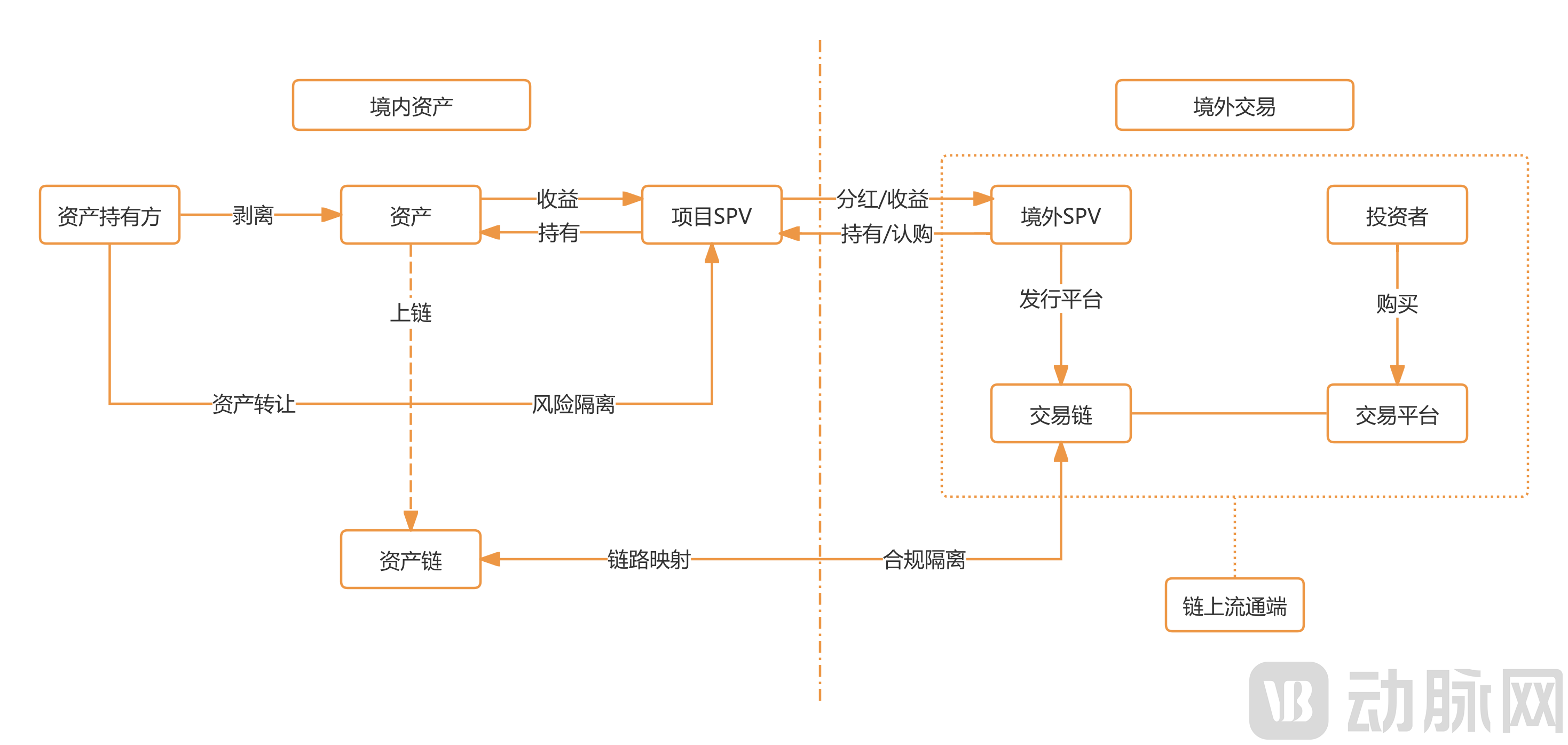
Transaction Structures for RWA Projects Issued in Hong Kong: Compiled from Public Information
It is evident that this is a highly complex, cross-disciplinary engineering endeavor, which most healthcare enterprises are unable to undertake independently. Therefore, companies must possess robust collaboration and management capabilities to engage effectively with a wide range of external partners, including blockchain technology providers, exchanges, law firms, audit institutions, and custodians. Only in this way can information silos be broken down, resources integrated, and a compliant new ecosystem established.
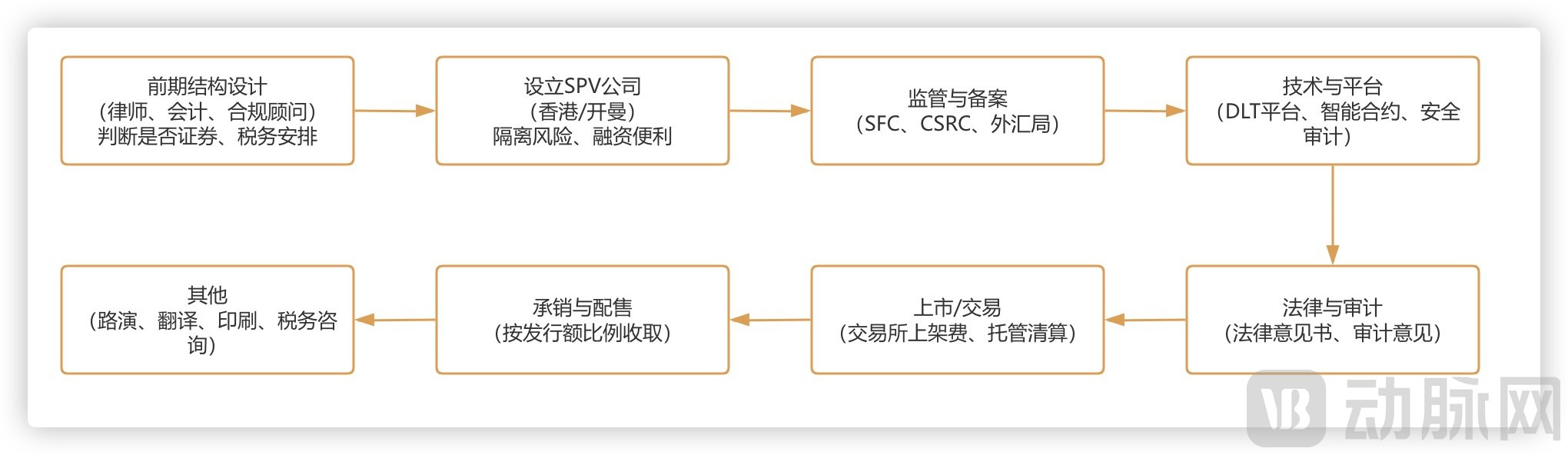
Key Milestones in the RWA Issuance Process: Compiled from Public Information
Furthermore, and more importantly, data capability is critical. From the perspective of the entire RWA operational workflow, trust is predicated on data credibility. If existing offline data are merely transcribed onto the blockchain without verification, the authenticity of asset data cannot be validated, cash flow trajectories become difficult to trace, and the healthy development of the RWA ecosystem would be unattainable.
Taking the development of innovative drugs as an example, the process involves multiple stages related to equity distribution, including preclinical research, IND submission, completion of clinical trials at specific phases, approval of NDA/BLA, and achievement of sales targets. While these milestone nodes have clear and verifiable criteria for attainment under traditional models, there is currently no standardized solution for migrating them onto the blockchain while ensuring data privacy.
For instance, can the blockchain record changes in the status of real-world assets in real time and with accuracy? Can capital flows—such as income distribution, principal repayment, default resolution, and fee carryover—be executed automatically, remain tamper-proof, and ensure public transparency? How to build a robust trusted data space and design smart contracts are critical issues that enterprises must address.
For healthcare enterprises, this capability was not involved in past business development, particularly regarding how to ensure that clinical results at different stages of innovative drug R&D, or the phased revenues from medical devices and equipment, are automatically recorded on the blockchain. Compared with other industries such as new energy, the healthcare sector still has a long path of exploration ahead in determining how to proceed.
Judging from the collaboration between Hybio Pharmaceutical and the KuCoin platform, KuCoin is not merely acting as a simple issuer but rather playing a role in assisting Hybio Pharmaceutical in building its Real-World Asset (RWA) ecosystem. This includes functions such as asset title confirmation, on-chain mapping of key milestones into programmable income rights, the establishment and execution of smart contracts for revenue distribution, and trade matching.
At this stage, Chinese healthcare enterprises indeed require such a bridging role to support their development. Just a few days ago, Hangzhou Baicheng Medicine signed a letter of intent with DeepStone Technology, a Hong Kong-based fintech and Real World Asset (RWA) service provider, to jointly explore new RWA-driven financial models that integrate the pharmaceutical industry with digital asset technologies.
Overall, the issuance process of Real World Assets (RWA) involves complex legal compliance, technical implementation, and financial operations. Enterprises need to demonstrate their capability for ecosystem expansion.
Some companies choose to leverage the new ecosystem for financing, while others opt to utilize it for transformation.
If one merely views Huajian Medical’s exploration of Real World Assets (RWA) as a means to secure future revenue rights from its IVD equipment, that would clearly underestimate the ambition behind its strategic transformation. Judging by its recent announcements and actions, Huajian Medical’s expectations for the RWA model extend far beyond this.
First, Huajian Medical is establishing the “IVDNewCo Exchange,” which focuses on the tokenized trading of innovative drug assets and plans to issue a supporting stablecoin, IVDDollar (IVDD). This step aims to enable compliant decentralized liquidity for medical RWA projects.
Secondly, Huajian Medical has established a wholly-owned subsidiary, IVD GROUP, in New York, USA, and simultaneously initiated the submission of stablecoin license applications to the SEC and CFTC. Finally, Huajian Medical is actively participating in the Hong Kong Monetary Authority’s stablecoin sandbox scheme in the Hong Kong region, testing reserve asset management and cross-border payment scenarios, thereby paving the way for applications for dual licenses as a “stablecoin issuer and trading platform.” Meanwhile, given the Hong Kong regulatory requirements for reserve asset collateralization, Huajian Medical announced plans to purchase Ethereum cryptocurrencies to build an Ethereum reserve treasury.
Centered on the core objective of monetizing intellectual property rights for innovative drugs, Hua Jian Medical aims to use Ethereum as the underlying asset to provide value anchoring for its Real-World Asset (RWA) project, while also replenishing treasury reserves through staking yields. Meanwhile, if regulatory endorsements from both jurisdictions can alleviate trust concerns, the prospects for this strategy will be quite promising.
Huajian Medical’s all-in approach has captivated the market. Since the announcement, its stock price has surged by over 360%, with a single morning session witnessing a dramatic 53.9% spike, indicating strong investor interest in the initiative. From an operational perspective, Huajian Medical aims to leverage Real-World Assets (RWA) to create a closed-loop ecosystem within the medical industry chain. Potential development paths include issuing vertical-industry-specific stablecoins, establishing an RWA-enabled stablecoin payment middleware, or serving as an offshore compliance bridging service provider.
As one of the first medical enterprises in China to venture into Real World Assets (RWA), Huajian Medical has keenly recognized the inherent appeal of the RWA model to the healthcare industry and identified the need for a “shovel seller” role within this emerging ecosystem. Unlike other sectors, the healthcare industry possesses unique complexities and specificities; thus, experiences gained from empowering other vertical industries with RWA cannot be directly applied. Instead, an enterprise with deep industry familiarity is required to accelerate the implementation of the RWA model. Huajian Medical’s move strategically targets the core issue, though it remains to be seen whether it can secure this ecological niche by leveraging its first-mover advantage.
The concentrated surge of Real-World Assets (RWA) in the healthcare industry is no accident; it represents a resonance between underlying financial infrastructure development and the sector’s urgent demands. Rather than constructing a new healthcare ecosystem, RWA is empowering the industry by compelling enterprises to upgrade their global capabilities. Ultimately, corporate development must withstand the scrutiny of the global market. In future competition, projects equipped with a robust data-driven core, actively embracing digital transformation, and leveraging RWA to expand global capital and collaborative ecosystems will be better positioned to gain a competitive edge in efficiency and trust.