

Mengmeng DreamPod: A Non-Invasive BCI-Powered System for Personalized Sleep Enhancement and Dream Customization
Brain-Computer Interfaces and Large Language Models: The Twin Stars Rising in Digital Healthcare, Illuminating the Industry’s Path Forward with Dazzling Brilliance.
Recently,The “Implementation Opinions on Promoting the Innovative Development of the Brain-Computer Interface Industry,” jointly issued by the Ministry of Industry and Information Technology and six other departments, has swept through the industry’s fertile ground like a spring breeze, reigniting enthusiasm for brain-computer interfaces among all stakeholders.In the secondary market, the upward trajectory of related concept stocks serves as the most straightforward testament to this enthusiasm.
Large medical AI models are also accelerating their entry into clinical practice this year—from the meticulous drafting of medical records to the seamless flow of appointment scheduling, and from the comprehensive considerations of general practice to the precise breakthroughs in specialized care. Like a fine mesh, they are quietly permeating every crevice of healthcare.
Beneath the surface prosperity, “go into real-world scenarios and let technology generate genuine value through practice” has become an unspoken consensus within the industry.As Fan Fangfang, Founder & CEO of Maidong Shukang, softly yet firmly emphasized in the interview: “Whether it is brain-computer interfaces or large language models, only by rooting themselves in specific scenarios can they unleash the vitality inherent to technology.”
Guided by this conviction, the startup—which has been anchored in “practical technology implementation” since its inception—has been quietly cultivating its expertise within a professional ecosystem. So, what specific domain have these founders, backed by profound academic credentials, chosen as the terrain to sow the seeds of technological innovation?
A Harvard Postdoc’s “Sleep Pact”: A Startup Journey in Gentle Guardianship
To understand MaiDong ShuKang’s strategic choices, it is helpful to first look into its founding team—their story not only holds the answer to why they chose this particular track, but also embodies the confidence that determines how far the company can go.
Fan Fangfang, Founder & CEO of Maidong Shukang, is a postdoctoral fellow at Harvard University. She has conducted research at the University of Pennsylvania and Peking University Sixth Hospital, and currently serves as Deputy Director of the Sleep Professional Committee under the Chinese Association for Continuing Medical Education. Zhao Kangqing, Co-Founder & CMO, earned his bachelor’s, master’s, and doctoral degrees from Peking University. Under the guidance of Academician Lu Lin at Peking University Sixth Hospital, he has focused on clinical research related to sleep and addiction disorders. Liu Xiaofeng, Co-Founder & CTO, holds a Ph.D. from the University of Chinese Academy of Sciences and completed a joint doctoral program at Carnegie Mellon University and Harvard University, studying under Turing Award winner Yoshua Bengio. He has been deeply engaged in the field of medical artificial intelligence for many years. It is evident from the industry background of the founding team thatThe application scenarios selected by Maidong Shukang are closely related to sleep. From the founder’s perspective, VCBeat obtained a more concrete answer—centering on sleep and expanding into niche segments related to neurology and mental health.
This decision stemmed equally from the team’s academic heritage and from the personal resonance it held for Fan Fangfang. The choice to focus on the sleep and mental health sector was driven not only by the founding team’s professional background but also by a pivotal moment of inspiration for Fan Fangfang. Having worked at three renowned institutions specializing in sleep medicine—Harvard University, the University of Pennsylvania, and Peking University Sixth Hospital—Fan Fangfang personally witnessed the robust demand for sleep-related care while recognizing the relative scarcity of clinical treatment options. This insight fueled her determination to develop product-based tools to address clinical challenges, ultimately serving as the catalyst for the founding of Maidong Shukang.
Nowadays,This enterpriseSelected for the “China Sleep Valley” initiative, with over RMB 100 million in strategic financing secured, and furtherWeaving a product matrix covering sleep and mental health domains, with “brain-computer interfaces + large language models + digital therapeutics” as the framework.VCBeat selectedIts core sleep product, the “Sweet Dream Pod,” and its core psychological companionship product (i.e., in the sleep-related sector), the “Mindcare Companion Robot,”Deconstructing Maidong Shukang’s Corporate Strengths and Product Advantages from the Perspectives of Technical Superiority and Resource Accumulation.
Multimodal EEG-ECG Monitoring + Personalized Intervention: DreamPod Makes Dreams Within Reach
Maidong Shukang’s “Sweet Dream Pod” is a personalized, intelligent closed-loop sleep optimization system capable of executing the cycle of “monitoring–identification–intervention–reassessment,” designed to improve sleep quality and sleep-related mental health.
According to the functional description of the “Dream Pod” and introductions by its founders, VCBeat has learned that multi-modal precision monitoring based on brain-computer interfaces (BCI) and effective personalized interventions constitute the core competitive barriers of the “Dream Pod.”
In the realm of unobtrusive, precision monitoring, Maidong Shukang primarily utilizes its self-developed portable EEG and ECG monitor (sleep monitor).Fan Fangfang stated that the traditional sleep monitoring devices previously used by the hospital had four major shortcomings: first, complex wiring made it inconvenient for users to wear the device; second, operation required trained professionals, whose learning and training entailed a certain time commitment; third, users needed to stay in the hospital for one to two nights, which disrupted patients’ daily lives and work and incurred additional operational costs for the hospital; and fourth, manual interpretation combined with the discomfort caused by cumbersome equipment could lead to “errors” in the results.
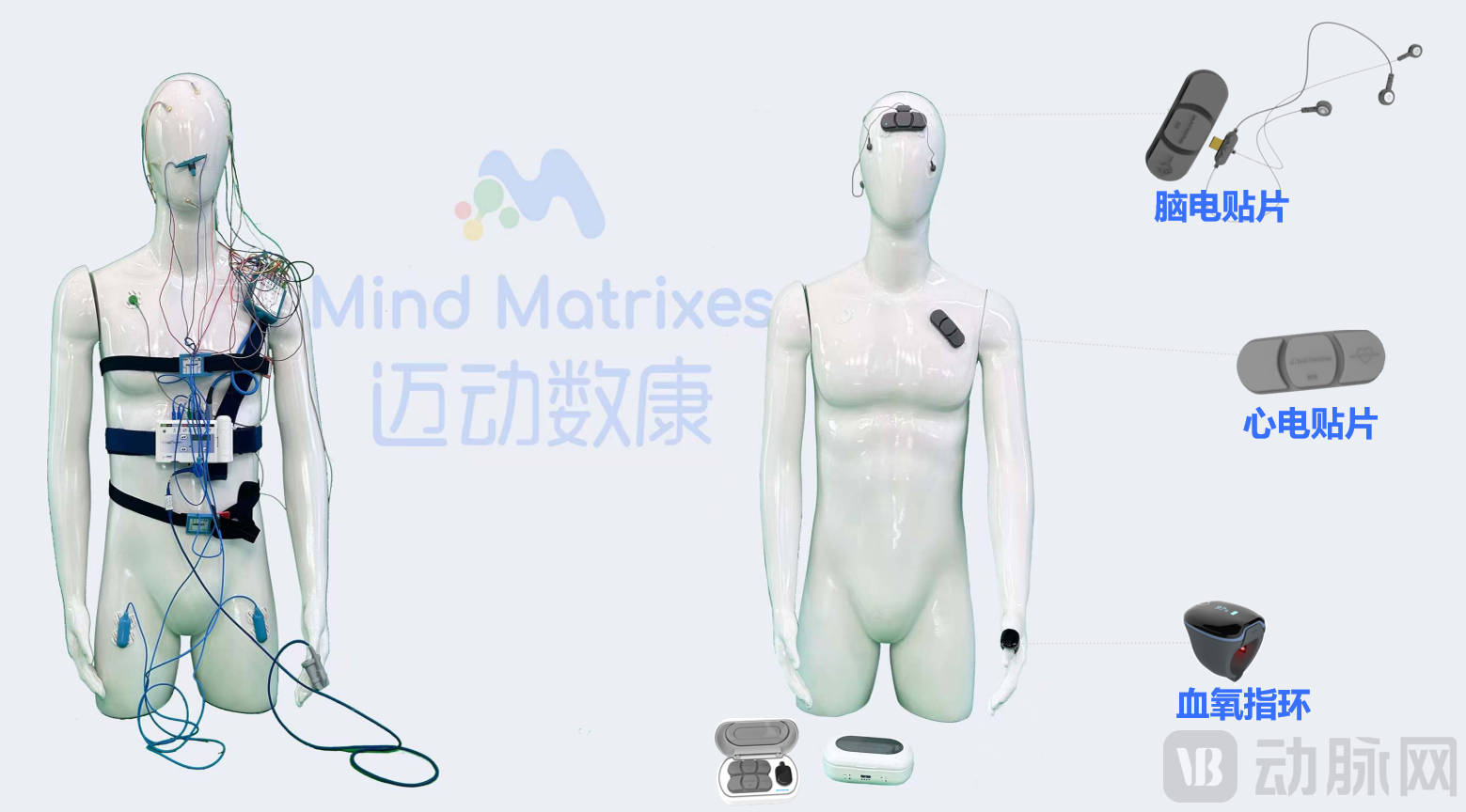
Maidong Shukang's EEG and ECG Monitor (Sleep Monitor)
One of the main advantages of Maidong Shukang’s EEG and ECG monitor (sleep monitor) is its portability.The combination of EEG patches, ECG patches, and SpO2 rings significantly reduces the difficulty of wearing the devices while enhancing patient comfort, thereby achieving “unobtrusive” monitoring as much as possible. Meanwhile, portable EEG and ECG monitors can also help healthcare institutions reduce operational costs related to staffing and bed occupancy to a certain extent.
Furthermore, portable ECG monitors (sleep monitors) not only enable real-time monitoring but also provide intelligent interpretation of results, thereby reducing potential “errors” associated with manual interpretation. Additionally, the portability ensures a nearly “imperceptible” wearing experience, minimizing the impact on users’ sleep quality. Consequently, the monitoring accuracy of Maidong Shukang’s EEG and ECG monitor is well assured.
According to Fan Fangfang,The accuracy of Maidong Shukang’s ECG monitoring exceeds 95%, and that of its EEG monitoring exceeds 91%. This establishes the technical foundation for the precise monitoring capabilities of Maidong Shukang’s “Sweet Dream Pod.”
andIn terms of intervention, Maidong Shukang’s “Dream Pod” primarily employs a vertical model combined with stimulus modules that automatically adjust tactile, olfactory, visual, and auditory inputs to deliver personalized interventions.So, how can we ensure the effectiveness of these combined interventions to the greatest extent? This is related to the data accumulation of Maidong Shukang.
In addition to reviewing the literature,Maikang Shukang has also partnered with multiple hospitals, including Peking University Sixth Hospital, the National Center for Children’s Health, and Sir Run Run Shaw Hospital in Zhejiang. The company’s products have undergone clinical validation at more than 50 medical institutions, accumulating a clinical dataset annotated by hundreds of thousands of physicians. Notably, one of Maikang Shukang’s shareholders, Qisheng Technology, is the world’s largest manufacturer of smart electric beds, holding approximately 33% of the global market share. The millions of sleep monitoring data points accumulated by Qisheng Technology have provided strong support for Maikang Shukang’s implementation of personalized sleep interventions.
Currently, Maidong Shukang’s “Dream Pod” is still in the R&D and testing phase, with medical institutions, school mental health centers, and public rest areas such as railway and airport waiting lounges slated to be the primary target markets.
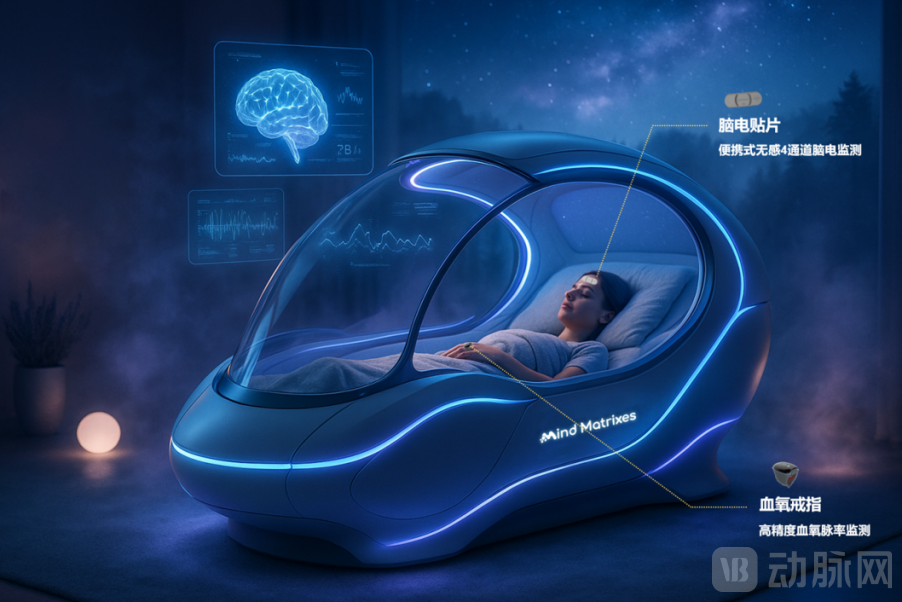
VCBeat Digital Health Dream Capsule
Mindcare Companion Robot: Banish Loneliness, Bring Warmth to Companionship
If the “Sweet Dream Pod” safeguards your sleep at night, then the “Mindcare Companion Robot” serves as a warm glow during the day—focusing on psychological companionship and allowing loneliness to gradually melt away in the warmth of technology.
“Mindcare Companion Robot” is the flagship product developed by Maidong Shukang in the fields of sleep-related health and mental wellness, primarily focusing on companionship for two key demographics: the elderly and children.
The decision to focus on the “elderly and children” stems largely from strong demand. According to a study conducted by the Institute of Psychology, Chinese Academy of Sciences, in collaboration with institutions such as the Beijing Institute of Geriatrics under the National Health Commission, anxiety levels rise significantly among adults aged 70 and older. The prevalence of anxiety was 16% in those aged 70–79 and 15.6% in those aged 80 and above, while self-rated life satisfaction and psychological resilience also declined.
Mental health issues among children should not be overlooked. According to the "Report on the Development of National Mental Health in China (2019-2020)," the current detection rate of depression in China is nearly 10%, with the adolescent depression detection rate reaching as high as 24.6%, representing a significant increase compared to ten years ago. These figures reflect only one aspect of the numerous psychological problems faced by the elderly and pediatric populations, underscoring the severity of mental health challenges among these groups. This has driven Maidong Shukang to spare no effort in seeking solutions, ultimately leading to the creation of the "Mindcare Companion Robot."
Based on different user groups, Maidong Shukang’s “Mindcare Companion Robot” is available in two versions: the Elderly Version and the Children & Adolescents Version.
Emotion recognition-based companionship and interaction are common features of both versions of the companion robots. It is reported that the multimodal emotion perception and intelligent assessment system developed by Maidong Shukang can recognize eye movement signals through ordinary cameras, and achieve precise emotion identification by combining multimodal data analysis of facial expressions, voice tone, and body movements. Building on this foundation, the integration of Maidong Shukang’s Aladin vertical model enables in-depth conversation and companionship.
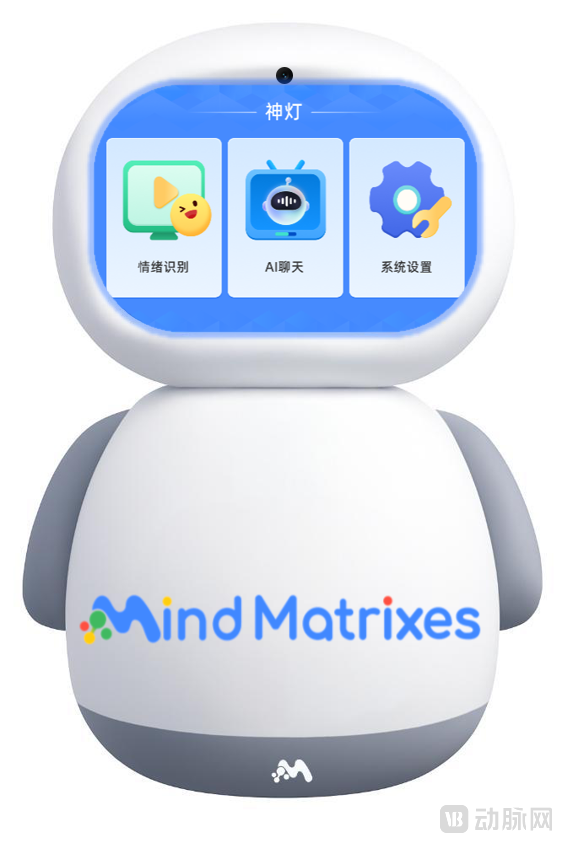
“Mindcare Companion Robot” Elderly Version
Building on this foundation, and taking into account the elderly population’s needs for health management, remote care, and family connectivity, the senior version of Maidong Shukang’s “Mindcare Companion Robot” incorporates additional modules. It not only provides health reminders, medication alerts, abnormal condition warnings, family video calls, and remote care assistance, but also leverages EEG and ECG technologies to record sleep patterns, enabling monitoring and intervention for sleep health.

Maikang Digital Health “Mindcare Companion Robot” Children and Adolescent Edition
It is worth noting that although both the elderly and child/adolescent versions adopt the product form of hardware robots, the child/adolescent version features an animal-like exterior. This design not only provides emotional companionship and interaction based on multimodal emotion recognition technology to address the lack of companionship resulting from a fast-paced digital lifestyle, but also helps reduce the time children and adolescents spend on electronic devices such as smartphones and iPads. In doing so, it safeguards their eye health while promoting their physical and mental development for healthy growth.
Currently, the child and adolescent version of Maidong Shukang’s “Mindcare Companion Robot” is still in the R&D phase; the elderly version has successfully completed development and is planned to enter the market through offline sleep centers, elderly care institutions, and other channels.
The Ultimate Goal of Technology: Rooting Technology in Daily Life, Delivering Warmth to the Human Heart
Maidong Shukang possesses medical-grade emotion recognition models and mental health regulation models. We welcome industry partners interested in collaborating to explore optimal product forms and implementation strategies, making AI communication more human-centric and human-computer interaction warmer.
In fact, the “Mindcare Companion Robot” is merely a microcosm of Maidong Shukang’s exploration into the application of brain-computer interface (BCI) and large language model (LLM) technologies in the mental health sector.Beyond providing psychological companionship, they are leveraging “brain-computer interfaces + large language models + digital therapeutics” to pioneer early screening and personalized interventions for diseases such as Alzheimer’s disease and stroke.
As founder Fan Fangfang has repeatedly emphasized in interviews: “No matter how cutting-edge the technology, it only holds true value when applied in practice. For the application of brain-computer interface and large language model technologies in the medical field, a closed loop of precise monitoring plus personalized intervention is the future.”
Perhaps this is the very essence of MaiDong ShuKang: with robust technology as its backbone and human care as its soul, it allows technology to take root in the soil of daily life, ultimately bearing “valuable” fruit. And those dreams of better sleep, and the warmth of companionship, are merely the first blossoms on this tree.