

GRIN Therapeutics Advances Radiprodil into Global Phase 3 Trial for GRIN-NDD with $140M Series D Financing and $520M Collaboration with Angelini Pharma
GRIN Therapeutics
Developer of Severe Neurodevelopmental Disorder Therapies
GRIN Therapeutics announced in May 2025 the completion of a $140 million Series D financing round and entered into an exclusive collaboration with Italian pharmaceutical giant Angelini Pharma, securing a $50 million upfront payment, up to $520 million in milestone payments, and sales royalties.
Subsequently, the company officially launched the global Phase III clinical trial of radiprodil, a negative allosteric modulator for GRIN-related neurodevelopmental disorders (GRIN-NDD), marking its final push toward market approval.
If the trial meets its prespecified endpoints (such as a significant reduction in seizure frequency or improvement in Clinical Global Impression scale scores), it will prompt the FDA and EMA to shorten their review cycles, potentially granting priority review based on “unmet medical needs,” thereby enabling the drug to enter the market 1–2 years earlier and secure the first-mover advantage as the world’s first GRIN-NDD therapy.
Currently, GRIN Therapeutics’ key focus areas are the Honeycomb trial (core asset radiprodil) and the Astroscape trial (indication expansion). The following is an overview table of these two segments:
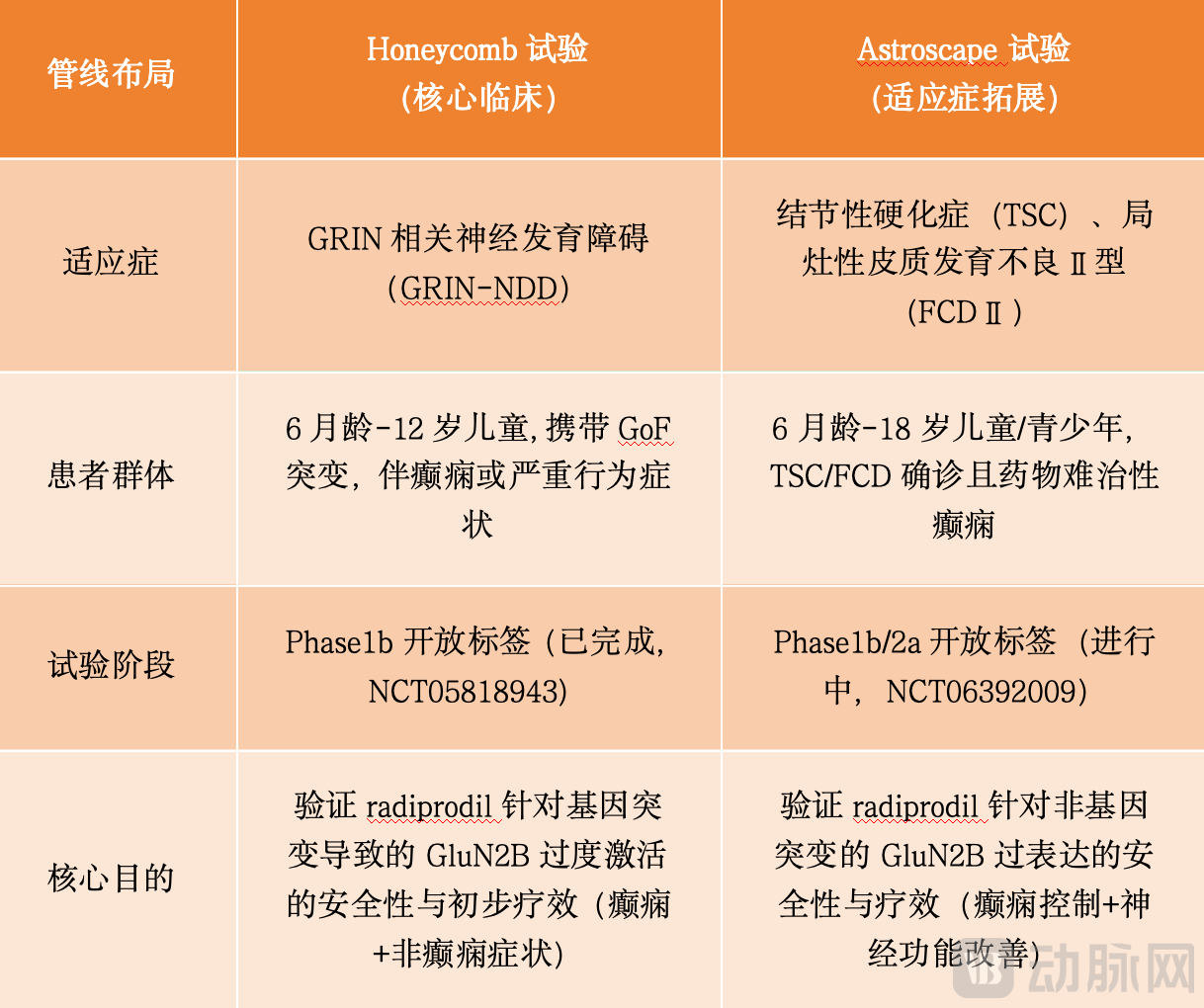
Overview of the Basic Status of Two Major Trials
Honeycomb Trial: Addressing Specific Challenges in Patients with Neurodevelopmental Disorders
GRIN Therapeutics’ core product, radiprodil, is a negative allosteric modulator that selectively targets the N-methyl-D-aspartate receptor subtype 2B (GluN2B) and is primarily indicated for GRIN-NDD.
GRIN-NDD is a rare disorder caused by gain-of-function (GoF) mutations in GRIN genes, which lead to hyperactivation of the GluN2B subunit and aberrant signaling of N-methyl-D-aspartate (NMDA) receptors (a type of glutamate receptor), ultimately resulting in multisystem symptoms such as epilepsy and developmental delay.
Mutant genes mainly include four types of gene mutations: GRIN1, GRIN2A, GRIN2B, and GRIN2D. Patients commonly face multiple challenges, including developmental delays, intellectual disabilities, and drug-resistant epilepsy.
Research funded by the U.S. Centers for Disease Control and Prevention (CDC) shows that the overall incidence of GRIN-NDD in newborns is 3.2–5.45 cases per 100,000 live births, with GRIN2B mutations having the highest proportion (5.91 cases per 100,000) and GRIN2A mutations the lowest (3.23 cases per 100,000).
The population affected by this rare disease is gradually expanding. Initially, the onset was concentrated primarily in Europe and North America, but it has since spread to Eastern countries. In 2021, a research report from Beijing Children’s Hospital identified 11 Chinese pediatric cases with de novo mutations.
However, current therapies can only alleviate symptoms and fail to address the core pathological mechanism of NMDA hyperactivation, due to a lack of specific drugs.
In clinical practice, physicians primarily control seizures using anti-seizure medications, such as benzodiazepines or valproic acid. However, the efficacy of these drugs varies significantly among patients with GRIN-related neurodevelopmental disorders (GRIN-NDD). Some patients may require supratherapeutic doses to alleviate symptoms, but excessive dosing can lead to adverse effects, including cognitive impairment (e.g., memory decline) and increased hepatic metabolic burden.
Furthermore, although antiepileptic drugs can partially control epileptic seizures, they are largely ineffective against symptoms such as cognitive impairment and dystonia, and long-term use may lead to side effects including sedation and cognitive suppression.
What makes radiprodil unique is its ability to selectively inhibit the mechanism of GluN2B overactivation, which has been demonstrated in preclinical studies to effectively modulate abnormal synaptic transmission.
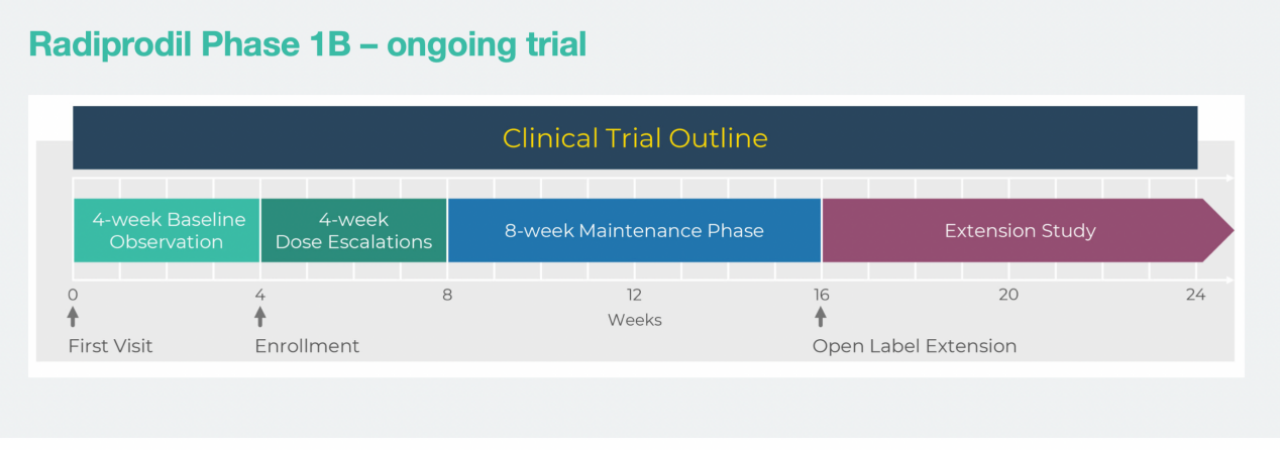
Radiprodil Phase1b
In the Phase 1b/2a Honeycomb trial of Radiprodil, behavioral scale assessments (including CGI-C and ABC-C) demonstrated a positive trend toward improvement in patients with GRIN-related neurodevelopmental disorders (GRIN-NDD).
Across all trial participants (including both the epilepsy and non-epilepsy cohorts), CGI-C and ABC-C scores indicated clinical improvement: caregivers and clinicians reported reductions in behavioral symptoms such as emotional dysregulation, social interaction deficits, and stereotyped behaviors. These improvements were independent of seizure reduction, suggesting that Radiprodil may directly alleviate core behavioral issues associated with neurodevelopmental disorders.
Based on this, the FDA granted Breakthrough Therapy Designation, explicitly positioning it as “substantially superior to existing symptomatic treatments.” This milestone signifies that the trial not only validated the target’s efficacy but also propelled GRIN-NDD from a state of “no available cure” into a new era of “disease-modifying therapy.”
Astroscape Experiment: High-Expression Common Mechanism Drives Multi-Indication Pipeline Expansion
GRIN Therapeutics’ pipeline exhibits a distinct “target-centric, multi-indication expansion” strategy.
In addition to the core pipeline for GRIN-NDD mentioned above, the Company has now initiated the Astroscape trial.
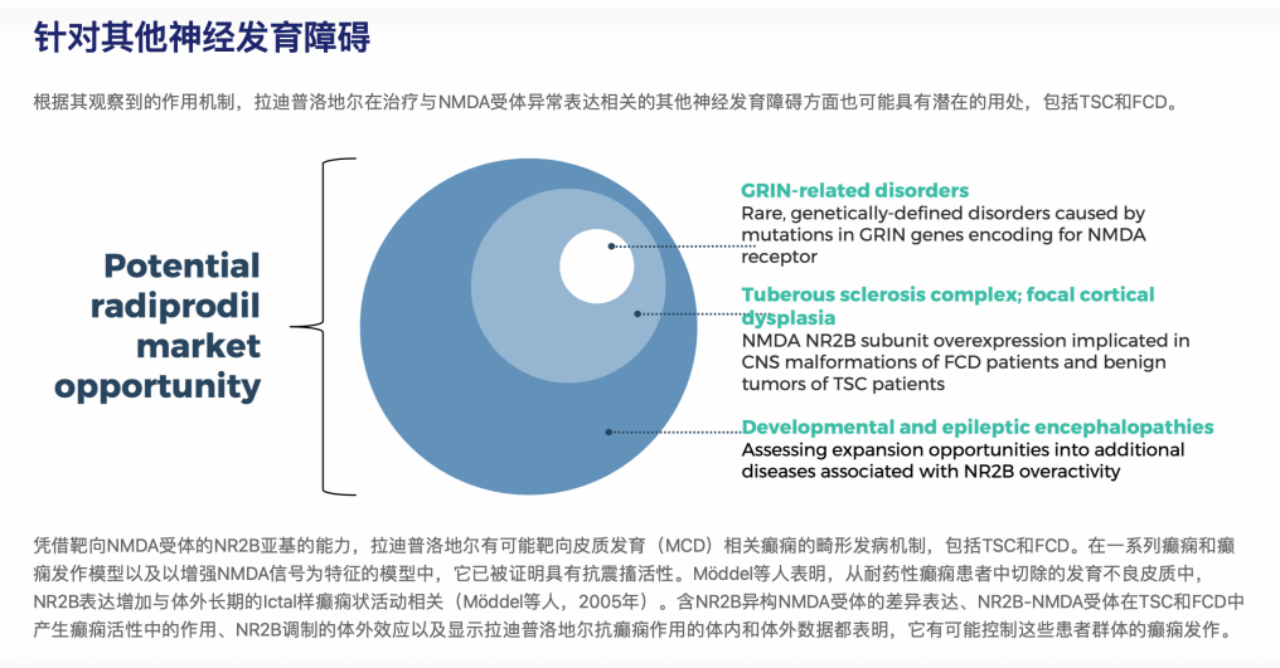
This trial is a proof-of-concept basket study conducted by GRIN Therapeutics, targeting patients with tuberous sclerosis complex (TSC) and focal cortical dysplasia type II (FCD II).
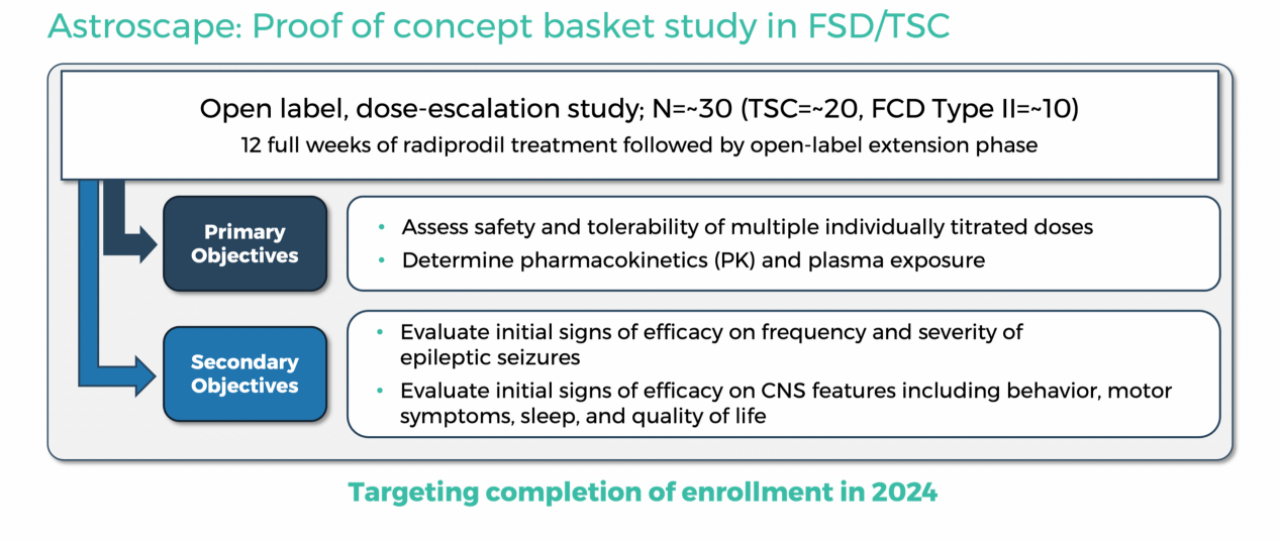
Astroscape Study
These populations commonly face the issue of “epilepsy being uncontrolled by existing medications (or losing efficacy over the long term).” Therefore, research is being conducted to explore the efficacy and safety of radiprodil based on the mechanism that “overexpression of the NR2B (GluN2B) subunit in the cerebral cortex of patients with TSC and FCD drives abnormal NMDA receptor activation, leading to epilepsy.”
This trial creates a synergy of “target validation → cross-indication expansion” with GRIN-NDD’s core pipeline (the Honeycomb trial), accelerating breakthroughs in brain health.
This expansion was made possible by the team’s discovery of GluN2B overexpression in brain tissues with TSC and FCD lesions, which shares pathogenic homology with GRIN-NDD.
Furthermore, leveraging the shared mechanism of GluN2B overexpression in lesion tissues of TSC and FCD, the Company initiated the GRIN Therapeutics Astroscape trial (Phase 1b/2a) in October 2024 to evaluate the efficacy of radiprodil in refractory epilepsy.
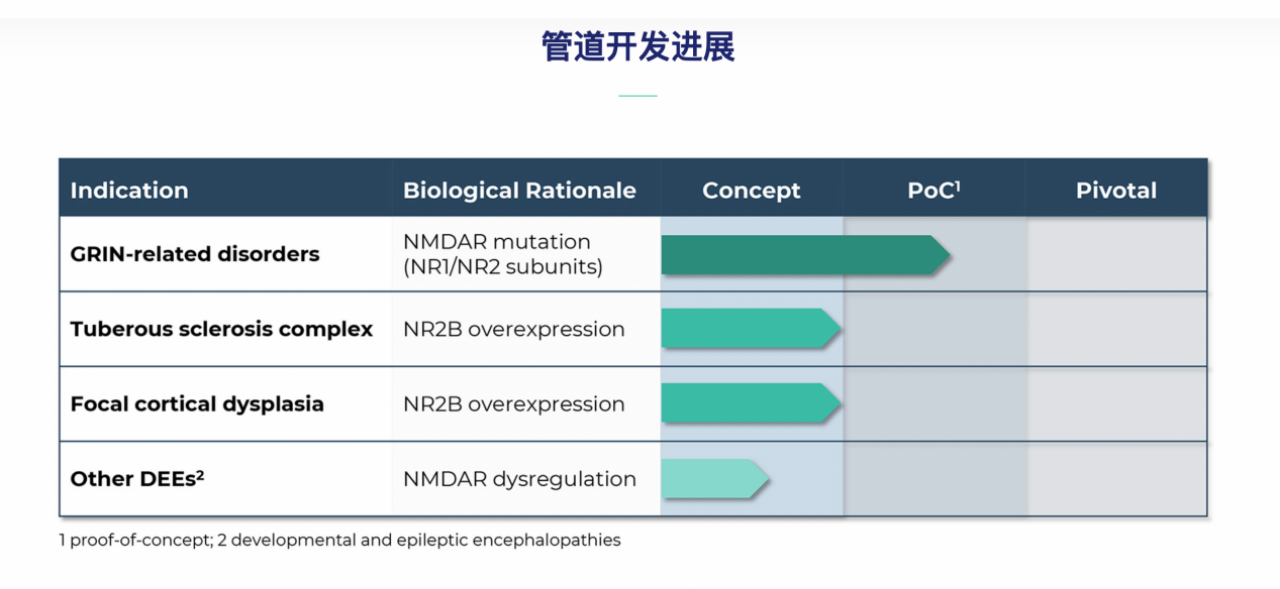
1Tuberous Sclerosis Complex (TSC, Mechanistic Homolog Expansion)
Mechanism: Overexpression of the NR2B (GluN2B) subunit in lesional tissues of patients with tuberous sclerosis complex (TSC) leads to hyperactivation of NMDAR-mediated excitatory synapses, driving refractory epilepsy.
Stage: In the early phase of proof-of-concept (PoC). The Astroscape trial (Phase 1b/2a) was initiated in October 2024, with 30 patients enrolled to date (20 with TSC and 10 with FCD). The trial employs a “dose-escalation plus open-label extension” design, allowing patients to enter a long-term extension study.
2Focal Cortical Dysplasia (Type II, Mechanistic Homology Expansion)
Mechanism: Patients with FCD Type II exhibit NR2B overexpression in areas of cortical dysplasia, sharing the pathological feature of “NMDAR excitatory imbalance” with TSC; therefore, they are being co-developed with TSC (both included in the Astroscape trial cohort).
Stage: Similar to TSC, it is in the early proof-of-concept (PoC) phase, with concurrent evaluation based on the Astroscape trial. As focal cortical dysplasia (FCD) is a core etiology of drug-resistant epilepsy in children (accounting for 20% of cases), successful validation would enable coverage of a broader population with “structural epilepsies.”
3Other DEEs (Developmental and Epileptic Encephalopathies, Expanded Disease Spectrum)
Mechanism: Targeting developmental and epileptic encephalopathies (DEEs) caused by broader NMDAR dysfunction (non-mutant types, such as abnormal expression or dysregulation), including West syndrome, Dravet syndrome, and others.
Stage: Currently in the late stage of concept exploration, collaborating with institutions such as Johns Hopkins Hospital to screen patients matched with biomarkers for NMDAR functional abnormalities, with plans to initiate an exploratory proof-of-concept (PoC) trial in 2026.
Other DEEs
GRIN Therapeutics’ overall pipeline layout embodies the logic of “precision targets × mechanism extension,” which not only circumvents the market limitations of single indications but also reduces R&D costs by sharing preclinical data.
With the initiation of Phase III clinical trials, radiprodil is transitioning from an “innovative drug for rare diseases” to a “platform therapeutic for neurodevelopmental disorders.”
Pipeline Development Status
$140 Million Series D Financing, Bolstered by Clinical Expertise from Weill Cornell Medicine
In May 2025, GRIN Therapeutics completed a $140 million Series D financing round. Angelini Pharma, an Italian pharmaceutical company with a century-long history (founded in 1920), not only injected $65 million in strategic investment but also secured the rights to develop and commercialize radiprodil in regions outside North America through an exclusive partnership.
The collaboration terms include a $50 million upfront payment, up to $520 million in milestone payments, and sales royalties. This partnership model not only addresses the resource requirements for global commercialization but also strengthens R&D capabilities through the injection of industrial capital.
Angelini Pharma has cultivated deep expertise in rare neurological disorders and brain health for decades (e.g., developing therapies for Angelman syndrome). Leveraging its distribution channels and patient resources in Europe and emerging markets, the company is well-positioned to accelerate the clinical development and market expansion of radiprodil outside North America.
As a long-term investor, Blackstone Life Sciences injected $75 million in the Series D round and provided full-lifecycle support to the company through a $200 million capital commitment. This “financial investment + industry empowerment” model has accelerated the translation efficiency of radiprodil from clinical development to market launch.
The impressive performance in financing is, in essence, a dual endorsement by capital of GRIN Therapeutics’ technological value and team strength.
Dr. Bruce Leuchter, President and CEO, is the Director of the Division of Clinical Neuropsychiatry at Weill Cornell Medicine. He also brings extensive experience in pharmaceutical operations, having previously led biotechnology equity research and mergers and acquisitions at institutions such as Goldman Sachs and Credit Suisse.
Chief Medical Officer Michael A. Panzara has deep expertise in the clinical research of neurodevelopmental disorders, leading the design of pivotal clinical trials and regulatory communications.
Dr. Gail Farfel, a neuroscience expert who joined the board of directors in June 2025, provides strategic guidance to the company by leveraging her commercialization experience gained at companies such as ProMIS Neurosciences.
Currently, radiprodil has successively received FDA Breakthrough Therapy designation (based on significant improvement in seizures observed in the Honeycomb trial), Orphan Drug designation, and the European Medicines Agency’s (EMA) Priority Medicines (PRIME) designation. These designations not only provide accelerated approval pathways but also underscore regulatory recognition of its potential to address significant unmet medical needs, positioning it to secure a first-mover advantage as the world’s first therapy for GRIN-related neurodevelopmental disorders (GRIN-NDD).