

Apple-Masimo Patent Battle Reignites: Critical Implications for Medical Device Exporters
Masimo
Developer, Manufacturer, and Seller of Medical Monitoring Instruments

Apple
Designers, manufacturers, and sellers of electronic products such as personal computers and software
Apple has recently become a hot topic in the medical community again, but this time it is negative news, and even the U.S. government has been drawn into the matter.
Recently, the Apple Watch sold in the United States has finally been able to use the blood oxygen monitoring function again after more than a year. However, this event has triggered a strong reaction from medical device company Masimo, directly challenging the release of the Apple Watch.CBP(U.S. Customs and Border Protection) filed a lawsuit.
The patent battle between Masimo and Apple has reignited. Will this dispute affect domestic wearable health device companies?
Masimo is the global leader in vital signs monitoring devices. Founded in 1989, the company went public in 2007. Through years of research and development, Masimo has accumulated a substantial portfolio of patents in the field of vital signs monitoring, earning it the title of “Invisible Healthcare Champion.”
Its patent war with Apple has a long history, dating back to 2013.
At that time, Apple was planning to develop a wearable smartwatch with health monitoring capabilities and therefore began engaging with Masimo, the industry leader in this field. Naturally, Masimo welcomed the opportunity to be courted by Apple. The two parties held formal meetings, which included Marcelo Lamego, Chief Technology Officer of Cercacor, a subsidiary of Masimo.
During his tenure at Masimo, this technical expert was granted seven patents and had “unrestricted access” to confidential technical information, making him a key technological asset to the company. Apple had previously attempted to recruit him, but he declined. However, dissatisfied with the lack of promotion, Lamego voluntarily joined Apple a few months later to participate in the research and development of the Apple Watch.
Not only that, but Apple also poached Masimo’s Chief Medical Officer and approximately 20 employees.The shift from an anticipated partner to a poaching target has clearly sparked intense dissatisfaction at Masimo.
Although Lamego left Apple a few months later, he stated that during his tenure at Apple, he was asked to file approximately a dozen patents related to sensors and algorithms to enable wearable devices to accurately measure users' blood oxygen levels.
This further enraged Masimo.
In September 2014, Apple released the first-generation Apple Watch. This groundbreaking product featured heart rate monitoring but did not support blood oxygen monitoring. In the following years, Apple successively launched five generations of the Apple Watch, which not only revolutionized the wearable device market but also became Apple’s fastest-growing business at the time. Its ECG function even received FDA medical device certification.
Feeling threatened, Masimo filed a lawsuit in court in January 2020, accusing Apple of infringing on multiple patents held by Masimo and its subsidiaries, which pertain to methods using photoplethysmography (PPG) technology to monitor vital signs such as blood oxygen levels and heart rate.
Meanwhile, Masimo and its subsidiary Cercacor have also applied to add their engineers as inventors to the seven patents granted to Lamego, thereby positioning Masimo and Cercacor as at least co-owners of Lamego’s patents in preparation for their next steps.
Apple, naturally, did not sit idly by; it repeatedly moved to dismiss the allegations of misappropriation of trade secrets and, in September of that year, filed a petition with the United States Patent and Trademark Office seeking to invalidate Masimo’s patents.
The lawsuit was not adjudicated until April 2023. The judge dismissed Masimo’s claims, and the jury ruled in favor of Apple by a 6-to-1 vote.
In fact, when Masimo filed its lawsuit with the court, the Apple Watch still did not have a blood oxygen monitoring feature; this feature did not appear until the Apple Watch Series 6 was released in September 2020, becoming one of the product’s biggest highlights.
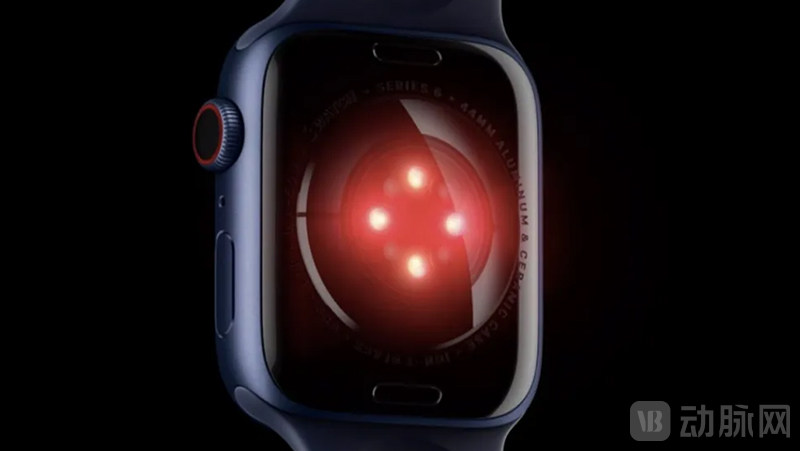
Apple Watch Blood Oxygen Monitoring Feature
The release of the Apple Watch Series 6 triggered a further response from Masimo, which first filed continuation patent applications that were subsequently granted. After securing these patents, Masimo filed a complaint with the U.S. International Trade Commission (ITC) in June 2021, expanding the scope of its litigation to include the Apple Watch Series 6 with its blood oxygen monitoring feature. This later became the key factor leading to the ban on the blood oxygen monitoring feature of the Apple Watch in the United States.
Following Masimo’s complaint to the U.S. International Trade Commission (ITC), Apple filed a defense, arguing that Masimo is primarily known for clinical pulse oximeters and does not even manufacture true smartwatches. Therefore, Apple’s products do not constitute competition. The ITC has consistently required that complaints be filed by a viable U.S. domestic industry. Given that Masimo has historically been a medical device company with no health watch products in the United States, Apple’s defense clearly struck at the heart of the matter.
Masimo submitted design drawings of its wearable device to the ITC and officially launched the device, later known as the W1, in 2022. Apple promptly filed a countersuit, alleging that the W1 copied the design of the Apple Watch and seeking a sales ban on the W1. In response, Masimo quickly modified the product design and discontinued the older model.
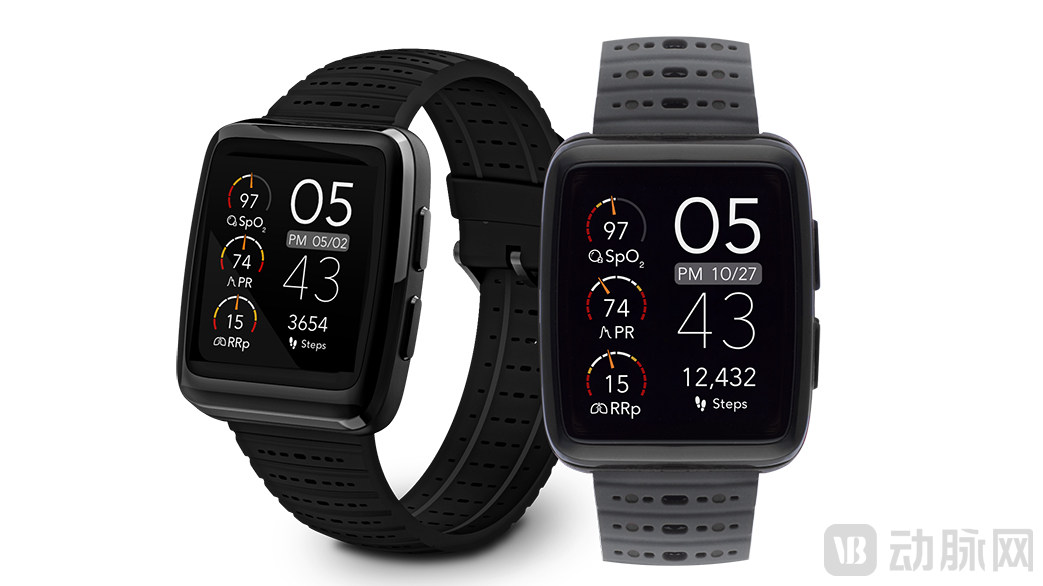
Masimo W1 Blood Oxygen Monitoring Watch
Apple attempted to file petitions for inter partes review (IPR) in 2022 in an effort to invalidate these patents, but was unsuccessful. In January 2023, the Patent Trial and Appeal Board (PTAB) ordered that no trial be instituted, thereby strengthening the validity of these patents and solidifying Masimo’s advantageous position.
In October 2023, the ITC issued a ruling determining that Apple had infringed upon Masimo’s patents and imposed an import ban on the relevant Apple Watch models. Consequently, Apple was compelled to suspend sales of these products in the United States at the end of 2023, particularly affecting the Apple Watch Series 9 and Apple Watch Ultra 2, which were then in their product lifecycle, and disabled the blood oxygen monitoring feature on older models.
Of course, Apple did not come away entirely empty-handed. In October 2024, a jury ruled in Apple’s favor in its lawsuit alleging that Masimo had copied its product design, but Apple was awarded only $250 in damages and failed to secure a sales ban.
Until recently, Apple announced that it had restored the blood oxygen monitoring feature on the Apple Watch via a software update. By shifting the algorithms and computational processes to the iPhone paired with the Apple Watch, Apple successfully circumvented the restrictions and obtained clearance from U.S. Customs and Border Protection (CBP), thereby reinstating the blood oxygen monitoring functionality for the Apple Watch in the United States.
Masimo, naturally unwilling to let the matter rest, has filed a lawsuit against CBP for exceeding its authority, seeking to uphold the ITC’s ban on the Apple Watch. Simultaneously, it has applied for temporary injunctive relief, requesting the court to issue a temporary restraining order and a preliminary injunction to block the enforcement of CBP’s August 1 ruling.
Clearly, this protracted patent war will continue.
The outcome of this patent battle also has far-reaching implications for China’s wearable health industry. On one hand, blood oxygen monitoring has become a key feature of current health-focused wearable devices; on the other, Chinese companies are emerging as a significant force in the health wearables sector.
Medical IP Jun, a prominent blogger in the field of intellectual property for medical devices, believes that the patent dispute between Masimo and Apple will not affect the domestic market at least for now: “Patents are territorial. Based on available information, Masimo’s litigation targets only the U.S. market, and several patents involved are not effective in mainland China. Apple has only disabled the relevant features in the United States; the corresponding features in products sold in China have remained unaffected. Therefore, the domestic market will not be impacted for the time being.”
“However, once domestic health wearable companies—including medical device manufacturers with similar blood oxygen monitoring capabilities, such as pulse oximeters or other products—prepare to expand into international markets, they may be affected. Companies need to make corresponding preparations or assessments, or implement technical workarounds in advance,” he added.
Medical IP Jun explained to VCBeat that even if a product has obtained a medical device registration certificate, it cannot avoid patent infringement. This is because medical device approval focuses only on the safety and effectiveness of the medical device, not on its patent status. Even for innovative medical devices with patent requirements, they only need to meet the relevant patent criteria. Medical device regulatory agencies do not have the resources or capability to conduct in-depth investigations into whether patents are being infringed.
Medical IP Jun also offered his recommendations on how medical device companies can avoid patent risks when expanding overseas.
He stated that patent circumvention strategies are widely adopted across major countries and regions, primarily aiming to avoid infringement under the all-elements rule and the doctrine of equivalents. A common practice involves conducting comprehensive and accurate searches for patents held by competitors or those posing potential risks, followed by targeted design modifications based on specific patent claims to achieve circumvention.
“This is what I believe should be the top priority: a professional team needs to systematically review relevant patents to clearly understand patent risks, including whether they are controllable.”
During the process of expanding into overseas markets, it is often necessary to conduct a local Freedom-to-Operate (FTO) analysis to assess the risk of product infringement on local patents and to formulate corresponding measures. “An FTO report can demonstrate the non-intentional nature of any potential infringement, objectively reduce the likelihood of litigation, and, even if litigation ultimately occurs, help mitigate damages and other legal liabilities.”
“During this process, close attention must be paid to the corresponding patent litigations. For instance, the patent dispute between Masimo and Apple often results in certain patents being invalidated or their rights being altered. If fortune favors you, it is possible that high-risk patents may have already been nullified by others during the product’s market launch,” he added.
"If relevant patent avoidance measures were not implemented prior to the official product launch, resulting in the inability to avoid patent infringement either legally or technically, thereby creating a high risk of infringement, countermeasures must be taken. For instance, one should assess whether their own patents can establish a cross-licensing arrangement in the local jurisdiction. If competitors’ products also fall within the scope of one’s patents, this can serve as a countermeasure, enabling leverage and facilitating cross-licensing. If cross-licensing cannot be achieved, it may be necessary to evaluate obtaining a patent license from the competitor."
“If time permits, proactive measures can also be taken in advance to invalidate risky patents through specific mechanisms. For instance, in the United States, one may file for Inter Partes Review (IPR) to have the patent declared invalid or amended to a scope that does not constitute infringement,” further explained Mr. Medical IP.
Of course, more importantly, it is crucial to plan ahead by implementing risk mitigation strategies at the project initiation stage, effectively conducting product risk avoidance, and thereby enabling true innovation of the product itself.
Meanwhile, enterprises must proactively secure their own patents during the R&D phase and strategically file for patent protection in relevant countries and regions. This creates a reciprocal constraint mechanism, thereby mitigating potential risks and future complications arising from undisclosed patents in subsequent stages.
The patent battle between Masimo and Apple is just one of many patent lawsuits. VCBeat believes that as China’s innovation capabilities in the medical device sector continue to strengthen, and with the growing desire to expand overseas for greater development, the likelihood of patent-related conflicts will inevitably increase significantly. Relevant enterprises also need to plan ahead and make corresponding preparations and responses in advance.
VCBeat will continue to monitor developments in related fields, and we welcome news tips from industry professionals.
References:
Susan Decker & Mark Gurman,Bloomberg:Apple Stole Tech for Watch, Masimo Claims in Patent Suit
Mark Gurman,Bloomberg:The Late-Night Email to Tim Cook That Set the Apple Watch Saga in Motion
Susan Decker,Bloomberg:Apple Accused of Delaying Masimo Legal Fight to Gain Watch Sales
Victoria Song,TheVerge:Here’s Apple’s 916-page appeal over the Apple Watch ban
Koh Ewe,Time:What to Know About the Various Legal Disputes Over the Apple Watch
Jameer Ahamed,patentlawyermagazine.com:Apple v. Masimo: the clash over pulse oximetry patents