Yonghe Medical Shifts from Scale Expansion to Efficiency-Driven Growth, Achieves Profitability Turnaround
Recently, Yonghe Medical released its financial report for the first half of 2025, marking a turnaround in performance: revenue reached RMB 861.6 million, with gross profit amounting to RMB 550.3 million, representing a 3.9% year-on-year increase; the gross profit margin rose from 58.8% to 63.9%, an increase of 5.1 percentage points. Notably, Yonghe achieved a net profit of RMB 27.9 million during the reporting period, compared to a net loss of RMB 138.6 million in the same period last year, successfully turning losses into profits.
As a company specializing in hair medical services, Yonghe Medical has built a full-industry-chain brand matrix comprising “Yonghe Hair Transplant,” the medical hair care and restoration brand “Stevensons,” the female aesthetic hair transplant brand “Yonghe Hair Genesis,” and the medical wig brand “Hafada.”
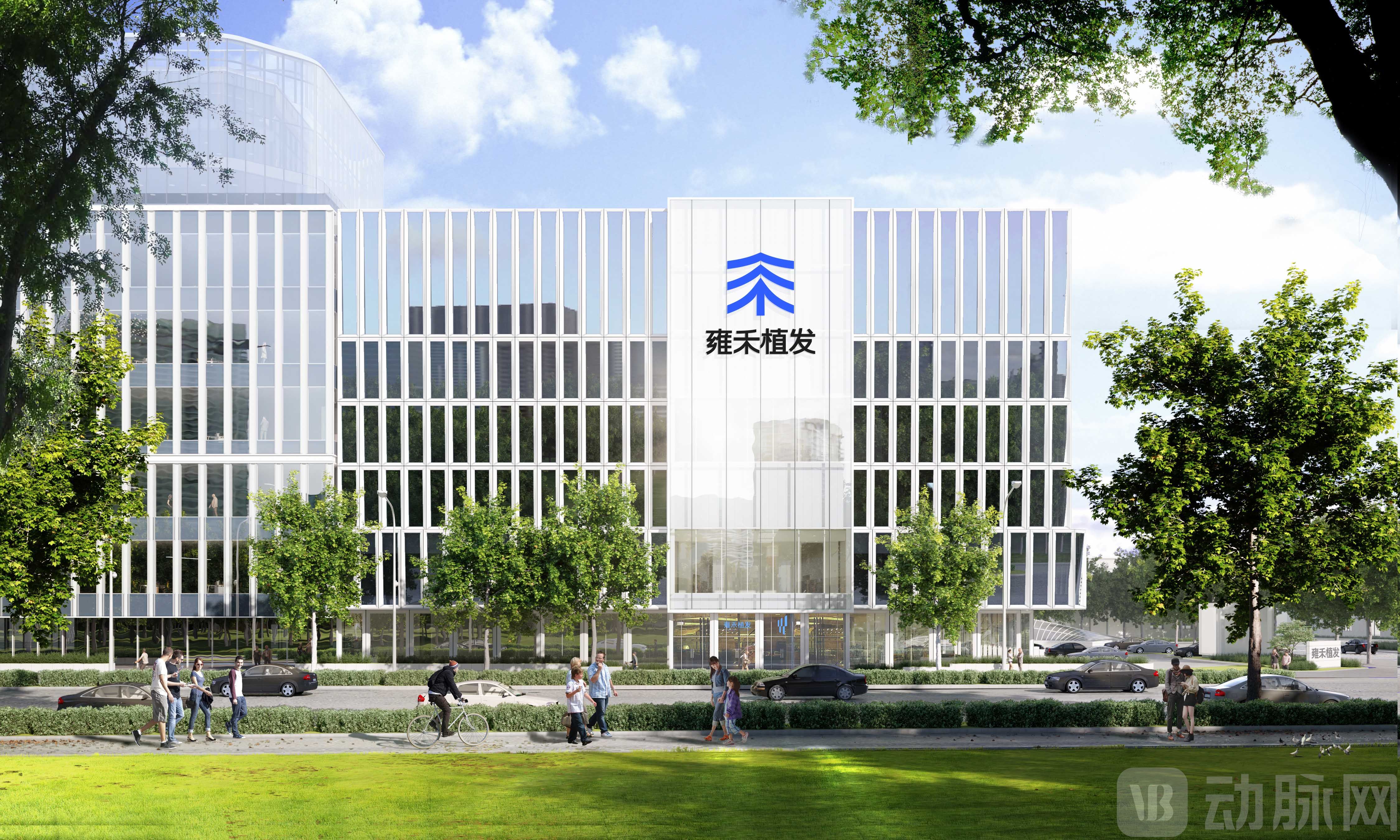
Source: Yonghe Medical
Financial reports indicate that as of June 30, 2025, the company operated 63 hair transplant medical institutions across 61 cities in China and six Savena hair care centers in Shenzhen, Shanghai, and Guangzhou, making it the largest chain hair medical group in China with the widest urban coverage.
This has sparked widespread market attention: How did Yonghe Medical turn from a loss of RMB 139 million to a profit of over RMB 25 million without significant new store openings?
The answer does not stem from reckless expansion, but rather from the triumph of its “Sky Network + Ground Network” closed-loop ecosystem and refined operational strategy.
Its “Sky Network” integrates online consultations, health education, and disease management to achieve precise patient routing and build trust upfront; meanwhile, its “Ground Network” strengthens the radiating capacity of offline service centers in key cities, providing an integrated, closed-loop service encompassing diagnosis, treatment, and care. The synergy between these two networks enables patients to undergo initial consultations online and receive high-quality services offline at nearby locations, proving particularly effective in expanding into third- and fourth-tier markets.
Yonghe Medical’s recent performance turnaround is not merely a financial recovery; it also serves as a testament to the shift in healthcare services from a “scale-oriented” to a “capability-oriented” model.
Building a Closed-Loop Ecosystem of "Sky Network and Ground Network"
The key to turning losses into profits lies not in the simple growth of business volume, but in the re-evaluation of user needs and the comprehensive improvement of operational efficiency brought by the “integration of online and offline networks” strategy.
Yonghe Medical has restructured its “demand axis,” shifting focus beyond surgical procedures to comprehensively align its product portfolio around “hair health.” By spanning from low-cost, high-frequency hair care and maintenance products to high-cost, low-frequency hair transplantation surgeries, the company has established a complete product matrix.
Since 2024, Yonghe has been driving the transformation of its hair care and maintenance business toward high-value, medical-grade packages.
Financial reports show that in the first half of 2025, the Yanggu business service generated revenue of RMB 188 million, accounting for 21.8% of total revenue. The repurchase rate rose to 29.9%, significantly enhancing user stickiness and long-term value.
As the female hair restoration market rapidly emerges, Yonghe Medical has responded swiftly by strengthening its dedicated women’s department, increasing the proportion of aesthetic design services and non-shaven FUE procedures, thereby precisely meeting female patients’ needs through personalized care.
In addition, Yonghe Medical has launched lighter-weight medical care products targeting individuals with early-stage or mild hair loss and younger demographics, achieving early intervention, shorter treatment cycles, and an enhanced user experience, thereby further expanding its customer acquisition channels.
In the process of building its “Ground Network and Sky Network,” Yonghe Medical is committed to creating an integrated service loop encompassing “offline consultations, in-hospital treatment, and post-operative care.” This approach transcends the traditional positioning of surgical institutions by providing full-cycle services ranging from hair loss consultation and pharmaceutical sales to advanced treatments. Meanwhile, the “Sky Network” integrates a suite of online functions, including virtual consultations, pharmacy services, health education, and disease progression management.
Performance growth depends not only on the efficiency improvements of the “Sky Network” and the “Ground Network” individually, but more critically on their efficient synergy and coordination.
For instance, the “Ground Network” replaces mere store expansion by strengthening the operational and radiating capabilities of institutions in central cities; meanwhile, the “Sky Network,” centered on internet hospitals, supports remote expansion into third- and fourth-tier markets. The two form an organic integration: patients can complete preliminary consultations and diagnoses online, then visit central city hospitals for high-quality services once their needs are clarified, thereby achieving resource optimization and an enhanced patient experience.
Recent financial report data also corroborates the accuracy of Yonghe Medical’s assessment of the situation. Compared with the traditional asset expansion model, the business model of its central institutions can not only ensure an increase in the company’s operational scale but also reduce the allocation level of fixed assets, thereby facilitating a faster return to profitability.
In terms of intelligent infrastructure development, Yonghe Medical’s self-developed “Hefan” system integrates an AI knowledge base and is extensively applied to user tag identification and intent analysis, significantly enhancing operational efficiency and workforce productivity. Meanwhile, AI-driven detection and image recognition technologies facilitate the construction of a visualized diagnosis and treatment system, thereby advancing precision in hair restoration medicine.
In this regard, the closed-loop ecosystem formed by the “Sky Network and Ground Network” is steadily propelling Yonghe Medical from a phase of scale expansion into a new stage of high-quality development that emphasizes both quality and efficiency.
From Scale Expansion to Efficiency-Driven Growth
The key to turning losses into profits lies not in the simple growth of business volume, but in the re-evaluation of user needs and the comprehensive improvement of operational efficiency brought by the "integration of online and offline networks" strategy.
Yonghe Medical’s CGO (Chief Growth Officer), Ren Jian, once shared his observations: “We have found that the average transaction value in consumer healthcare is relatively high, while customer demand in third- and fourth-tier cities is relatively fragmented, making it difficult to fully extend standardized medical services to these lower-tier markets.”
Guided by this insight, Yonghe proactively adjusted its expansion strategy in 2024 by suspending deployments in underperforming regions and optimizing its store network. This move did not signify an abandonment of lower-tier markets; rather, it marked a shift toward a more efficient central hospital model to enhance regional coverage and service quality. In the first half of 2025, Yonghe’s medical network became more focused, with resources more concentrated.
Yonghe Medical categorizes its clinics into three tiers: those established for over three years are classified as mature clinics, those operating for one to three years are in the growth phase, and those open for less than a year are considered new clinics. This tiered system lays the foundation for subsequent differentiated operations and precise resource allocation.
In enhancing the growth capabilities of individual clinics, Yonghe Medical has focused on optimizing the cost structure of its mature facilities, promoting multi-department collaboration and refined operations to continuously unlock the performance potential of existing institutions while ensuring service quality and user experience. Meanwhile, Yonghe Medical has also timely implemented an asset-light small clinic model in lower-tier cities, gradually expanding its market coverage.
In the face of challenges such as rising customer acquisition costs and lengthened decision-making cycles, Yonghe has introduced a tiered operational strategy: in first-tier cities, it focuses on building high-end physician IPs to establish brand authority. In lower-tier markets, Yonghe Medical chooses to strengthen local trust-building, making medical professionalism the core competitiveness of its brand.
Meanwhile, Yonghe Medical has innovatively launched the “Integrated Linkage” model. On the front end, it lowers customers’ decision-making barriers through diverse touchpoints; on the back end, it leverages digital tools to enhance conversion efficiency. By strategically focusing on the female demographic and cross-regional medical treatment markets, the company optimizes its cost structure and strengthens marketing resilience. The expert rotational consultation mechanism further ensures consistent medical quality and extends the reach of core-city expert resources across China.
With the refocusing of resources and operational optimization, Yonghe Medical has significantly enhanced its per-store revenue generation capability.
In the first half of 2025, the average revenue per store for Yonghe Hair Transplant and Savin stores reached RMB 13.6753 million, representing a 23% increase from RMB 11.1136 million in the same period of 2024, demonstrating the positive impact of strategic adjustments on terminal performance.
While continuing to strengthen its internal capabilities, Yonghe Medical announced that it has successfully completed the optimization and upgrade of its hospital network. In the next phase, the company will focus on boosting the single-store output of mature hospitals, optimizing cost structures, accelerating refined operations for multi-specialty and moderately scaled hospitals, consolidating its leading position in high-tier markets, and seizing opportunities to expand into lower-tier city markets.