

Chai Discovery Files IPO Prospectus: AI-Powered Zero-Shot Antibody Platform Attracts $100M Backed by OpenAI

Chai Discovery
Drug Discovery Platform Developer
On August 7, 2025, San Francisco-based startup Chai Discovery secured $70 million in Series A funding, with this round led by Menlo Ventures and joined by new and existing investors including Anthology Fund, Yosemite, DST Global Partners, and OpenAI. Chai Discovery, founded just one year ago, has completed two funding rounds to date, raising a cumulative total of $100 million. In September 2024, it raised nearly $30 million in its seed round, led by OpenAI, with participation from top-tier firms such as Thrive Capital, Conviction, Dimension, and Amplify Partners.
In June 2025, Chai released its latest foundation model, Chai-2, which enables “zero-shot” de novo antibody design.In short, it can “conceive” novel antibodies de novo and hit the target antigen in a single round of experiments, achieving an average hit rate of 15%–20%, which represents an improvement of several orders of magnitude over traditional methods.
In the field of AI-based protein modeling, DeepMind’s AlphaFold is regarded as a milestone in technological revolution. Its groundbreaking capability in structure prediction has indeed sent shockwaves through the scientific community, leading many to mistakenly believe that AI had already “hit the ceiling” in protein research—implying that structure prediction was no longer an open question. However, AlphaFold’s strength lies in predicting the static three-dimensional folding of proteins, rather than in designing novel molecules that are functionally oriented, exhibit high affinity, and are directly applicable to drug development.
Although AlphaFold can “solve structures,” it cannot efficiently address the critical challenge of “how to generate novel proteins with well-defined functions and stable structures.” This gap in drug discovery is becoming the core focus for a growing number of AI-driven pharmaceutical startups—theyStriving to transcend the realm of mere structural prediction and advance toward “designing novel protein molecules that are synthesizable and experimentally verifiable.”
As the AI drug discovery industry remains mired in the bottleneck of “generating sequences that are difficult to validate,” Chai Discovery has taken the lead in breaking the curse of “idle models” by integrating generation and validation into a unified workflow. This AI biotechnology team, focused on antibody generation, released two generations of its models within just two years.
A Small, Elite Team Aiming to Achieve “Big and Deep” Impact
Chai Discovery, founded in 2024 and headquartered in San Francisco, USA, is a rapidly emerging AI-driven antibody discovery company. Despite having a team of fewer than ten members, this “small but elite” group has quickly risen to the ranks of global innovators in biological computing, leveraging its highly focused technical approach and cutting-edge expertise.
Co-founders Joshua Meier and Jack Dent are college friends and long-time partners in the interdisciplinary field of AI and biomedicine. Meier, formerly with OpenAI and Meta FAIR (Facebook AI Research), has specialized in protein structure modeling and the development of generative models; Dent brings engineering experience from Google and multiple biotech startups, excelling at translating foundational models into deployable application systems.
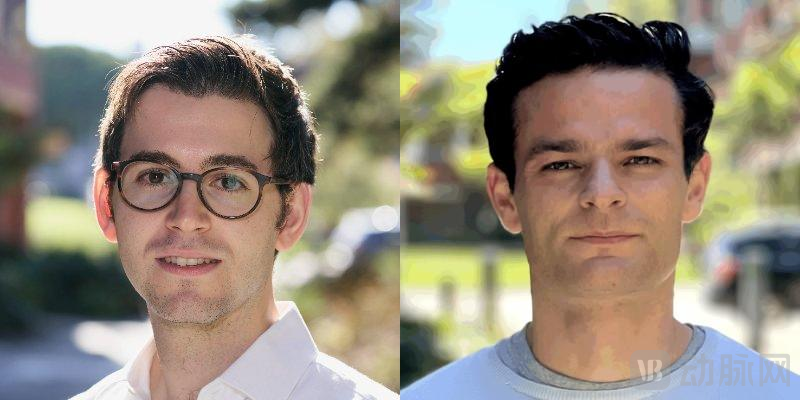
Figure 1: Co-founder profiles: Josh Meier (left), Jack Dent (right)
Their original vision in founding Chai was not merely to build a large language model capable of “writing sequences,” but to establish a complete closed loop from AI generation to experimental validation, thereby driving a paradigm shift in drug discovery from “trial-driven” to “design-driven.” Specifically, this means that AI not only generates hypotheses but also participates in the processes of synthesis, expression, and validation, creating a truly systematic antibody discovery platform with rapid feedback mechanisms.
Chai-1 Generation: Two-Week Closed-Loop Generation of Multi-Format Antibodies, Empowering Efficient Bispecific/ADC Design
The discovery of antibody-based therapeutics has historically been a meticulous and time-intensive endeavor. Traditional approaches generally fall into two categories: one involves immunizing animals (such as mice) to generate antibodies, followed by screening and optimization on a humanized basis; the other utilizes phage display libraries to screen candidate molecules individually from millions to hundreds of millions of antibody sequences. Regardless of the approach, bothIt takes months to optimize affinity, adjust stability, and fine-tune expression, while the probability of identifying truly effective targets from a vast screening library is typically less than 0.1%.[1]。
It is against this R&D backdrop that the model mechanism proposed by Chai Discovery offers a possibility of reconstructing efficiency from the ground up. Its core breakthroughs are mainly reflected in three technical directions:
First, regarding the structural controllability of generative models, Chai-2 employs a multimodal generative architecture that integrates all-atom structure prediction with sequence generation. When outputting each candidate antibody sequence, it simultaneously evaluates its spatial conformation and binding pocket accessibility.Significantly improve the rationality of generated antibodies and the success rate of subsequent validation.
Secondly, Chai Discovery has established an end-to-end closed-loop validation process for "generation-experimentation.": The design model generates candidates (≤20) in a single run, enabling protein expression and binding assays to be completed in standard 24-well plates, with results fed back into the model for the next iteration. The entire cycle is completed within two weeks, significantly faster than traditional screening processes.
Finally, in terms of supporting antibody format and functional diversity, Chai-2 not only supports traditional IgG formats but is also compatible with various molecular structures such as scFv, VHH, and miniproteins., which means the platform is suitable for designing complex drug formats such as bispecific antibodies, antibody-drug conjugates (ADCs), and fusion proteins.
September 2024: The First Foundation Model, Chai-1[2]Launch, Chai integrates multimodal biological structural information into its AI system. Chai-1 can accept protein sequences, small molecules, or DNA/RNA fragments as input and output the three-dimensional structure of their complexes.
It has demonstrated excellent performance across multiple international evaluation benchmarks, including the structure prediction benchmark PoseBusters and the protein folding competition CASP15.Chai-1 demonstrates more refined conformational reconstruction capabilities and stronger geometric consistency than AlphaFold.
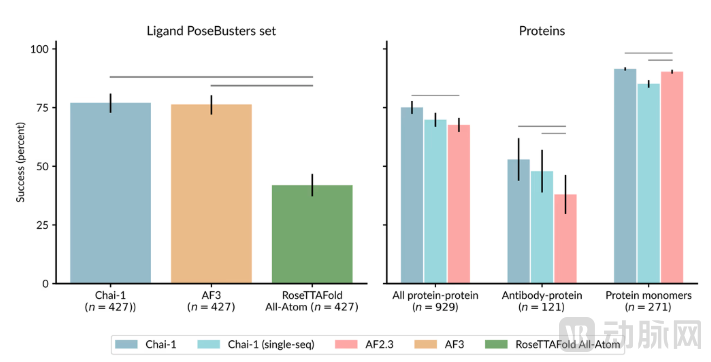
Figure 2: The Chai-1 model achieved a 77% success rate on the PoseBusters benchmark
Chai-2 Iteration: AI Models Must Not Only Predict Structures, But Also Improve Hit Rates
In early 2025, Chai launched Chai-1r, its first version to integrate “structure-constrained generation.”Users can provide experimentally derived binding site information (such as contact residues and binding pocket morphology), enabling the model to incorporate structure-guided constraints during sequence generation, thereby enhancing the physical plausibility and target-binding potential of the final design.
Co-founder Joshua Meier pointed out that by incorporating antigen epitope information as guidance into structure prediction, the Chai-1r model significantly outperformed its predecessor (with a DockQ score of 35.6) and AlphaFold2 (with a DockQ score of 20.6) in standard evaluations of antibody–antigen docking (achieving a DockQ score of 43.7), demonstrating higher prediction accuracy.
In June 2025, Chai achieved a milestone in its technological breakthroughs with the official release of its next-generation model, Chai-2.[1], and demonstrated for the first time its experimental hit capability in zero-shot de novo antibody design. “Zero-shot” refers to the model’s ability to directly generate candidate antibody sequences against novel antigens without requiring pre-training samples or targeted libraries.
According to data from Chai Discovery’s official website, the team conducted experiments on 52 previously unseen antigen targets, achieving a single-round design hit rate of 15–20%, with some targets even reaching a 50% binding success rate—figures that are significantly higher than the 0.1–0.5% average associated with traditional antibody library screening methods.
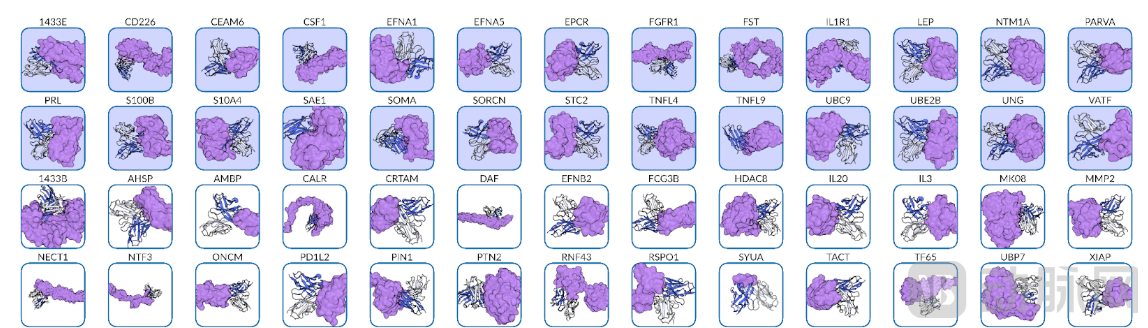
Figure 3: 52 novel antigens targeted by Chai-2.
(The blue box indicates targets with at least one successful binder in ≤20 assay designs, accounting for 50% of the tested targets.)
Chai-2 is not only applied to antibody design but also supports the design of various formats, including single-chain variable fragments (scFv), nanobodies (VHH), and miniproteins.In the design of mini-protein binders, Chai-2 achieved a laboratory validation hit rate of up to 68% (Figure 4), with binding affinities reaching the picomolar (pM) range. Furthermore, antibodies generated by Chai-2 exhibit superior drug-like properties, such as high specificity, nanomolar-level affinity, and favorable developability, laying the foundation for rapid translation into therapeutic applications.
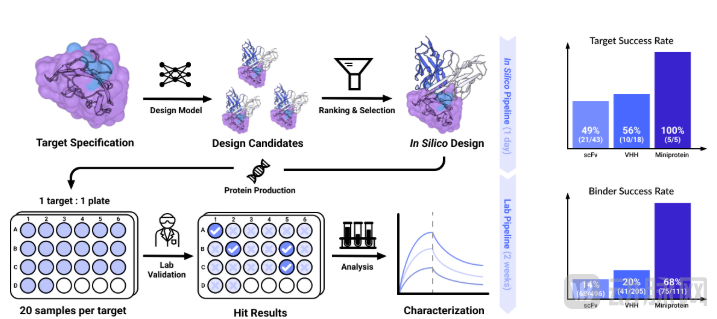
Figure 4: Workflow and Results of the Miniprotein Conjugate Experiment
Currently, Chai-1 is available as an open-source software package (chai_lab) on GitHub, allowing users to invoke the model via code for structure prediction or molecular design. The API access policies for the Chai-1r and Chai-2 models have not yet been announced.
Oracle, NVIDIA, and Sino Biological are its strong backing
Chai Discovery can complete the generation and validation of candidate molecules within an extremely short cycle,Benefiting from a collaborative mechanism built upon a three-dimensional ecosystem encompassing cloud computing power, experimental institutions, and open scientific research collaboration.
Specifically, Chai has collaborated closely with Oracle Cloud Infrastructure (OCI), leveraging Oracle’s cloud platform to support the advanced technological requirements of its groundbreaking AI model, Chai-2, thereby enabling high-performance GPU cluster support for model training and inference tasks.
Meanwhile, the experimental validation phase of Chai was undertaken by Sino Biological in Beijing and the Canadian synthetic biology platform Adaptyv, covering key steps such as protein expression, binding screening, and functional validation.
Furthermore, Chai is a participant in OpenBind, an open science initiative led by the UK government, which aims to generate over 500,000 protein–ligand complex structures and affinity data points in the future to support the training and evaluation of AI-driven drug discovery models.
It is precisely this collaborative combination of “cloud computing power + third-party experimental platforms + open scientific research data” that has enabled Chai to build an efficient, self-driven, and scalable AI antibody design platform, while also providing a reference paradigm for establishing infrastructure for future AI-driven biopharmaceutical enterprises.
“Generation + Validation” Closed Loop May Be the Key to AI Drug Breakthroughs
In recent years,Chinese AI-driven drug discovery companies have made significant progress in model development and translational application, with global collaboration and international expansion becoming increasingly prominent.
For instance, XtalPi leverages AI, quantum physics, and automation to accelerate drug discovery. Following its listing on the Hong Kong Stock Exchange in June 2024, it recently signed a pipeline collaboration agreement with overseas innovative biopharmaceutical company DoveTree, with a total contract value of approximately HK$47 billion (US$5.99 billion). Shanghai Sanyou Biotechnology has partnered with BioGeometry to build the GeoBiologics AI platform and a high-throughput wet-lab closed-loop system. Molecular Mind achieved rapid protein design using its NewOrigin AI model and completed a Series A financing round worth hundreds of millions of yuan in September 2024. Meanwhile, AI-driven pharmaceutical companies are entering a phase of wet-lab experimentation and R&D validation; Insilico Medicine’s pulmonary fibrosis drug Rentosertib and several other pipeline candidates have advanced into clinical stages, with cumulative licensing deals exceeding US$2 billion.
The case of Chai Discovery further suggests that strong generative capabilities alone do not constitute an industry-level advantage. The true breakthrough lies in deeply embedding models into the experimental workflow to establish a rapid “design–validation” iteration cycle, thereby enhancing the real-world translation efficiency of candidate molecules.
Furthermore, Chai Discovery, with a lean team of fewer than 10 people, completed the development of three generations of models and established an experimental closed-loop system in less than two years. This achievement has also prompted domestic companies to reflect on the efficiency issues inherent in the traditional “large team + long chain” R&D model, suggesting that future organizational structures may need to be more flexible, lightweight, and modular.
Looking ahead, whether in antibody discovery, protein design, or small-molecule screening, the combination of “generation + validation + platform ecosystem” is poised to become the foundational capability set for next-generation AI-driven drug development companies. Against the backdrop of declining computing costs and enhanced data sharing, those who can first establish an efficient, scalable closed-loop system will be well-positioned to stand out in the second half of global biopharmaceutical innovation.
References:
[1] Zero-shot antibody design in a 24-well plate Chai, Discovery Team, Jacques Boitreaud, Jack Dent, Danny Geisz, Matthew McPartlon, Joshua Meier, Zhuoran Qiao, Alex Rogozhnikov, Nathan Rollins, Paul Wollenhaupt, Kevin Wu bioRxiv 2025.07.05.663018; doi: https://doi.org/10.1101/2025.07.05.663018。
[2] Chai-1: Decoding the molecular interactions of life, Chai Discovery, Jacques Boitreaud, Jack Dent, Matthew McPartlon, Joshua Meier, Vinicius Reis, Alex Rogozhnikov, Kevin Wu
bioRxiv 2024.10.10.615955; doi: https://doi.org/10.1101/2024.10.10.615955