

Portal Biotech Files for IPO Following $35M Series A to Advance Nanopore-Based Single-Molecule Protein Sequencing Platform

Portal Biotech
Protein Sequencing Service Provider
UK Biotech Startup Portal Biotech Announces Completion of $35 Million Series A Funding, co-led by the NATO Innovation Fund and Earlybird, with follow-on investments from prominent firms including Science Creates VC, Pillar VC, and 8VC. This round not only marks the company’s largest financing since its founding in 2021, but also signifies a major capital injection into the European life sciences tools sector.
What has truly sparked discussion within the industry is the identity of the investor: the NATO Innovation Fund. Jointly funded by NATO member states and focused on “strategic disruptive technologies,” this fund has set its sights on the field of biological tools for the first time—marking a rare foray into life sciences investments by the organization.
The NATO Fund stated bluntly in its announcement: “Portal Biotech is developing a core foundational technology capable of enhancing national biosecurity capabilities.” In other words, this investment is not merely a bet on the future of protein sequencing; it is also about the technological race in biological competition and data sovereignty.
“A New Protein Decoder” Emerging from a University Laboratory
Originating from the Maglia Lab at the University of Groningen,Portal Biotech was founded in 2021., co-founded by Professor Giovanni Maglia, who has long been engaged in single-molecule protein research, and tech entrepreneur Andy Heron (currently CEO of Portal). Professor Maglia has devoted more than a decade to the field of nanopore technology and has published core papers on protein translocation mechanisms and current-based identification in top academic journals in nanoscience and technology, such as Nature Nanotechnology.
CEO and Co-founder Andy Heron previously served as a Senior Director at the global sequencing giant Oxford Nanopore Technologies, where he spent many years overseeing the engineering and product advancement of single-molecule sequencing platforms. He possesses a profound understanding of the underlying principles and commercialization pathways of nanopore sequencing. Tim Massingham, Vice President of Machine Learning and Bioinformatics, led machine learning development efforts during his tenure at Oxford Nanopore, driving improvements in sequencing accuracy and algorithmic performance. With over two decades of experience in machine learning and bioinformatics, he has accumulated extensive research background at institutions such as the European Molecular Biology Laboratory (EMBL). Chief Operating Officer Selly Saini brings more than twenty years of experience in the medical device and diagnostics sectors. A former executive at Johnson & Johnson, she specializes in company scaling and supply chain development.
PortalThe team members’ backgrounds are complementary in terms of academic depth, engineering experience, and commercial implementation., has built a core team that combines breakthroughs in original technology, platform engineering translation, and industrial execution capabilities, laying a solid foundation for its transition from the laboratory to a platform ecosystem.
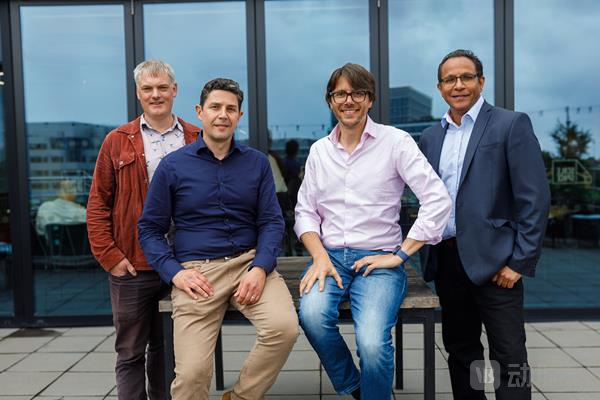
Figure 1: Group photo of the Portal Biotech team
From left to right: Tim Massingham (Vice President of Machine Learning and Bioinformatics), Andrew Heron (Co-founder & CEO),
Giovanni Maglia (Co-Founder & Chief Strategy Officer) and Selly Saini (Chief Operating Officer)
Portal currently has a team size of approximately 11 to 50 employees. It has established an interdisciplinary team at Scale Space, the London Innovation Hub, and continues its in-depth collaboration with the Maglia Laboratory in the Netherlands. This development path, though low-key, follows a clear and steady pace.Attracted capital from multiple sources within three years, completing two rounds of financing by July 2025 with a total amount exceeding $45 million.
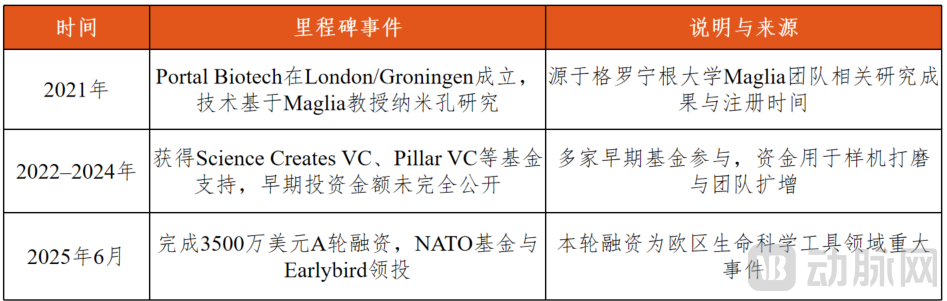
Table 1: Overview of Portal Biotech Milestones
From Mass Spectrometry to Current Signals: Another Way to “See” Proteins
To understand Portal’s disruptive technological approach, it is first necessary to review the current mainstream proteomics tool—Mass Spectrometry (MS). As the gold standard for scientific research and clinical testing, mass spectrometry offers advantages such as high throughput and high sensitivity. However, the process is lengthy: samples must first be enzymatically digested into small fragments, which are then identified one by one. This entire procedure is not only time-consuming but also results in significant loss of “contextual information.” It is akin to trying to understand a letter by piecing together shredded strips of paper, inevitably leading to distortion.
Portal Biotech has chosen a different path, specifically,Portal threads protein chains segment by segment into an engineered nanopore channel and performs real-time sequence identification by analyzing the current perturbations generated as each amino acid translocates through the pore, combined with artificial intelligence (AI) models.. Its ultimate goal is to directly read the complete sequence and modification information of native protein molecules, without the need for enzymatic digestion, tagging, or complex sample preparation.
The greatest innovation of this approach lies in its “direct native reading” capability. The Portal platform not only identifies amino acid sequences but also precisely captures post-translational modifications (PTMs)—such as phosphorylation and acetylation—that are difficult to resolve by mass spectrometry. These subtle yet critical chemical modifications often serve as key clues for early disease signals.
If traditional mass spectrometry is akin to “reading shredded paper,” Portal’s approach is more like “high-definition scanning of an entire letter,” preserving information more completely and enabling more precise interpretation.
Many industry insiders have dubbed Portal the “Oxford Nanopore of protein sequencing.” This comparison is not without merit. The two companies share significant similarities in their technological approaches and platform strategies: both are based on nanopore sensing principles, reading sequence information by analyzing changes in electrical current as biomolecules pass through nanopores; both emphasize portable, rapid, and field-deployable hardware designs, aiming to move sequencing out of large laboratories and into a broader range of real-world applications.
However, compared with DNA sequencing, proteins are far more complex than nucleic acids. These “floppy” long-chain molecules not only lack a uniform charge but also exhibit diverse spatial conformations and post-translational modifications, making the identification process akin to “deciphering a new language” from ambiguous signals. Portal Biotech must address not only how to stably stretch protein chains and accurately capture electrical current signals, but also rely on artificial intelligence (AI) models to reconstruct amino acid sequences and modification information from massive amounts of interference.
At this juncture, Portal is not merely “replicating” Oxford Nanopore’s technological approach; rather, it is building upon that foundation to explore a new pathway for protein sequencing—one that presents greater technical challenges but holds significantly larger potential.
More Than an Instrument: A Platform Reconstructing the Protein Sequencing Ecosystem
Portal is not content with merely building a research-grade prototype; instead, it is committed to reshaping the technological ecosystem of protein sequencing.
Currently,Portal Biotech is developing a desktop, integrated, on-site deployable sequencing systemBy integrating nanopore chips, standardized sample processing workflows, AI recognition algorithms, and cloud-based data platforms, it provides a complete closed-loop service from “sample to result.” Its goal is to make protein sequencing as simple and user-friendly as PCR, bringing it into university laboratories, biotechnology companies, and even future clinical research settings.
At the core protein level, this platform enables end-to-end sequencing at the single-molecule level, directly resolving the amino acid sequence of intact proteins and accurately identifying all modification sites, thereby providing highly detailed molecular information.This multidimensional capability reflects Portal Biotech’s technological ambition to build a universal underlying detection platform.
Although the product is still in the prototype stage, Portal Biotech has clearly outlined multiple key application scenarios:
First, in the field of biosafety and emergency response, its portable system, combined with AI recognition capabilities, can support on-site identification of unknown proteins for specific public health incidents or specialized testing scenarios.
Secondly, in the field of precision medicine, this platform can assist in early cancer screening, genetic disease screening, and rare disease diagnosis by identifying post-translational modifications (PTMs) of proteins.
Furthermore, the platform also holds potential for drug discovery: identifying changes in protein expression under drug influence, thereby facilitating early go/no-go decisions and target validation.
Furthermore, Portal Biotech’s platform architecture is not only focused on proteomics but also possesses the capability to expand into metabolomics and peptide analysis. According to its official website, the system enables multidimensional detection of small molecules, peptides, and intact proteins.
For small molecule and metabolite detection, the platform enables quantitative analysis of metabolites and assesses sample purity, providing foundational data support for metabolic research and drug development. For peptides, Portal employs mass spectrometry-compatible peptide spectroscopy, which not only identifies post-translational modifications but also distinguishes chiral differences and other isomers.
Overall,Portal Biotech’s platform leverages the advantages of rapid analysis, direct reading, quantitative measurement, scalability, and cost control to build an integrated “device + reagent + algorithm + cloud” system.This structure not only demonstrates its closed-loop technical capabilities but also lays the foundation for its platform-based business model.
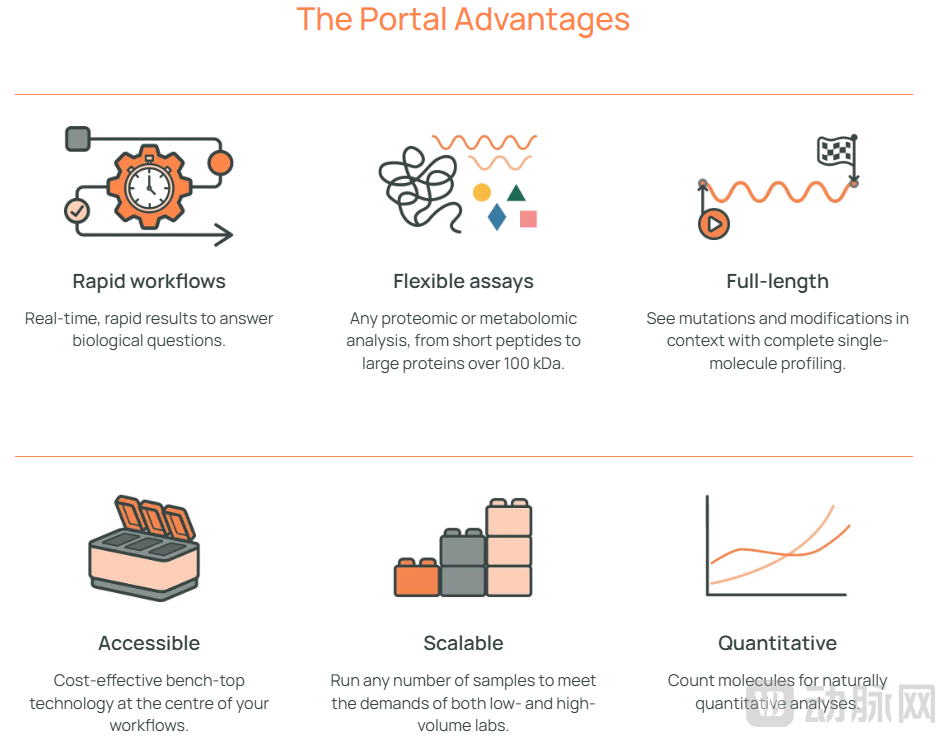
Figure 2: Advantages of the Portal Biotech Platform
A New Race for Precision, Throughput, and Scenarios
In the technological breakthrough battle of proteomics, Portal is not the only player. The current mainstream technology remains liquid chromatography-mass spectrometry (LC-MS), dominated by industry giants such as Thermo Fisher and SCIEX. Meanwhile, a group of emerging companies is competing around the “single-molecule reading” approach, represented by Quantum-Si, Nautilus, and Seer, each exploring different pathways.
Quantum-Si optimizes the identification process using single-molecule protein barcode labeling technology; Nautilus employs iterative protein mapping for large-scale single-molecule protein analysis; and Seer, through its Proteograph product suite, utilizes nanoparticles for sampling to automate sample preparation while maintaining compatibility with mainstream LC-MS platforms, thereby enhancing throughput and analytical depth.
Portal Biotech’s path is clear: bypass labeling and optical systems to directly read full-length proteins. However, achieving this technological leap still requires striking a balance among precision, throughput, and cost. Particularly in the research market, only by delivering tangible value that is “simpler and more cost-effective than mass spectrometry” can it secure user trials and repeat purchases.
Protein sequencing was once hailed as the next frontier of the information revolution following genomics. However, for over a decade, the field has been constrained by high costs, fragmented results, and experimental complexity, preventing its widespread adoption. Portal’s vision is to reconstruct the “reading method” of the protein world through a novel foundational approach. It is neither a simple replacement for mass spectrometry nor a standalone detection device; rather, it seeks to build a new-generation protein information ecosystem via a closed-loop model integrating sequencing chips, algorithmic models, and a data platform.
For the Chinese market, this case sends a profound signal: in key foundational tools for biotechnology, innovations with true global impact are often not isolated breakthroughs, but rather the result of full-stack integration capabilities “from laboratory to platform.” The ability to advance simultaneously in originality, engineering translation, and industrial pathways may well be the critical question determining whether domestically produced foundational biotechnologies can break through in the future.