

A Wave of Biomedical Industrial Parks Quietly Disappears Amid Industry Downturn
On March 20, 2025, the 187th live episode of “Political Inquiry in Shandong” focused on Jinan City, directly exposing the industry reality of excessively high vacancy rates in certain biopharmaceutical industrial parks in Jinan.
 Figure 1. Screenshot from Episode 187 of "Wenzheng Shandong"
It is reported that,Nearly two years after its opening, the Haiping Medical Device Industrial Park still has four buildings—No. 2, No. 3, No. 6, and No. 9—remaining vacant. Building No. 10, which has 23 floors, currently houses only one tenant company.. The Bianque Health and Wellness Ecological Valley project is located in the core area of Jinan High-Tech Zone. Phase I of the project commenced operations in July 2024, with plans to introduce approximately 50 enterprises within two years,However, to date, only two enterprises have moved into the park, including one that has completed renovation and another that is preparing for renovation.。
This is by no means an isolated case, but rather a microcosm of the entire pharmaceutical industrial park landscape. According to statistics from Cushman & Wakefield,In 2024, the average vacancy rate of industrial parks across China reached 62.8%, a surge of 27 percentage points within five years.Focusing further on the pharmaceutical sector, the vacancy rate in industrial parks has now exceeded 50%. For instance, at BioBAY, insiders reveal that occupancy rates for Phases IV and V have dropped from 80% two years ago to approximately 50% currently. A similar trend is observed in Zhangjiang, Shanghai, where many buildings are now essentially “half occupied, half vacant.”
The cold, hard reality of case after case seems to signal that the “golden age” of pharmaceutical industrial parks has officially come to an end, with a major industry reshuffle imminent.
When the Tide Recedes, Who Is “Swimming Naked”?
In the autumn of 2024, a large expanse of golden corn kernels was spread out to dry on an open lot within a pharmaceutical industrial park in Beijing. They glistened dazzlingly under the sunlight, yet this very brilliance only served to accentuate the desolation and loneliness of the park. This scene is a true reflection of the current state of many pharmaceutical industrial parks across China, which are scattered throughout various cities, so quiet that they have virtually become real-life industrial “ghost towns.”
Taking a pharmaceutical industrial park in Tianjin as an example, construction of Building 1 began in early 2023, and investment promotion efforts were launched shortly thereafter. However, as of June 2025, only three enterprises had settled in the park: one was recommended by the local government, another was a subsidiary established by the park’s own operating company, and only one was genuinely attracted through external investment promotion. Yet even this last tenant has recently shown intentions to withdraw, with its founder proactively confiding to the park’s management that, “With no other option, as a local government has promised to provide some funding, we have no choice but to leave in order to survive.。”
However, this is not the worst part. Buildings 2 and 3, as initially planned for the park, remain unfinished. Building 2 has not yet been topped out, and construction progress on Building 3 stands at only 30%, with the last construction activity dating back to late 2024. This suggests that these “unfinished buildings” are largely destined to remain in this state permanently.
Some industrial parks remain vacant, while others have effectively vanished from the industry by rebranding themselves. Recently, a pharmaceutical and health industrial park in Beijing was officially renamed the “Bio-Intelligent Manufacturing Industrial Park,” signaling an expansion from the single sector of biopharmaceuticals into emerging fields such as optical information technology, artificial intelligence and robotics, and next-generation electronic information. Although this is the stated rationale, the underlying motive is to de-emphasize its pharmaceutical focus through “rebranding” and thereby seek new industrial targets.
Beyond mere renaming, some biopharmaceutical industrial parks have undergone a complete change in ownership. It is reported that a pharmaceutical industrial park in Wuhan, due to unsatisfactory investment attraction outcomes and the successive departure of existing tenant companies, was officially requisitioned this January by a local university of pharmacy. In line with the principle of avoiding resource waste, the site has been transformed from an industrial park into a new campus accommodating freshman students. In fact, there have been numerous cases of “secondary redevelopment” of pharmaceutical industrial parks over the past year. Apart from conversion into educational institutions, such facilities have been repurposed as stadiums, hospitals, and activity centers, with some in more favorable locations even planned for development into shopping malls.
Certainly, it is not only these emerging industrial parks that are facing difficulties; leading targets are also in the same situation. For example, due to the closure or withdrawal of a large number of resident enterprises, the second-hand trading market for laboratory equipment within BioBAY has become particularly active. A person in charge who specializes in this business at BioBAY stated, “Previously, we received inquiries from at most two to three companies per week. Now, however, we receive 10 to 20 calls a day, all with clear requirements and an eagerness to close deals as soon as possible.。”
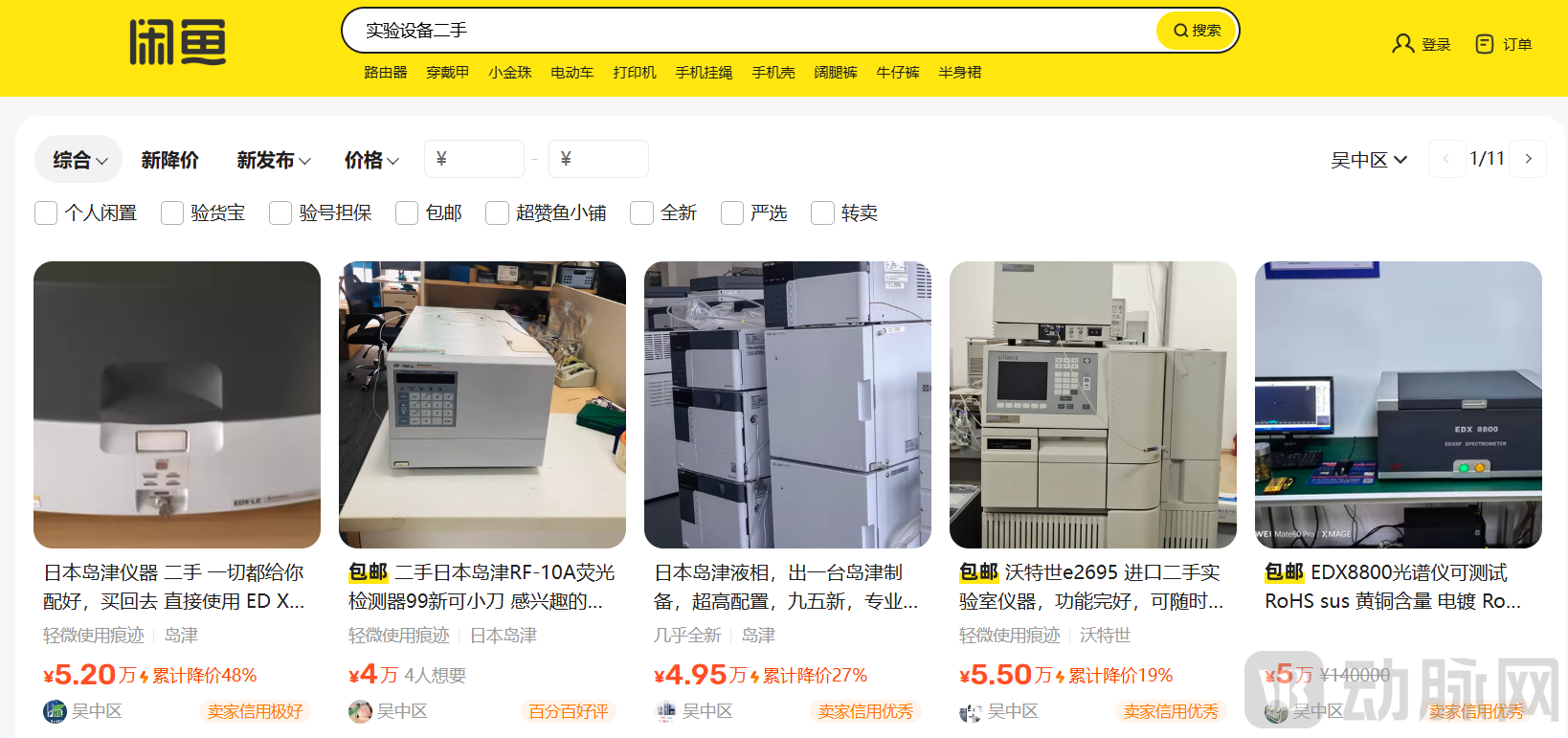 Figure 2. Robust trading of second-hand laboratory equipment on the Xianyu platform
Beyond seeking out platforms, many founders have even stepped in personally, registering individual accounts on Xianyu to sell their equipment. Additionally, major industry chat groups within the park are flooded with information on second-hand equipment transactions. These increasingly frequent trades indirectly confirm the objective reality of BioBAY’s declining occupancy rate.
Shanghai’s Zhangjiang, located less than 100 miles away, has clearly not remained unaffected either. It is reported that,Park buildings that were once in such high demand that securing a single unit was difficult are now largely underoccupied, with some having half or even entire floors left vacant.Upon closer inspection, in the laboratories of many companies, supplier advertisements inserted into sequencing sample boxes were covered with dust, and some large-scale equipment was partially draped with dust covers, clearly indicating that they had not been used for a long time.
Confronted with this situation, an industry veteran who has long been involved in the park’s development couldn’t help but lament, “Times have never been this hard for everyone.”
Trapped in the “Copy-and-Paste” Dilemma
In April 2018, following the launch of Chapter 18A of the Hong Kong Stock Exchange listing rules, which allowed pre-revenue biotech companies to go public, a surge in the development of pharmaceutical industrial parks swept across China. It is reported that in 2018, there were only 98 nationally-level biomedical industrial parks independently established in China; however, this number rapidly climbed to 193 in 2019, accounting for 49.87% of all national-level industrial parks in the country—nearly half of the total.
In the following years, as both the primary and secondary markets remained red-hot, pharmaceutical industrial parks experienced explosive growth. Not only governments, but also private enterprises, investment institutions, and research universities enthusiastically participated in this trend. In this regard, a senior industry expert remarked, “During those years, building industrial parks seemed to cost nothing; in just one district alone, there were at least ten named parks of various sizes..” This is no exaggeration; according to statistical data from the Qianzhan Industrial Park Database,As of the end of 2023, there were 532 biopharmaceutical industrial parks in China, with more than 300 added over the past four years.。
Yet, as prosperity inevitably gives way to decline, the pharmaceutical industrial parks have not escaped this law. After 2023, as the entire industry cooled down, pharmaceutical industrial parks experienced successive crises, with incidents such as “ghost towns,” “unfinished buildings,” “chaotic investment promotion practices,” “substantial losses,” and “park disputes” emerging one after another. Particularly since 2025, the continuously rising vacancy rates have directly torn away the last fig leaf covering the golden age of pharmaceutical industrial parks.
So, how exactly did this collapse occur?
This must be viewed from three dimensions,First and foremost, the industry downturn has significantly increased the difficulty of investment promotion.. A business development representative corroborated this with personal experience: “During the peak years of the market, the timeline for a pharmaceutical company from initial contact to final implementation was typically two to three months, with some cases completed in as little as one month. Currently, however, the process generally spans years and involves multiple rounds of online negotiations and on-site visits. Even so, the ultimate success rate remains very low; converting just one out of 50 prospects is considered a favorable outcome.”
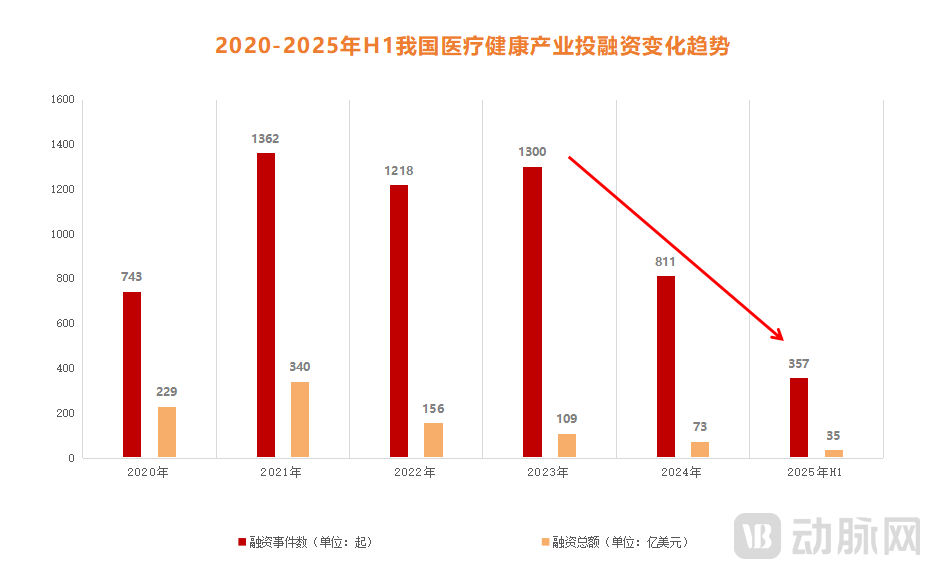 Figure 3. Number and Amount of Investment Deals in China’s Healthcare Industry, 2020–H1 2025 (Data Source: Artery Orange)
This situation has arisen partly because the number of innovative investment targets on the market has indeed decreased following a significant tightening of investment. According to incomplete statistics from the VBInsight database, China’s healthcare sector completed 811 financing rounds in 2024, nearly half the number recorded during the industry’s peak. On the other hand, from the corporate perspective, most companies have opted for cost reduction and efficiency improvement to ensure survival in the cooling market, making them reluctant to consider relocation or establishing new operations.
Secondly, after a period of frenzied growth, the current supply-demand relationship has become severely imbalanced, making it difficult for many industrial parks to secure a share of the market.. According to data from the National Bureau of Statistics, the total area of industrial parks across China has exceeded 6 billion square meters, with annual new supply still reaching 140 million square meters, which clearly outpaces the growth rate of pharmaceutical companies. Taking listed companies as an example, as of the end of 2024,There are nearly 500 pharmaceutical companies listed on China’s A-share and Hong Kong stock markets, yet the number of pharmaceutical industrial parks in China exceeds 500. This means that, on average, there is not even one listed company per park., and what is even more brutal is that 80% of these listed companies are concentrated in Beijing, Shanghai, Guangzhou, and Jiangsu Province, leaving other industrial parks to compete for the remaining 20% of listing resources.
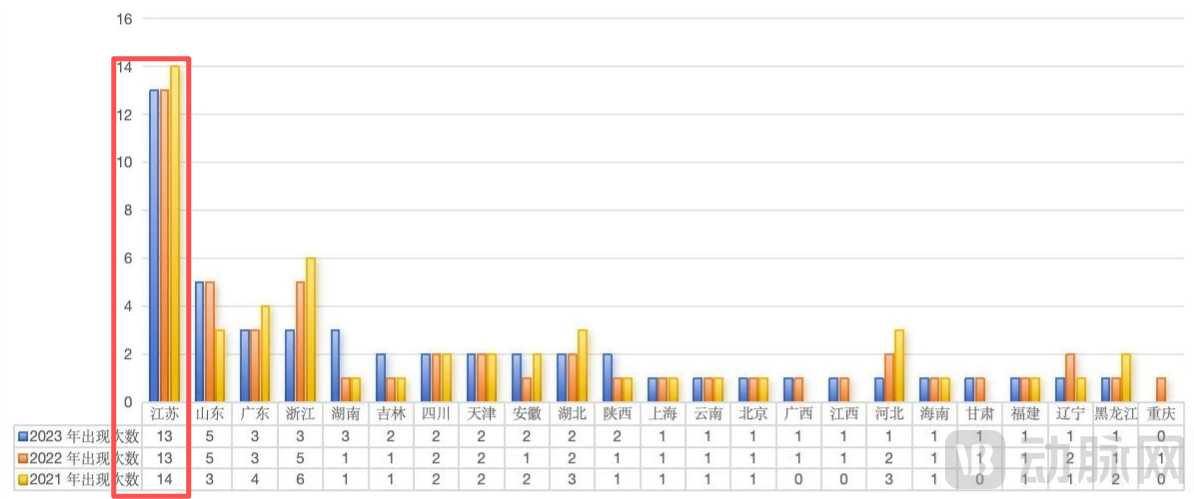 Figure 4. Distribution of the Top 50 Provinces in the Comprehensive Competitiveness of National Biomedical Industry Parks, 2021–2023
A business development officer from a Suzhou Industrial Park shared this profound insight, “Jiangsu is the province with the largest number of pharmaceutical industrial parks in China. Among the top 50 nationwide, as many as 13 are located in Jiangsu. Driven by the industry’s boom in recent years, a large number of emerging industrial parks have sprung up across the province, further increasing park density. It is not uncommon for a small county to host five or six industrial parks simultaneously. Therefore, in many cases,”Investment promotion truly carries a sense of powerlessness, akin to meat that has been gnawed down to the bone yet still struggles to call out, “Welcome back.”。”
The final key factor lies in the operational model: “homogenization” has left many pharmaceutical industrial parks lacking core competitiveness, reducing them to replaceable casualties.In fact, the operation of many current pharmaceutical industrial parks follows a pure real estate logic, treating investment promotion merely as a means to fill physical space and relying primarily on rent and tax revenues for returns. These parks lack in-depth industry research and fail to implement differentiated strategies based on their own advantages. Instead, they blindly replicate existing models, only to find themselves surrounded by numerous similar copies, ultimately leading to intense internal competition.
A park manager exposed this phenomenon, “Many pharmaceutical industrial parks attempt to replicate the models of Zhangjiang and Biobay, yet they overlook their own strategic positioning and lack the commitment to cultivating a platform ecosystem. Instead, they treat operations and investment promotion as mere exercises in real estate development, harboring the illusion that they can build an industrial park in five years and force-mature a cluster of industries within three, before sitting back to collect rent.“Such an operational model that conflates rental services with investment activities will only result in weak industrial clusters, fragmented enterprises, and poor interconnectivity within the park. Many target companies will depart shortly after exploiting short-term benefits, ultimately leaving behind an empty shell.”
Therefore, the collapse of this pharmaceutical industrial park is by no means accidental; rather, it is the inevitable outcome of the interplay among industry cycles, supply-demand imbalances, and homogenized operational models, while also representing the price paid for past reckless expansion.
A Story About Vision and Long-Termism
In March 2025, Shenzhen announced that it would consolidate 100,000 square meters of industrial park resources owned by municipal state-owned enterprises to provide rent-free incentives for up to two years to small and micro sci-tech innovation enterprises meeting policy criteria. Subsequently, major pharmaceutical industrial parks across China launched a wave of “zero-rent” initiatives, with the clear objective of curbing the ongoing rise in vacancy rates.
From a results-oriented perspective, this will inevitably provide some impetus, but it is unlikely to make significant waves. According to the detailed implementation rules currently issued by various localities, the “zero-rent” policy is primarily targeted at star pharmaceutical companies. These enterprises are not short of funds, and they may also be indifferent to annual rents amounting to only several hundred thousand yuan. In this regard, a senior expert from an industrial park commented, “Some companies spend millions of yuan annually on electricity bills for their laboratories alone, so a rental cost of several hundred thousand yuan is hardly a significant expense.。”
Nevertheless, we can still observe positive signals indicating that the current pharmaceutical industrial parks are proactively seeking transformation.. On one hand, this is reflected in the operational model, which is gradually shifting from real estate investment promotion to industrial investment promotion; on the other hand, it is manifested in ecosystem development, with a greater focus on innovative R&D as well as on building lifestyle communities.。
Let’s begin with the shift in operational models. Since the promulgation of the Regulations on Fair Competition Review in May 2024, the era of the “three traditional tactics” for local investment attraction—land incentives, tax rebates, and fiscal subsidies—has officially come to an end. “Investment-driven attraction” is gradually replacing “tax-based attraction,” emerging as a more compliant and forward-looking new paradigm for investment promotion in pharmaceutical industrial parks.
BioBAY’s growth trajectory has precisely validated the feasibility of this model. In 2005, Fei Jianjiang was assigned a special mission: to develop the biopharmaceutical industry in Suzhou following a venture capital model. At that time, Mr. Fei served as Deputy General Manager of CSSD Venture Capital, an investment arm directly under the Administrative Committee of Suzhou Industrial Park. The firm was restructured into Suzhou Venture Capital in 2007 and renamed Suzhou Yuanhe Holdings in 2012. Following corporate restructuring, Yuanhe Yuandian spun off independently in 2013, becoming a market-oriented venture capital platform under Yuanhe Holdings. It has provided investment management for a number of early-stage pharmaceutical companies that established operations in BioBAY, including Ascentage Pharma, CStone Pharmaceuticals, and Innovent Biologics.
It is reported that in the early stages of BioBAY’s development, Shanghai Zhangjiang and Beijing Zhongguancun already had a certain scale in the pharmaceutical industry. Fully aware of this gap, Yuanhe Yuandian adopted a differentiated investment strategy: on one hand, it focused on start-ups that were generally overlooked by first-tier cities but possessed significant industry potential; on the other hand, it strictly adhered to market-oriented investment logic, requiring its team members to have medical backgrounds from the outset. Dr. Yu Qiang, founder of Shengshi Taike, was deeply impressed by his initial contact with BioBAY, “They were the first to email me in English, and their English was very idiomatic. When I asked about their field of study, they said they majored in pharmacy; many of them are graduates of China Pharmaceutical University.。”
Next, let us focus on the development of the industrial ecosystem. Taking Chengdu Tianfu Bio-town as an example, in just nine short years, it has transformed from a former “wasteland” into a hub with more than 300 projects established and six listed companies cultivated. This achievement is undoubtedly attributable to its continuous efforts in building a robust industrial ecosystem.
It is reported that Tianfu Bio-Town has established 113 research and development functional platforms covering the entire lifecycle, from target discovery to pilot-scale production. This undoubtedly provides strong support for corporate R&D efforts. Yao Zhe, Director of Public Affairs at Ucell Biosciences, recalled, “Although we had secured a certain amount of funding in our early stages, the high cost of experimental equipment—often running into tens of millions of yuan—still stretched our resources thin. Tianfu Bio-Town not only provided professional and comprehensive laboratory equipment but also allowed us to use it by paying only a modest rental fee. This addressed our urgent needs and facilitated the rapid translation of our R&D achievements into practical applications.”
In addition to providing equipment, Tianfu Bio-Town has issued “Innovation Vouchers” valued at RMB 1 million to 2 million to each enterprise within the park to stimulate R&D enthusiasm. These vouchers can be used to procure services from public technology platforms. For instance, Ucell Therapeutics can directly use the Innovation Vouchers to pay third-party providers for preclinical safety assessments, and the safety assessment agencies can then redeem these vouchers for cash from the Administrative Committee. This initiative is of significant importance to startups in critical stages of research and development.
A business development representative from a certain industrial park in Shanghai also confirmed this, ““I now receive nearly 20 calls a day, with most inquiries focused on locating existing legacy laboratories on the market that can be put into use after only minor renovations. This trend highlights how heavily companies currently prioritize R&D. Therefore, our offer of subsidies covering 50% of actual R&D expenditures is sufficient to differentiate us from other industrial parks.”。”
Certainly, ecosystem development is reflected not only in R&D but also in essential living infrastructure. In 2017, Keymed Biosciences, which had been established for just one year, was invited to Tianfu International Bio-town. Initially, the company’s impression was less than favorable, as it found the area “inconveniently located and desolate.” However, two years later, upon revisiting the bio-town, it observed that “buildings had risen and greenery had taken root,” making the area “suitable for both work and life.” Consequently, Keymed Biosciences officially settled in Tianfu International Bio-town in 2019. This phase of “infrastructure first, entrepreneurship second” has frequently appeared in the recollections of many early tenant enterprises.
In fact, the rise of any pharmaceutical industrial park depends on the right timing, favorable location, and human synergy. Take BioBAY as an example: if one were to attempt to replicate its path today, success would not be guaranteed, as the times have changed, the industry has evolved, and corporate needs have naturally shifted accordingly.This compels today’s pharmaceutical industrial parks to understand the industry better than enterprises do and grasp trends more adeptly than capital investors, while also implementing targeted layouts based on their own circumstances to identify the most suitable path for industrial development.。
In the long run, China’s pharmaceutical industrial parks will inevitably undergo intense competition, but those that can truly nurture pharmaceutical companies into “towering trees” will endure.
1. “Price Cuts, Renaming, and Sales: Biopharma Parks in Struggle” — Shenlan Guan;
2. “Founders Buy Equipment on Xianyu: The Chill of Innovative Drugs Blows into BioBAY” — Pharmaceutical Economic News;
3. “Stop Building: The Biomedical Park Boom Has Cooled Down” – Fangsheng Research.