

Nanochap completes 300 million RMB strategic financing, leading the global visual brain-computer interface sector

Nanochap
Core Chip Developer in the Biomedical Field

Legend Capital
Early-stage venture capital and growth-stage private equity investment institutions

harvest Capital
Venture Capital Institutions Specializing in Equity Investment

GF Xinde
Financial institutions that focus on investments in the pharmaceutical, TMT, and other industries
Nanochap Electronics has recently completed a 300 million RMB strategic financing round. This round was co-led by a renowned industrial investment institution and Legend Capital, with existing shareholder Harvest Capital making an oversubscribed follow-on investment. GF Xinde Investment and Caitong Capital participated as follow-on investors, while Qifeng Capital served as the financial advisor. The proceeds will be primarily used to advance clinical trials of visual brain-computer interface products and to drive iteration of core technologies.
The year 2026 marks the beginning of the 15th Five-Year Plan period, during which brain-computer interface has been incorporated into national strategy, becoming a "strategic battleground" for unlocking new quality productivity. Supportive policies are expected to propel BCI from isolated laboratory breakthroughs to a systemic industrial takeoff, accelerating the establishment of technical standards and the expansion of application scenarios. This also signals the official start of China's substantial leap toward a future of "brain-computer integration." This environment presents Nanochap with a critical window of opportunity for breakthroughs and large-scale transformation.
To date, Nanochap has launched two groundbreaking visual restoration BCI products: the retinal pathway E-BCI and the visual cortex pathway V-BCI. The maximum number of signal acquisition and stimulation channels has been increased to 1,280. All core underlying technologies, including electrodes, chips, and packaging processes, are developed in-house. With key performance indicators ranking among the world's top tier, Nanochap is leading the global visual restoration field.
Restoring Sight to the Blind Is Not a Fantasy
Nanochap Advances Dual Approaches in Visual Reconstruction
As a cutting-edge technology integrating life sciences and information technology, brain-computer interface (BCI) enables a direct communication channel between the brain and external devices, opening up new possibilities for the synergy between biological intelligence and machine intelligence. Visual restoration, as one of the most disruptive directions in BCI, has become a focal point of global technological competition. For instance, Elon Musk's Neuralink has announced that its Blindsight product is planned to help blind individuals restore low-resolution vision by 2026. Science Corporation also published clinical trial data for its visual restoration product PRIMA in 2025. In addition, multiple other companies and research institutions are concurrently advancing their efforts in this field.
One of the key drivers of this global technological race is the substantial unmet need. According to 2020 statistics from the World Health Organization, approximately 1.2 billion people worldwide live with visual impairment, including 43 million who are blind and 238 million with moderate to severe visual impairment. Every breakthrough in visual restoration technology has the potential to significantly improve the quality of life for hundreds of millions of people.
In response to this immense demand, and based on a comprehensive assessment of technological pathways, Nanochap has strategically positioned itself in the visual BCI field with an advanced dual-track approach to visual restoration: the retinal pathway E-BCI and the visual cortex pathway V-BCI. These two products are designed to be applicable to the vast majority of blind individuals.
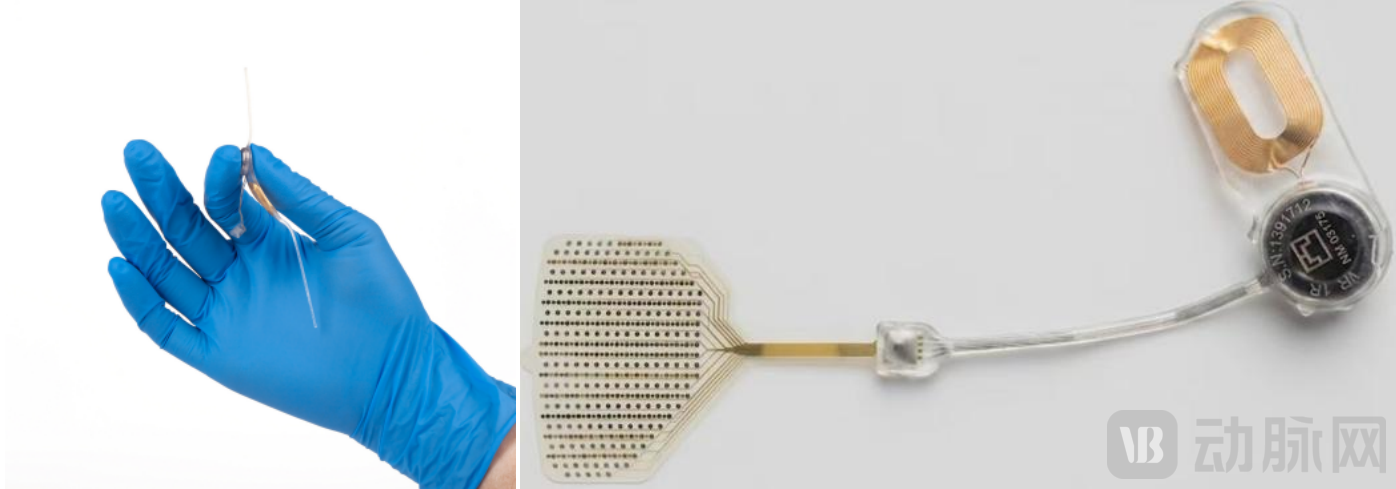
Left: Retinal Pathway Brain-Computer Interface E-BCI; Right: Visual Cortex Pathway Brain-Computer Interface V-BCI
Among these, the retinal pathway visual brain-computer interface involves implanting an electrode array into the macular region of the retina through minimally invasive ophthalmic surgery. The electrodes stimulate retinal ganglion cells or bipolar cells to help patients restore functional vision. This approach has been in clinical development for nearly a decade and has accumulated substantial safety data. From a surgical perspective, the risks associated with fundus implantation are significantly lower than those of craniotomy, while also avoiding the ethical concerns, privacy issues, and long-term safety risks associated with intracranial implantation. Therefore, the retinal pathway BCI is expected to achieve rapid clinical application within the next 2–3 years, enabling truly disruptive and innovative clinical translation that would benefit a large number of patients and individuals with low vision.
In contrast, the visual cortex pathway involves implanting an electrode array directly into the visual cortex. Because it completely bypasses the optic nerve pathway, this approach offers greater universality for visual reconstruction, making it suitable for patients with eye loss, optic nerve atrophy, or absence of the optic nerve to achieve artificial vision. However, as this approach involves intracranial implantation, the clinical safety requirements are substantially higher.
Nanochap's retinal interface product obtained its type inspection report in 2024. Key parameters, including biocompatibility and an implanted device lifespan exceeding 10 years, have been validated. The company has also completed nearly 100 large animal and primate studies, confirming the in vivo safety and efficacy of the product. Currently, Nanochap has initiated human clinical trials for its retinal interface product, and its visual cortex pathway BCI product is expected to enter prospective clinical trials this year.
Full-chain Independent Controllability
Build a Bottom-line Moat
Given that implantable visual brain-computer interface products require high throughput, high precision, and closed-loop characteristics, the technological barriers are extremely high. Every component and each step of the manufacturing process must be refined over an extended period.
Under the leadership of Dr. Yang Jiawei, founder and a nationally recognized high-level talent, the Nanochap team has successfully built a full-chain technology platform covering everything from core integrated circuits to system algorithms. The team has achieved multiple key technological breakthroughs, including high-density 3D electrodes, high-throughput brain-computer chips, ultra-precision MEMS processes, dynamic parameter regulation, and charge balancing technology, thereby establishing a moat around its foundational technologies.
Taking implantable electrodes as an example, Nanochap's visual BCI innovatively employs a 3D electrode array. Each electrode features a three-dimensional structure with a composite surface coating. When combined with current steering control from the chip, this creates a precisely focused electrical field, significantly enhancing neuronal targeting and visual spatial resolution.
In terms of core manufacturing processes, to meet the stringent requirements for ultra-high hermeticity of the implant and to extend its operational lifespan, the Nanochap team has independently developed a "high-density feedthrough process" and an "ultra-compact hermetic packaging process." These technologies ensure long-term implantability in the challenging in vivo environment. These related technologies are rare internationally and have been granted international patents.
Complete Industrialization Capability
More Than a Decade of Dedication Helps Chinese Visual Brain-Computer Breakthrough
As a hardcore technology startup focused on the R&D, production, and sales of brain-computer interfaces and neuro-biological chips, Nanochap Electronics possesses solid research foundations and a professional R&D team, with extensive development experience in BCI/neural interface implants and biological chips. The company has filed over 100 patent applications for its core technologies, including more than 20 PCT patents.
In addition, Nanochap has built a nearly 2,000 m² Class 10,000 (ISO 7) GMP cleanroom, featuring a complete in-house production line for BCI implants. Both the core manufacturing equipment and all key processes have been independently developed from the ground up.
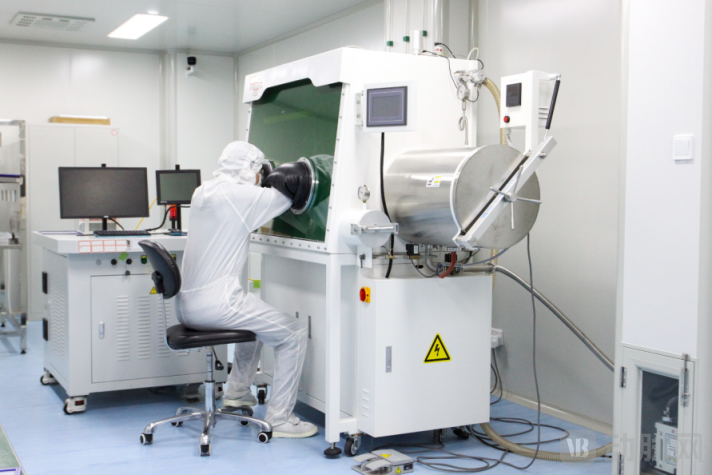
Figure: Nanochap Clean Workshop
Leveraging its core technological R&D strength, Nanochap successfully obtained national recognition as a "Little Giant" company specialized in niche sectors, demonstrating outstanding innovation capabilities, in September 2024, establishing itself as a benchmark enterprise in the brain-computer interface field.
The inclusion of brain-computer interface into national strategy represents not only a strategic choice to address global health challenges but also a forward-looking move to compete in future industries. The influx of supportive policies will accelerate the establishment of technical standards, the advancement of clinical trials, and the construction of the industrial chain, propelling China from a technology follower toward a rule-maker. As a leading enterprise in visual brain-computer interfaces, Nanochap is well-positioned to become one of the core forces driving transformation in the global implantable BCI industry, bringing further innovations and breakthroughs to China's technological landscape.