Zhongke Shenlong Pioneers the Second Paradigm of Brain-Computer Interfaces with AI, Nanotechnology, and Modern Traditional Chinese Medicine Physics for Neurological Disorder Diagnosis and Treatment
Building on the research achievements of Professor Huang Feilong’s team in modern Chinese medicine brain science, clinical studies of brain diseases, and complex systems science, and integrating cutting-edge nanotechnology,Zhongke Shenlong Health Technology (Shenzhen) Co., Ltd. (hereinafter referred to as “Zhongke Shenlong”)Deeply integrating triboelectric nanogenerator (TENG) technology, innovative AI algorithms, and novel theories and techniques in Traditional Chinese Medicine (TCM) for brain disorders to provide practical technical solutions for clinical TCM neurology, including the diagnosis and treatment of brain diseases and intervention for chronic pain., while filling clinical gaps, focuses on product R&D and industry empowerment, helping small and medium-sized enterprises in the multi-scenario general health sector overcome technical bottlenecks.
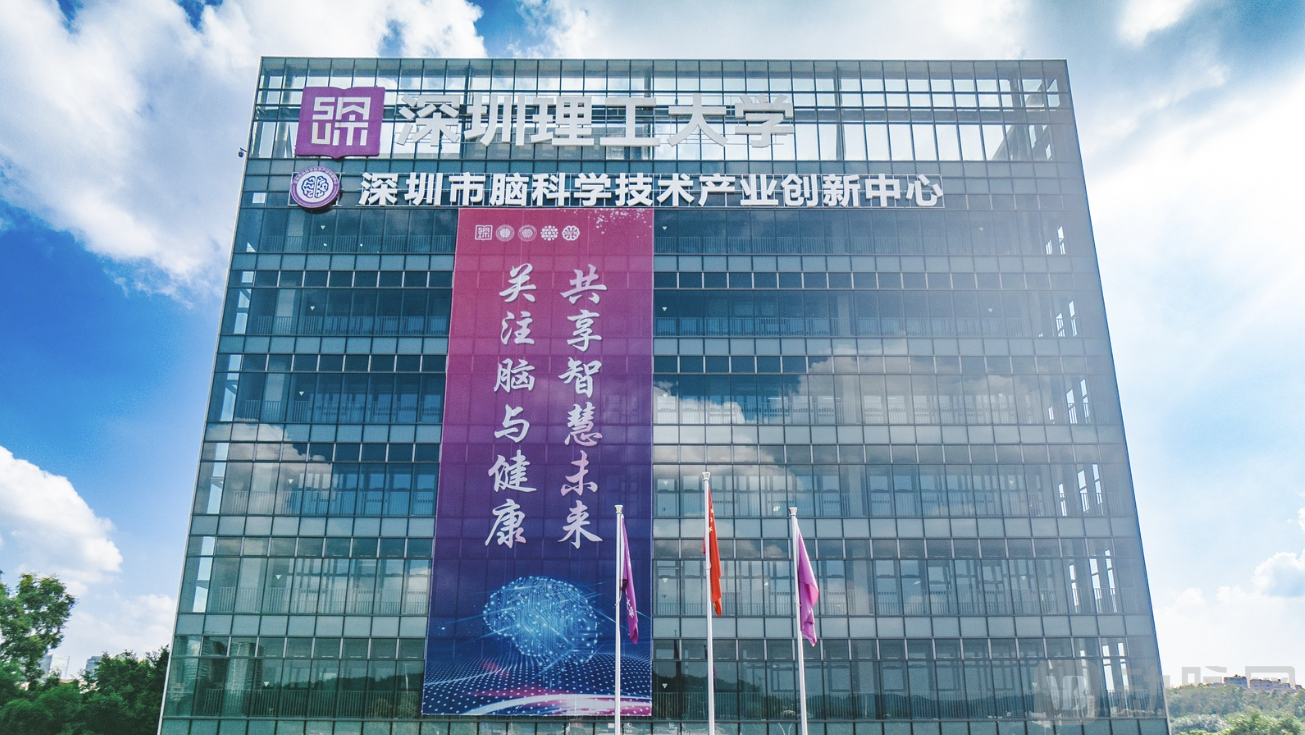
During this process, the Shenzhen Brain Science and Technology Industry Innovation Center has continuously provided incubation and entrepreneurial support to Zhongke Shenlong, driving the project’s growth.
The establishment of Zhongke Shenlong stemmed from a precise response to actual clinical needs.
Professor Huang, the core leader of the team, has dedicated many years to clinical practice. He is not only the founder of minimally invasive pain surgery but also the primary proponent of the “Bone-Brain” theory and a co-discoverer of the cellular essence of meridians. As the originator of both the theoretical framework and associated technologies, he has long been engaged in foundational and clinical research on integrative Chinese and Western medicine concerning the skull-brain axis and brain disorders. In his research on the “near-field mechanism” within the Bone-Brain theory, he has systematically established an interdisciplinary field of skull-brain science and brain disorders, along with its corresponding academic and clinical systems. Furthermore, he pioneered research on a self-powered nanosensor system based on the pulse wave of the Renying (ST9) artery.
And the starting point of these studies was precisely the diagnostic and therapeutic dilemmas of brain diseases that he confronted directly in clinical practice.
In the clinical diagnosis and treatment of brain disorders such as Alzheimer’s disease, Parkinson’s disease, and sequelae of stroke, Professor Huang’s team has identified three major practical challenges.: Traditional diagnosis relies on static/cross-sectional scale assessments, biochemical laboratory tests, or imaging examinations, making it difficult to capture the dynamic progression of diseases and their biomarkers in real time; treatment plans are mostly formulated based on general standards, lacking precise adaptation to individual patient differences; there is a lack of effective monitoring tools during the rehabilitation process, preventing timely and precise adjustment of intervention strategies. These pain points not only affect the effectiveness of diagnosis and treatment but also cause a large number of patients to miss the optimal window for intervention.
TENG theory and technological innovations provide key breakthroughs for the real-time diagnosis, assessment, and monitoring challenges in clinical encephalopathy. The team’s developed nanosensors possess the core capability to precisely and in real time sense the pulse wave signals of the “Renying pulse” associated with encephalopathy. Integrated with Professor Huang’s team’s modern meridian science, bone-brain theory, and AI algorithms based on complex systems science, this approach delivers a comprehensive solution that addresses the pain points of prevalent subjective assessments and limited precise interventions in the clinical diagnosis and treatment of brain disorders.
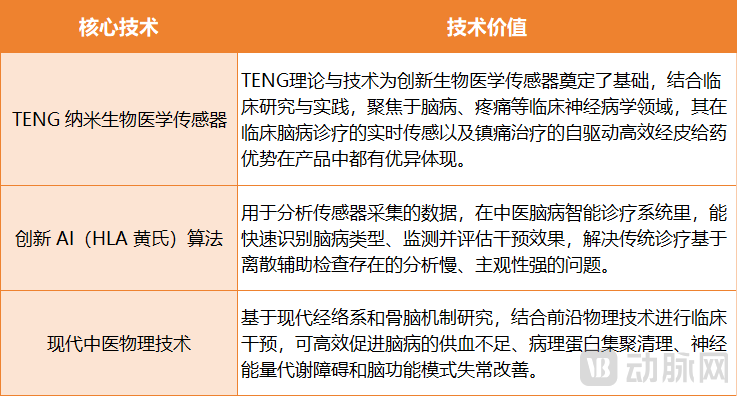
Value of Interdisciplinary Technologies
In building its product pipeline, Zhongke Shenlong has aligned its development path closely with practical implementation and industry value. The company focuses on two core directions: first, developing core products centered on the “Shenlong Eye” TENG nanobiomedical sensor series and advanced traditional Chinese medicine (TCM) physical therapy technologies characterized by the “Shenlong Hand,” to address direct clinical diagnostic and treatment needs; second, leveraging AI algorithms under the “Shenlong Heart” initiative to drive growth across multiple scenarios and industries.
Shenlong Series Products Directly Address Clinical and General Health Essential Needs, covering the entire chain of diagnosis, treatment, and rehabilitation, with a focus on clinical management of brain disorders and pain, as well as comprehensive health management. On one hand, TENG nanobiomedical sensors are employed to collect high-quality data for brain science research and clinical practice in Traditional Chinese Medicine (TCM) for brain disorders. This not only provides dynamic data for clinical diagnosis and treatment, addressing the challenge of insufficient digitalization in traditional TCM practices, but also offers robust data support for product improvement and functional iteration. On the other hand, leveraging the innovative AI + Huang’s (HLA) algorithm, the system enables doctors and patients using the diagnostic or health management platform to access professional information on brain diseases or brain function disorders in real time. This facilitates efficient two-way communication between patients and clinicians based on diagnostic, assessment, and monitoring results, while also enabling medical-grade early warning and proactive health management supported by cloud platforms, digital twin technology, and Cloud Brain.
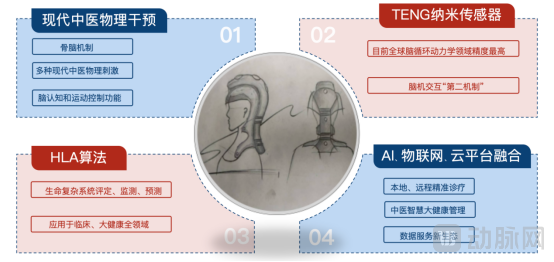 Intelligent Diagnosis and Treatment System for Cerebral Diseases in Traditional Chinese Medicine
Furthermore, the company’s independently developed self-powered transdermal nanodelivery system (anti-inflammatory and analgesic type), based on self-powered triboelectric nanogenerator (TENG) nanobiomedical technology, enables rapid and precise transdermal delivery of analgesic drugs directly to the lesion site. By integrating AI with nanosensor technology, the system achieves intelligent and precise controlled release. It has demonstrated excellent efficacy in preclinical trials for various types of pain, providing a novel clinical pathway for analgesic therapy.
In addition to its own product R&D, Zhongke Shenlong’s “Shenlong Core” algorithm also aims to empower multiple scenarios and industries. It provides innovative AI+ support for life science research institutes in China, small and medium-sized enterprises in the medical technology sector, as well as big health platforms and products, facilitating scientific statistics, analysis, and modeling of data from complex life systems.
Notably, this empowerment is not merely a conceptual collaboration; rather, it provides readily integrable technical support based on our own validated technology modules. This approach helps research peers and industry partners rapidly address technical gaps, reduce R&D costs, and achieve technology sharing and mutual growth.
Currently, brain-computer interface (BCI) technology is undergoing a critical transition from laboratory research to industrialization. With continuous emergence of innovative achievements and rapid industry expansion, the field is poised for disruptive breakthroughs and has become a key area for the deep integration of technological and industrial innovation. Among various approaches, non-invasive technical pathways have become the focus of attention due to their higher safety profiles and potential for widespread accessibility. Recent research in the BCI field exhibits two distinct characteristics: on one hand, neural electrical signal acquisition and decoding technologies are continuously advancing; on the other hand, exploration of cerebral blood flow and neurovascular coupling mechanisms has emerged as a second mechanism for brain-computer interaction. These two complementary pathways are driving the evolution of BCIs from merely reading electroencephalographic signals toward a comprehensive understanding of brain function.
Leveraging the participation of Zhongke Shenlong and its supporting technical teamThe core capability of TENG nanobiomedical sensors to accurately and in real time acquire pulse wave signals from the "Renying pulse" under both normal cerebral conditions and pathological brain states enables scientific analysis based on in vivo, synchronized, high spatiotemporal resolution distribution and monitoring of neuronal activity alongside dynamic information on nearby blood flow, blood oxygenation, and cerebral blood flow., on the one hand, it supports in-depth research and elucidation of the multidimensional and comprehensive mechanisms of brain function; on the other hand, it provides new avenues for multimodal R&D of brain-computer interaction interfaces. Meanwhile, enhanced by innovative AI+HLA algorithms, it enables the construction of a more complete map of brain activity and facilitates collaborative achievement of task objectives under a “shared autonomy” architecture.
Zhongke Shenlong will continue to deepen its research into the second mechanism of brain-computer interaction, and focus on accelerating the R&D and commercialization of its “Shenlong Heart” dual-drive product series in the field of clinical neurology, targeting conditions such as Alzheimer’s disease, Parkinson’s disease, post-stroke sequelae, and chronic pain. Leveraging its novel brain-computer interface products and their enabling achievements across multiple scenarios and industries, the company will lead or participate in establishing the industry’s technological, industrial, and standard systems.
Shenzhen Brain Science and Technology Industry Innovation Center (hereinafter referred to as the “Brain Innovation Center”) is a specialized incubation platform established with strong support from the Shenzhen Municipal Government and the Guangming District Government. It receives technical support and operational management from the Institute of Brain Cognition and Brain Diseases, Shenzhen Institutes of Advanced Technology, Chinese Academy of Sciences, and the Shenzhen-Hong Kong Institute of Brain Science–Shenzhen Fundamental Research Institutions. The Brain Innovation Center is committed to building China’s first “plug-and-play” specialized incubation and empowerment platform for brain-related initiatives. Focusing on the pain points in the industrial translation of technologies in the fields of brain science, brain technology, brain health, brain diseases, and brain intelligence, it establishes an innovative cooperation model where “end-users define the challenges, and the scientific community provides the solutions.” This approach fosters the integrated development of innovation, entrepreneurship, venture capital, and creativity. The Center strives to become a leading hub for new quality productive forces, characterized by its focus on the brain and life health industries, serving China and extending its influence globally.
Since its trial operation began in October 2022, the Brain Innovation Center has established a “phased” incubation model and developed over 10,000 square meters of industrial space. It has attracted nearly 50 enterprises to settle in its incubator and industrial park. The cumulative historical financing of these resident enterprises exceeds RMB 1 billion, with a total valuation surpassing RMB 10 billion. Additionally, the Center has established China’s first venture capital fund in the fields of brain science and brain-inspired intelligence that is fully funded by social capital, with a scale exceeding RMB 200 million, focusing on investing in high-quality early-stage projects at the Brain Innovation Center. The Brain Innovation Center sincerely invites enterprises, institutions, and research teams in related fields such as brain science, brain-computer engineering, and brain health to visit and exchange ideas!