

Aortyx Advances First-in-Human Trial of AX-GEN01 Bioresorbable Aortic Patch, Pioneering a Paradigm Shift from Mechanical Stenting to Vascular Regeneration

Aortyx
Intravascular Treatment Device Developer
In June 2025, the Spanish company Aortyx announced the completion of a €13.8 million Series A financing round, led by Ship2B Ventures and Clave Capital. The funds will be used to conduct the first-in-human (FIH) trial of its bioresorbable aortic patch, AX-GEN01.
This advancement marks a new stage in technological innovation for the treatment of aortic diseases, shifting from mechanical support to vascular repair achieved through bioresorbable materials.
Biodegradable, non-migratory, effectively avoiding long-term complications
Aortic dissection, as a cardiovascular emergency, is characterized by “sudden onset, critical condition, and diagnostic and therapeutic challenges.”
According to statistics from the National Center for Cardiovascular Diseases, the annual incidence of aortic dissection in China is 2.35 per 100,000 people (i.e., approximately 2.35 cases per 100,000 individuals). The Cardiovascular Interventional Device Market Report (2025) indicates that the global market for aortic interventional devices (including products for the treatment of aortic dissection) is valued at approximately USD 3.4 billion (equivalent to RMB 24 billion), with North America accounting for the largest share (approximately USD 1.8 billion).
This indicates that aortic dissection has a high incidence rate and represents a substantial market. However, conventional treatments have many limitations. Traditional diagnosis and treatment mainly rely on open surgery and metallic stent intervention. Open surgery is associated with significant trauma, prolonged recovery periods, and high mortality rates. Furthermore, thoracic endovascular aortic repair (TEVAR) with metallic stents is suitable for only 25% of patients with Stanford type B aortic dissection; 40% of these patients require reintervention and lifelong anticoagulation therapy.1, young patients also face the problem that stents cannot grow with blood vessels.
Conventional treatments are unable to reverse the pathological mechanisms of aortic dissection. Conservative medical management is only suitable for stable cases and carries a risk of progression. According to ESC guidelines, the mortality rate for patients with acute aortic dissection approaches 50% within 48 hours of onset if not diagnosed and treated promptly.
Addressing the clinical pain points of conventional therapies, Aortyx’s AX-GEN01 patch adopts an innovative “repair rather than cover” paradigm to overcome the limitations of traditional stents. By leveraging a synergistic design that combines bioabsorbable materials with tissue regeneration, it breaks through the therapeutic bottlenecks in the treatment of aortic dissection.
The AX-GEN01 bioresorbable patch employs electrospun polylactic acid (PLA) nanofibers to construct a three-dimensional scaffold that precisely mimics the biomechanical environment of the human aorta. Preclinical studies demonstrate that this feature reduces the incidence of chronic aortic wall injury by 76% compared with traditional TEVAR metal stents.
The working principle of AX-GEN01 is primarily achieved through the following functions:
1Instant Adhesion Function
This function is achieved through a unilateral bioadhesive coating, enabling the AX-GEN01 implant to instantly seal aortic tears ranging from 7 to 26 mm in size and prevent blood from entering the false lumen.
2Regeneration Guidance Function
AX-GEN01 accelerates the directional migration of endothelial cells through its gradient pore structure. It can be understood as a “navigation system” in the field of tissue regeneration, precisely regulating cellular behavior via structural biomimicry, signal programming, and mechanical adaptation to ultimately achieve functional tissue reconstruction.
The elastic modulus of the stent is controlled within the range of 1–10 MPa, a range that closely matches the mechanical behavior of native vascular tissue. The patch can expand and contract synchronously with the heartbeat—compliantly expanding during diastole and returning to its original shape during systole—thereby reducing the risk of intimal injury caused by rigid contact with metallic stents.
The core of this function lies in simulating the microenvironment of native tissue to provide biomimetic signals that guide cells to complete tissue regeneration along predetermined pathways. Its goal is not merely to fill defects, but also to restore the full functional and physiological integrity of the tissue.
3Hydrolytic Metabolic Function
Once the material’s controllable degradation properties have fulfilled their reparative function, the material is gradually metabolized into water and carbon dioxide. The entire degradation process can be viewed as hydrolysis of the PLA backbone in the physiological fluid environment, where ester bonds are cleaved to generate lactic acid monomers, which are subsequently metabolized via the tricarboxylic acid (TCA) cycle to complete degradation.
Meanwhile, esterases secreted by macrophages accelerate material degradation. The degradation rate is regulated by the PLA/PCL copolymer ratio to ensure that the patch maintains mechanical support until vascular tissue regeneration is complete (mass retention >85% within the first 30 days of degradation; degradation rate >95% after 90 days).
The biodegradable nature fundamentally avoids complications such as chronic inflammation, migration, or late-stage thrombosis induced by the lifelong retention of metallic foreign bodies. The complete cycle of “repair–regeneration–disappearance” is driving the evolution of aortic disease treatment from permanent implants toward bio-intelligent regeneration.
Currently, the patch has demonstrated catheter delivery accuracy through validation in an ex vivo human aortic model, and ram experiments have shown complete scaffold resorption within 90 days with maintained structural integrity of the neovascular wall.
Secured 5 Core Patents
Aortyx’s development is rooted in the integration of industry, academia, and research. In 2018, Jordi Martorell (CEO), a biomedical engineering researcher at IQS School of Engineering in Barcelona, and Dr. Vicenç Riambau, Director of Vascular Surgery at Hospital Clínic de Barcelona, co-founded the company.
Martorell has an academic background in fluid dynamics and vascular biomechanics, while Riambau brings 20 years of clinical experience in aortic diseases. Their demonstration of the feasibility of biological patch repair gave rise to the original design concept for the AX-GEN01 patch.
As the concept took shape, this young company has been continuously expanding its team. The core members include Noemí (CTO), a chemical engineering expert; Vicenç, a surgical specialist at a clinical hospital; and Helena, a biomedical engineering expert. Currently, the team has secured five core patents in areas such as material degradation control, microstructure design, and delivery systems, establishing a robust technical barrier.
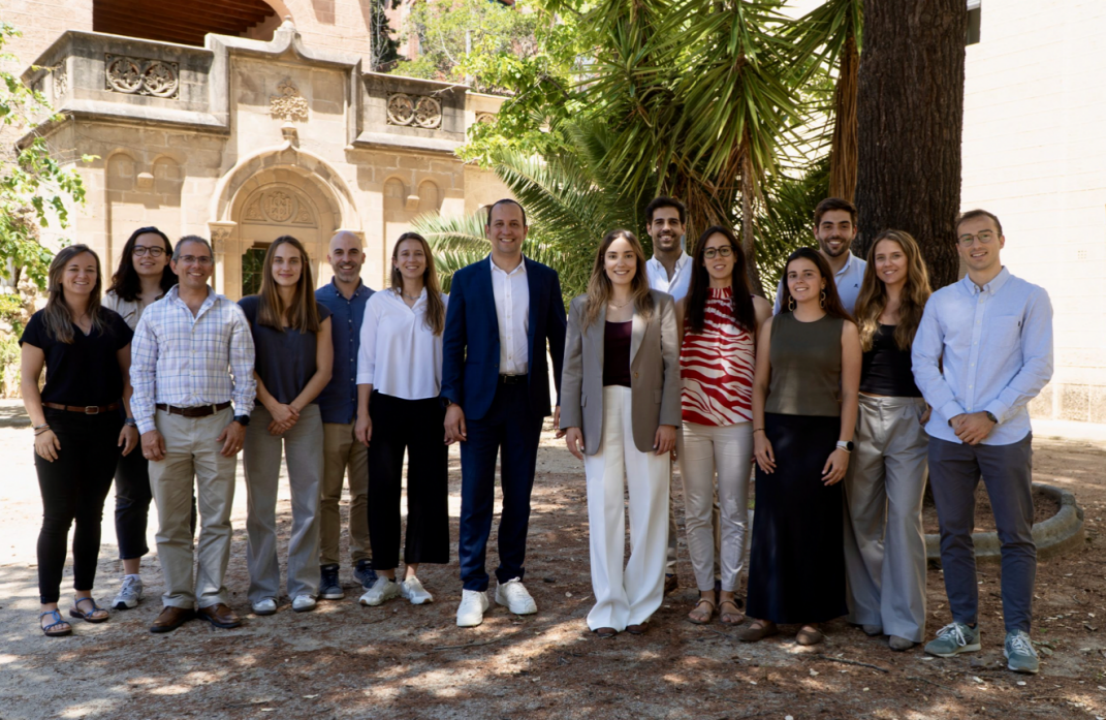
Core Team Members (Image Source: Company Website)
This “clinical needs + engineering implementation” dual-wheel drive model enabled the team to achieve the leap from proof of concept to animal experiments within three years.
Total Financing: $23.8 Million
As the number of new global cardiovascular disease cases rises, minimally invasive procedures become more prevalent in outpatient centers, and insurance policies gradually cover innovative therapies, the market size for bioresorbable cardiovascular devices continues to expand, with competition exhibiting a tiered differentiation pattern.
According to a report by Bizzy Consulting, the global market size for bioresorbable scaffolds was RMB 3.181 billion (approximately USD 450 million) in 2023 and is projected to reach RMB 6.123 billion (approximately USD 870 million) by 2029, representing a CAGR of 11.26%. International giants Medtronic and Abbott hold over 40% of the market share, leveraging their mature portfolios of metallic stents and global distribution networks. To achieve leapfrog growth, emerging companies must break through by capitalizing on unique material innovations and technological advantages, while building comprehensive ecosystem networks.
In 2021, with funding from the Spanish government’s “2021–2023 Plan for Science, Technology and Innovation,” Aortyx officially launched the collaborative project SIMUPATCH (Project No.: CPP2021-008546).
Although the bioresorbable patch developed by Aortyx has demonstrated promising clinical potential in animal studies, the reliability of its delivery system in complex vascular environments requires further validation, namely through collaboration with CIMNE (International Center for Numerical Methods in Engineering).
CIMNE is a prestigious research institution established in 1987, jointly founded by the Government of Catalonia, Spain, and the Polytechnic University of Catalonia (UPC). It holds global influence in the fields of green energy, biomedical engineering, advanced materials, and smart cities. By integrating computational simulations (in silico) with in vitro experimental data through computational models, CIMNE can demonstrate the safety and efficacy of delivery systems to regulatory authorities.
This collaboration with CIMNE has enabled Aortyx to integrate into the scientific research ecosystem, effectively addressing the technical challenge of device-tissue mismatch in aortic therapy, accelerating its product commercialization timeline (targeting CE certification by 2029), and providing a replicable development pathway for similar products.
Furthermore, Aortyx’s performance in the capital markets has begun to gain recognition. According to Crunchbase, as of June 2025, Aortyx had undergone five rounds of investment, raising a cumulative total of $23.8 million.
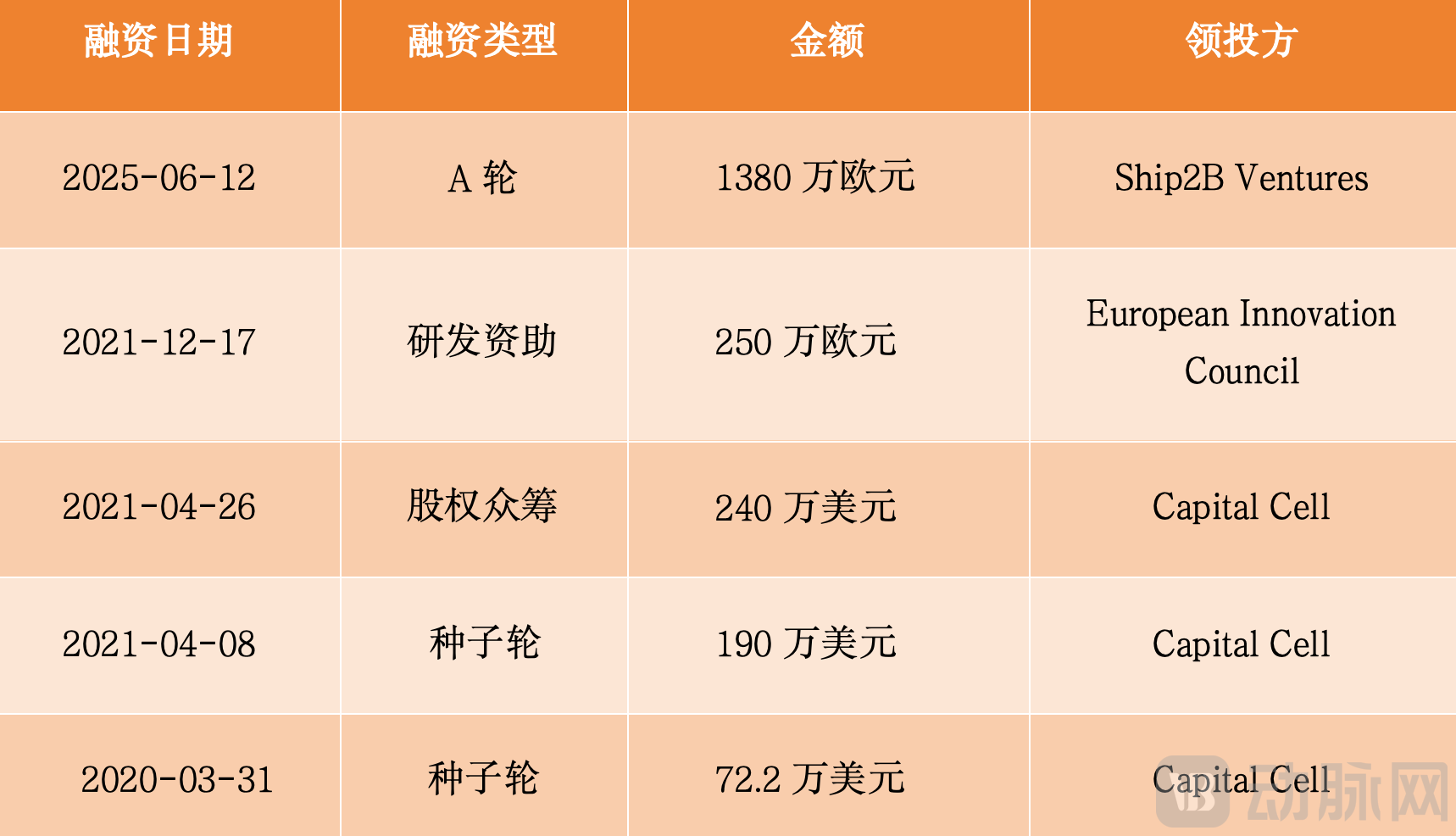
Aortyx Historical Financing
Capital support also helps Aortyx further optimize its strategic layout.
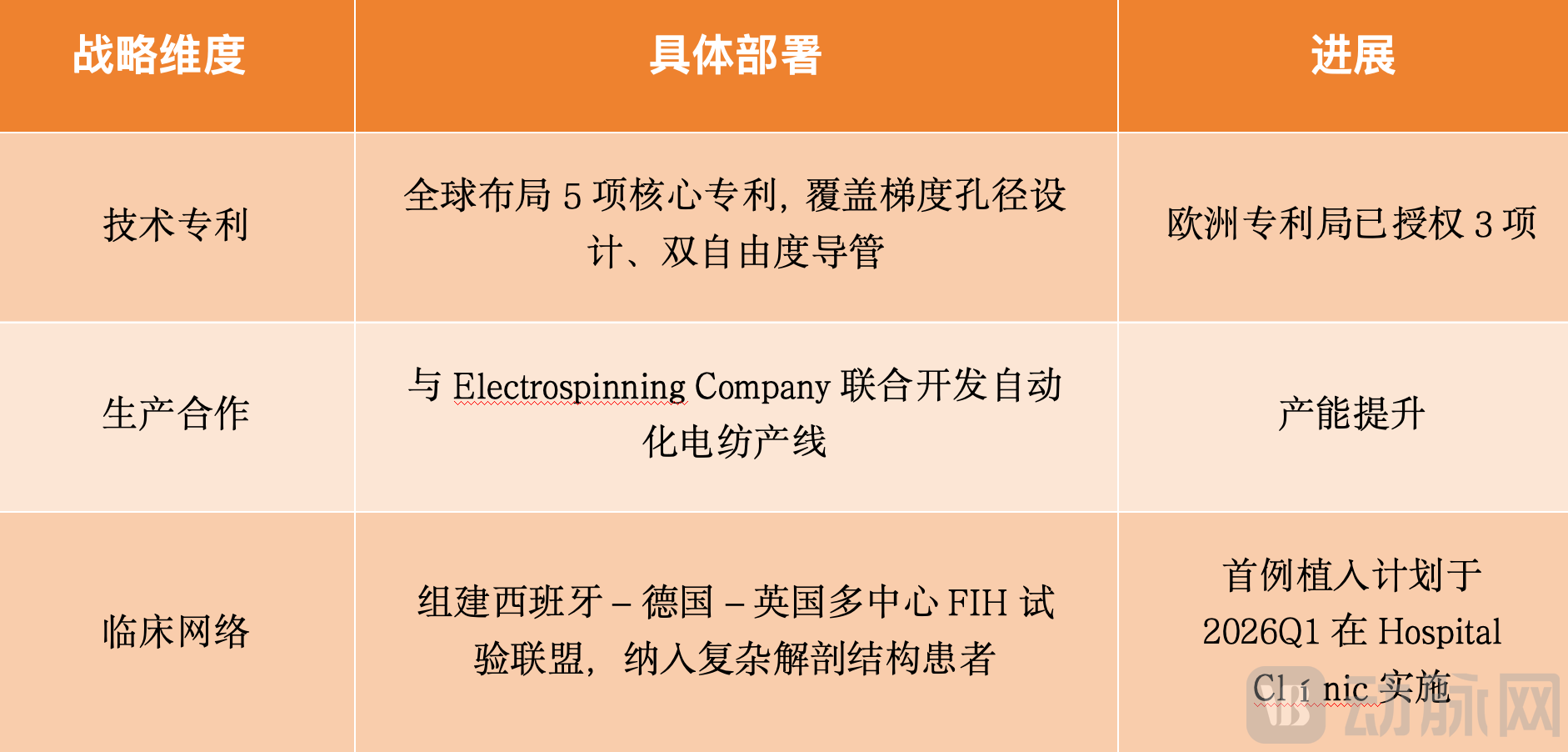
Aortyx’s Key Strategic Layout and Progress
On the technology transfer front, the Company has entered into a joint development agreement with the UK-based biomedical materials company, The Electrospinning Company, to optimize the mass-production stability of the electrospinning process for scaffolds.
In terms of clinical advancement, Aortyx is preparing for its first-in-human (FIH) trial across multiple international medical centers, planning to enroll a cohort of patients with complex anatomical structures to validate the performance of its delivery system.
Overall, Aortyx’s AX-GEN01 patch offers a novel solution for aortic diseases by leveraging material innovation and regenerative medicine mechanisms, providing both minimally invasive application and long-term safety while balancing immediate mechanical support with long-term restoration of vascular function.
Aortyx’s development path is centered on “clinical needs–material innovation–regulatory compliance,” giving it the potential to carve out a differentiated position in a multi-billion-dollar market. However, the company must remain vigilant against technological replication by industry giants and payment-side pressures. The “bioabsorbable” approach warrants long-term attention for its sustainable development potential in the field of high-value cardiovascular consumables.
References:
[1]:Iwakoshi, S., … Kichikawa, K. (2022). Comparison of Outcomes and Complications Among Patients with Different Indications of Acute/Subacute Complicated Stanford Type B Aortic Dissection Treated by TEVAR: Data from the JaPanese REtrospective multicenter stuDy of ThoracIc Endovascular Aortic Repair for Complicated Type B Aortic Dissection (J-Predictive Study). Cardiovascular and interventional radiology, 45(3), 290–297.