

Verona Pharma: The $10B Respiratory Biotech Acquired by Merck for Its Breakthrough COPD Therapy Ohtuvayre

Verona Pharma
Biological New Drug Developer
Recently, pharmaceutical giant Merck & Co. announced its acquisition of Verona Pharma (hereinafter referred to as “Verona”), a biotechnology company focused on the treatment of respiratory diseases, for $10 billion. This transaction marks Merck’s largest acquisition since its purchase of Prometheus Biosciences in 2023.
Under the agreement, Merck & Co. will complete the acquisition at a price of $107 per American Depositary Share (ADS), with the transaction expected to close in the fourth quarter of 2025. The core asset of this acquisition is Verona Pharma’s first-in-class drug, Ohtuvayre (ensifentrine). Approved by the FDA in June 2024 for maintenance treatment of chronic obstructive pulmonary disease (COPD) in adults, this novel therapy represents the first breakthrough inhalation treatment in over two decades, leveraging a dual mechanism of action that combines bronchodilation and anti-inflammatory effects. It is currently undergoing clinical trials for non-cystic fibrosis bronchiectasis.
For Merck & Co., which is facing pressure from the patent cliff of its core product Keytruda, this transaction not only fills the gap in its respiratory disease pipeline but also aligns with the industry trend of large pharmaceutical companies using mergers and acquisitions to offset patent losses by incorporating approved, revenue-generating products, thereby adding a significant weight to its diversification strategy.
Verona (Nasdaq: VRNA) was founded in 2005, formerly known as the UK-based biotechnology company Isis Resources. In 2006, the company acquired Canada’s Rhinopharma, obtaining the core patented product—ensifentrine, a first-in-class dual PDE3/4 inhibitor—and thereby transformed into a specialty pharmaceutical company focused on respiratory diseases. This drug has since become Verona’s core asset for its subsequent development.
In its early development stage, although Verona’s core clinical product development saw positive progress, the pace was slow. Due to the high heterogeneity of the COPD patient population, with significant variations in disease severity, physical condition, and drug response, it was extremely challenging to design clinical trial protocols that could comprehensively and accurately assess drug efficacy. Moreover, obtaining reliable clinical data depended on large-scale, long-term trials. As a result, the company failed to advance any product into Phase III clinical trials for many years after its establishment. This situation directly led to a crisis in early 2020: depressed stock price, funding shortages, and a substantial capital gap required for Phase III clinical trials.
However, a turning point also emerged that year. After Dr. David Zaccardelli assumed the role of CEO, he rapidly assembled a team with extensive commercialization experience, steering the company from a sole focus on R&D to a balanced emphasis on clinical development and commercial implementation, thereby achieving breakthroughs in capital markets and strategic partnerships. During this phase, Verona not only resolved its funding challenges through multiple rounds of financing but also entered into a collaboration with YouRui Pharma, successfully establishing a presence in the Greater China market.
In 2022, two Phase III clinical trials for its core product were successfully completed. In June 2024, the core product ensifentrine, marketed under the brand name Ohtuvayre, received FDA approval for commercialization, becoming the first novel inhaled medication with a new mechanism of action for COPD in over two decades. Since its launch, sales performance has been remarkable: in Q1 2025 alone, sales reached $71 million, representing a 95% quarter-on-quarter increase, with more than 25,000 prescriptions written; cumulative sales over eight months surpassed the $100 million mark. Merck’s recent announcement to acquire Verona Pharma for $10 billion further underscores that the company’s value has been recognized by industry giants, marking its entry into a new phase of global expansion.
Since its establishment in 2005, Verona Pharma has undergone nearly two decades of deep cultivation, achieving a remarkable transformation from technological exploration to clinical breakthroughs, from the brink of delisting to an explosion in value, and from an obscure startup to an industry focal point. Its development journey epitomizes the proverb “twenty years to sharpen a sword,” reflecting profound accumulation and sudden emergence, making it a paradigmatic example of a turnaround in the respiratory field. What drove this resurgence? The answer lies in its R&D pipeline centered on ensifentrine.
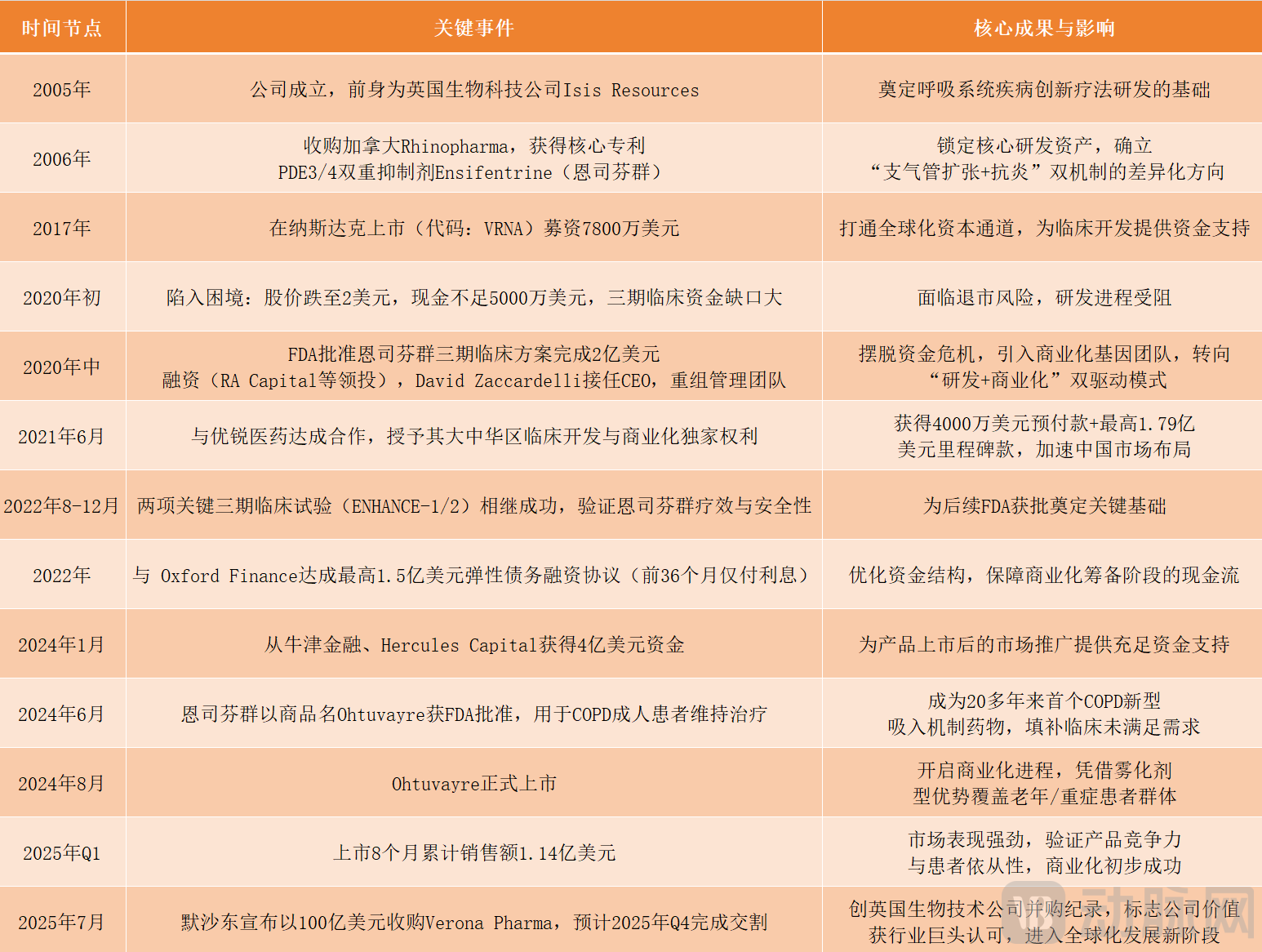
Verona Development Timeline Overview
COPD is a category of pulmonary diseases encompassing chronic bronchitis and emphysema, characterized by chronic airway inflammation, and has currently become the third leading cause of death globally. Data from the "White Paper on Prevention and Control of Respiratory Diseases in China (2024)" shows that there are approximately 580 million COPD patients worldwide, with 180 million in China; an average of 2.5 people die from this disease every minute, ranking it as the fourth leading cause of death among Chinese residents. This disease is highly destructive, with patients often tormented by symptoms such as shortness of breath, chronic cough, and wheezing, making even daily activities like getting out of bed or showering difficult to perform.
The pathogenesis of chronic obstructive pulmonary disease (COPD) is complex, involving inflammation, oxidative stress, and protease-antiprotease imbalance, among other factors. Consequently, drugs targeting a single mechanism are insufficient to comprehensively halt disease progression. In conventional therapy, bronchodilators and glucocorticoids are the primary medications, typically administered via oral or injectable routes.
Oral medications must be absorbed through the gastrointestinal tract before entering the systemic circulation to reach the lungs. This process not only results in a delayed onset of action but also leads to significant loss of active ingredients due to the hepatic first-pass effect, making it difficult to achieve therapeutic concentrations at the site of pulmonary lesions. Although injectable administration can improve the bioavailability of certain drugs, it is associated with the inconvenience of frequent injections, risk of infection, and potential systemic side effects with long-term use.
Addressing these unmet needs, Verona’s core pipeline product, ensifentrine, represents a breakthrough. As the world’s first dual PDE3/4 inhibitor, its innovative value is reflected in the synergistic design of its mechanism of action, inhibitory balance, and route of administration.
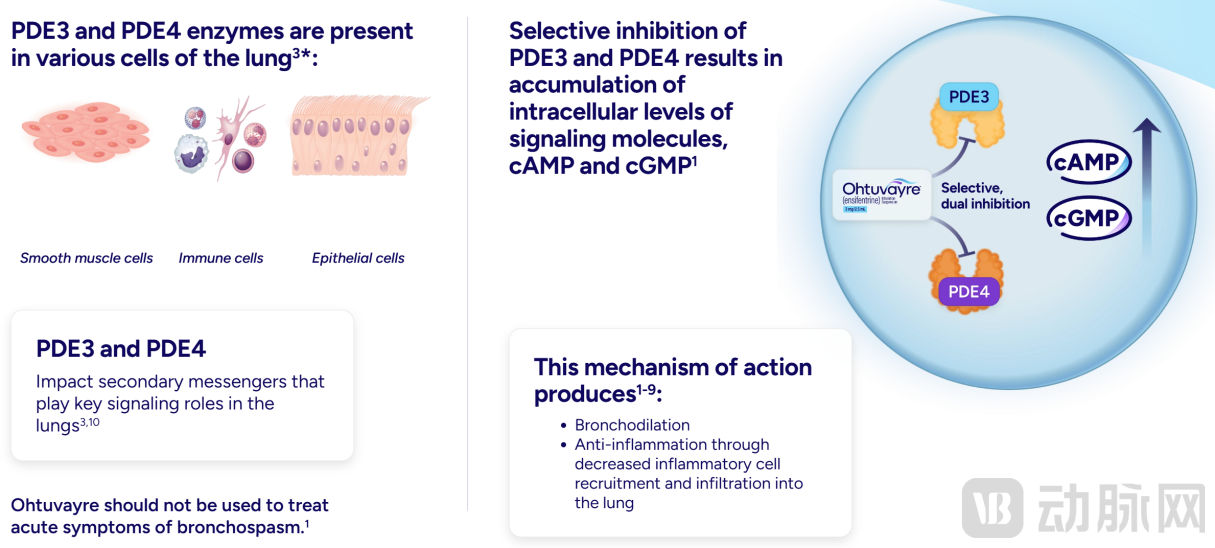
The Innovative Mechanism of Action of Ensifentrine
At the mechanistic level, ensifentrine precisely targets the two core pathologies of COPD. PDE3 is predominantly distributed in airway smooth muscle cells; its excessive activity leads to sustained smooth muscle contraction, causing dyspnea. Inhibiting PDE3 directly relaxes smooth muscle, rapidly dilates the airways, and alleviates acute episodes of dyspnea. PDE4 is closely associated with inflammatory responses; its overactivation exacerbates chronic airway inflammation, leading to progressive deterioration of lung function. Inhibiting PDE4 reduces the release of inflammatory cytokines, thereby mitigating chronic lung damage at its source. This “dual-pronged” design aligns more closely with the essential nature of the disease than single-mechanism agents.
More critically, it achieves a delicate inhibitory balance through molecular optimization—Ensifentrine exhibits 3,700-fold greater affinity for PDE3 than for PDE4, forming “Emphasizing Dilation Over Anti-Inflammation” unique advantages. This approach not only ensures rapid relief of acute respiratory symptoms as the core focus, but also addresses long-term anti-inflammatory disease control, thereby avoiding the limitations associated with single-mechanism drugs.
Meanwhile, due to its weak inhibition of PDE4 and reduced systemic exposure via inhalation administration, it significantly lowers the incidence of common side effects associated with traditional PDE4 inhibitors, such as nausea and diarrhea. This also eliminates the need for combination therapy with multiple drugs, thereby avoiding the cumulative risks of polypharmacy.
In terms of administration, direct pulmonary delivery via a standard jet nebulizer further enhances patient friendliness.Patients are not required to perform rapid inhalation maneuvers, making it particularly suitable for elderly or critically ill patients; the medication can also act directly on the target organs, taking effect within 5 minutes, thereby providing faster relief from the sense of impending doom than oral medications or certain inhalers.
Moreover, two pivotal Phase III clinical trials, ENHANCE-1 and ENHANCE-2, evaluated the efficacy and safety of nebulized ensifentrine in patients with COPD over 24 weeks. The data confirmed its value: a 40% reduction in the rate of moderate-to-severe COPD exacerbations (p=0.0012) and a 41% reduction in the risk of moderate-to-severe exacerbations (p=0.0008) within 24 weeks, with good tolerability throughout the study. These results fully demonstrate its significant efficacy in improving lung function and reducing the risk of disease exacerbation, providing a new and robust therapeutic option for COPD treatment.
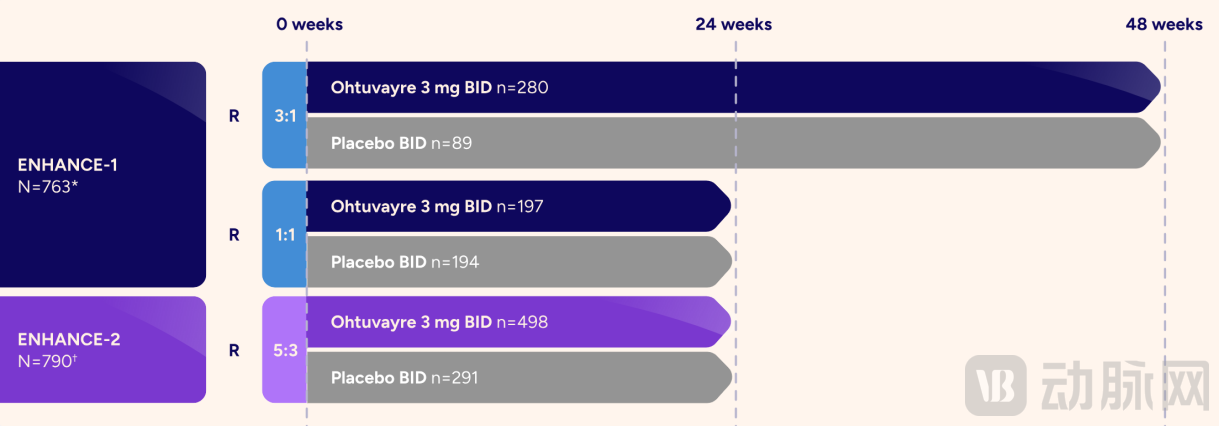
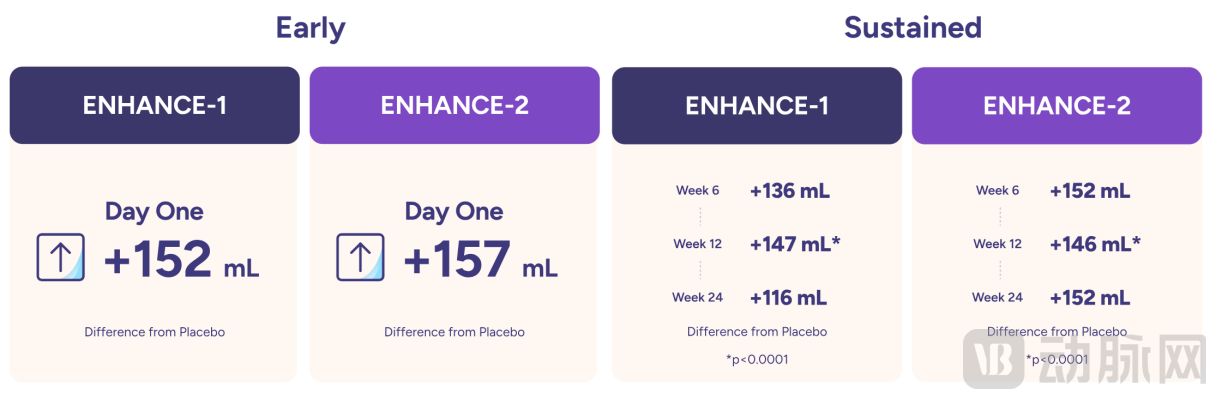
Two pivotal Phase III clinical trials, ENHANCE-1 and ENHANCE-2
In addition to COPD, Verona is also exploring the potential of Ensifentrine in other respiratory diseases. TargetingNon-Cystic Fibrosis Bronchiectasis, its anti-inflammatory and mucus-regulating effects may improve patients' issues of mucus hypersecretion and recurrent infections; inCystic Fibrosisfield, holds promise for reducing mucus viscosity and enhancing mucociliary clearance function by activating relevant regulators;Asthma, and is also evaluating its efficacy in improving airway hyperresponsiveness and inflammation, with the aim of addressing the limitations of existing therapies in achieving synergistic bronchodilation and anti-inflammatory effects.
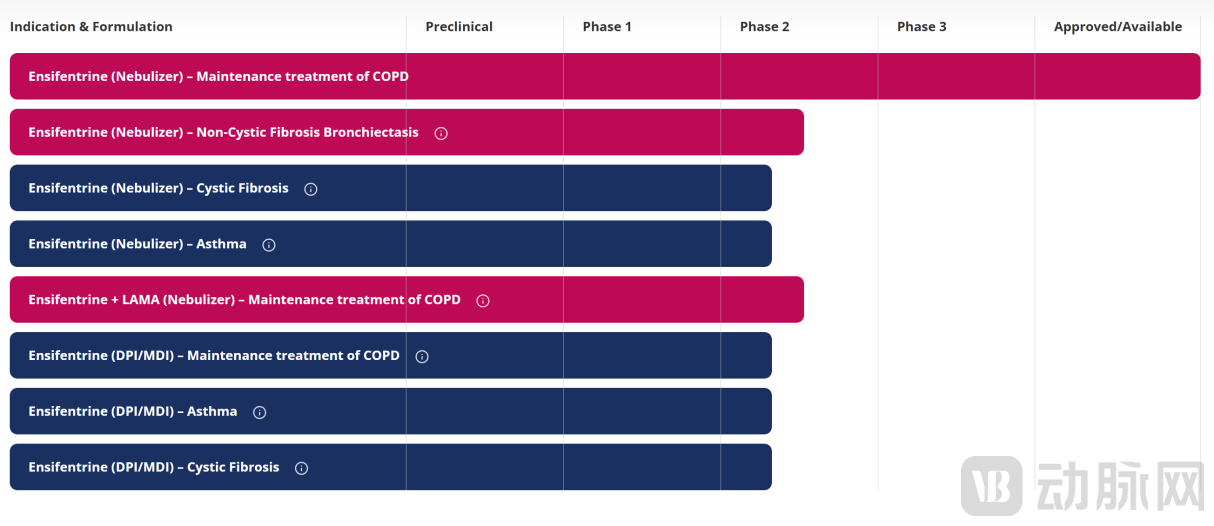
Verona R&D Pipeline Overview
To address a broader range of patient needs, Verona is also enhancing the applicability and technical value of ensifentrine through multi-dimensional expansion. In terms of dosage forms, it is advancingDry Powder Inhalers (DPIs) and Metered-Dose Inhalers (MDIs)R&D is tailored to meet the diverse needs of different patients—for instance, elderly patients may rely more on nebulizers, while younger patients prioritize portability—thereby reaching a broader population.
In terms of treatment regimens, its combination therapy with long-acting muscarinic antagonists (LAMA) has entered Phase II clinical trials: Ensifentrine exerts bronchodilatory and anti-inflammatory effects through dual inhibition of PDE3/4, while LAMA achieves long-term maintenance of airway patency by blocking acetylcholine signaling. The two agents produce a synergistic effect of bronchodilation plus anti-inflammation, which not only enhances therapeutic efficacy but also simplifies the medication regimen, thereby improving patient adherence. If the trials are successful, this combination is poised to become the standard of care for patients with mild-to-moderate COPD.
At a deeper level, this PDE3/4 dual-inhibition technology platform holds even greater potential. The precise balance of inhibition not only ensures efficacy but also avoids the systemic side effects associated with traditional PDE4 inhibitors, providing a replicable template for subsequent drug development. Theoretically, this platform can be extended to support the development of new drugs for other respiratory or inflammatory diseases, such as pulmonary arterial hypertension, thereby leaving ample room for long-term growth.
Merck & Co.’s acquisition of Verona Pharma represents a pivotal move in its strategic positioning within the respiratory disease sector, reflecting not only the precise alignment of both parties’ strategic needs but also heralding a reshaping of the therapeutic landscape for respiratory diseases.
From a strategic perspective, this is a critical acquisition for Merck & Co. On one hand, the company’s flagship product, the PD-1 inhibitor Keytruda, will lose patent protection in 2028, while its HPV vaccine Gardasil has seen its growth cycle in the Chinese market cut short by competition from domestically produced alternatives. Consequently, there is an urgent need for Merck to identify new growth drivers and reduce its overreliance on a single product.
On the other hand, Verona’s core product, ensifentrine, as the world’s first-in-class PDE3/4 inhibitor, has demonstrated strong market performance, with peak annual sales projected to reach billions of dollars. Its innovation and market potential in the treatment of COPD align well with Merck & Co.Focusing on Specific Fields Such as Immunology and Cardiopulmonary Diseasesof its M&A strategy, becoming itsFilling Product Gaps and Building New Growth Pillarsa key lever.
For Verona, the acquisition signifies an accelerated realization of the value of its R&D outcomes. Leveraging Merck’s global sales network spanning over 140 countries and regions, along with its mature reimbursement systems, Ensifentrine can penetrate the global COPD market more rapidly, particularly expanding patient access in developed nations with abundant medical resources and in emerging markets with urgent demand.
Meanwhile, the combination of Merck’s robust R&D resources (such as biomarker research and combination therapy development) with Verona’s PDE3/4 technology platform will not only accelerate the expansion of ensifentrine into indications such as asthma and cystic fibrosis but also potentially spur synergistic therapies with Merck’s pulmonary arterial hypertension drug, Winrevair, further unlocking the respiratory disease market and providing innovative solutions for more patients.
In fact, the field of COPD treatment is experiencing a rare surge in new drug development not seen in over two decades. The rise of novel small-molecule inhibitors and biologics has broken the monopoly held by traditional pharmaceutical giants, propelling the market into a new phase characterized by multi-mechanism approaches and competition among multiple players.
Competition in the PDE inhibitor arena continues to intensify. Merck & Co. seized the initiative by acquiring Verona Pharma for $10 billion, while GSK partnered with Hengrui Medicine through a potential deal valued at $12 billion to secure exclusive global rights (excluding China) to Hengrui’s PDE3/4 inhibitor, HRS-9821. Meanwhile, China Biopharmaceutical has initiated Phase III clinical trials for its TQC3721 suspension, and Joincare Pharmaceutical is also developing a pipeline of PDE4 inhalers. The escalating rivalry between domestic and multinational pharmaceutical companies is propelling this therapeutic area into the industry spotlight.
In the field of biologics, targets within the type 2 inflammatory pathway have become a focal point of research and development. Monoclonal antibodies targeting IL-4Rα, IL-5, and other markers have demonstrated significant potential. For instance, Sanofi’s dupilumab has been approved for patients with uncontrolled COPD and elevated blood eosinophils, showing efficacy in reducing exacerbation rates. Meanwhile, GSK’s mepolizumab has established a competitive differentiation in specific patient populations due to its convenient dosing regimen.
Furthermore, the TSLP target, which lies upstream in the inflammatory cascade, has also garnered significant attention: Tezspire (tezepelumab), a “first-in-class” monoclonal antibody co-developed by Amgen and AstraZeneca, has been granted Breakthrough Therapy Designation by the FDA as an add-on maintenance therapy for patients with moderate to very severe COPD. Related pipelines from companies such as Bio-Thera Solutions and Novartis are also advancing, holding promise for expanding the eligible population for biologic therapies.
Overall, the COPD drug market is shifting from a red ocean dominated by traditional therapies to a blue ocean characterized by intense competition among innovative treatments.In the short term, PDE inhibitors are rapidly capturing market share by virtue of their superior efficacy; in the long term, driven by precision medicine, the integration of combination therapies, comprehensive disease management, and digital tools will reshape treatment standards, with market concentration shifting toward leading enterprises that have established end-to-end value chain layouts.
This transformation is not merely about the competition for commercial interests; more importantly, it brings more effective and accessible treatment options to hundreds of millions of COPD patients worldwide. In the next decade, the COPD sector may become the next strategic high ground, following the field of oncology.