

MGI Tech Reclaims Global Leadership in Sequencing Race with Launch of DNBSEQ-T7+
MGI
Gene Sequencing Instruments and Related Reagent & Consumables R&D Manufacturer
The gene sequencing instrument sector is experiencing unprecedented prosperity.
With the deepening of precision medicine, large-scale population genomics initiatives, and biomedical research, global sequencing manufacturers have intensified their efforts in recent years, propelling the industry into a period of rapid development characterized by intensive innovation and frequent product launches. In February 2025, Illumina’s inclusion on China’s “Unreliable Entity List” further ignited enthusiasm within the domestic sequencer industry.
Domestic manufacturers, represented by MGI, Genetron Biology, and Sana Biotechnology, are collectively accelerating their pace. Their product portfolios now span from low-throughput to ultra-high-throughput systems, and from benchtop instruments to large-scale production lines. The release cycle has shifted from annual updates to quarterly launches, creating a vibrant and diverse landscape. The gene sequencer market is experiencing unprecedented activity, with continuous product innovations igniting an “arms race” in sequencing performance metrics, driven by the pursuit of higher throughput, faster speed, greater accuracy, and lower costs.
Behind the industry's prosperity, a severe "performance trade-off" persists: key metrics such as throughput, speed, accuracy, and cost constrain one another, leaving most manufacturers able to pursue only "single-point excellence" along different technological pathways, while struggling to achieve synergistic breakthroughs across multiple dimensions.The so-called “impossible triangle” has become a key bottleneck constraining the large-scale application and implementation of sequencing.
Currently, the technological trajectories of short-read and long-read sequencing are diverging at an accelerating pace. The former continues to enhance throughput and base-calling accuracy, while the latter is dedicated to addressing challenges in detecting structural variants and annotating complex genomic regions. Application scenarios are becoming increasingly diverse; fields such as early cancer screening, genetic disease testing, large-scale biobank construction, and monitoring of emerging infectious diseases all require sequencing instruments to deliver faster turnaround times, lower error rates, and more controllable total cost of ownership (TCO), while maintaining high data output.
The multidimensional challenges of technology are directly reflected in the real-world contradictions faced by end users.Research users require ultra-high-precision data, yet also demand high throughput in large-scale screening scenarios. Mid-sized laboratories seek flexibility while also requiring the convenience of plug-and-play operation. Enhancing one parameter often comes at the expense of other metrics. For instance, pursuing higher speeds may lead to shorter read lengths or increased costs; doubling throughput may compromise accuracy.
In this fierce race centered on performance metrics,“What Kind of Sequencers Do Customers Really Need?”Instead, it has strayed from the core of the issue. As clinical and research demands become increasingly complex and dynamic, industry competition has evolved from a mere comparison of single parameters to the capacity to provide comprehensive, all-around solutions.
So, is it possible to build a gene sequencer that truly achieves a balance across multiple performance metrics, optimizing not only technical indicators such as throughput, speed, cost, and ease of use, but also covering various scenarios in both scientific research and clinical applications, thereby meeting customers’ diverse and flexible needs?
On the 10th anniversary of its DNBSEQ sequencing technology, MGI has provided an answer with the T7+, a new-generation sequencer featuring comprehensive advancements.
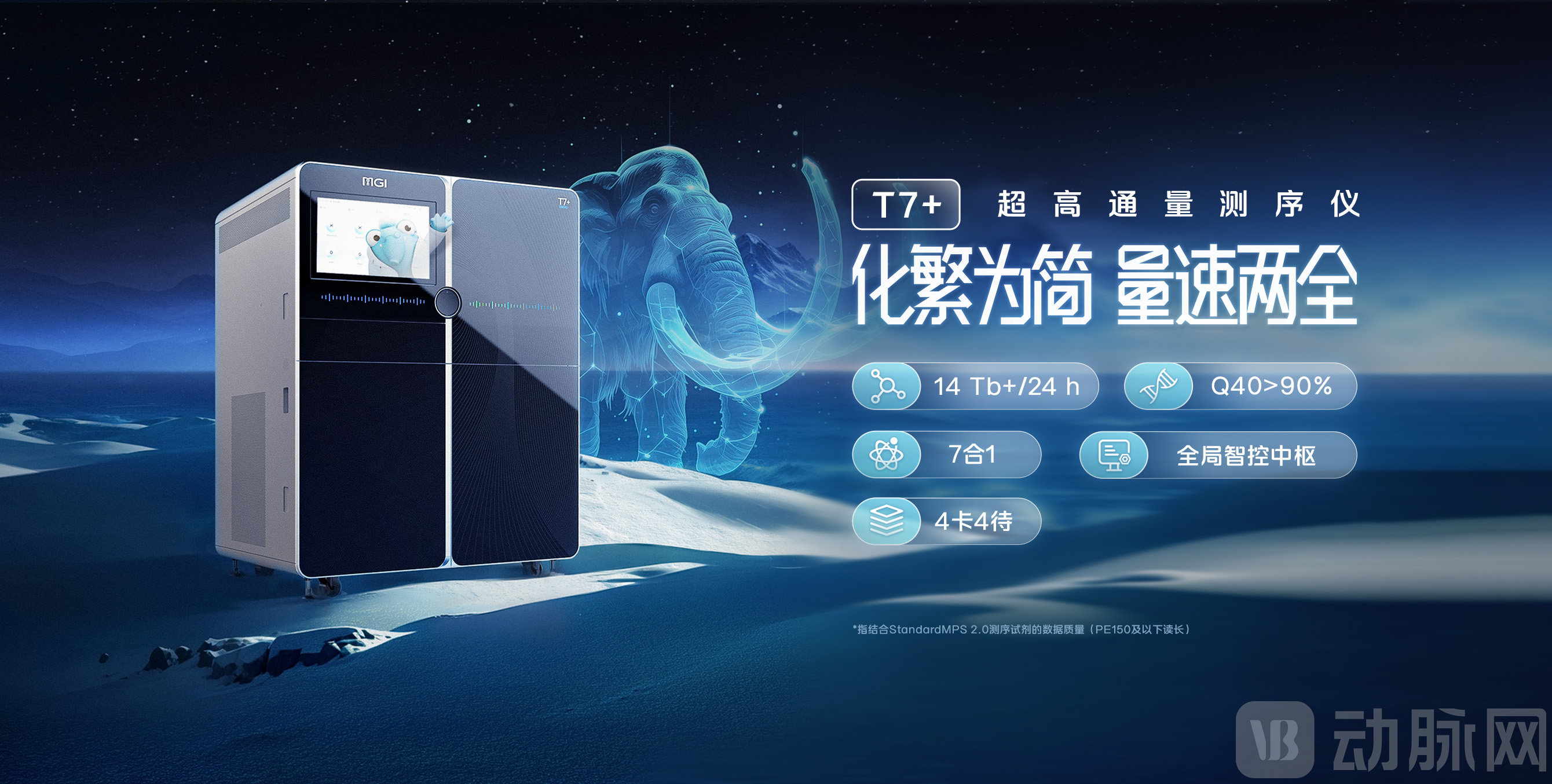
MGI Officially Launches Ultra-High-Throughput Gene Sequencer DNBSEQ-T7+
"Fish" and "Bear's Paw" Can Be Had Together
September 9, 2025MGI Officially Launches Ultra-High-Throughput Gene Sequencer DNBSEQ-T7+. With PE150 read length, the device can generate over 14 Tb of data per day, achieving an annual WGS throughput of 35,000 cases; the Q40 accuracy rate exceeds 90%.
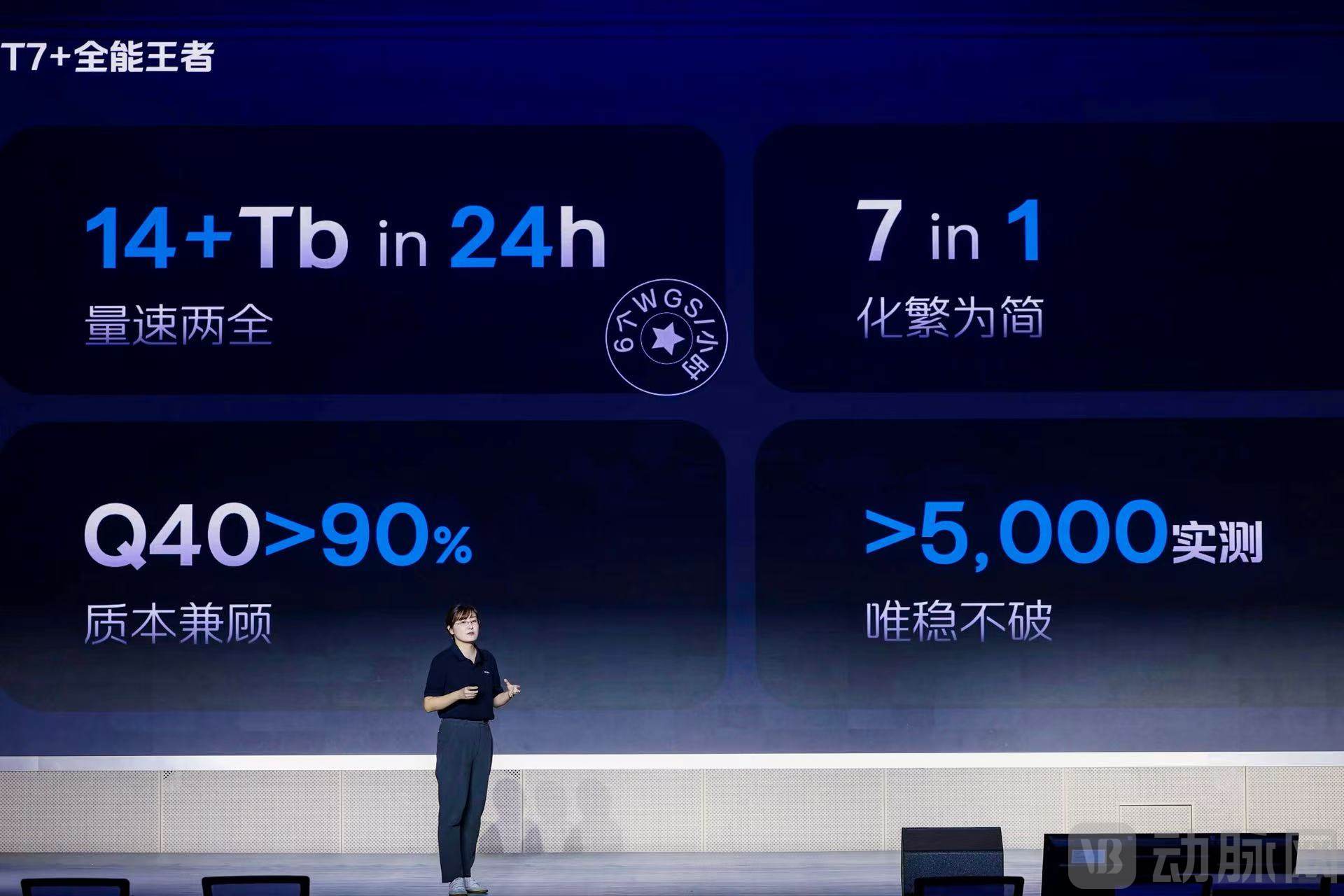
Zhang Luqi, Deputy Director of MGI’s Product Marketing Center, introduces the T7+ on-site
T7+ doubles throughput without compromising speed, allowing PE150 sequencing to be completed within 24 hours.Shattering the long-standing dilemma that “throughput and speed cannot be achieved simultaneously,” it elevates the efficiency benchmark of ultra-high-throughput sequencing to new heights.
The DNBSEQ-T7+ did not emerge out of nowhere; rather, it builds on MGI’s years of technological accumulation and systematic innovation to achieve significant leaps in throughput, speed, and accuracy. Seven years ago, MGI launched the T7, which has since shipped more than 400 units worldwide, enabling users to generate over 270 Pb of data. The newly released T7+ is a comprehensive upgrade of the T7.
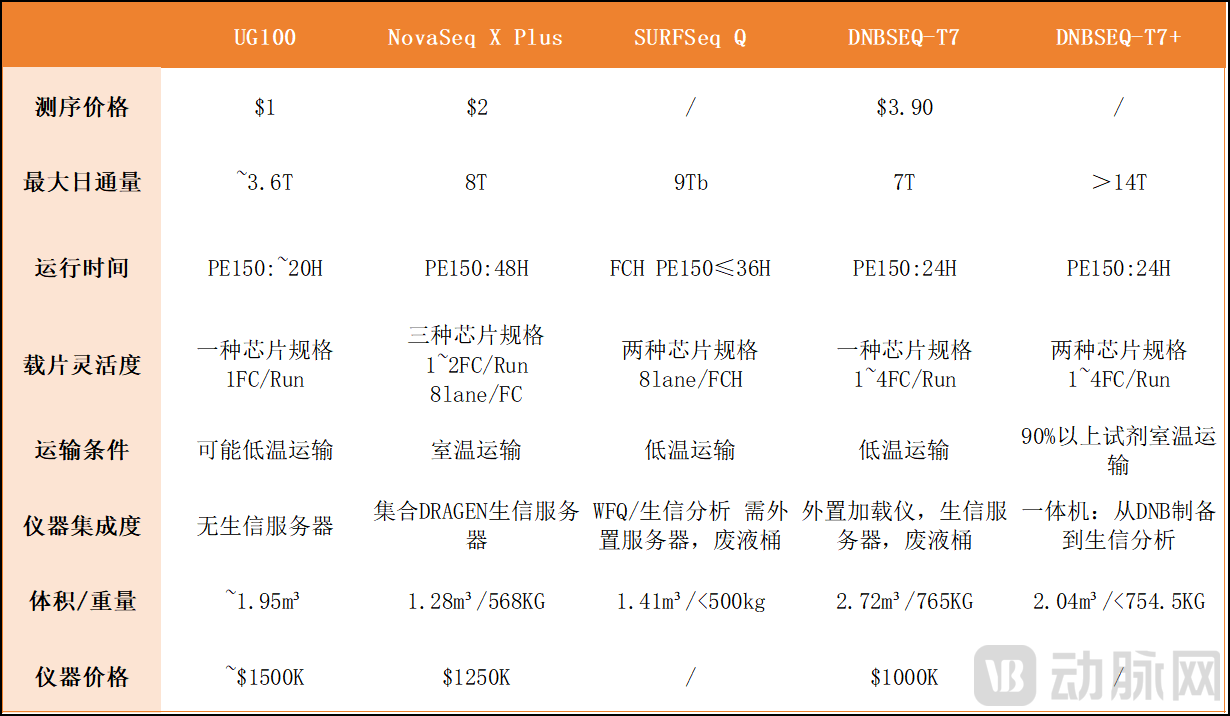
In a horizontal comparison, the DNBSEQ-T7+ achieves a maximum daily throughput of over 14T, surpassing the Illumina NovaSeq X Plus (8T) and the Genetron SURFSeq Q (9T). In terms of operational efficiency, the T7+ completes PE150 reads in just 24 hours, faster than the NovaSeq X Plus (48 hours) and the SURFSeq Q (36 hours). While its speed is on par with the DNBSEQ-T7, its throughput is doubled.
From a longitudinal perspective, compared to the previous-generation T7, the T7+ has undergone comprehensive upgrades in throughput, chip specifications, transportation conditions, and integrated integration.As the ultra-high-throughput gene sequencer with the strongest daily delivery capacity globally, the T7+ addresses the dual demands for “throughput and speed” in large-scale population genomics research.
Behind these breakthroughs lies the collaborative innovation of foundational hard technologies, including ultra-high-density flow cells, an AI-driven closed-loop system for sequencing enzyme screening, and specially developed TDI cameras. The T7+ is powered by MGI’s independently developed DNBSEQ™ sequencing technology, the StandardMPS 2.0 sequencing biochemistry system, and multiple innovative technologies, enabling flexible parallel processing of four flow cells, with a maximum data output of 3.6 Tb per flow cell.
Beyond the upgrades in performance metrics, the T7+ simplifies user experience through its “intelligent 7-in-1” design, which integrates seven major modules—including DNB preparation, DNB loading, sequencing, data analysis, and data compression—to achieve a “library-in, report-out” workflow, significantly reducing manual operational steps. With a footprint of only one square meter, the system lowers the barrier for laboratory space requirements. Furthermore, the T7+ supports room-temperature transportation for over 90% of reagents and ambient-temperature storage for more than 50%, substantially reducing reliance on cold-chain logistics and operational complexity, thereby offering advantages in supply chain stability and cost control.
Traditional ultra-high-throughput sequencing platforms typically face challenges such as complex operations, large footprints, and stringent cold-chain requirements for reagents, often limiting large-scale sequencing to top-tier genomics centers. Complex workflows, high operational and maintenance costs, and specialized storage and transportation requirements have inadvertently raised the barrier to entry for scaled sequencing applications. The T7+, however, lowers these barriers by simplifying complexity and upgrading to an integrated service workflow, enablingUltra-high-throughput sequencing capabilities are no longer confined to top-tier genomics centers but are expanding to more research service providers, universities, and mid-sized laboratories.
At the press conference, seven companies—BGI Genomics, GenePlus, Berry Genomics, Majorbio, OE Biotech, Personal Biotechnology, and Gezhi Boya—signed cooperation agreements with MGI, becoming the first batch of T7+签约 customers.
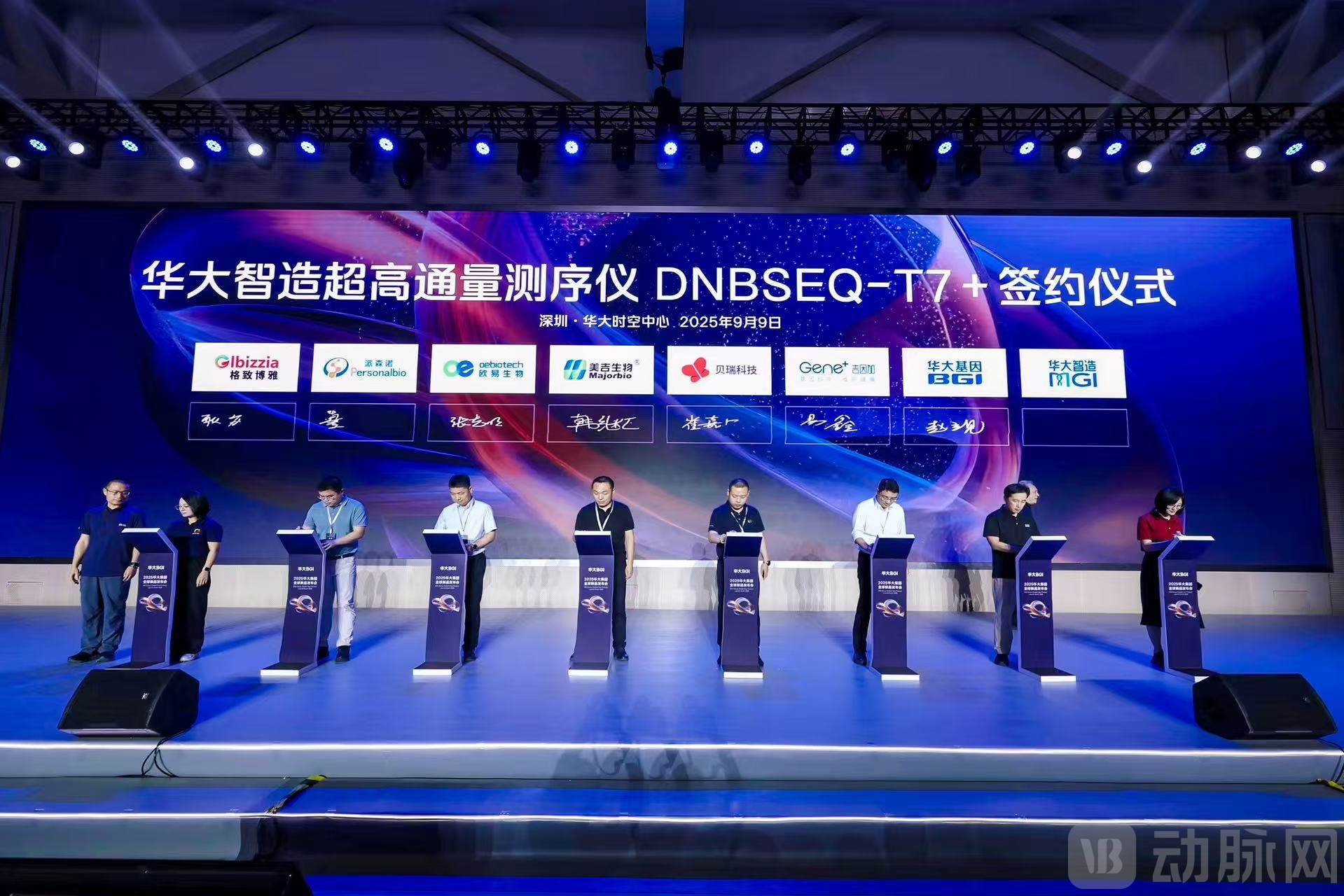 T7+ Inaugural Partner Signing Ceremony
Notably, during the same period last year, MGI also released a nanopore long-read sequencer, the CycloneSEQ G400-ER platform. AndThe combination of DNBSEQ T7+ and CycloneSEQ G400-ER is perfect, providing users with a comprehensive suite of tools designed for the “Full Read Length (SEQ ALL)” workflow.
Specifically, the T7+ delivers ultra-high accuracy and cost-effective large-scale sequencing, while the G400-ER enables ultra-long read sequencing. Together, they unlock breakthrough applications such as complete genome assembly, detection of complex structural variations, and precise diagnosis of rare diseases. In large-scale population studies, comprehensive cancer profiling (with simultaneous detection of fusion genes, copy number variations, and small mutations), and even in complex genomic regions that are difficult to access with traditional technologies, this combined strategy provides more complete genetic information and higher resolution.
Returning to the initial question, MGI has launched the T7+ ultra-high-throughput gene sequencer, featuring comprehensive upgrades in performance metrics and application scope, on the tenth anniversary of the commercialization of its DNBSEQ sequencing technology. This move not only addresses the current diverse and complex customer demands but also elevates the competitive landscape of sequencers to a new ecological niche.
The Full-Stack Advance of Chinese Sequencers
Large-scale sequencing was once a task affordable only by major genomics centers. With the T7+ significantly lowering the barrier to ultra-high-throughput sequencing, more research service providers, universities, and mid-sized laboratories will be able to conduct large-population sequencing studies.
However, MGI’s vision extends far beyond a single sequencing instrument; it is building an end-to-end solution that covers the entire workflow from “sample pre-processing to sequencing to data analysis.”
Outside of the sequencer,MGI has long established a presence in automated sample processing systems, biochemical analysis tools, and data interpretation platforms. By optimizing synergy between front-end and back-end operations, MGI lowers the barriers to sequencing, achieving truly low-threshold, high-efficiency, and easy-to-maintain solutions.
Its product portfolio achieves comprehensive coverage across all scenarios, ranging from the E25 flash sequencer for emergency diagnostics and the G99, which meets the flexible needs of mid-sized laboratories, to the ultra-high-throughput T7+, and further extends into cutting-edge fields such as Stereo-seq spatial omics and the DNBelab C-YellowR single-cell platform.
This “full-stack” capability has made MGIAmong the very few companies worldwide that have mastered short-read, long-read, and spatial omics technologies simultaneously, it has established an industrial ecosystem layout that ensures “a corresponding solution for every application scenario,” fully empowering users with choice and flexibility.
The market has also responded positively. In the first half of 2025, MGI’s global sales volume of gene sequencers exceeded 700 units, representing a year-on-year increase of 60.35% and setting a new historical record for the same period. Particularly in the domestic market, leveraging the policy window created by the “Unreliable Entity List,” the company’s new domestic sequencer sales surpassed 600 units, up 82.47% year on year.
In terms of internationalization, MGI has expanded its presence to over 110 countries and regions worldwide, established 13 customer experience centers, and served more than 3,560 clients cumulatively. Despite a slight year-on-year decline in revenue from the Americas due to geopolitical influences, revenue from Europe and Africa increased by 2.82% year on year, while the Asia-Pacific region made steady progress in large-scale population genomics projects in countries such as Thailand and Indonesia.
Currently, MGI has established ecosystem partnerships with numerous leading global research institutions, medical centers, and enterprises to jointly promote technical standardization and application innovation, with the synergistic effects of its ecosystem significantly amplifying.
In the future, as multi-omics research, precision medicine, and the bioeconomy accelerate their development, sequencing technologies will play a pivotal role in an increasingly diverse range of scenarios. The ability to continuously drive technological innovation, reduce application costs, and build an open ecosystem will be key determinants of a company’s global competitiveness.
Through systematic innovation and a full-stack layout, MGI is securing greater influence for China’s sequencing industry while providing new infrastructure options for global life sciences research. From catching up to running side by side, and now leading in certain areas, China’s sequencer industry is redefining the performance boundaries and industrial paradigms of global sequencing technology.