

Reprieve Cardiovascular Files for IPO Following $103M in Funding to Advance Precision Decongestion Therapy for Acute Heart Failure

Reprieve Cardiovascular
Medical Device Developer
In August this year, U.S. cardiovascular medical device company Reprieve Cardiovascular announced the completion of an oversubscribed $61 million (approximately RMB 430 million) Series B financing round, and enrolled the first patient in the global pivotal registration clinical trial FASTR II for its core product, the Reprieve System.
This funding round was led by Deerfield Management, with participation from Arboretum Ventures, Lightstone Ventures, Sante Ventures, Genesis Capital, Rex Health Ventures, Cadence Capital, and other investment firms. The proceeds will be used to accelerate the global advancement of the pivotal FASTR II clinical trial and to prepare for the commercialization of the company’s core product, the Reprieve Smart Decongestion Management System.
Acute Decompensated Heart Failure (ADHF) is a global medical challenge and the most common reason for hospitalization among patients with heart failure. It is characterized by the rapid onset of symptoms such as dyspnea, lower extremity edema, and weight gain, often necessitating emergency or inpatient treatment.
In the United States, 5 million patients are diagnosed with heart failure annually. Of these, 40% are hospitalized due to worsening heart failure symptoms, with an average length of stay exceeding five days. The readmission rate remains persistently high: approximately one-quarter of patients are readmitted within 30 days after discharge, and the recurrence rate approaches 50% within six months. Clinical observations indicate that inadequate resolution of fluid retention is the direct cause of readmission for most patients. This issue not only exacerbates the physical and psychological burden on patients but also further drives up healthcare costs.

Real-World Care in the United States (2023) Source: Reprieve Cardiovascular Official Website
In the treatment of acute decompensated heart failure (ADHF), diuretics remain the standard clinical approach for fluid removal in cardiac patients. Since their approval 60 years ago, loop diuretics such as furosemide have continued to play a foundational role. Their core mechanism of action involves promoting renal diuresis, thereby alleviating typical symptoms such as edema and dyspnea by eliminating excess fluid from the body.
However, after decades of application, the limitations of diuretic therapy have become increasingly prominent. Significant pain points include severe delays in monitoring and dose adjustment, a high prevalence of diuretic resistance, and persistently elevated risks of disease recurrence and hospital readmission. Currently, there are no superior clinical alternatives available; consequently, physicians must rely on empirical experience to optimize treatment, resulting in constrained therapeutic efficacy.
The core contradiction in traditional therapy lies in the mismatch between empirical practices and the need for personalized treatment in patients with acute decompensated heart failure (ADHF): significant interpatient variability in fluid metabolic status makes precise regulation difficult to achieve through experience alone. This therapeutic dilemma has spurred an urgent clinical demand for intelligent, precision-based fluid management solutions. Intelligent systems capable of real-time monitoring of indicators such as urine output, urinary sodium concentration, and blood pressure, while automatically adjusting treatment protocols, have become a critical necessity. This aligns precisely with Reprieve Cardiovascular’s core R&D focus and technological value proposition.
Reprieve Cardiovascular was founded in 2018 against the backdrop of this clinical need, with its headquarters located in Milford, Massachusetts, USA. Its core technology builds on the expertise accumulated by the RenalGuard Solutions team in the field of renal protection. By integrating clinical insights from heart failure specialists, the company has developed the Reprieve Intelligent Volume Reduction Management System, which fundamentally addresses the inefficiency and lack of controllability associated with traditional diuretic therapy.
Reprieve’s innovative concept has garnered sustained support from top-tier medical investment institutions. In February 2024, after emerging from stealth mode and publicly disclosing its business direction and core technologies, the company rapidly closed a $42 million Series A financing round. The funds are primarily designated to advance the FASTR pilot study of the Reprieve system and to optimize product technology based on clinical feedback.
In 2025, as the FASTR pilot study achieved positive progress, Reprieve Cardiovascular once again gained recognition from the capital markets, completing an oversubscribed $61 million Series B financing round and officially entering a new phase characterized by parallel “scaled clinical validation and commercialization deployment.”
In just two years, Reprieve Cardiovascular secured over $100 million in financing ($103 million, approximately RMB 737 million), providing capital support to accelerate its technology commercialization and market expansion, while further underscoring the industry’s strong recognition of its technological approach and clinical value.
Reprieve Cardiovascular’s flagship product, the Reprieve System, centers on personalized decongestion management. By precisely regulating diuretic administration and synchronously infusing saline to protect renal function, it achieves precise and predictable management of fluid status in patients with acute decompensated heart failure (ADHF). Its technical design delivers targeted efficacy through three key aspects:
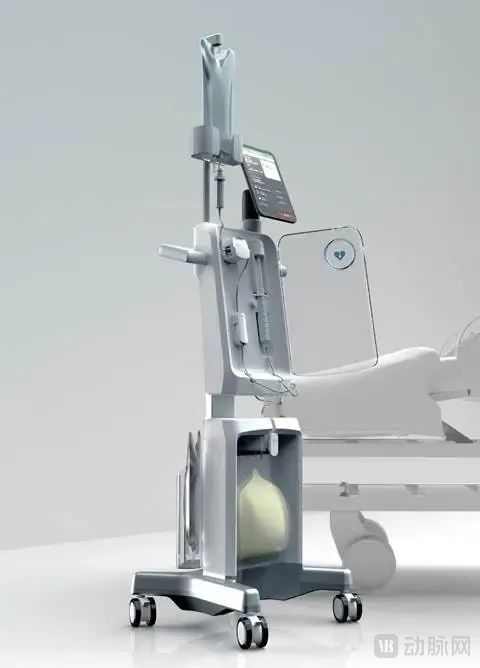
Reprieve System Schematic Diagram Source: Reprieve Cardiovascular Official Website
First, it enables rapid identification of the optimal dosage, breaking the limitations of empirical medication.The system is equipped with a dedicated urine monitoring module connected to the urinary catheter, eliminating the need for additional invasive procedures. It continuously collects key metrics such as hourly urine output and urine sodium concentration from the initiation of therapy, providing real-time feedback on the drug’s effect on fluid excretion.
Meanwhile, the built-in dose-finding algorithm integrates patient baseline data (age, weight, baseline renal function, and degree of fluid retention at admission) with real-time monitoring data to calculate the optimal initial dose within the first hour of treatment. This dose balances rapid diuresis with the avoidance of excessive hemodynamic burden, thereby eliminating reliance on physician experience and enabling more precise initial dosing with faster onset of action.
Second, dynamically adjust treatment plans in real time to avoid ineffective medication and overtreatment.Based on preset algorithms, the system will adjust treatment plans in real time according to varying clinical conditions. It provides clear therapeutic recommendations to physicians and the nursing team, such as whether to continue medication, whether to conclude the diuretic phase, or whether to adjust dosages. By making real-time assessments of treatment milestones, this approach effectively limits the ineffective use of diuretics while mitigating the risk of over-diuresis. This mechanism aims to reduce “ineffective waiting” time and accelerate the progression of treatment.
Third, dynamic saline supplementation to overcome diuretic resistance and renal injury.To address the issue in traditional therapy where excessive diuretic use easily leads to decreased renal perfusion pressure, resulting in diuretic resistance and acute kidney injury, the Reprieve system synchronously collects indicators such as serum creatinine, estimated glomerular filtration rate (eGFR), and urine output change rate. Once early warning signals of kidney injury are detected, a protective protocol is immediately triggered.
Furthermore, based on the renal perfusion pressure calculation model, the system automatically recommends continuous infusion of normal saline at a rate of 50–100 mL/h to maintain renal artery perfusion pressure. In cases of diuretic resistance, the system further prompts adjustment of diuretic administration methods in addition to normal saline supplementation, thereby enhancing renal sensitivity to diuretics while preserving renal function, achieving safe and efficient decongestion.
Clinical evidence further validates the core value of the Reprieve system. The FASTR randomized controlled pilot study, completed in 2024, provided the first systematic clinical validation of its efficacy and safety.
In terms of short-term efficacy, the Reprieve system demonstrated outstanding performance. The 24-hour urinary sodium excretion reached 1100 mmol (2.2 times that of the control group, P < 0.001), total urine output reached 9.4 L, and body weight decreased by 3.8 kg, all of which were higher than the 4.5 L and 2.7 kg observed in the control group. Furthermore, daily diuretic usage was reduced by 40%, indicating significantly superior outcomes.
Furthermore, this effect remained stable and consistent in patients with both heart failure with reduced ejection fraction (HFrEF) and heart failure with preserved ejection fraction (HFpEF), eliminating the need to adjust the core regimen based on heart failure subtype and demonstrating strong clinical generalizability. Meanwhile, by dynamically adjusting normal saline supplementation, the system maintained patient urine output within the safe range of 300–500 mL/h, reduced serum creatinine levels by 13% (P < 0.001), and significantly mitigated the trend of renal function deterioration compared with conventional therapy.
Regarding the potential for long-term prognostic improvement, although the pivotal FASTR II study (NCT05897842) has not yet been completed (based on the results of the pilot study, Reprieve formally launched the FASTR II registrational clinical trial in 2025. This trial has received FDA Investigational Device Exemption (IDE) approval and will serve as the core clinical evidence for a future Pre-Market Approval (PMA) application), positive trends are evident from the pilot data. The 90-day readmission rate in the system group was reduced by 28% compared with the control group, and the treatment cycle was shortened by 1.5 days. These outcomes can directly alleviate the burden of recurrent hospitalizations for patients while reducing the utilization of healthcare resources.
According to the research timeline, the company is expected to formally submit a marketing application to the FDA in 2026. If approved smoothly, it will become the first approved medical device for intelligent decongestive therapy targeting acute decompensated heart failure (ADHF), thereby filling a clinical gap.
Furthermore, Reprieve Cardiovascular has initiated clinical pathway collaborations with major healthcare groups in Europe and the United States. For instance, the company has established pilot partnerships with U.S.-based HCA Healthcare and Mayo Clinic-affiliated hospitals in Europe, embedding the operational workflow of the Reprieve system into standardized diagnostic and treatment pathways for patients with acute decompensated heart failure (ADHF). Through clinical training and case sharing, these initiatives help medical staff rapidly master system operations, thereby accumulating practical clinical experience to support subsequent large-scale adoption.
The domestic market for acute decompensated heart failure (ADHF) treatment is undergoing rapid development and transformation, while Reprieve’s growth trajectory offers valuable insights for breaking through existing bottlenecks in the Chinese market.
From the perspective of the core market status, domestic treatment practices remain predominantly traditional, with slow penetration of innovative therapies. In terms of pharmacological management, conventional agents such as diuretics and vasodilators continue to be the first-line clinical choices. While innovative drugs like SGLT2 inhibitors (dapagliflozin) and ARNIs (sacubitril/valsartan) have demonstrated efficacy in chronic heart failure, their application during the acute phase of acute decompensated heart failure (ADHF) remains exploratory. Furthermore, limited coverage under medical insurance reimbursement schemes restricts clinical accessibility, hindering widespread patient benefit.
The field of medical devices and digitalization is relatively lagging. Mechanical circulatory support technologies, such as ultrafiltration therapy and ECMO, are only sparingly used in critically ill patients due to their high costs and operational complexity. These technologies also face the obstacle of lengthy training cycles for healthcare professionals. Coupled with the strain on nursing resources in China’s tertiary hospitals, nurses struggle to record key indicators in real time, and physicians often rely on experience when adjusting medications, further constraining the precision of treatment.
In this context, the development of Reprieve provides a clear direction for personalized fluid management in acute decompensated heart failure (ADHF) in China. First, it is essential to refine personalized treatment by promoting the stratified and precise application of pharmaceuticals and medical devices based on patient condition, thereby breaking away from the traditional one-size-fits-all treatment model. Second, a real-time, efficient patient indicator monitoring system should be established to provide data support for clinical decision-making, enhance the precision of treatment, and advance digital monitoring systems. Finally, patient treatment burdens and hospital implementation costs should be reduced by optimizing reimbursement policies and exploring innovative payment models.
In the future, enterprises that can precisely align with domestic medical scenarios, possess technical adaptability, and rapidly respond to adjustments in health insurance reimbursement and clinical practice policies will be better positioned to gain a competitive advantage in the acute decompensated heart failure (ADHF) treatment market, thereby driving high-quality development of the industry.
References:
1. Diagnosis of Primary HF—2023 Heart Failure Statistics—https://www.ahajournals.org/doi/epub/10.1161/CIR.0000000000001123 | Diagnosis of Secondary HF—J Am Heart Assoc. 2017 Dec;6(12):e006955.