

AQ Launches Agent Open Platform to Empower Every Doctor with a Personalized AI Assistant
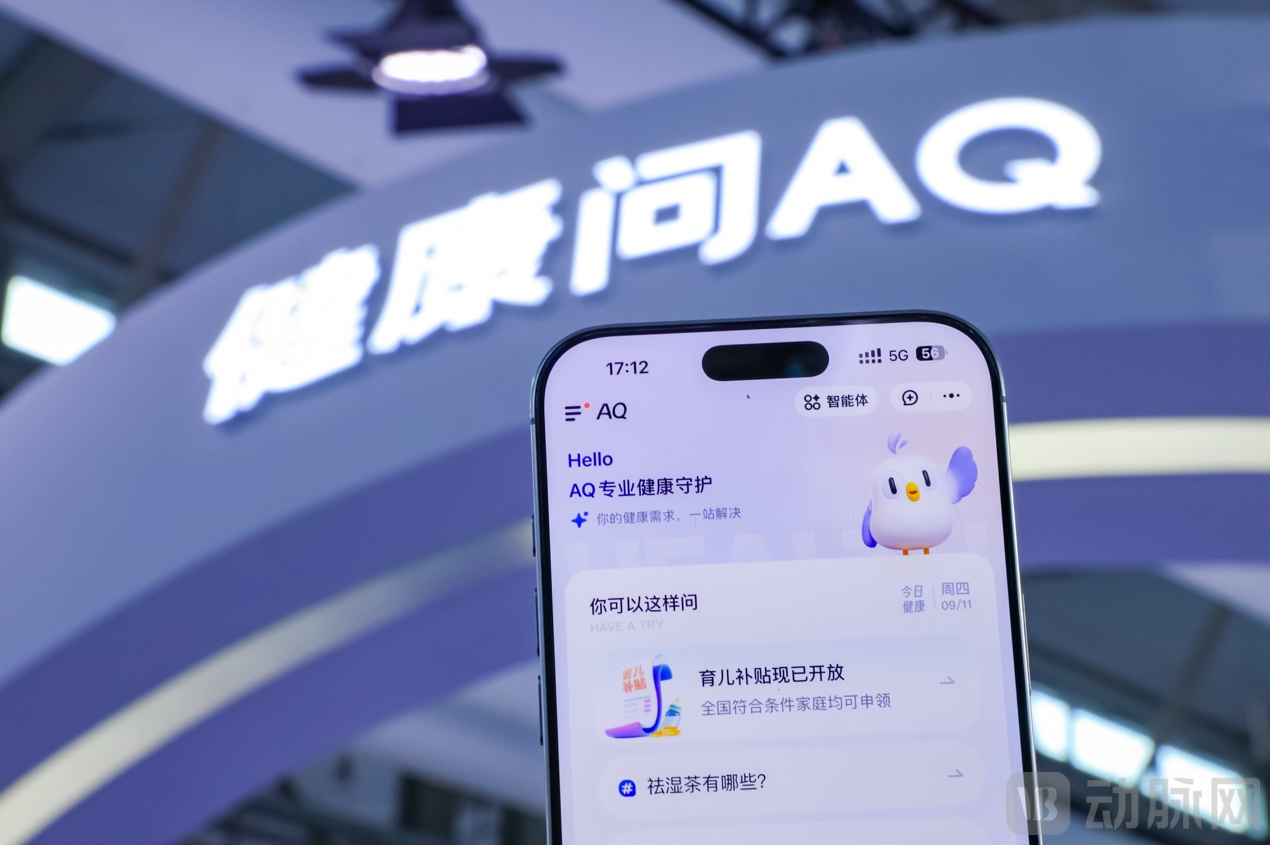
On September 12, at the 2025 Inclusion Bund Summit, AQ, the AI-powered health application under Ant Group, unveiled a series of new product features. Addressing key pain points such as family health management and fraud prevention in healthcare for the elderly, AQ launched its new “Health Records” feature, partnered with China Mobile to introduce an “AI Anti-Fraud Hotline,” and rolled out an open agent platform to empower more physicians in building AI assistants that serve as their digital avatars.
"According to the latest data, since the launch of its beta version last September, AQ has cumulatively served over 140 million users, with nearly 60% coming from third-tier cities and lower. 'In the AI era, AQ aims to promote deeper precision medicine and broader inclusive healthcare, benefiting every ordinary person,' said Zhang Junjie, Vice President of Ant Group and General Manager of the Digital Medical Health Business Unit."
Finding reputable hospitals and skilled physicians is a common healthcare expectation among the public; however, the supply of high-quality medical resources remains limited. According to the “2024 National Healthcare Service Capacity Survey Report,” tertiary Grade A hospitals in eastern provinces account for 50% of the national total, whereas those in western provinces represent less than 5%. Licensed physicians in rural areas constitute less than 20% of the national workforce, while per capita medical resources in urban areas are more than 2.5 times those in rural areas.
At the Bund Summit, AQ officially launched an agent open platform that is easy for doctors to use, aiming to help more doctors and medical institutions develop specialized, personalized, and automated medical AI agents, thereby making AI-powered medical services more accessible. Liu Junwei, General Manager of Ant Group’s AI Healthcare division, stated, “Through this open agent platform, we hope to equip every doctor with a dedicated AI assistant, enabling renowned specialists to extend their reach, empowering primary-care physicians with enhanced skills, and allowing family doctors to safeguard the health of countless households.”
To ensure that people at the grassroots level can also access high-quality health services, AQ is collaborating with a large community of physicians to drive the practical application of AI technology. One of AQ’s distinguishing features is its integration of real-world medical service resources. Reportedly, AQ connects with nearly one million licensed physicians across China, enables online consultations with over 200,000 doctors via the Haodafu platform, and has helped more than 300 renowned specialists create AI avatars that provide medical services to users around the clock.
For example, Dr. Wang Jieting from the Nanjing East Road Community Health Service Center in Huangpu District, Shanghai, can provide exclusive services such as 24-hour health consultations to the elderly in her community through the “Digital Family Doctor • Huangpu” AI agent on AQ. Currently, more than 200 AI avatars of family doctors have been launched across the district, covering 400,000 permanent residents and one million working professionals. This initiative helps alleviate the pressure on family doctor services and improves service efficiency for residents.
“AI cannot replace doctors; it should serve as their assistant.” At the opening ceremony of the Bund Summit, Han Xinyi, CEO of Ant Group, shared Ant’s insights and practices in the field of AI-driven healthcare. He pointed out that Ant has recently established a Healthcare Laboratory to invest in cutting-edge explorations such as AI-enabled Multidisciplinary Team (MDT) consultations. In the future, Ant will remain committed to addressing core issues including the accumulation of high-quality data, mitigation of model hallucinations, and the development of technological ethics, thereby making AI a reliable assistant for physicians and ensuring everyone has access to a trustworthy health steward.