

From $3.2B Losses to 140% Profit Surge: ChemPartner Strengthens Global Footprint with Boston Center of Excellence
ChemPartner
Contract Research and Manufacturing Organization (CRMO)
In September 2025, ChemPartner, a globally leading integrated pharmaceutical R&D service platform, reached a significant milestone in its global strategic layout with the official opening and operation of its Boston Center of Excellence. Positioned around the core philosophy of “global professional expertise, local impact,” this establishment is not only a key move by ChemPartner in the “heartland” of global innovative drug development but also a strong signal to the international market following its strategic resurgence.
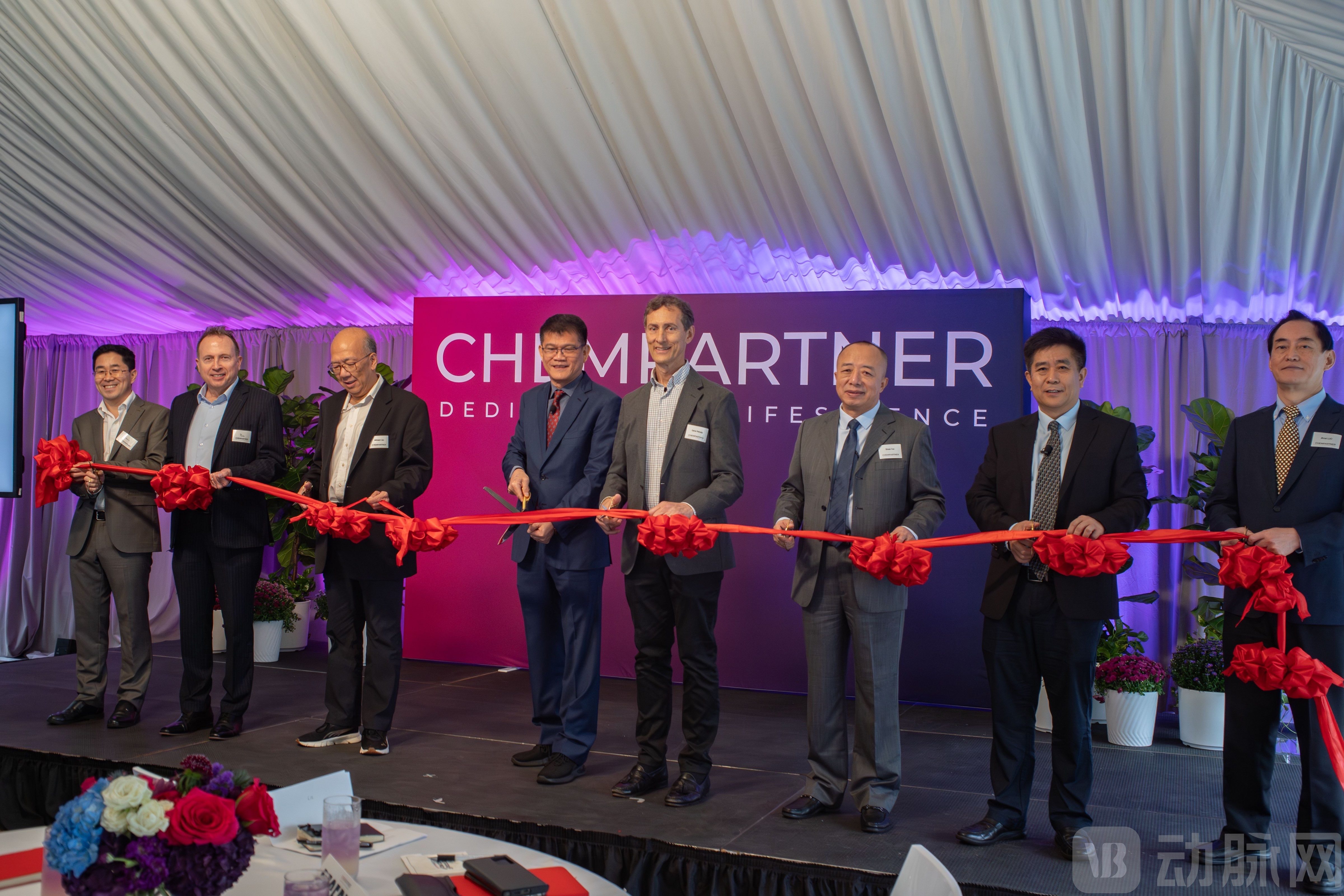
Opening Ceremony of ChemPartner’s Boston R&D Center. Image source: ChemPartner
At this moment, only about a year and a half has passed since ChemPartner released its annual report showing a loss. From 2021 to 2024, the company accumulated losses of RMB 2.2 billion, with its stock price plunging and market capitalization evaporating.
However, its latest 2025 semi-annual report presents a V-shaped recovery. Data shows that the company achieved operating revenue of RMB 534 million in the first half of the year, a year-on-year increase of 14.75%; net profit attributable to shareholders of the listed company reached RMB 25.3821 million, a surging 140.35% year-on-year, successfully turning losses into profits; the gross profit margin of pharmaceutical R&D services and production business increased to 29.17%. In terms of segmented businesses, revenue from pharmacodynamics and pharmacokinetics services grew by 13.44%, and revenue from large molecule services increased by 54.68%. Only the chemistry business experienced a slight decline due to industry price competition, but it has shown signs of recovery with the advancement of new modality businesses and integrated service models.
Against the backdrop of emerging signs of recovery in the CRO industry, ChemPartner’s turnaround represents far more than a single company’s self-redemption. Its dramatic reversal is closely interwoven with multiple zeitgeist factors, including the booming business development (BD) deals for innovative drugs, the global shift in the pharmaceutical industry amid geopolitical tensions, and the company’s precise strategic transformation. This makes it a key case study for observing the resilience and development trends of China’s pharmaceutical R&D services industry.
Leveraging Key Personnel to Drive Business Transformation and Upgrading
ChemPartner’s V-shaped reversal is primarily attributable to its decisive, albeit challenging, strategic adjustments and business restructuring. All of this is inextricably linked to the leadership of key figures.
With Hu Ruilian, Chairman and CEO of ChemPartner, becoming the company’s new actual controller, this change has ended a period of equity disputes and laid the foundation for strategic stability.

Hu Ruilian, Chairman and CEO of ChemPartner. Image source: ChemPartner
In fact, after acquiring a stake in ChemPartner, Hu Ruilian developed a strong interest and passion for the innovative drug sector, which is part of the broader health industry. Observing that Shanghai ChemPartner faced management instability due to the absence of a clear leader, Hu Ruilian engaged in in-depth communications with the controlling shareholder of the listed company and decided to transition from a financial investor to the helmsman of the publicly traded entity. In 2023, Hu Ruilian first assumed the role of Chairman of Shanghai ChemPartner, optimizing the company’s organizational structure and business strategy. At the beginning of 2024, following approval by the Board of Directors and the Shareholders’ Meeting of the listed company, he was appointed as Chairman and CEO of ChemPartner, officially becoming the leader of the publicly listed ChemPartner.
Upon assuming office, Hu Ruilian immediately spearheaded a series of “surgical” adjustments within the company: divesting non-core assets (such as transferring its 32.59% equity stake in the associate company Guangdong Shenghetang for RMB 60 million during the reporting period), further optimizing resource allocation, and recapturing capital to focus squarely on its core CRO/CDMO business.
Under the influence of key leadership, management boldly scaled back low-margin business lines and concentrated resources on high-growth sectors. Financial report data clearly reflects this shift: revenue from the formerly core chemical business segment declined slightly by 2.86% year-on-year, while the macromolecule business achieved a rapid 54.68% growth, becoming the primary engine driving the performance rebound.
Interestingly, behind these figures lies the company’s strategic foresight planted years ago—its early entry into hot sectors such as ADCs and XDCs. Notably, during ChemPartner’s “tumultuous period” of revenue fluctuations, a series of initiatives also paved the way for subsequent business refinement.
ChemPartner has shifted away from its previous phase-based service model for clients, launching a market strategy that uses ADC projects as an entry point to vigorously promote end-to-end outsourcing services. The company formally launched its end-to-end project offerings in 2024 and achieved multiple breakthroughs within just one year.
It is worth noting that ChemPartner’s “integrated” strategy is not a mere brute-force stacking of phased services, but rather a “precise layout under strategic synergy.” Its balance lies in building an organic, mutually empowering, and highly synergistic whole, grounded in customer needs and the intrinsic logic of drug development, thereby avoiding the simple accumulation of business units.
First, ChemPartner’s integrated platform has always been closely aligned with its core strategy of “From Idea to NDA.”To this end, the company has made substantial investments in the ADC (XDC) field, simultaneously strengthening its capabilities in linker-payload synthesis (chemistry), antibody production (large molecules), and conjugation processes, thereby naturally creating synergies across these segments.
Secondly, achieve "specialization and excellence" through "technological penetration" to ensure the depth of each segment.Taking the chemistry segment as an example: it has not only deepened its expertise in the traditional small-molecule field but also established professional advantages in emerging chemical domains such as peptides, oligonucleotides, and PROTACs.
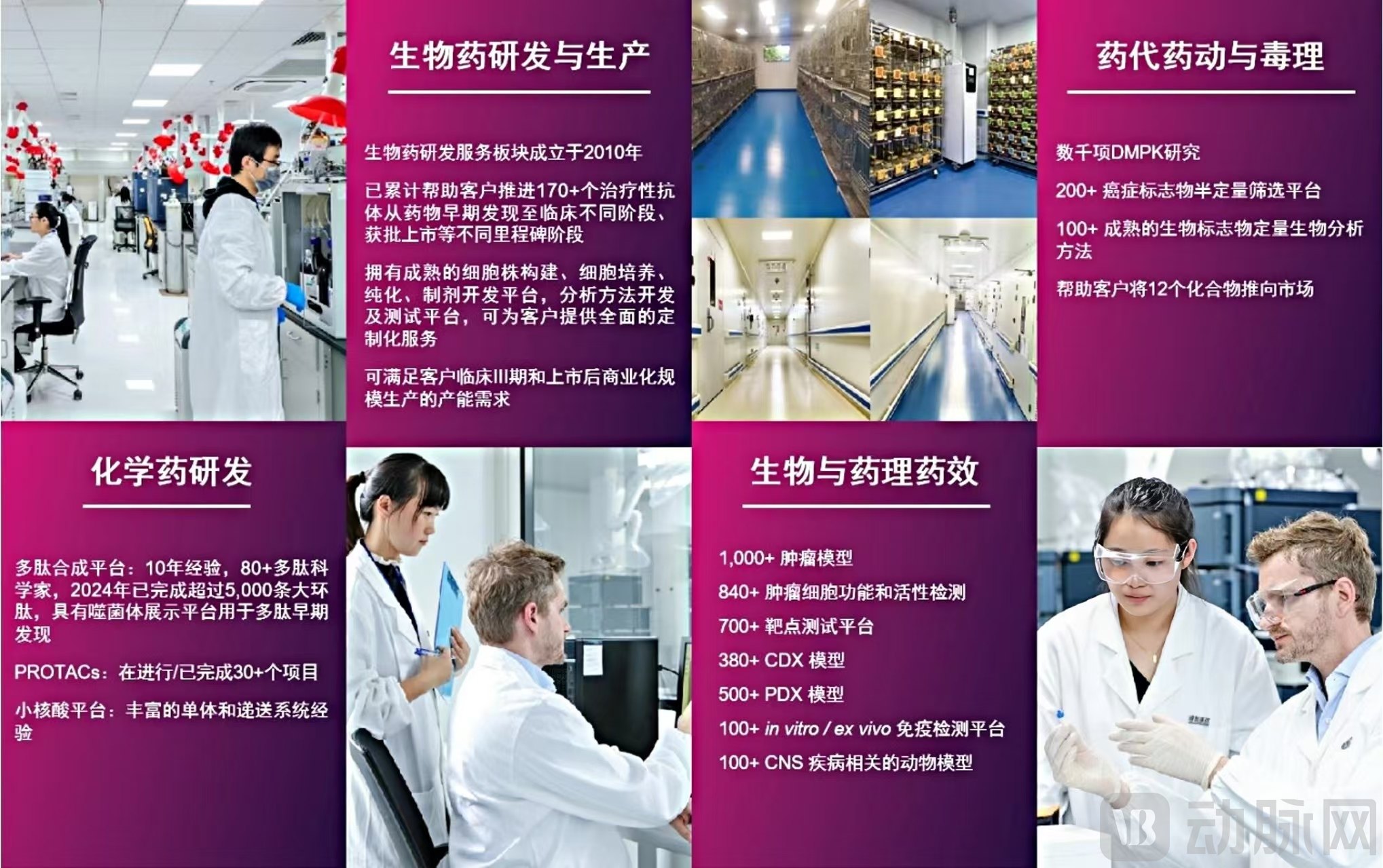
ChemPartner’s Business Segments, Image Source: ChemPartner
Finally, the “full-package model” serves as a “litmus test” for evaluating and strengthening cross-functional collaboration and professional capabilities across all sectors.A successful turnkey project requires seamless integration across all business lines and the ability to independently deliver work products that meet international standards. This imperative drives each segment to continuously refine its professional capabilities, thereby mitigating the risks of “fragmented resources” and “being large but not strong.”
Furthermore, these initiatives have not only significantly enhanced clients’ R&D efficiency and reduced their communication costs, but also substantially increased ChemPartner’s average project value per client and profit margins. This strategy aligns closely with the current global pharmaceutical industry trend, wherein companies seek to consolidate their supplier base while improving R&D efficiency.
BD-Driven CROs Join the “Partial Recovery” Cohort
Aligning with industry trends signifies that ChemPartner’s resurgence is not only a testament to its individual efforts but also an inevitable outcome of its forward-looking predictions and precise alignment with the overall rhythm of the industry’s recovery. Having served nearly 4,000 clients worldwide, ChemPartner has run in the same race as China’s new drug R&D sector since its inception, growing alongside it and witnessing its developmental trajectory.
Since 2015, entrepreneurship and investment in the primary market have grown increasingly vibrant. In 2018, the Hong Kong Stock Exchange took the lead by breaking new ground, amending its Main Board listing rules to allow pre-revenue biotechnology companies to list, thereby opening up exit channels for primary market investors and further stimulating market investment enthusiasm.
As clinical results of domestic innovative drugs continue to be released, and with the support provided by Chapter 18C of the Hong Kong Stock Exchange and new policies on the STAR Market for pre-revenue biotechnology companies, the entire biomedical industry chain has ushered in a new round of development momentum. Since 2021, the total value of business development (BD) transactions for domestic innovative drugs has exceeded the total financing amount for three consecutive years, becoming a source of incremental capital, with the gap widening year by year.
Taking the most prominent domestic ADC sector as an example, multinational pharmaceutical giants have been aggressively licensing in ADC projects from Chinese pharmaceutical companies. These business development (BD) deals, often valued at billions of dollars, not only inject valuable cash flow into domestic biotech firms but also directly channel R&D and manufacturing demands to downstream CXO enterprises.
ChemPartner has successfully seized this market opportunity by leveraging its years of technical accumulation in the field of innovative drug R&D. This is evidenced by its orders and financial reports: during the reporting period, the number of clients served by the company reached 1,026, a year-on-year increase of 5%; the number of projects undertaken totaled 2,572, up 9% year on year; among these, the number of new clients was 187, representing a 12% year-on-year growth. Notably, in the field of new modality drugs, orders related to XDCs, peptides, small nucleic acids, and PROTACs saw significant growth, with their share of the total order volume rising substantially from 8% in the same period last year to 17%.
However, on the other hand, the fierce competition brought about by the “buyer’s market,” represented by multinational corporations (MNCs), has led to fluctuations in BD-driven demand. The “trendsetters” in this landscape are integrated CROs like ChemPartner, which have made forward-looking bets that align with the latest BD trends, or small yet specialized CROs that possess exclusive therapeutic area advantages or proprietary technology platforms.
ChemPartner is concurrently pursuing orders from both multinational corporations (MNCs) and biotech companies. For MNC clients, the company will primarily focus on subcontracting services, aiming to expand existing small-scale orders into larger engagements. Meanwhile, its turnkey solutions will be strategically promoted to three key customer segments: first, facilitating the commercialization of scientific achievements from universities; second, empowering traditional generic drug manufacturers in their transition toward innovative drug R&D, and supporting core project implementation for innovative biotechnology companies; and third, aiding investment decision-making for biomedical funds by providing professional validation services to enhance investment accuracy and success rates in global market expansion.
The company’s business layout and financial report data once again corroborate this.
Currently, ChemPartner serves clients worldwide, with over 80% of its revenue derived from overseas operations. Leveraging a comprehensive end-to-end drug development value chain, the company completes thousands of drug R&D projects annually. It has established strategic collaborations with hundreds of leading global biopharmaceutical research institutions and enterprises, including renowned multinational pharmaceutical companies such as Pfizer, Roche, GlaxoSmithKline, Eli Lilly, and Merck & Co.
Proactive Strategy: Strengthening Moats to Build Sustainable Profitability
In fact, in the first quarter of 2025, the overall revenue growth rate of several major CROs increased compared to Q4 2024. Except for ChemPartner, both WuXi AppTec and Pharmaron achieved double-digit revenue growth, while the revenue declines of Tigermed and Joinn Laboratories narrowed. Moreover, overseas business growth was significant for several of these CROs: WuXi AppTec’s U.S. revenue accounted for 66% in the first quarter, with a growth rate of 28.4%, significantly higher than that from domestic clients. Pharmaron’s European revenue grew by 26.57% in the first quarter, outpacing the 13.15% growth in China.
Undoubtedly, to optimize customer structure and ensure stable performance, the preferred strategy for CRO companies is to continuously advance their key account strategy, deepen collaboration with multinational corporations (MNCs), and persistently expand their overseas business development (BD) teams. However, although MNCs’ demand for new pipelines remains sustained, there is an emerging trend of rapid shifts in therapeutic areas and instability in geographic selection, posing a risk that their strategic focus may shift away from China to other regions. If biotech companies consequently fall into a more passive position, the Matthew effect within the CRO industry could well drive relevant enterprises into further intense involutionary competition.
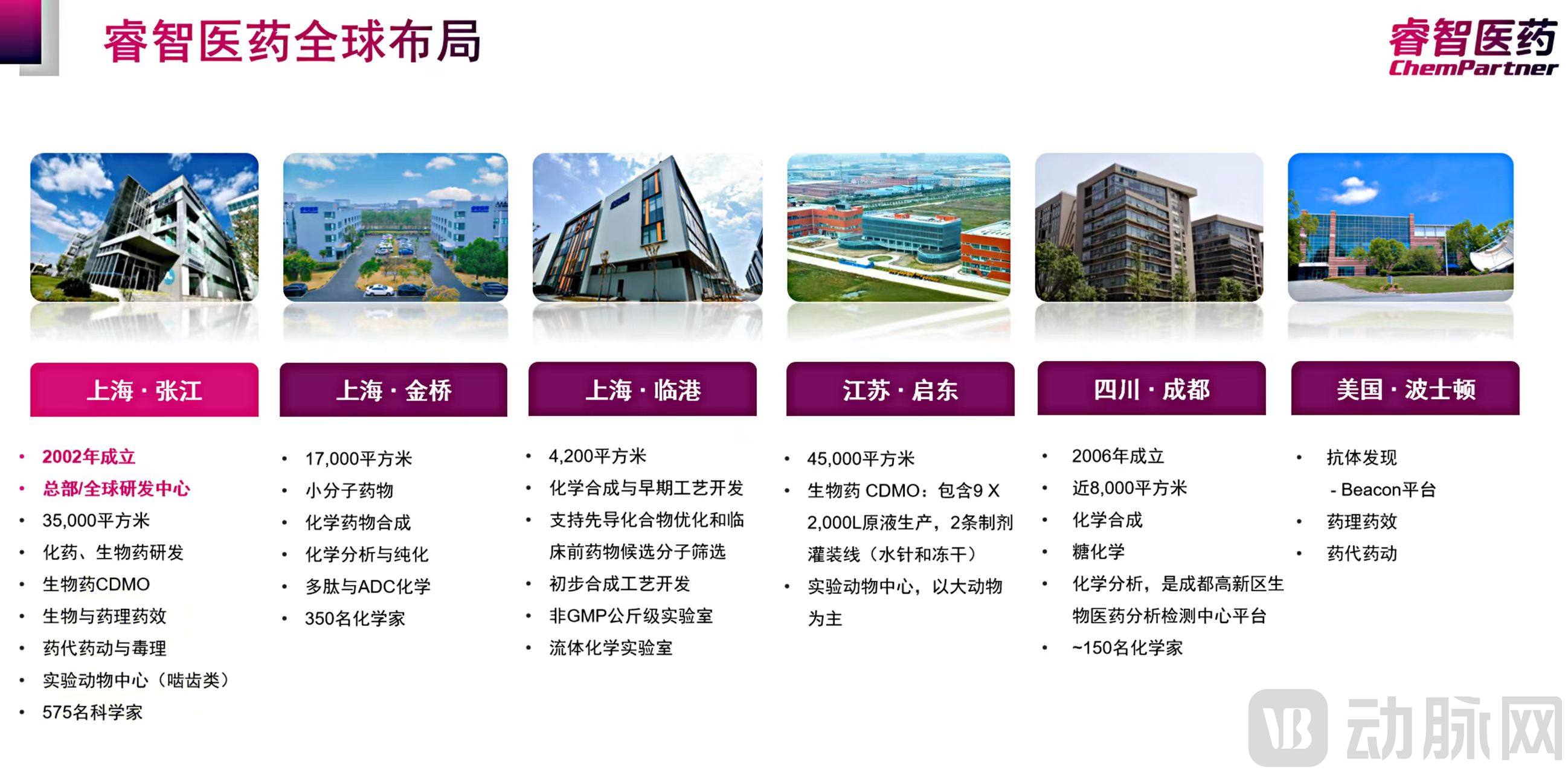
ChemPartner’s Global Layout. Image source: ChemPartner
Moreover, China’s CRO industry is currently undergoing a “growing pain” period marked by intensifying price competition, rising cost pressures, and heightened financing difficulties. For the cohort of CRO companies driving an industry recovery through performance rebounds, investors are most concerned about whether they can maintain healthy cash flows and sustained profitability after achieving profitability.
To this end, ChemPartner, having just achieved a turnaround from its lowest point, has chosen to take the initiative.
ChemPartner is building a multi-dimensional moat and a three-dimensional competitive system centered on “technological depth, model innovation, and global ecosystem” through clear strategic choices, thereby effectively avoiding pure price competition.
First is the "technological moat."As shown in the financial report, ChemPartner focuses on the field of new-modality drugs with high technical barriers and has established first-mover advantages and platform capabilities. In addition to the ADC sector, ChemPartner has significantly increased its weekly production capacity for cyclic peptides from 100 to 300–350 batches. In the field of small nucleic acids, it has made key breakthroughs in extrahepatic targeted delivery technology. In the CNS sector, it boasts an independent professional team that is relatively rare in the CRO industry.These platforms require long-term technological accumulation and talent investment, making them difficult to replicate quickly.
Next is the “business model moat,”Namely, the “full-package service” (From Idea to IND). Compared with the traditional “fragmented” subcontracting model, the full-package model can significantly reduce clients’ communication and management costs and improve R&D efficiency, thereby further enhancing customer stickiness and driving higher average revenue per user (ARPU) and profit margins.
Next is the “Ecological and Genetic Moat,”The so-called “gene” is precisely ChemPartner’s gene for internationalization. As early as 2002, the company’s predecessor established in-depth collaboration with Eli Lilly, inheriting world-class R&D management standards. Today, ChemPartner is upgrading this gene into a “Global Innovation Ecosystem”: by establishing a Boston center to stay close to the frontier and capture orders and technological trends; by expanding into Malaysia to tap emerging markets and leverage geopolitical advantages; while its robust R&D and production bases in Shanghai, Jiangsu, and Sichuan serve as the “Innovation Execution Hub,” providing scalable, high-efficiency support.
Furthermore, ChemPartner is actively embracing AI technology, adhering to a “pragmatic and focused” strategy to ensure that AI effectively addresses pain points in R&D.Reduce unnecessary experimental trial and error, promote automated data processing and analysis, to help innovative drug projects advance to the clinical stage more rapidly.
Forward Outposts Linking with Rear Support: Exploring New Growth Poles in the International Market
Geopolitics is driving the “nearshoring” of pharmaceutical R&D. In addition to their domestic home base, CROs need to establish distributed capabilities in North America, Europe, and the Asia-Pacific region, while also adapting to data regulations such as the GDPR and HIPAA in various countries. This is the future that Chinese CROs emphasizing differentiation, intelligence, and globalization will face.
The launch of ChemPartner’s Boston Center of Excellence will mark a new beginning.

ChemPartner’s Boston R&D Center. Image source: ChemPartner
Among the many global biopharmaceutical hubs, ChemPartner recognizes Boston’s significance as the innovation center of the global biopharmaceutical industry and a concentrated hub for top-tier research institutions, universities, innovative enterprises, and venture capital firms. Establishing a center here signifies ChemPartner’s formal entry into the “first tier” of global innovation.
This R&D center will serve as ChemPartner’s outpost in North America, providing close access to cutting-edge technological trends and innovative concepts. It will deliver tailored services to multinational corporations (MNCs) and high-quality biotech firms in the region, while connecting top-tier institutions such as Harvard and MIT, venture capital firms, and startups into the global innovation network.
The establishment of ChemPartner’s Boston Center of Excellence marks a deepening of the CRO “nearshore outsourcing” strategy—upgrading from “exporting services” to “local integration.” This initiative aims to achieve zero-distance proximity to the forefront of North American innovation, deeply embed itself within the local biopharmaceutical ecosystem, and engage with client needs at the earliest possible stage.
This move, signaling a transformation in the industry, also marks a turning point for China’s innovative pharmaceuticals amidst a complex international environment: both Biotech firms and CROs are shifting from their previously relatively simple development models to building global clinical development and independent commercialization capabilities, thereby forging genuine international competitiveness.
Meanwhile, cross-border collaboration in innovative drugs has become a global trend that will not be diverted by new executive orders; instead, it will prompt domestic companies to accelerate their expansion into more diversified international markets and actively seek cooperation opportunities with multinational pharmaceutical firms in emerging markets. For instance, ChemPartner has leveraged Malaysia as a strategic hub to further connect with ASEAN countries and those in the Middle East, while also making significant inroads into the Japanese and South Korean markets, turning them into important growth drivers in the Asia-Pacific region.
After years of accumulation, China’s CXO sector has become deeply embedded in the global biopharmaceutical supply chain. This means that international markets can hardly bypass China, thanks to its mature engineer dividend, comprehensive industrial chain support, and quality systems certified by international authorities such as the FDA and EMA.
As the path to global expansion becomes less smooth, a cohort of companies represented by ChemPartner is driving a new rhythm for the development of innovative drugs in China: “strengthening core capabilities domestically while advancing market diversification internationally.” Having just won its turnaround battle, the established CRO ChemPartner has also clarified its long-term strategic objectives—To become a CXO enterprise covering the entire value chain of innovative drugs, and to strive for a 1% share in the global CXO market, which is valued at hundreds of billions of dollars.