

Xintide Biotech: Advancing Collagen Applications with a Biomimetic Peptide High-Throughput Iteration Platform
Amid the booming growth of the medical aesthetics and functional skincare markets, collagen has undoubtedly emerged as a focal point of the era. According to market data analysis and projections, the sales volume of collagen raw materials alone reached RMB 10 billion by 2025, with the sales volume of related end-user products expected to reach the RMB 100 billion level.
Beneath the market’s prosperity lie burgeoning opportunities in technology and products. According to the industry standard YY/T 1955—2025 “Terminology for Collagen” issued by the National Medical Products Administration, collagen mimetic peptide is defined as the specific amino acid sequence corresponding to the triple-helical region of collagen. This sequence constitutes the fundamental motif of the native collagen triple-helix conformation and typically follows the “Gly-X-Y” pattern (glycine-proline-hydroxyproline).
In this context, Chengdu Xintai Biotechnology Co., Ltd. (hereinafter referred to as “Xintai Biotech”) has leveraged its proprietary high-throughput iterative platform for biomimetic peptides to overcome the manufacturing bottlenecks associated with traditional collagen-mimetic peptide technologies. This platform not only enables precise control over the structure, purity, and molecular chain length of biomimetic collagen, but more importantly, its precise molecular design makes scalable production and cost control feasible. Crucially, it ensures the formation of a stable triple-helix structure in biomimetic collagen, leading to significantly enhanced biological performance and providing a novel solution for industry breakthroughs.
Currently, Xintai Bio has obtained numerous official certifications at the national level, and its related technological achievements have been recognized by the National Medical Products Administration (NMPA). In just over a year, the company has demonstrated strong momentum, not only attracting interest from renowned investment institutions but also rapidly establishing a comprehensive R&D system and product pipeline, emerging as a rising star in the field of collagen-biomimetic peptides.

Xintai Biotech Chengdu R&D Center
Focusing on a High-Throughput Iterative Platform for Biomimetic Peptides: How Three Scientists Carved Out a Differentiated Path?
Xintai Bio is a successful example of collaborative innovation among industry, academia, and research in response to national strategic development needs. The company was incubated from a technology transfer project of the College of Polymer Science and Engineering at Sichuan University. Its core team brings together talent from industry, capital sectors, and top-tier universities, with deep expertise in the research, development, and production of bioactive peptide molecules.
Mr. Jiang Chengda, the company’s General Manager, brings extensive experience in capital markets and previously served as Chief Operating Officer (COO) at an emerging domestic CDMO enterprise. The operational management and business development expertise he accumulated during that period has laid a solid foundation for the company’s commercial operations.
Dr. Su Hao, Chief Technology Officer, is a researcher and doctoral supervisor at the College of Polymer Science and Engineering, Sichuan University. With over a decade of specialized experience in peptide synthesis abroad, he previously conducted peptide-related research at Johns Hopkins University in the United States and at renowned European research institutions. Upon returning to China, he continued his in-depth exploration at the College of Polymer Science and Engineering, Sichuan University, integrating theoretical foundations with industrialization needs to develop multiple internationally advanced peptide synthesis technologies.
Dr. Zhang Ling, Chief Scientist, is dedicated to bridging the “last mile” between research and development and practical application. As a researcher and doctoral supervisor in the Department of Biomedical Engineering at the College of Polymer Science and Engineering, Sichuan University, and concurrently a researcher at West China Fourth Hospital, Dr. Zhang possesses a profound understanding of the clinical needs for medical products and can accurately identify key milestones in the technology translation process.
The trio’s collaboration has proven highly synergistic: Jiang Chengda excels in corporate operations and business planning, driving the company’s rapid growth; Dr. Su Hao is responsible for building the core technology platform and developing efficient, low-cost synthesis processes; and Dr. Zhang Ling oversees the implementation of medical applications.
This composite team structure has endowed Xinpei Biotech with dual advantages in technological innovation and commercial implementation from the outset, enabling significant progress within less than a year of its establishment. The company has not only completed its angel financing round, but its R&D center located in the Chengdu High-Tech Zone has also become operational, while simultaneously launching its first proprietary brand product series.

High Efficiency, Stability, and High Purity: Overcoming Mass Production Challenges
Xintai Biotech leverages its unique high-throughput iterative platform for biomimetic peptides to achieve the integration of structural stability, controllable mass-production costs, and high biological activity in collagen-mimetic peptides.
Dr. Su Hao stated that the essential difference between this technology and traditional methods lies in its adoption of a single synthetic strategy. Like assembling LEGO bricks, it assembles upstream components through chemical synthesis to precisely and efficiently produce long-chain collagen-biomimetic peptides with stable structures. These peptides can further form biomimetic collagen or be combined with existing biomaterials (such as sodium hyaluronate, PLLA, etc.) for applications in medical aesthetics, tissue engineering regenerative materials, skincare ingredients, and other fields, thereby driving innovative development in the collagen industry.
To validate the efficacy of the technology, the research team conducted systematic characterization studies. The data demonstrated that Xinpei Bio’s product spontaneously forms stable triple-helical structures at low concentrations. “This finding is significant,” added Dr. Zhang Ling, “as it confirms that our collagen-biomimetic peptides not only possess the correct chemical structure but also adopt the proper spatial conformation, which is crucial for maintaining biological activity.”
Notably, Xintai Bio’s synthesis strategy offers a high degree of flexibility and scalability. Leveraging this approach, the company can freely combine various functional sequences and chemical compositions to enable high-throughput, low-cost production of a wide range of long-chain collagen-mimetic peptides, elastin-mimetic peptides, silk fibroin peptides, and other biomimetic polypeptides. This technological advantage not only significantly enhances product diversity and market adaptability but also provides downstream customers with a broader selection of products, meeting diverse consumption scenarios and personalized needs.
Leveraging this technology platform, the company has launched a range of collagen-biomimetic peptides with varying chain lengths, tailored for diverse applications in sectors such as cosmetics and medical devices.
Furthermore, Xintai Bio’s strategic layout in the field of oral peptides is beginning to take shape. The development of products such as oral semaglutide offers consumers more convenient health solutions with improved adherence. As the peptide industry chain gradually matures and costs continue to decline, oral peptide products are poised for broader growth opportunities in consumer healthcare sectors, including functional foods and dietary supplements.
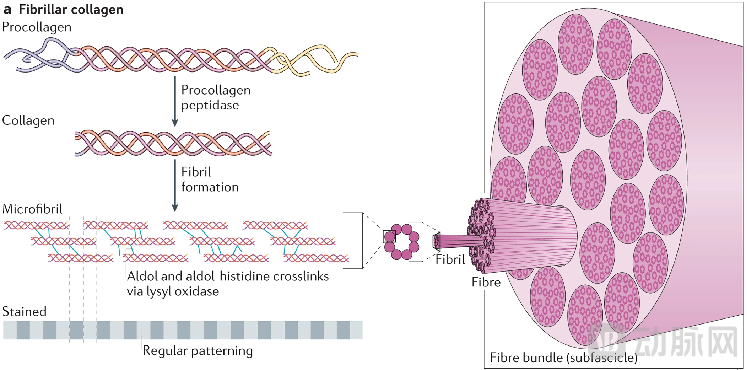
Triple-helix structure for precise and efficient synthesis of structurally stable biomimetic collagenProtein
Skincare, Medical Aesthetics, and Oral Peptides: Multi-Dimensional Expansion Is Booming
Currently, the consumer healthcare industry is characterized by rapid product iteration, diversified consumer demands, and increasingly intense differentiated competition. Consumers’ rising expectations for product efficacy, safety, and user experience are compelling companies to continuously innovate in order to meet the dynamically changing market demands.
Meanwhile, as peptide technology continues to mature and the industrial chain becomes increasingly comprehensive, the cost of peptide-based products has been effectively controlled, laying a solid foundation for their widespread application in the consumer healthcare sector.
Dr. Su Hao stated, “Our goal is to become a leader in the peptide-based general health sector. In the short term, we will focus on the in-depth development and market promotion of our existing technologies, while simultaneously preparing for preclinical research and regulatory submissions for products such as innovative medical aesthetic devices and novel peptide formulations.”
In terms of its product pipeline, the company is actively advancing multiple innovative projects. In addition to its collagen-biomimetic peptide (protein) series, the oral peptide project deserves particular attention. Currently, Dr. Zhang Ling’s team is developing an oral delivery system based on gastrointestinal absorption. Preliminary research data indicate that its gastrointestinal absorption efficiency exceeds 60%, significantly higher than the industry average. Dr. Zhang stated, “This technological breakthrough is significant; it is not only applicable to weight-loss drugs such as semaglutide but can also be used for the oral delivery of other peptide-based therapeutics.”
In the vast blue ocean of consumer healthcare, Xinpei Biotech, guided by its corporate vision of “Innovating for a Better Life,” sees its three co-founders continuously expanding the application boundaries of peptide technology. In this sector characterized by rapidly growing and certain demand, Xinpei Biotech is writing its own growth story, leveraging its innovative technology, clear strategy, and strong execution capabilities.