

Biogen Asia-Pacific President: ALS DMT Drug Launch Is Just the Beginning — Rare Disease Payment Burden Should Not Fall on Individuals
Biogen
New Drug Developer
From Pioneering Precision Diagnosis and Treatment of ALS to Building an Ecosystem for Rare Diseases: As a pharmaceutical company deeply rooted in neuroscience and rare diseases, Biogen has consistently been at the forefront of global exploration.
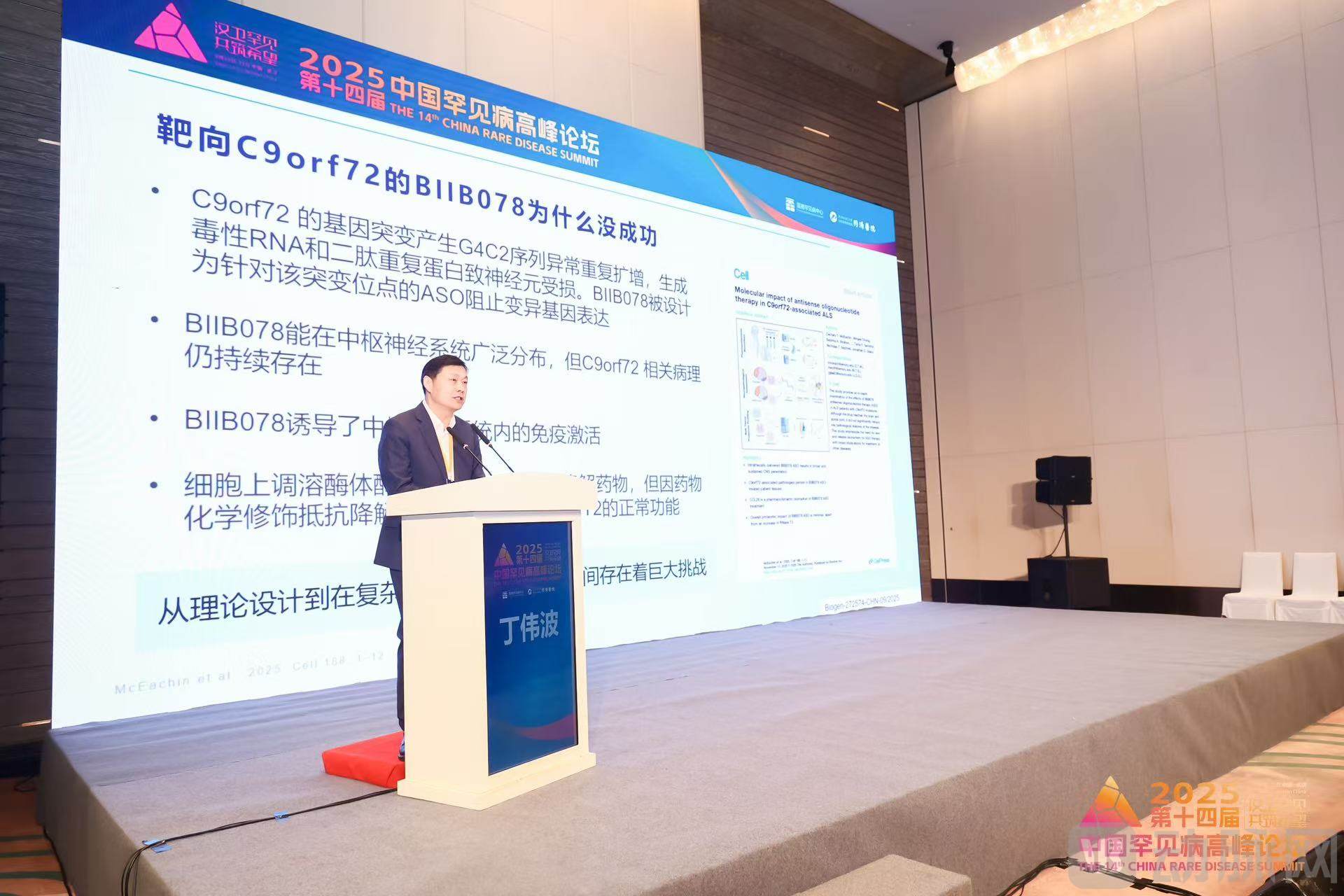
At the 14th China Rare Disease Summit in 2025, Mr. Ding Weibo, President of Biogen Asia Pacific, shared insights on the strategic theme of “Precision Diagnosis and Treatment of ALS and the Rare Disease Ecosystem.” The following is a summary of his speech compiled by VCBeat:
It is deeply moving to be here today with so many like-minded individuals, discussing rare diseases—a topic that is both heavy and full of hope.
Every step Biogen has taken is inextricably linked to “breakthroughs” and “protection”—breaking through scientific barriers and safeguarding the dignity of patients’ lives. Today, I would like to share Biogen’s strategic thinking and practical experiences with you openly and without reservation.
When discussing R&D, I prefer not to focus solely on success stories; instead, I would like to begin by highlighting a “regret.” In August 2025, Cell published a dedicated article analyzing the reasons behind the failure of Biogen’s amyotrophic lateral sclerosis (ALS) drug development project, BIIB078. Some may ask: Why proactively discuss a failed project? Because in rare disease R&D, “failure” is not the end point but rather a mirror that helps us clarify our direction.
Amyotrophic Lateral Sclerosis (ALS), known as the “foremost among the five major incurable diseases,” leaves patients powerless as they watch their bodies gradually “freeze.” Initially, it seemed that the “key” had been found: specific disease-causing genes were identified, mature technological pathways were validated, and tests confirmed that drugs could successfully reach the central nervous system. This once fostered optimistic belief that clarifying gene locus mutations would bring us close to discovering effective treatments.
Yet when the clinical results came out, we were stunned: pathogenic protein levels in some patients failed to decrease, central nervous system immune responses emerged, and even lysosomal function was impaired.
Such “surprises” are all too common in rare disease R&D. Take our SMA (spinal muscular atrophy) as an example: although the core direction of “promoting SMN protein production” was clearly defined, and various small-molecule and gene therapies were attempted, what ensued was a series of failed or forcibly halted studies.
It was not until 2016, a full 20 years after the discovery of the SMN1 gene, that nusinersen sodium, the world’s first disease-modifying therapy for spinal muscular atrophy (SMA), received FDA approval for market launch. This milestone represented more than just the advent of a new drug; it marked the formal transition of SMA management from an era of “no available treatment” to a new “therapeutic age” characterized by “treatable conditions.”
This drug has a molecular weight exceeding 7,500 Da and contains 17 phosphorothioate diester linkages, each of which can adopt two distinct stereochemical configurations in three-dimensional space. Do not underestimate the significance of these two configurations; they directly influence the drug’s ability to bind precisely to its target, penetrate tissues, and even determine whether adverse effects may occur.
To unravel the mysteries of these configurations, our R&D team conducted repeated trials using UV detection and mass spectrometry, working through countless all-nighters before finally overcoming this challenge.
What resonates more deeply is the “protracted” nature of R&D. In 1995, the SMN1 gene was identified as the causative gene for spinal muscular atrophy (SMA), yet it was not until 2016 that the first therapeutic drug received approval—marking 21 years of waiting and perseverance.
Amyotrophic lateral sclerosis (ALS) has proven even more challenging. The first disease-causing gene, SOD1, was identified in 1993, and over the next three decades, more than 30 additional pathogenic genes were discovered. It was not until 2022 that the first therapy targeting the SOD1 gene was approved.
During this period, at least three drug candidates were announced as failures, one of which was Biogen’s BIIB078, which failed in 2022. However, I want to emphasize that none of these setbacks were in vain. The data and experience gained have become the “stepping stones” for our next steps in R&D.
Biogen’s R&D strategy has never been about “taking a gamble,” but rather about “putting down deep roots.” By staying focused on patient needs and adhering to an attitude of “perfecting every detail,” even the toughest challenges can eventually be overcome.
Having effective drugs does not guarantee patient access—a profound lesson in commercialization. Biogen’s commercialization strategy centers on helping patients overcome every hurdle from drug launch to actual use.
Let’s first address the hurdle of “cognition.”
On average, it takes 1.5 years from the onset of symptoms to a confirmed diagnosis for patients with amyotrophic lateral sclerosis (ALS). However, given that the average survival period for ALS patients is only 3–5 years, this 1.5-year diagnostic delay may result in missed opportunities for optimal treatment. Even more concerning is the low rate of genetic testing: currently, fewer than 10% of ALS patients have identified pathogenic genes, and many physicians have not yet adopted the practice of recommending genetic testing upon initial patient consultation. Last year, a patient experienced a nearly two-year delay between symptom onset and definitive diagnosis. Subsequent testing revealed an SOD1 gene mutation. Although targeted therapy was available, the patient missed the optimal window for treatment.
To address this issue, Biogen has taken two key actions: on one hand, it has collaborated with authoritative experts such as Dr. Fan Dongsheng, Dean of Peking University Third Hospital, to promote the implementation of consensus guidelines for genetic testing in amyotrophic lateral sclerosis (ALS), providing clear guidance for physicians; on the other hand, it has engaged with communities and patient organizations, using accessible language to emphasize the importance of “early detection, early testing, and early treatment.”
In the field of SMA, since the drug’s market launch in 2019, Biogen has promoted the Multidisciplinary Team (MDT) model across dozens of hospitals throughout China, bringing together neurologists, rehabilitation specialists, and pediatricians to establish a “comprehensive lifecycle care network” for patients. The treatment of rare diseases is never simply a matter of “prescribing medication and being done with it.”
Let us also discuss the highly anticipated issue of “payment.”
Data on nusinersen sodium indicate that when treatment is initiated prior to symptom onset, eight-year follow-up shows a 100% survival rate, with 96% of patients able to stand independently and 92% able to walk independently. Among 25 infant patients, 23 showed developmental outcomes comparable to those of healthy children. Nevertheless, newborn screening for spinal muscular atrophy (SMA) has not yet been widely implemented in China, resulting in very few patients receiving presymptomatic treatment; the treatment rate for type 1 SMA patients remains below one-third. Why? In addition to an imperfect screening system, the more critical barrier is the prohibitively high out-of-pocket medication costs, which make treatment unaffordable for many patients.
Therefore, Biogen has always prioritized “driving payment innovation.” We proactively align with national policies, leveraging “priority review and approval” and “conditional approval” to accelerate market access for our medicines. We actively participate in national medical insurance negotiations and take the lead in fostering collaborations with commercial insurers, aiming to build a multi-pronged payment system.
This year, the state has launched an innovative drug directory for commercial insurance, which is a tremendous boon for patients with rare diseases. I have always believed that the financial burden of treating rare diseases should not fall on individuals. Take amyotrophic lateral sclerosis (ALS) as an example: 95% of cases are sporadic, meaning anyone could be affected. Including such conditions in commercial insurance coverage is not about granting special favors to specific individuals, but rather about providing society as a whole with a sense of “health security.”
The China Banking and Insurance Regulatory Commission (CBIRC) has already included amyotrophic lateral sclerosis (ALS) in the coverage of critical illness insurance. We are currently advocating for its inclusion in the innovative drug directory of commercial health insurance. We aim to significantly reduce the medication burden for ALS patients through a multi-tiered protection system comprising Patient Assistance Programs (PAP), Huimin Bao (city-specific supplementary medical insurance), and commercial health insurance.
"Go fast alone, go far together."
In the field of rare diseases, Biogen has never considered going it alone. The challenges of screening, diagnosis and treatment, payment, and rehabilitation cannot be resolved by the efforts of a single company. Only by aligning the government, hospitals, payers, and patient organizations into a unified force can we truly establish a robust health ecosystem for rare diseases.
Over the years, the Chinese government has increasingly strengthened its support for rare diseases. From “priority review” to accelerate R&D, to “medical insurance negotiations” to lower drug prices, and now to this year’s commercial health insurance catalog for innovative drugs, each policy has been like a “spring breeze,” giving us greater confidence.
Looking ahead, Biogen will remain patient-centric, deepen collaboration with all stakeholders, and ensure that this scientific breakthrough benefits every patient in China by enhancing disease awareness, advancing diagnosis and treatment, and improving payment and reimbursement systems.
There are no shortcuts on the path to addressing rare diseases. Even if disease-modifying therapies (DMTs) successfully reach the market, numerous obstacles must still be overcome. The ultimate success of an innovative drug’s launch is measured by whether it resolves unmet needs and ensures that patients can actually access and use the medication.
Biogen will continue to deepen its roots in China, focusing on rare neurological diseases and immunology, and move forward together with everyone through more innovative medicines and more attentive services.
Every action we take today for patients with rare diseases paves the way for the future of human health. Safeguarding individuals with rare diseases is a testament to our respect for every life, while building a supportive ecosystem for rare diseases constitutes a tangible contribution to the Healthy China initiative.