

SenseTime Healthcare Unveils Multimodal Foundation Model and Integrated Digital-Intelligent Pathology Solution at Suzhou Academic Symposium
In the golden autumn of September, Suzhou hosted a prestigious academic conference focused on cutting-edge developments in digital and intelligent pathology. The “11th Academic Symposium on Digital Pathology and Artificial Intelligence & Academic Events Celebrating the 70th Anniversary of the Founding of the Chinese Journal of Pathology,” jointly organized by the Chinese Medical Journal Publishing House Co., Ltd., the Chinese Society of Pathology of the Chinese Medical Association, and the First Affiliated Hospital of Soochow University, was grandly held from September 20 to 21.
Amid the wave of deep integration between precision medicine and artificial intelligence (AI), digital pathology and AI have become pivotal forces driving the advancement of pathology. As the authoritative journal in the field of pathology in China, the Chinese Journal of Pathology has witnessed and promoted the progress of Chinese pathology for 70 years since its inception. Leveraging this prestigious event, leading experts and scholars in pathology and AI from both domestic and international communities gather to discuss the latest achievements in the convergence of digital pathology and AI, thereby establishing a high-level, professional platform for exchange among stakeholders in industry, academia, research, and clinical application.
As an innovator in the field of AI healthcare, SenseTime Medical was invited to participate extensively in this conference. Through a series of high-level keynote presentations, specialized academic sharing sessions, and live product demonstrations, it comprehensively showcased its profound technological expertise and mature application achievements in intelligent pathology, emerging as one of the most closely watched enterprises during the event.
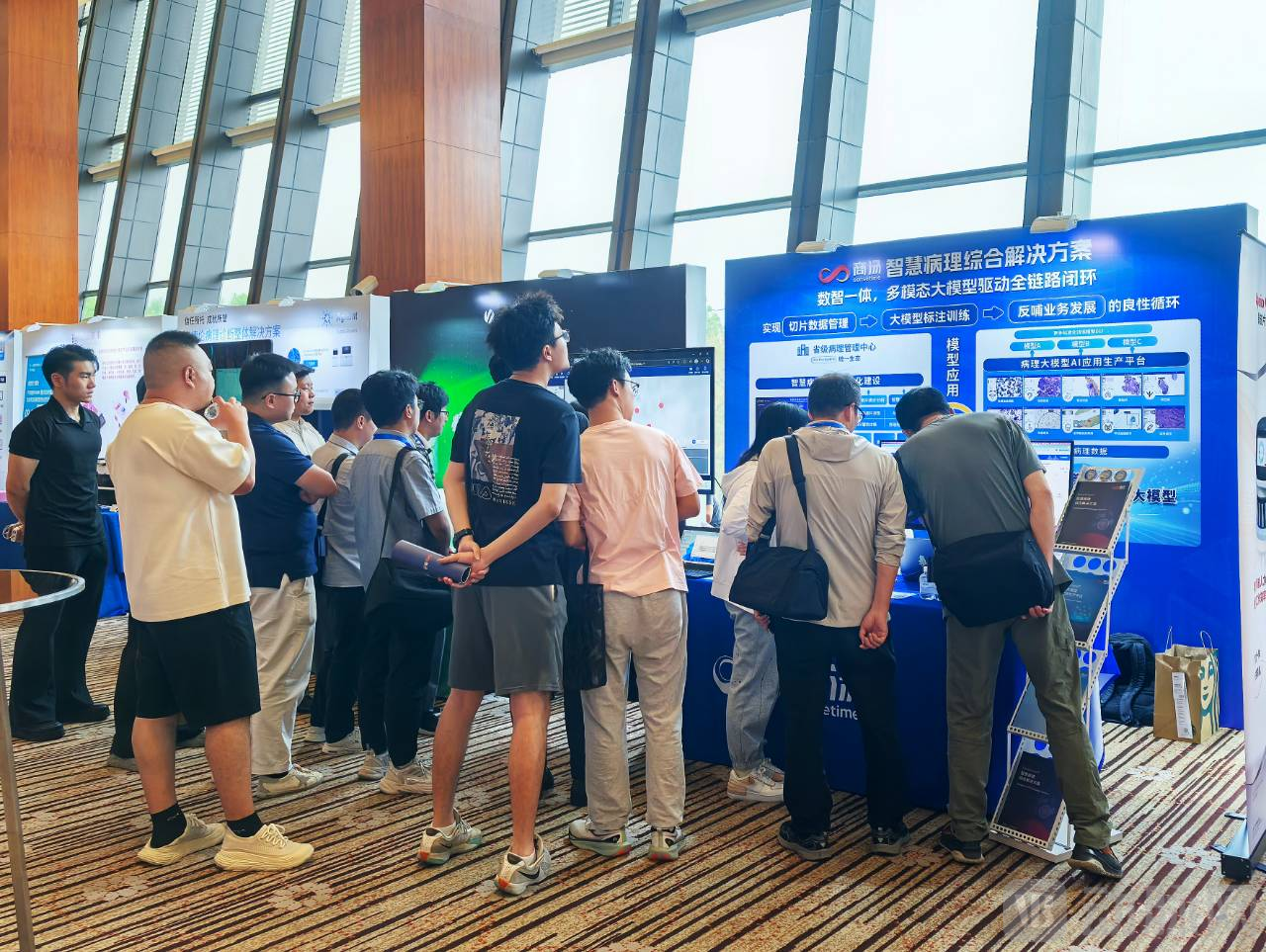
Focusing on Comprehensive Smart Pathology Solutions, SenseTime Medical’s Booth Draws Crowds with Lively On-Site Exchanges
Academic Spotlight: Technological Breakthroughs and Clinical Practice Jointly Chart a New Blueprint for Smart Pathology
On the first day of the conference, Professor Zhang Shaoting, CEO of SenseTime Medical, delivered a keynote address titled “The Paradigm of Integrating General and Specialized Multimodal Capabilities in Healthcare: Revolutionizing Smart Pathology Driven by Foundation Models” at the main venue. He pointed out that while pathological diagnosis serves as the “gold standard” for disease diagnosis, it faces industry-wide challenges such as complex and diverse data, a shortage of specialized professionals, and inconsistent diagnostic criteria. Leveraging its trillion-parameter medical large language model “Da Yi” as the intelligent core, SenseTime Medical has integrated multimodal technologies—including PathOrchestra, China’s first original large pathology model, and foundational imaging models—to build a “general-specialized integration” technical framework. This system achieves efficient fusion and collaborative understanding of pathological images, text reports, and clinical information, providing a systematic solution to the aforementioned challenges. Furthermore, through its self-developed PathoEngine®AI Production Platform for Large Pathology Models: Empowering Hospitals to Rapidly Develop Scenario-Specific Applications and Achieve Efficient Construction and Iterative Optimization of Multi-Disease, Specialized Pathology Models. This "empowerment-based" technology promotion model not only significantly enhances hospitals' independent research and clinical capabilities in specialized disease areas but also gradually builds a sustainable, evolving localized technological ecosystem, laying a solid foundation for the widespread accessibility of pathology-assisted diagnostic systems.
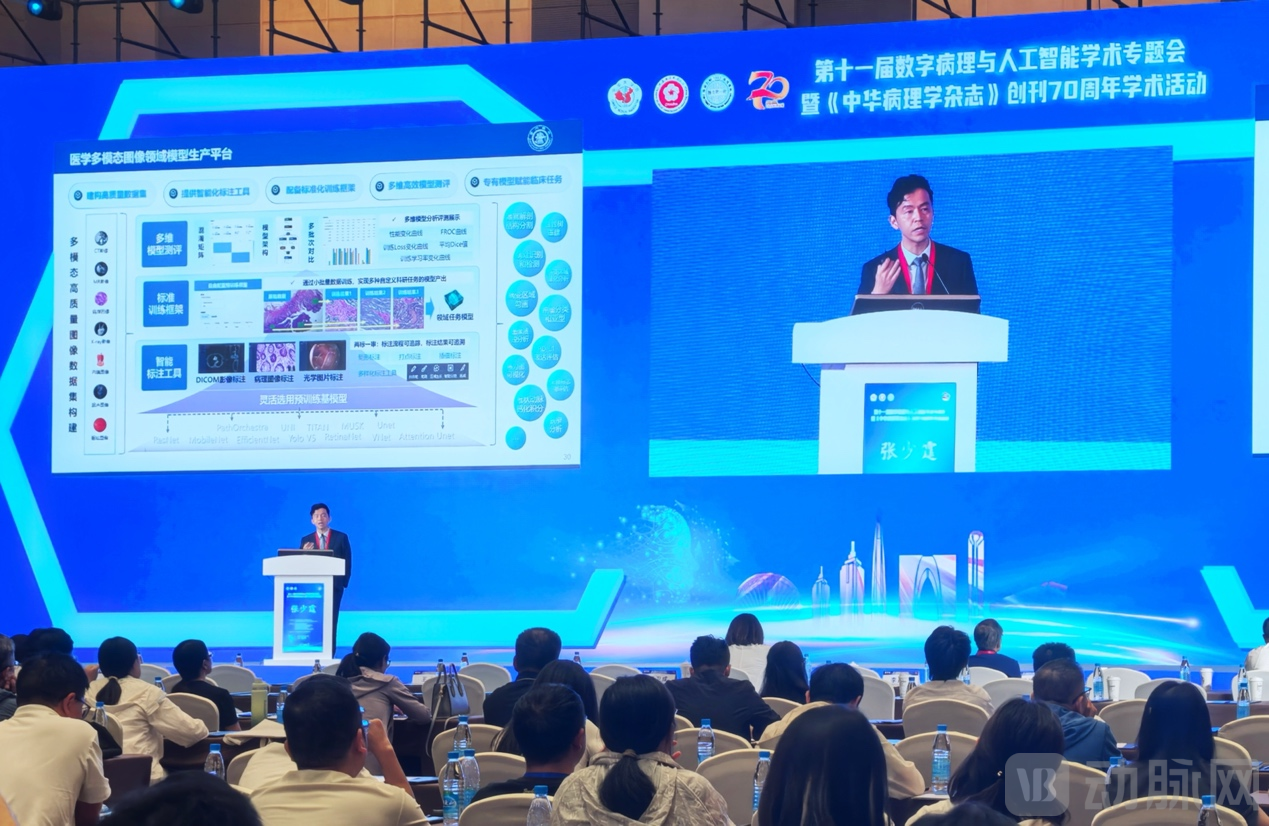
On the same day, at the special session on large pathology models and smart pathology department practices, Professor Zhang Xiaofan from the Qingyuan Research Institute of Shanghai Jiao Tong University shared cutting-edge advances in “Applications and Innovations of Multimodal Large Pathology Models.” She pointed out that, against the backdrop of a global race to develop large visual models for pathology, PathOrchestra—jointly developed by SenseTime and Xijing Hospital of the Air Force Medical University—has demonstrated superior performance. She also proactively explored conceptual frameworks for building multimodal interactive diagnostic systems, which simulate the diagnostic reasoning of pathology experts through image-based inference and multi-turn interactions, thereby providing an innovative direction for future human–machine collaborative diagnosis. Professor Zhang also highlighted the upcoming special issue on large pathology models in MedIA, extending a sincere invitation to colleagues in the academic community to jointly explore frontier technologies.
Application insights from the clinical frontline further corroborate the practical value of SenseTime Medical’s AI pathology technology. The Fourth Hospital of Hebei Medical University shared its practical experience in building a digital and intelligent pathology platform, stating that the application of AI technology has significantly improved the department’s diagnostic efficiency and research capabilities, while enhancing its capacity for innovative practice. Dr. Zhang Dachuan, Deputy Director of the Department of Pathology at Changzhou No. 1 People’s Hospital, provided a detailed overview of the implementation of more than ten AI pathology modules deployed within the department. In the six months since launch, the total number of slide scans exceeded 30,000, the AI utilization rate rose to 90%, and gastroscopy pathology reports achieved “same-day testing and next-day issuance,” substantially reducing patient waiting times.
Driven by the dual engines of “technology leadership + clinical practice,” SenseTime Medical not only demonstrates the leading performance of its large pathology model but also highlights the deep application value of artificial intelligence technology in real-world medical scenarios, fully reflecting its comprehensive strength to empower the pathology industry’s holistic transformation from digitalization to intelligence.
Booth Spotlight: A Panoramic Display of Smart Pathology’s “Integrated Digital-Intelligence Full-Chain Fusion”
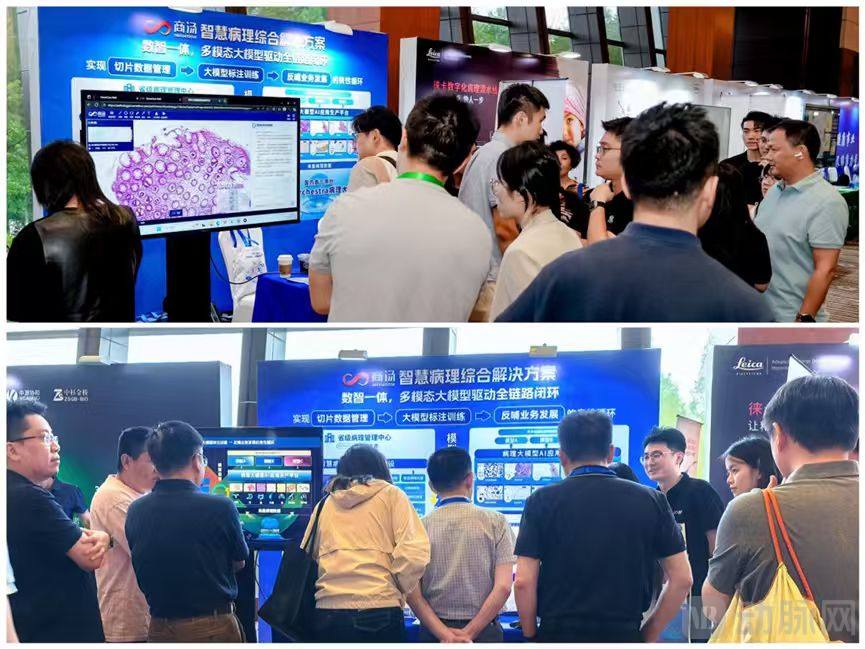
At the exhibition area of the conference, SenseTime Medical’s booth also attracted a large number of attendees to stop and engage in discussions. The booth provided a comprehensive showcase of SenseTime Medical’s “Digital-Intelligence Integrated” smart pathology solution, which is centered on multimodal large models and achieves a full-link closed loop of “acquisition, storage, management, application, and research” through the synergistic operation of three major technology platforms.
PathoEngine®The AI-powered production platform for large pathology models, operating as a “zero-code AI application factory,” enables hospitals to independently develop and deploy pathology models, significantly lowering the barrier to AI technology adoption. Serving as the “data hub,” the digital pathology slide management platform aggregates tens of thousands of high-quality, standardized slides, continuously fueling the evolution of large models. Meanwhile, the intelligent AI-assisted pathology diagnosis platform directly addresses clinical pain points in rapid screening and precise diagnosis, providing diagnostic support across multiple diseases and anatomical sites.
Taking Shanghai Pulmonary Hospital as an example, the Department of Pathology launched PathoEngine, leveraging its expertise in the diagnosis and treatment of pulmonary diseases.®AI Production Platform for Large Pathology Models: By deeply integrating the hospital’s extensive lung cancer pathology data, a series of AI-assisted diagnostic models tailored to specialty-specific diagnostic needs have been successfully developed. In clinical AI applications, the platform enables rapid detection and precise localization of atypical cells in pleural and ascitic fluid cytology. For PD-L1 quantitative analysis, it automatically identifies positive tumor cells and accurately calculates the Tumor Proportion Score (TPS), significantly improving interpretation efficiency and consistency, thereby providing a reliable basis for immunotherapy in lung cancer. This “Homebrew” localized production model not only leverages the data advantages of specialized hospitals but also offers a replicable pathway for the intelligent development of departments in similar institutions.
Following on-site discussions, multiple participating experts stated that the prospects for integrated digital and intelligent applications in smart pathology are broad. In particular, the low-threshold, high-efficiency AI application development model offers new approaches to the intelligent transformation of pathology departments. Many experts expressed their intention to pursue further in-hospital collaboration and exchanges.
Standing at the confluence of the 14th and 15th Five-Year Plan periods, smart healthcare and digital-intelligent pathology are ushering in unprecedented development opportunities. Although the grand event has concluded, the journey of innovation continues. SenseTime Medical will continue to uphold its philosophy of “insisting on originality and letting AI lead human progress,” constantly exploring the intersection and integration of digital pathology and artificial intelligence technologies. It will persistently tackle key technologies in multimodal large models, following the path of “model foundation-building, platform empowerment, and ecosystem co-creation.” By injecting sustained momentum into smart pathology and the broader field of smart healthcare, SenseTime Medical aims to propel medical large models from being merely “technically feasible” to becoming “clinically practical,” ultimately realizing the noble vision of “technology empowering healthcare and health benefiting all households.”