MicroVision AI: Delivering Integrated Microscopy Solutions through 'AI + Scenario-Based' Innovation to Accelerate Domestic High-End Scientific Instrumentation

WiMble
--
As a sophisticated high-end scientific instrument, the electron microscope is widely used in many fields such as materials science, biomedicine, and nanotechnology, and has long been a key area where China faces technological bottlenecks. In recent years, Western countries have increasingly imposed technological containment on China’s critical industries. This has not only further hindered the progress of China’s basic sciences and high-end scientific instrument industry but also strengthened the resolve of domestic researchers and related enterprises to pursue independent innovation.
Amid the current wave of independent innovation, WiMble (Shenzhen) Optoelectronic Technology Co., Ltd. (hereinafter referred to as “WiMble”), a startup incubated by the Chinese Academy of Sciences, is breaking the monopoly of foreign manufacturers through an innovative “AI + scenario-based” approach, thereby forging a distinctively Chinese path for the research, development, and commercialization of high-end microscopy imaging systems.
With the continuous advancement of technology and deepening research in frontier fields, market demand for high-end microscopic imaging equipment is rising steadily.
According to data released by the General Administration of Customs, both the import volume and value of electron microscopes in China saw significant growth in 2024, reflecting strong domestic demand. However, issues such as the high prices of imported brands, lengthy repair cycles, and a lack of localized services have long plagued domestic researchers, further underscoring the urgency and importance of accelerating the development of an independent and controllable domestic industry for microscopic imaging equipment.
Shi Xianli, the founder of WiMble, holds a master’s degree in Life Sciences from Shenzhen University and has extensive experience in the agency and sales of high-end scientific instruments.Over more than a decade of industry experience, he has keenly identified the pain points in China’s electron microscopy market from the frontline, pointing out that “the high cost of imported brands, lengthy repair cycles, and difficulties in obtaining spare parts severely constrain the efficiency of scientific research. These challenges are particularly pronounced for research teams with limited funding.”
After numerous brainstorming sessions with his team, Shi Xianli ultimately decided to transition from distribution to research and development, dedicating himself to providing Chinese researchers with high-end microscopy imaging equipment that better meets local needs, offers greater cost-effectiveness, and incorporates proprietary core technologies. This strategic direction was chosen for two main reasons: first, the WiMble team possesses years of experience distributing microscope brands, granting them a profound understanding of both products and the market; second, they recognized the historical opportunities presented by the national strategy of “domestic substitution” and the advent of AI technology, which will inevitably accelerate the deep integration of technological innovation with market demand.
In February 2025, WiMble, a high-tech enterprise dedicated to the R&D, manufacturing, application, and sales of microscopic imaging systems, was officially established, embarking on a new journey toward becoming a “leader in China’s microscopic imaging industry.”
Shi Xianli emphasized, “The microscopy imaging system is not merely a microscope for observing cells,”It is an integrated solution comprising three components: optical structure, imaging system, and analysis software., it can be widely applied across various fields and scenarios. For this very reason, such work requires close collaboration among multidisciplinary talents, as well as the integration and support of technical resources from different domains.”
Based on this, WiMble has assembled a team fromChinese Academy of Sciences, Southern University of Science and Technology, Macau University of Science and Technology, Shenzhen University, The Chinese University of Hong KongA young R&D team with Ph.D. or postdoctoral degrees or study experience in biology, optics, and communications from well-known Chinese universities. Moreover,The company's R&D and core sales personnel have all been working and studying in Shenzhen for over 10 years., with a profound understanding and practical experience of the innovation environment and market demand in the Pearl River Delta, which enables WiMble to rapidly respond to customer needs and drive innovative product development and continuous iteration.
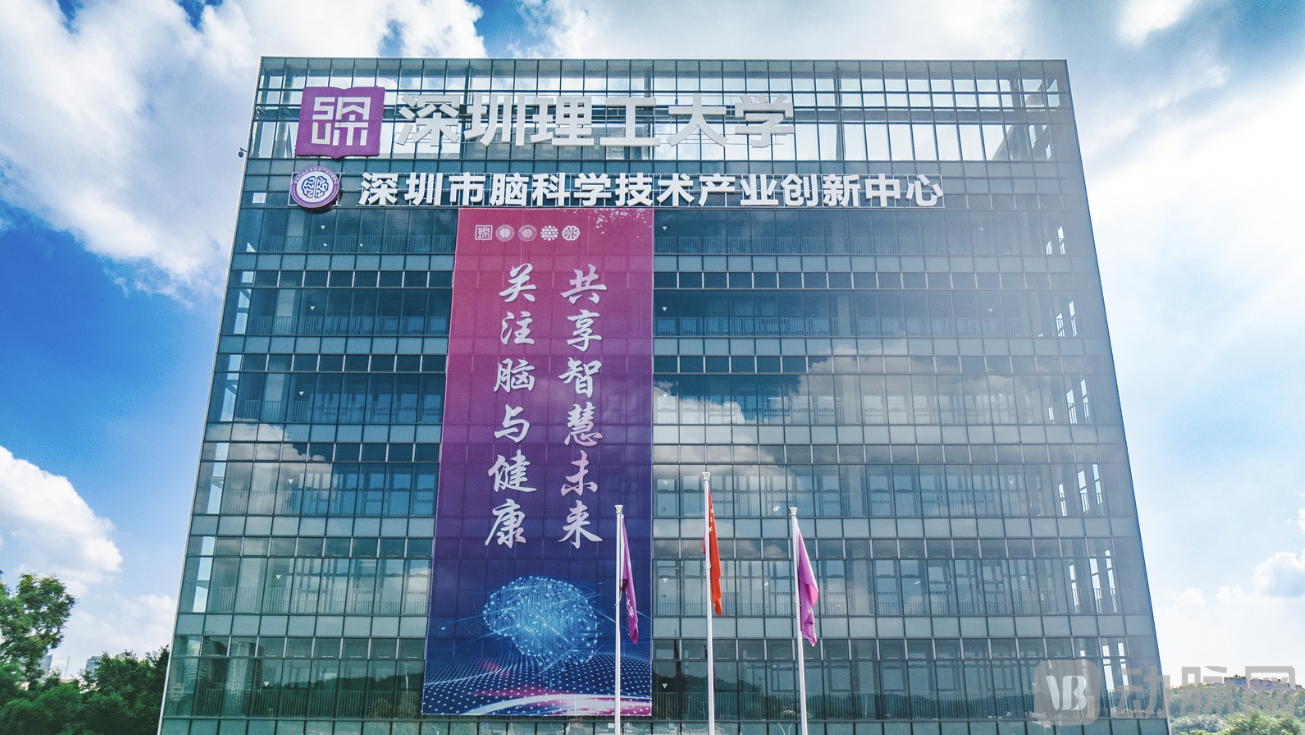
In addition, the Shenzhen Brain Science Industry Innovation Center (hereinafter referred to as the “Brain Innovation Center”), as a hub for talent and resources in the field of brain science, has also provided indispensable support to WiMble.Shi Xianli stated, “The Brain Innovation Center has provided us with multi-dimensional support, including scenario-based needs, technical testing, venues, and policies. For startups, the cost burden of procuring high-end equipment such as microscopes is significant. The Brain Innovation Center boasts a rich platform of equipment, allowing us to leverage these resources to carry out relevant R&D work.”
From the perspective of downstream application scenarios, WiMble prioritizes “brain science” as its primary focus.
As one of the key frontier disciplines in the 21st century, strengthening research in brain science will not only bring disruptive transformations to the diagnosis and treatment of brain diseases and the development of next-generation artificial intelligence algorithms, but also make a critical contribution to mapping the “blueprint of human intelligence.”
Based on this, China has consistently provided strong support for the field of brain science research.In the 14th Five-Year Plan, “brain science and brain-inspired research” was once again listed as one of the seven key frontier areas for technological breakthroughs. Meanwhile, the Ministry of Science and Technology, the National Natural Science Foundation of China, and other agencies have concurrently funded a series of brain science research projects, providing comprehensive support—from policy to funding—for the innovative development of brain science.
Microscopic imaging systems are among the key tools underpinning cutting-edge basic research in brain science. Through their prior professional and personal engagements, Shi Xianli and his team interacted extensively with neuroscience researchers. By integrating the authentic needs and pain points reported by these scientists, they rapidly launched the first-generation product of WiMble, providing robust instrumental support for brain science research.
It is precisely this frontline-rooted development logic of “from users, to users” that gives WiMble’s devices outstanding advantages in scenario adaptation, particularly in software optimization, AI integration, and automation.For instance, its VMZ4000, an entry-level multifunctional microscopy imaging system, is designed for researchers with limited budgets who need to conduct fluorescence labeling studies. Meanwhile, the VMScan is a high-throughput motorized scanning microscope that leverages AI algorithms to achieve fully automated intelligent imaging. It employs multi-layer scanning and extended depth-of-field algorithms for thick samples, ensuring the acquisition of high-definition images and significantly improving the efficiency of large-scale sample processing.
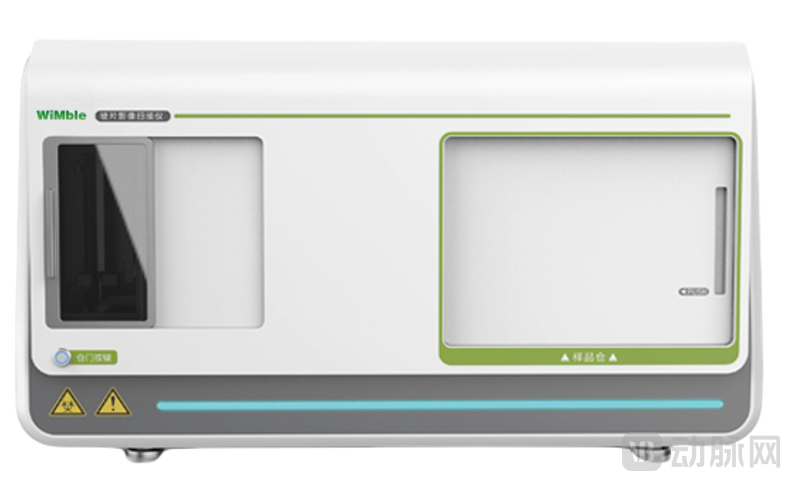
VMScan Panoramic Tissue Scanner
As a flagship product combining “scenarios + AI,” the VMScan system features a motorized multi-position filter wheel compatible with brightfield imaging and multiplex immunofluorescence imaging, providing researchers with greater flexibility in experimental design. Shi Xianli cited an example: “In Alzheimer’s disease research, scientists need to observe the efficacy of different drugs using mouse models.”“Our independently developed electric microscope, equipped with an AI system, enables researchers to automatically scan large batches of samples and rapidly identify and classify effective regions of interest through intelligent algorithms, more than doubling the efficiency of drug screening.”
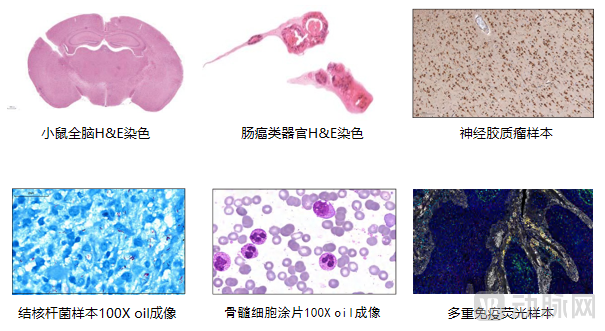
VMScan Panoramic Tissue Scanner: Case Study
When discussing the R&D logic behind its product line, Shi Xianli emphasized, “We do not pursue “large and all-encompassing” general-purpose equipment; instead, we delve into specific scenarios to deliver “small and elegant” solutions.“This is where our competitiveness lies. Meanwhile, we aim to develop our products from the perspective of brain science, continuously refining them by meeting the high-standard demands of this field, and then expanding their application to other scenarios.”
Currently, WiMble has established a rich and diversified product portfolio, encompassing microscopes, cameras, tissue panoramic scanners, as well as maintenance, upgrade, and modification accessories.Among them, the microscope lineup includes inverted biological microscopes, polarizing microscopes, stereo microscopes, upright biological microscopes, and integrated observation microscopes, comprehensively meeting microscopic imaging needs across diverse scenarios and providing robust support for precise observation and efficient workflows in fields such as scientific research and pathology.
“Microscopy relies 30% on hardware and 70% on calibration.” To better serve researchers and further increase the localization rate of microscopy imaging equipment, WiMble has chosen a more challenging yet user-centric path in its sales and service model: direct sales.
In terms of marketing network layout, the company adopts“Engineer + Sales” Integrated Model, leveraging a dedicated team of sales engineers to provide customers with direct support and rapid response. “All our sales personnel possess professional engineering backgrounds and must undergo six months of systematic training and pass rigorous assessments before assuming their roles. Under our direct sales model, once a customer expresses interest, we promptly visit their site with equipment to provide on-site product demonstrations, sample application testing, and other services. This approach enables customers to intuitively perceive the value of our products and assess their compatibility with specific needs.”
WiMble has earned widespread recognition from clients across universities, research institutes, hospitals, and pharmaceutical companies, thanks to its service system built on the principle of “end-to-end services and comprehensive solutions for microscopy imaging needs.”Currently, the company is continuously optimizing its service processes and accumulating successful case studies to lay the foundation for subsequent nationwide promotion across China. In addition, the company plans to gradually expand its business scope, extending its specialized services to more industries such as animal and plant conservation and ecological environmental protection.
In the process of localizing high-end scientific instruments, price is one of the key determining factors.In this regard, WiMble achieves a dual balance between “cost-effectiveness” and “high value.”On one hand, WiMble’s products are priced at approximately half that of imported brands; on the other hand, thanks to their leading software adaptability and AI capabilities in specific scenarios, WiMble’s products are actually priced slightly higher than those of mainstream domestic brands. This demonstrates that value is the core key to winning over customers and capturing market share.
Currently, the domestic microscopic imaging equipment industry is in a period of rapid growth. Shi Xianli pointed out: "Automation and intelligence have become two inevitable trends in the development of microscopic imaging equipment, a process quite similar to the transformation trend in the automotive industry. We hope to leverage AI and automation technologies to achieve overtaking on the curve during the process of import substitution."
From distribution to independent R&D, from general-purpose solutions to scenario-specific customization, and from hardware to software empowerment—WiMble’s entrepreneurial journey not only charts its own transformation but also reflects the deep strategic thinking and rising momentum of China’s high-end scientific instrument enterprises amid the global wave of innovation.
As Shi Xianli stated at the end of the interview, “Although WiMble is just getting started, we are confident that, leveraging our years of industry accumulation, talented team, favorable policy tailwinds, and our corporate philosophy of ‘high quality, high standards, and strict requirements,’ we will ‘expand the frontiers of vision with the light of a faint glow’ over the next ten to twenty years. We aim to inject momentum into the localization and independent development of high-end scientific instruments, growing into a leader in China’s microscopic imaging industry.”
About the Shenzhen Brain Science and Technology Industry Innovation Center
Shenzhen Brain Science and Technology Industry Innovation Center (hereinafter referred to as the “Brain Innovation Center”) is a specialized incubation platform established with strong support from the Shenzhen Municipal Government and the Guangming District Government. It receives technical support and operational management from the Institute of Brain Cognition and Brain Diseases, Shenzhen Institutes of Advanced Technology, Chinese Academy of Sciences, and the Shenzhen-Hong Kong Institute of Brain Science. The Brain Innovation Center is committed to building China’s first “plug-and-play” specialized incubation and empowerment platform for brain-related ventures. Focusing on the pain points in the industrial translation of technologies related to brain science, brain technology, brain health, brain diseases, and brain intelligence, it establishes an innovative collaboration model where “end-users define the challenges, and the scientific community provides the solutions.” This approach aims to achieve an integrated development pattern combining innovation, entrepreneurship, venture capital, and creativity. The center strives to become a highland for aggregating new quality productive forces, characterized by the brain and life health industries, serving China and radiating globally.
Since its trial operation began in October 2022, the Brain Innovation Center has established a “phased” incubation model and developed industrial space exceeding 10,000 square meters. It has attracted nearly 50 enterprises to settle in its incubator and industrial park. The cumulative historical financing of these resident enterprises exceeds RMB 1 billion, with their total valuation surpassing RMB 10 billion. Additionally, the Center has established China’s first venture capital fund in the fields of brain science and brain-inspired intelligence that is fully funded by social capital, with a scale of over RMB 200 million, focusing on investing in high-quality early-stage projects at the Brain Innovation Center. The Brain Innovation Center sincerely invites enterprises, institutions, and research teams in related fields such as brain science, brain-computer engineering, and brain health to visit and exchange ideas!