

The Invisible Disability Affecting Over 14% of the Global Population: How a Female Scientist Brought Migraine Research to the Forefront
Migraine, a complex neurological disorder, is characterized by recurrent, often unilateral, throbbing severe headaches, frequently accompanied by nausea, vomiting, and sensitivity to light and sound. In 2021, the global number of migraine sufferers reached approximately 1.16 billion, accounting for 14%–18% of the world’s population.
Moreover, the harm caused by migraine extends far beyond “headache” itself. It is a highly disabling neurovascular disorder. Long-term recurrent attacks can cause multidimensional and profound damage to physical, psychological, and social functioning, and may be comorbid with stroke, epilepsy, depression, and cognitive impairment, leading to serious consequences.
In 1999, Professor Wang Minyan of Xi’an Jiaotong-Liverpool University went to the United Kingdom to conduct scientific research. The following year, with funding from the Migraine Trust UK, she entered the field of migraine research and began her doctoral project. She told Chengguo Bureau that since the 1960s, people have gradually attempted to explain the origins of migraines from medical and biological perspectives. With the development of neuroimaging in the 1980s and 1990s, it was finally recognized that the neurovascular network is a potential pathogenic mechanism. Nevertheless, scientists’ understanding of the molecular pathogenesis of this disease remains limited, and clinically, there are still very few drugs available for the safe and effective prevention and treatment of migraines.
“Research into disease pathogenesis and drug development are mutually reinforcing and should be aligned as closely as possible,” she stated.
“Penance Theology” to the Neurovascular Hypothesis
The Pathogenesis of Migraine: A Historical Evolution from “Divine Theory” to Science
In the 12th century, under the prevailing “theology of penance,” pain was regarded as a means of imitating Christ’s Passion and purifying the soul. Migraines were considered divine omens. The nun Hildegard suffered throughout her life from periodic visual auras and unilateral throbbing pain. Yet in *Scivias* (Know the Ways of the Lord), she described the characteristic jagged flashes of light as “shining wheels of fire” and “living webs of light,” stating that this was “God writing with light in my soul.”
By the 17th century, Thomas Willis, regarded as the father of modern neurology, proposed the vascular hypothesis, attributing headaches to nerve stimulation caused by vasodilation. During this period, nonsteroidal anti-inflammatory drugs (NSAIDs) such as aspirin and ergotamine emerged. Although these medications are still used in pain management today, they were not originally developed for the treatment of migraine.
Moreover, although the vascular hypothesis links migraine to networks of nerve endings, it still struggles to explain the numerous aura symptoms that often accompany headaches, such as visual disturbances, nausea, and vomiting. Later, another physician, Edward Livingston, proposed the “neural storm” theory. She found that the symptoms preceding a migraine attack are largely influenced by structures such as the thalamus and the vagus nerve, and posited that migraines result from primary neurological dysfunction.
Unfortunately, subsequent research revealed that the aura associated with migraine is not triggered by structures such as the thalamus and vagus nerve, but rather influenced by more complex central nervous system activities. For the next several decades, no significant breakthroughs were made in migraine research. It was not until the development of imaging technologies in the 19th century that a revolutionary impact was made on the study of migraine pathogenesis, driving a fundamental shift from the “vascular hypothesis” to the “neurovascular theory.”
Functional imaging techniques, such as fMRI and PET, have demonstrated that during migraine attacks, vasodilation occurs concurrently with sustained activation of central regions, including the brainstem, hypothalamus, and cerebral cortex. These findings suggest that the core mechanisms of migraine lie in central sensitization and aberrant neuromodulation.
Using PET technology, researchers have found that cerebral blood flow in regions such as the periaqueductal gray (PAG) and raphe nuclei remains persistently elevated during the early phase of a migraine attack, with activation persisting even after pain relief. This suggests that these areas may serve as the "initiators" or "generators" of migraines.
fMRI studies have further revealed that the hypothalamus is activated up to 48 hours before migraine onset, closely associated with dysfunctions in circadian rhythms and hormonal fluctuations, suggesting its pivotal role in the prodromal phase of migraine.
Real-time fMRI imaging revealed that occipital cortex activity in patients with visual aura was highly consistent with the physiological characteristics of cortical spreading depression (CSD), providing the first in vivo validation in humans that CSD constitutes the neural basis of migraine aura.
Furthermore, high-resolution MRI has revealed microstructural alterations in both white and gray matter among patients with chronic migraine, such as reduced neuronal synaptic density and axonal injury. These findings suggest that long-term, recurrent attacks can lead to adaptive or pathological remodeling of brain structure. Such changes are positively correlated with disease duration and attack frequency, indicating that migraine is not merely an “episodic disorder” but may also represent a chronic, progressive brain network disease.
Meanwhile, medications for migraine treatment have also been successively introduced.
The development of first-generation migraine medications began in the late 1970s, with U.S. FDA approval granted in the 1990s. This class of drugs, primarily comprising triptans, is currently considered a first-line treatment in China.
The second generation comprises drugs that specifically target calcitonin gene-related peptide (CGRP) and its receptor. Since 2018, these agents have been successively approved by the U.S. Food and Drug Administration (FDA). Developed primarily based on the neurovascular theory of migraine, their advent has brought substantial benefits to patients with migraine.
Triptans are primarily used for the acute treatment of migraine. Due to the risk of cardiovascular constriction and medication-overuse headache associated with frequent use, they are not suitable for chronic migraine.
Existing CGRP and its receptor-targeting drugs primarily rely on peripheral vascular effects. As they cannot cross the blood-brain barrier, their central effects depend on whether the drugs can penetrate the blood-brain barrier to enter the central nervous system.
According to data from overseas clinical trials, the medication adherence rates for both triptans and CGRP receptor antagonists are less than 30%. The clinical need for migraine treatment remains unmet.
“Chronic migraine, as well as pharmacological management for special populations such as adolescents and pregnant women, remains inadequately addressed,” stated Professor Wang Minyan. Despite rapid advancements in migraine drug development in recent years, the disease still lacks biomarkers for diagnosis. Professor Wang Minyan believes that greater attention should be paid to the effects of medications on central vascular dynamics, which represents a current research limitation in the field of migraine studies.
25 Years on the “Chasing Light” Journey: Building a Full-Chain Platform for Migraine Research in China
Over the past 25 years, Professor Wang Minyan has explored the pathogenesis of migraine from multiple perspectives, including disease mechanisms, molecular targets, pharmacology, and therapeutic efficacy. She told Chengguo Bureau that researchers often need to engage in pioneering work, building knowledge from scratch, particularly in fields like migraine research, which started late and involves a condition without identifiable structural lesions.
“To conduct research on it, you need your own preclinical research platform, models that can match clinical symptoms with pathological mechanisms, and the establishment of complex systems for pharmacology and pharmacodynamics,” she explained to VCBeat. As a complex neurovascular disorder, migraine research must be carried out from multiple perspectives and dimensions.
Her work began during her doctoral studies, continued as she established herself as an independent Principal Investigator (PI), and has further expanded since her return to China, where she is building a more comprehensive migraine research platform. Her team has developed unique, diversified animal models based on the neurovascular pathology of migraine, fully capturing the “hemi” (unilateral) and “neurovascular” characteristics of the condition. Their multi-dimensional monitoring of neurovascular coupling represents a world-first and remains the only such capability currently available in China. This innovation addresses the R&D bottleneck caused by inadequate migraine evaluation models, improves prediction accuracy, shortens development cycles, and accelerates the development of new migraine therapies.
Leveraging her team’s advantages over conventional domestic industry practices, she has long focused on researching the pathogenesis of migraine and drug targets, achieving multiple breakthroughs in the molecular mechanisms of migraine, precision medicine, and the discovery of novel drug targets.
Since 2014, he has led his team in extensive collaboration with Professor Russo at the University of Iowa, USA, to investigate the central regulatory mechanisms of calcitonin gene-related peptide (CGRP), resulting in the joint publication of multiple papers. Building on research findings that identify cortical spreading depression (CSD) as a key pathogenic mechanism in migraine, their work revealed that CSD activates CGRP synthesis in the cerebral cortex and amygdala, thereby elucidating the critical mechanisms underlying sustained sensitization of these brain regions and associated emotional changes following CSD. They further proposed a coupling between CGRP-dependent central sensitization and changes in cerebral blood flow. These achievements have laid a solid foundation for understanding the pharmacological actions of second-generation CGRP-targeted therapies.
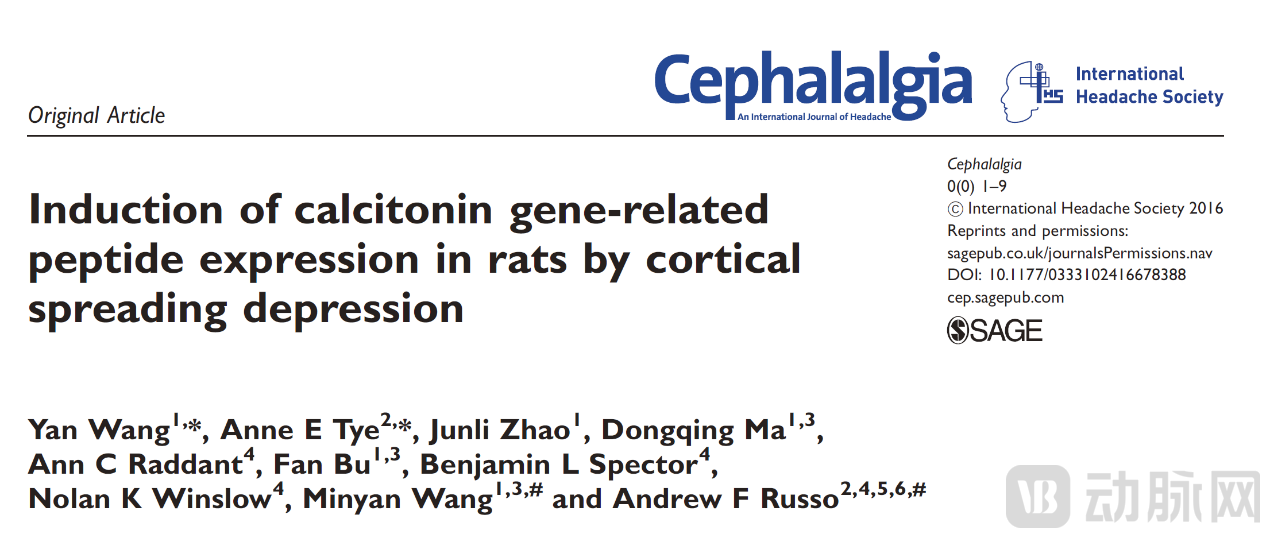

Since 2016, she has led her team in successfully elucidating a key neuroelectrophysiological activity underlying migraine attacks: the stress-sensitive TRPA1 ion channel promotes the propagation of cortical spreading depression and associated cerebral blood flow changes by activating SFKs and ERK2. Furthermore, TRPA1 facilitates central and trigeminal neuroinflammation and induces photophobia-like behaviors in mice. This study provides theoretical support for TRPA1 as a novel drug target and broadens the perspective on the central mechanisms of migraine.

During the same period, her team, in collaboration with the University of Liverpool in the United Kingdom and Murdoch University in Australia, also discovered that the activation of Src family kinases (SFKs) plays a significant regulatory role in mechanisms underlying cortical spreading depression (CSD), neuroinflammation, and migraine-associated photophobia. Notably, SFKs exhibit sex-specific regulatory effects. This represents a major advance in understanding the molecular basis of photophobia sensitivity. The study highlights the role of SFKs in the pathophysiology of migraine, reveals sex-specific influences, and proposes new directions for precision medicine in prevention and treatment. Notably, these key findings have been selected as one of the six major migraine drug targets featured in the core reference work in the field, Migraine Pain Management (October 2024). This conclusion is drawn from Chapter 9 of the book, titled “Src Family Kinases in Migraine.”


In 2025, Professor Wang Minyan’s team was the first to elucidate a “cascade reaction” pathway extending from NEAT1 to microRNA and subsequently to pain-related genes. This study provides the first molecular mechanistic explanation for the genesis of photophobia in migraine. The research demonstrated that blocking the expression of NEAT1 or the TRPM3 protein significantly attenuated light sensitivity responses in mice, suggesting that this pathway constitutes a key mechanism underlying migrainous photophobia.
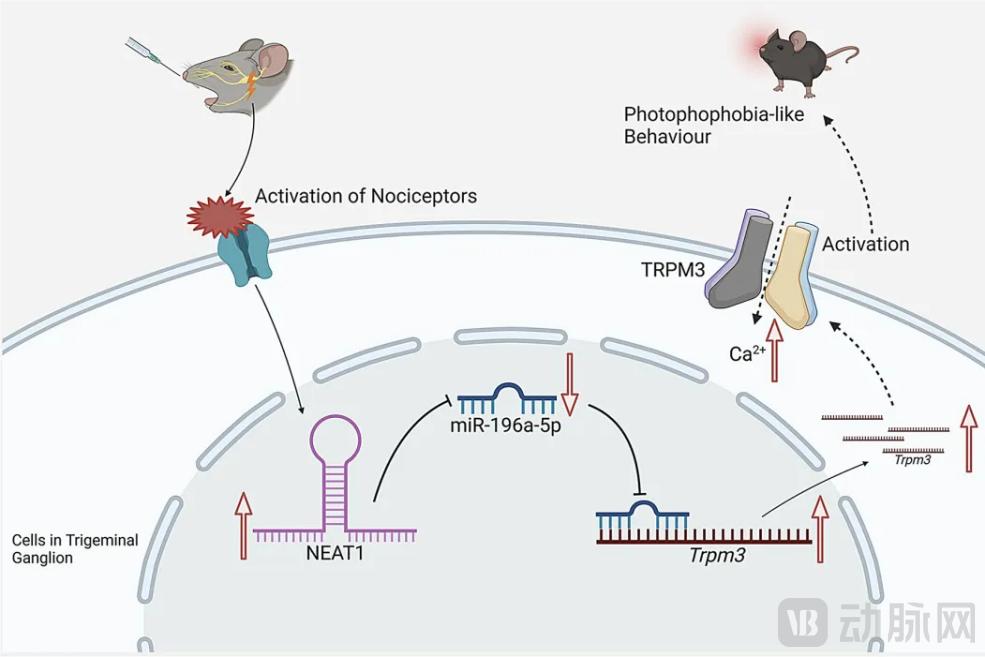
This not only deepens the understanding of migraine mechanisms but also suggests that NEAT1 may become a new therapeutic target for treating photophobia in the future.
“This study provides a new perspective for explaining the perplexing photophobia symptoms in migraine, and also opens up possibilities for the future development of targeted therapies,” said Professor Wang Minyan in an interview at the time. “It allows us to gain a deeper understanding of what is happening in the brain and identifies potential points for intervention.” The research findings were selected as the featured article in the May 2025 issue of the Journal of Headache and Pain, and the team presented an academic report at the International Headache Congress held later that year.
Her and her team’s research spans multiple levels, from molecular and cellular to behavioral, systematically elucidating the key mechanisms of migraine. They have made pioneering contributions in areas such as photophobia and central sensitization, emphasizing the importance of sex differences and individual variability in migraine.
Throughout her career, Professor Wang Minyan has made significant contributions to the discovery of prominent migraine drug targets, including CGRP, as well as novel targets such as TRPA1 and SFKs, thereby charting a course for the development of new anti-migraine therapeutics and the future of precision medicine.
In terms of international collaboration and platform development, Professor Wang Minyan established the XJTLU Center for Neurobiology in 2013, building a systematic research platform for migraine. She has maintained long-term collaborations with international institutions such as the University of Liverpool and serves as a reviewer for the UK Medical Research Council (MRC) and UK Research and Innovation, significantly enhancing China’s international influence in this field.
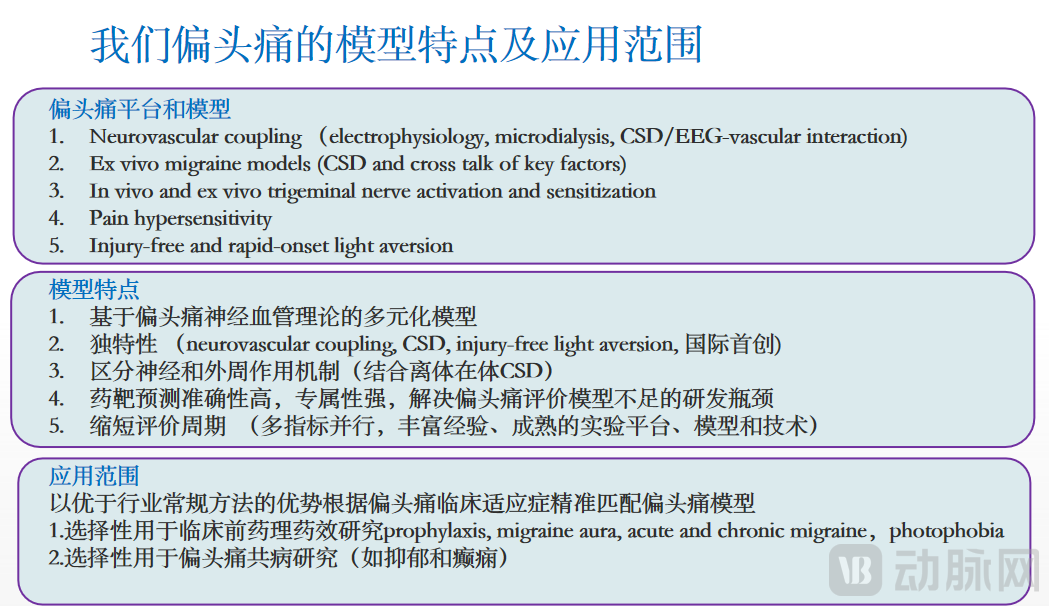
Main Research Areas of Professor Wang Minyan’s Laboratory
The Underestimated 15%: Migraines Move from the “Sidelines” to the “Main Battlefield”
With over two decades of accumulated expertise, Professor Wang Minyan has emerged as one of the internationally influential scholars in the field of basic migraine research in China. Her research has not only advanced the scientific understanding of the molecular mechanisms underlying migraines but also provided a solid theoretical foundation for precision clinical treatment and new drug development.
But in her view, these are still not enough.
Unlike more intractable conditions such as cancer and Alzheimer’s disease, migraine has attracted far fewer innovative pharmaceutical companies and a much smaller community of researchers. Academically, the number of scholars and research projects in this field is also significantly lower than those for the former two conditions.
Professor Wang Minyan told us that among her doctoral cohort, few have remained in this field; most have changed careers, and the number of those still active in this area is dwindling. Furthermore, from the perspectives of clinical practice, government, and even patients and their families, the socioeconomic and physical burdens imposed by migraine have long been overlooked.
However, the prevalence of migraine is actually very high. According to data released by the World Health Organization (WHO), the global prevalence of migraine is approximately 15%, meaning that about 1.5 out of every 10 people are suffering from migraines. In reality, due to limited diagnostic capabilities and societal neglect, the actual prevalence of migraine is likely even higher.
“Research on migraine lags behind that on cancer and neurodegenerative diseases,” she stated.
In the past, due to limited understanding, extensive research on migraine focused solely on pain as a superficial manifestation. Moreover, in the absence of identifiable structural lesions, the underlying molecular mechanisms, affected brain regions, and susceptible populations remained difficult to ascertain. Consequently, progress in migraine research has been relatively slow amid widespread resource constraints.
With the establishment of International Headache Day, the promotion by various academic conferences, and the continuous strengthening of community-level awareness campaigns, migraine has gradually received more attention, and the related research community is growing. Currently, hundreds of laboratories worldwide are dedicated to basic and clinical research on migraine.
At the organizational level, in addition to “established” academic conferences such as the Migraine Trust International Symposium (MTIS), the International Headache Society (IHS) holds its international conference biennially, rotating among venues worldwide. Professor Wang Minyan has attended nearly every session.


(Above: 2025 IHC in São Paulo; Below: 2019 IHC in Dublin)
In China, basic research on migraine started relatively late. Systematic research into the mechanisms of migraine essentially began with Professor Wang Minyan’s laboratory. In 2024, Chinese migraine researchers successfully held the inaugural China Headache Congress in Chongqing. The following year, the second congress was held in Nanjing.
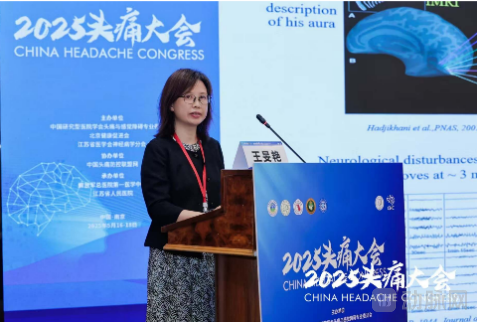
Image from the 2025 Headache Conference
Professor Wang Minyan believes that the convening of the China Headache Conference is of milestone significance, marking a new height in the attention paid by China’s academic and medical communities to the disease burden of migraine.
From Pfizer to Domestic Pipelines: The Chinese Moment for Innovative Migraine Drugs
In 2024, Pfizer’s next-generation, migraine-specific therapeutic, Rimegepant, was approved by China’s National Medical Products Administration (NMPA). Targeting the CGRP receptor, it is indicated for the acute treatment of migraine with or without aura in adults. It is currently the only medication globally approved by both the U.S. Food and Drug Administration (FDA) and the European Medicines Agency (EMA) for both acute and preventive treatment of migraine. Its approval not only provides migraine patients with a novel therapeutic option but also spurs greater domestic attention to research on the disease’s underlying mechanisms.
“The launch of this drug in China has also fostered the growth of local scientific research capabilities. We are delighted to see an increasing number of research teams, clinicians, and industry players joining this field, gradually forming a Chinese academic community. This holds profound significance for advancing migraine research and improving patients’ quality of life,” she remarked.
What surprised her even more was that, at a recent CPHI, Professor Wang Minyan learned that innovative companies in China had already begun laying the groundwork for research into targeted therapies for migraine.
“I feel greatly encouraged that, beyond academia, innovative companies are also considering the industrialization of migraine medications,” she stated. As a scholar who has dedicated more than 25 years to the field of migraine, Professor Wang Minyan believes in the potential of this class of drugs in the domestic market. It is an untapped blue-ocean market brimming with potential.
“Particularly in the Yangtze River Delta and Pearl River Delta regions, there is a highly vibrant innovation ecosystem. Innovative companies possess cutting-edge insights into drug development, and the government actively supports the growth of related industries,” she remarked. She believes that, empowered by domestic R&D experience and bolstered by government support for innovative drugs, China will soon see the emergence of its own innovative therapies for migraine.
In previous studies, Professor Wang Minyan frequently communicated with clinicians regarding the current status of clinical diagnosis and treatment, and engaged in innovative R&D collaborations with foreign enterprises, such as drug target assay. In her view, there is an inseparable relationship among clinical practice, scientific research, and industry. Different roles undertake different tasks, and it is precisely the integration and linkage of these tasks that form a closed loop from pharmaceutical R&D to industrialization.
A decade ago, China’s pharmaceutical R&D was dominated by generics, making it difficult for innovative research to gain traction. However, with the advancement of innovative drugs in China, R&D for migraine treatments has gradually established viable pathways for downstream translation and commercialization.
Currently, only a very small number of enterprises in China are engaged in the research and development of innovative drugs for migraine. In the view of Professor Wang Minyan, the alignment between these companies’ research directions and the “neurovascular coupling” theory of migraine still needs improvement. Based on her team’s previous research findings, even if antibody-based therapeutics under development cannot penetrate the blood-brain barrier, their effects on the neurovascular unit must still be systematically evaluated. Therefore, drug development should not only focus on peripheral vascular responses but also place greater emphasis on the drug’s impact at the central level, particularly vascular responses associated with cortical spreading depression (CSD).
This necessitates that research models closely align with clinical pathophysiological mechanisms, prioritizing the use of diverse animal models constructed based on the theory of neurovascular coupling, and further validating and supplementing these with specific models of chronic migraine.
She emphasized that general-purpose models should be given equal weight to disease-onset-specific indications, thereby enhancing the efficacy and translational potential of new drug development.
Going forward, Professor Wang Minyan hopes to foster greater collaboration with innovative pharmaceutical companies on R&D directions, leveraging her years of research in the field of migraine, as well as the platforms and models she has established, and integrating them into the drug development process. In the past, due to a later start, Chinese innovative pharmaceutical companies have needed to be more cautious in selecting R&D targets; while competing for popular targets, they also had to consider factors such as drug response rates and the size of the domestic market.
With the success of some local innovative enterprises, Professor Wang Minyan believes that the current themes of pharmaceutical R&D innovation are internationalization and differentiated competition, thus Chinese pharmaceutical companies need to make more cutting-edge attempts.
Regarding the development of migraine medications in China, Professor Wang Minyan believes that although China has a large population base and a substantial number of patients, no original innovative drug has yet been launched on the market. This situation reflects both market dynamics and patient needs. She hopes to achieve a breakthrough from zero to one in the development of original innovative drugs for migraines through the joint efforts of industry, academia, research institutions, and medical practitioners.