

Xiangda Bio Launches World's Largest Urine-Based Extended Genotype HPV Screening Clinical Trial in Guang'an, Achieving Three Global Firsts

PHASE Scientific
Developer of Liquid Biopsy Diagnostic Technology
On September 20, 2025, the “Guang’an Cervical Cancer Screening Public Welfare Project” and the “Clinical Research Project on the Establishment and Promotion of an Innovative Model for Cervical Cancer Prevention and Control” were officially launched in Guang’an, Sichuan Province. Led by Peking University Shenzhen Hospital and jointly participated in by West China Guang’an Hospital of Sichuan University (Guang’an People’s Hospital), the project received technical support and core testing services from PHASE Scientific, a caring corporate partner. By leveraging PHASE Scientific’s exclusively developed PHASiFY™ concentration technology, the project aims to explore a replicable and scalable new model for cervical cancer prevention and control through the integration of public welfare initiatives and technological innovation.
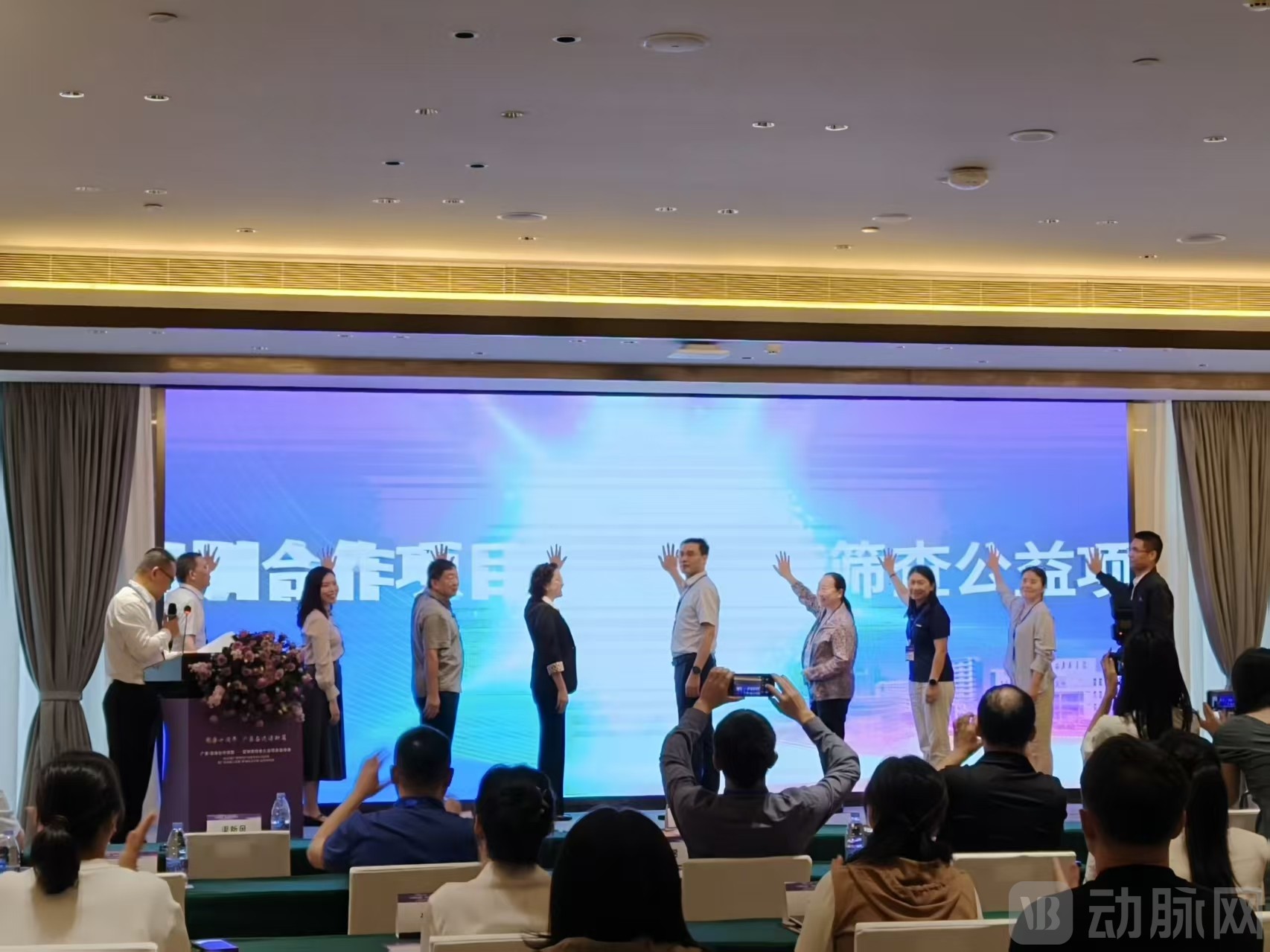
Figure: The Guang’an Cervical Cancer Screening Public Welfare Project was officially launched on September 20. From left to right: Dr. Li Yunge, President of Guang’an Hospital of West China Hospital, Sichuan University; Ms. Zhao Zhanru, Vice President of Phase Scientific International Limited; Professor Qu Xinfeng from Peking University Shenzhen Hospital; Ms. Zhou Xiaoqin, Secretary of the Guang’an Women’s Federation; Mr. Xiao Rongxing, Deputy Director of the Guang’an Municipal Health Commission; Professor Wu Ruifang, Director of the National Early Diagnosis and Early Treatment Demonstration Base for Cervical Cancer and Director of the Institute of Obstetrics and Gynecology at Peking University Shenzhen Hospital; Mr. Du Yutao, Secretary of the Party Committee of BGI Group; Professor Du Hui from Peking University Shenzhen Hospital; and Mr. Zeng Xinkai, Executive Secretary-General of the Shenzhen Radio and Television Public Welfare Foundation.
Notably, the project launched this time plans to enroll 17,000 age-eligible women. Through a prospective study design, it aims to validate the sensitivity, specificity, negative predictive value (NPV), and positive predictive value (PPV) of urine-based HPV testing for detecting cervical intraepithelial neoplasia (CIN) and cervical cancer in a primary screening population. Furthermore, it will be the first to validate the diagnostic performance of urine-based gene methylation and the Artificial Intelligence Virtual Evaluation (AVE) system for colposcopy within the same cohort, thereby achieving three “world firsts”:

This study integrates non-invasive sampling, high-efficiency detection, and intelligent diagnosis, marking a transition in cervical cancer prevention and control from the “vaccine era” to a new phase driven by the dual engines of “vaccination plus non-invasive screening.” It is regarded within the industry as a significant milestone for the “Chinese solution” in advancing toward the World Health Organization’s (WHO) Global Strategy to Accelerate the Elimination of Cervical Cancer and its “90-70-90” targets. Meanwhile, this research is expected to establish a new model for cervical cancer prevention and control that is truly tailored to China’s national conditions, particularly in regions with relatively scarce medical resources.
Public Welfare + Technology + Government: Creating the Guang’an Model to Bridge the “Last Mile” of HPV Screening
It is reported that the project will conduct a three-year follow-up of individuals who screen positive, proposing more scientific management strategies based on risk stratification. This will provide an evidence-based foundation for the development of future guidelines. Furthermore, for precancerous lesions such as CIN2 and CIN3, the research team plans to explore new minimally invasive interventions upon obtaining regulatory approval.
Project Sponsor: Professor Wu Ruifang, Director of the National Demonstration Base for Early Diagnosis and Treatment of Cervical Cancer at Peking University Shenzhen HospitalReview: The breakthrough in self-sampling screening technology began with detection methods rather than sampling devices. “The introduction of PCR technology was a key turning point, enabling self-sampling screening to achieve sensitivity comparable to that of clinician-collected samples.” This achievement was already incorporated into the 2012 U.S. Cervical Cancer Screening Guidelines and helped foster global consensus.
Subsequently, her team pioneered the exploration of a “community model” in Heshan, Guangdong, enabling non-medical personnel to assist with screening after just half a day of training. They also introduced the first “internet-based model” in Shenzhen, achieving online management and follow-up. The integration of these two approaches has formed a hybrid “Internet + Community” solution, which has been implemented in Baise (Guangxi), Shenzhen, and the Shenshan Special Cooperation Zone, accumulating over 10,000 cases of initial screening experience. “These experiences have laid a solid foundation for the implementation of the Guang’an project,” she emphasized.
Why Guang’an? Discussing the reasons for site selection, in addition to the profound historical ties between Guang’an and Shenzhen, Professor Wu Ruifang also stated, “We hoped to find a region that had not previously conducted organized screening programs and where HPV testing coverage was low, yet which possessed urban population characteristics. Guang’an fit these criteria perfectly.”
Furthermore,Initiated and funded by the Shenzhen Broadcasting Public Welfare Foundation, with strong endorsement from the local government of Guang’an (including the Health Commission and the Women’s Federation),Significantly enhanced public trust and willingness to participate in public welfare screening, while ensuring project recruitment and follow-up rates.
“The All-China Women’s Federation has primarily played a role in three areas.”Zhou Xiaoqin, Secretary of the Guang'an Women's FederationShe told VCBeat, “The first step is to leverage the organizational strengths of Women’s Federations at all levels—municipal, county, and rural—to disseminate notifications and conduct screenings. The second aspect involves close collaboration with the Health Commission, whereby grassroots Women’s Federation cadres join forces with local health officials to ensure effective implementation through fiscal expenditure. The third aspect entails leveraging the municipal Women’s Federation’s website and WeChat official account to conduct extensive publicity and encourage broad participation among women.”
Xiao Rongxing, Deputy Director of the Guang'an Municipal Health CommissionIt was pointed out that the government-led free “two-cancer screening” program for rural women in Guang’an City previously achieved high coverage, basically covering all eligible rural women and urban low-income groups. However, there remains a certain gap in prevention and control for urban non-low-income populations. Although this group has the means to seek screening at medical institutions on their own, they have not been included in systematic and standardized public health programs.
Against this backdrop, the prospective clinical study conducted by Peking University Shenzhen Hospital in collaboration with Huaxi Guang’an Hospital and others has effectively addressed the prevention and control gap for this population. Xiao Rongxing stated that this initiative will not only have a positive impact on public health in Guang’an City but is also expected to create a replicable “Guang’an Model,” providing valuable experience for the rest of China.
“With government endorsement, the three-year longitudinal follow-up can be ensured,” Wu Ruifang added.
Multi-Platform Collaborative Innovation: Full-Chain Upgrade from Screening to Treatment
If Professor Wu Ruifang emphasizes the scientific research value and strategic significance, thenProfessor Du Hui of Peking University Shenzhen Hospital, greater attention is paid to feasibility and acceptance in frontline practice. Guang’an, with both urban and rural populations, provides an ideal setting for observing the feasibility of screening models across different groups. Professor Du Hui pointed out, “In the past, the biggest challenges were low screening coverage and poor follow-up. Many women gave up on screening due to inconvenience in accessing medical care or psychological concerns.”
During the initial enrollment phase of the public welfare project, the team has already observed positive signals: following community mobilization, women demonstrated higher participation and acceptance rates for urine testing and self-sampling methods. Professor Du Hui emphasized, “Non-invasive, private, and convenient—these are the keys to improving compliance.”
However, new challenges have emerged. As detection sensitivity improves, the number of HPV-positive cases has increased. The team’s current priority is to leverage risk stratification and AI-assisted colposcopy to ensure timely management of high-risk cases while avoiding overtreatment. “The value of scientific screening lies in precision, not merely in volume,” said Professor Du Hui.
Regarding key technical aspects,Professor Qu Xinfeng, Peking University Shenzhen HospitalTell VCBeat that urine testing, as a non-invasive and easily accepted sampling method, has long attracted the attention of the scientific research community. However, its application has always faced a major challenge—insufficient sensitivity. In the past, it was often considered only slightly superior to traditional cytology tests, making it difficult to truly replace physician-collected samples.
However, PHASE Scientific’s PHASiFY™ urine concentration and purification technology has brought new hope to urine-based testing. During public welfare screening initiatives in Guangxi, the team from Peking University Shenzhen Hospital utilized this technology to complete over 4,000 tests. The results demonstrated that the diagnostic rate for cervical precancerous lesions approached the levels achieved by both clinician-collected and self-collected samples, while showing high concordance with the international gold-standard Cobas test in terms of major HPV genotype agreement. Subsequently, equally promising data were obtained from more than 1,900 initial screenings conducted in the Baise region.
Based on these preliminary validations, the “Guang’an Cervical Cancer Screening Public Welfare Project” has been launched, with a planned coverage of 17,000 individuals, making it the largest study of its kind globally. He particularly emphasized that this study features innovations in both its model and technology—
“This encompasses international cutting-edge approaches ranging from screening models to detection technologies, and from clinical triage to treatment,” stated Professor Qu. Notably, the study employed the Roche Cobas HPV test as the gold standard control throughout, ensuring that the results met internationally recognized standards.
It can be said that this project not only served as a large-scale validation of PHASE Scientific’s core technologies, but also represented an exploration of an original Chinese model.
PHASE Scientific Provides Strong Support, with Core Technology PHASiFY™ Empowering Parallel Public Welfare and Commercialization
The core technological advantage of this project—PHASiFY™ concentration and purification technology, exclusively developed by PHASE Scientific—can concentrate trace amounts of HPV DNA in urine by more than 10,000-fold, achieving a detection sensitivity of 93.42% for high-risk types and demonstrating over 97% concordance with clinician-collected samples using the Roche Cobas system. This achievement was honored with the “Best Clinical Research Abstract Award” at the 2025 Annual Meeting of the American Society for Colposcopy and Cervical Pathology (ASCCP), the most prestigious award at the ASCCP conference. It marks the first time Chinese experts have received this accolade, garnering widespread recognition from both the academic and medical communities.
PHASE Scientific emphasizes that a company’s value lies not only in commercial success but also in addressing societal needs. From the outset, the founding team established the core mission of “enhancing public health through technological innovation.” The Guang’an Cervical Cancer Screening Public Welfare Project is a concrete manifestation of this mission: beyond providing its proprietary PHASiFY™ core concentration and purification technology, the company has also deployed a sample preservation and transportation system along with an AI-powered handheld colposcopy assistance system, delivering end-to-end technical support for the entire public welfare screening initiative.
Such public welfare initiatives not only demonstrate corporate social responsibility but also serve as a bridge for “market education”: nearly 20,000 women directly experienced the convenience and accuracy of urine testing, leading to a significant increase in social awareness. As Zhao Zhanru, Senior Vice President and Chief Marketing Officer of PHASE Scientific, stated, “Only when companies establish genuine connections with society and understand users’ pain points can brands achieve long-term development.”
Of particular note, Zhao Zhanru also highlighted the concept of “joint prevention for both men and women.” To this end, PHASE Scientific has launched a male HPV testing solution utilizing dual samples—urine plus external genital swabs—thereby avoiding the pain and high failure rates associated with traditional urethral meatus swabs. This approach cuts off the transmission chain at its source, making it possible to achieve true population-level prevention and control of cervical cancer.
In terms of its commercialization strategy, PHASE Scientific has adopted a dual-track model combining “technology implementation” with “market education.” Guan Xin, General Manager of PHASE Scientific China, stated, “For the Chinese market, we will gradually enhance awareness among the public and physicians through public welfare initiatives and large-scale clinical studies. We plan to obtain registration approval from the National Medical Products Administration (NMPA) for our self-developed HPV testing reagents within the next two to three years (our proprietary PHASiFY™ Urine Nucleic Acid Concentration and Extraction Reagent already received approval in August 2023). This will accelerate their inclusion in expert consensus statements and clinical guidelines, while expanding application scenarios through medical and health management institutions, physical examination centers, insurance providers, wellness and elderly care facilities, and internet health platforms.”
For capital market investors and industry partners, PHASE Scientific is not only a technology-driven enterprise but also a pioneer rapidly expanding into clinical applications and the public health market. With the accumulation of more clinical data and the expansion into international markets, PHASiFY™ technology is poised to achieve global scale-up within the next two to three years. As advancements in technology, research, and distribution channels progress in tandem, this Chinese solution is expected to reshape the global pathway for cervical cancer prevention and control, serving as a vivid testament to the “Healthy China 2030” initiative.
Phase Scientific International Limited (“Phase Scientific”) is a rapidly growing biotechnology company dedicated to reshaping the new health ecosystem through innovative diagnostic and healthcare solutions. Headquartered in Hong Kong, China, Phase Scientific has established branches in the United States and the Greater Bay Area of China. The company leverages its proprietary technologies to provide innovative diagnostic tools and services for cancer and infectious diseases, supporting disease detection, diagnosis, and management.
PHASE Scientific’s products and services have been certified by the U.S. Food and Drug Administration (FDA), the European Union CE marking, and regulatory authorities in multiple countries, with over 100 million test kits and related services provided in more than 30 countries worldwide.
PHASE Scientific recently completed a $34 million Series A financing round, marking the largest Series A funding in the Asian diagnostics technology sector since 2019. Since its inception, the company has received strong support from the Bill & Melinda Gates Foundation, the U.S. National Institutes of Health (NIH), the U.S. National Science Foundation (NSF), China’s Ministry of Science and Technology, the Innovation, Technology and Industry Bureau of Hong Kong, and the Hong Kong Science and Technology Parks Corporation.
For more details, please visit https://phasescientific.com.
PHASiFY™ is the world’s first concentration and purification technology specifically designed for molecular diagnostics. Its ability to extract target analytes from various liquid samples, particularly urine, surpasses the industry gold standard by more than 10-fold, setting a new benchmark for the field. This technology can process and concentrate large volumes of urine samples, significantly enhancing the sensitivity and accuracy of disease detection. This patented innovation has established PHASE Scientific as a pioneer in the field of urine-based liquid biopsy diagnostics, with clinical validation achieved in the detection of HPV and various other cancers. By enabling convenient, non-invasive, and painless sample collection, PHASiFY™ has opened up new possibilities for early disease screening, widespread diagnosis, and comprehensive testing.