Aoshi Medical Leverages Brain-Visual Digital Therapeutics to Bridge the Eye-Brain Health Continuum from Amblyopia/Strabismus to Reading Disorders

Aovis Vision
Provider of Digital and Intelligent Ophthalmic Diagnosis and Treatment Solutions
Currently, the eye health of children and adolescents in China is facing severe challenges, with strabismus, amblyopia, and visual function deficits emerging as prominent issues affecting their development. These conditions not only result in reduced visual acuity and blurred vision but also trigger a cascade of complications, including loss of stereopsis and reading difficulties. If effective intervention is not administered during the critical window for treatment, they may lead to lifelong, irreversible visual impairment.
However, traditional treatment models struggle to address these challenges. Methods such as monocular occlusion are tedious and inefficient, leading to poor compliance among pediatric patients; surgical correction merely resolves ocular alignment issues while neglecting functional remodeling of the brain’s visual centers; and primary care institutions lack standardized diagnostic and treatment protocols, causing a large number of cases to miss the critical window for intervention... Against this backdrop, Hunan Aovis Vision Medical Technology Co., Ltd. (hereinafter referred to as “Aovis Vision”) was established.
Founded in 2021, the company is dedicated to safeguarding the visual health of adolescents, focusing on innovative applications of digital therapeutics in the field of brain-based visual perception. It provides intelligent diagnostic and treatment solutions for adolescent myopia, strabismus and amblyopia, visual function deficits, and dyslexia. The core team has been specializing in research and clinical translation in the field of brain-based visual perception for over 15 years.
1Deeply Cultivating Digital Therapeutics for Visual Perception: Establishing a Closed-Loop System of “Assessment–Training–Feedback” Covering Visual Function, Visual Cognition, and Visual Behavior
Chu Hang, Chief Scientist at Aovis VisionGraduated from the Department of Computer Science at the National University of Defense Technology, he subsequently worked at the Institute of Biomedicine of Guangdong Academy of Sciences and a leading domestic digital therapeutics company specializing in vision care, focusing on the research and implementation of translational projects at the intersection of ophthalmology and biomedical engineering. The institute relies on the National Engineering Research Center for Healthcare Devices, approved by the Ministry of Science and Technology in 1993, and has successfully incubated some of the first Class II medical devices in the digital therapeutics category in China.
Leveraging this platform, Chu Hang led a major special project in Guangdong Province titled “Research on Integrated Solutions for Plastic Repair of Nerve Defects Based on VR/AR Technologies, Integration of Bioinformatics Models, and Key Application System Development for Mobile Healthcare,” and successfully facilitated the translation and implementation of its outcomes. Drawing on this experience, he keenly identified the development opportunities presented by the convergence of digital therapeutics with VR and AR technologies, and is eager to leverage innovative technologies in this field to enhance the diagnosis and treatment of ophthalmic diseases.
Thus, Aovis Vision was established in 2021. The company focuses on the field of digital therapeutics for visual perception, with its core mission being to address the urgent demand for improved visual quality within China’s broader visual health sector and clinical ophthalmology. “We have observed that current clinical diagnosis and treatment largely focus on the anterior structures and functions of the eye, while research into the central nervous system processes involved in ‘the reception, processing, and feedback of visual information transmitted from the eye to the brain’ remains relatively scarce,” introduced Chu Hang. Such research had previously been concentrated abroad, with related explorations in China only gradually commencing in recent years.
This research gap directly leads to three major pain points in the industry: First, there is a lack of effective solutions for visual quality issues following various ophthalmic surgeries; even though optical technologies for the anterior segment of the eye (such as intraocular lenses) have reached a high level of sophistication, post-implantation visual quality often fails to meet expectations. Second, although myopia prevention and control has been elevated to a national strategy, current outcomes have not met expectations, and the prevalence of myopia continues to rise. Third, reading difficulties among children and adolescents—such as line skipping, omission, and slow reading speed—are frequently observed during reading and writing activities.To address the aforementioned pain points, there is an urgent need to establish a comprehensive system encompassing quantitative assessment, training, and feedback for visual perception. This is precisely the gap that Aovis Vision is committed to filling.
Currently, Aovis Vision has built a diversified talent matrix. Its team comprises experts in computer science, internet technologies, and medical technology; clinical ophthalmology specialists; and professionals in specialized fields such as visual function research, cognitive psychology, and behavioral rehabilitation. This multidisciplinary team provides comprehensive support for the technological innovation and clinical implementation of digital therapeutics for brain-based visual perception.
Since its establishment, Aovis Vision has been deeply engaged in clinical collaboration and project implementation, establishing in-depth partnerships with domestic computer engineering hardware enterprises and top-tier Grade 3A hospitals in China.To date, a total of eight multi-center clinical projects have been advanced, all focusing on the frontier field of digital therapeutics for brain-based visual perception. Among these, multiple technologies and application solutions are first-of-their-kind in China, covering key areas such as visual training for glaucoma, visual training for myopia prevention and control, non-surgical treatment of strabismus, and interventions for reading and learning difficulties. Currently, the company has established a comprehensive closed-loop system of “assessment–training–feedback” for brain-based visual perception, encompassing three major dimensions: visual function, visual cognition, and visual behavior.
2Developing a Diagnostic and Treatment Protocol for Strabismus, Amblyopia, and Visual Function Deficits Based on Cerebral Visual Perception, with Intelligent Formulation Matching for Personalized Therapy
Aovis Vision has identified adolescents as its core target population, primarily due to the four key eye health challenges faced by this group:
First, the prevalence of myopia remains persistently high and is closely associated with deficits in cerebral visual perceptual function; traditional prevention and control measures focused on the anterior segment of the eye are insufficient to comprehensively address this issue. Second, visual developmental disorders such as strabismus and amblyopia typically onset in childhood, and failure to intervene in a timely manner can adversely affect lifelong visual function. Third, Cerebral Visual Impairment (CVI) has become the most common cause of visual impairment and blindness in children in European and American countries, whereas in China, clinical consensus and diagnostic criteria are still in the preliminary stages of establishment, resulting in significant gaps in diagnosis and treatment. Fourth, regarding reading and learning difficulties, relevant studies indicate that 70% of developmental reading and learning problems are directly related to abnormal visual function, yet there is currently a scarcity of specialized intervention methods targeting this area.
At the market level, there is substantial demand and significant potential for adolescent eye health. In terms of intervention efficacy, adolescents exhibit pronounced neuroplasticity, making early intervention more conducive to neural remodeling and visual function restoration. From a social value perspective, improving their visual health enhances learning and quality of life, contributing meaningfully to long-term societal development. Therefore, since its inception, Aovis Vision has been committed to safeguarding adolescent visual health through digital therapeutics.
Currently,Aovis Vision has developed a diagnostic and therapeutic solution for strabismus, amblyopia, visual function deficits, and dyslexia based on brain-based visual perception.The company implementsMulti-platform integrated training, combining the optical characteristics of glasses-free 3D, VR, and AR with the advantages of biological models, steadily enhances patients’ relevant visual functions and visual quality through an “activation-stabilization” closed-loop model.
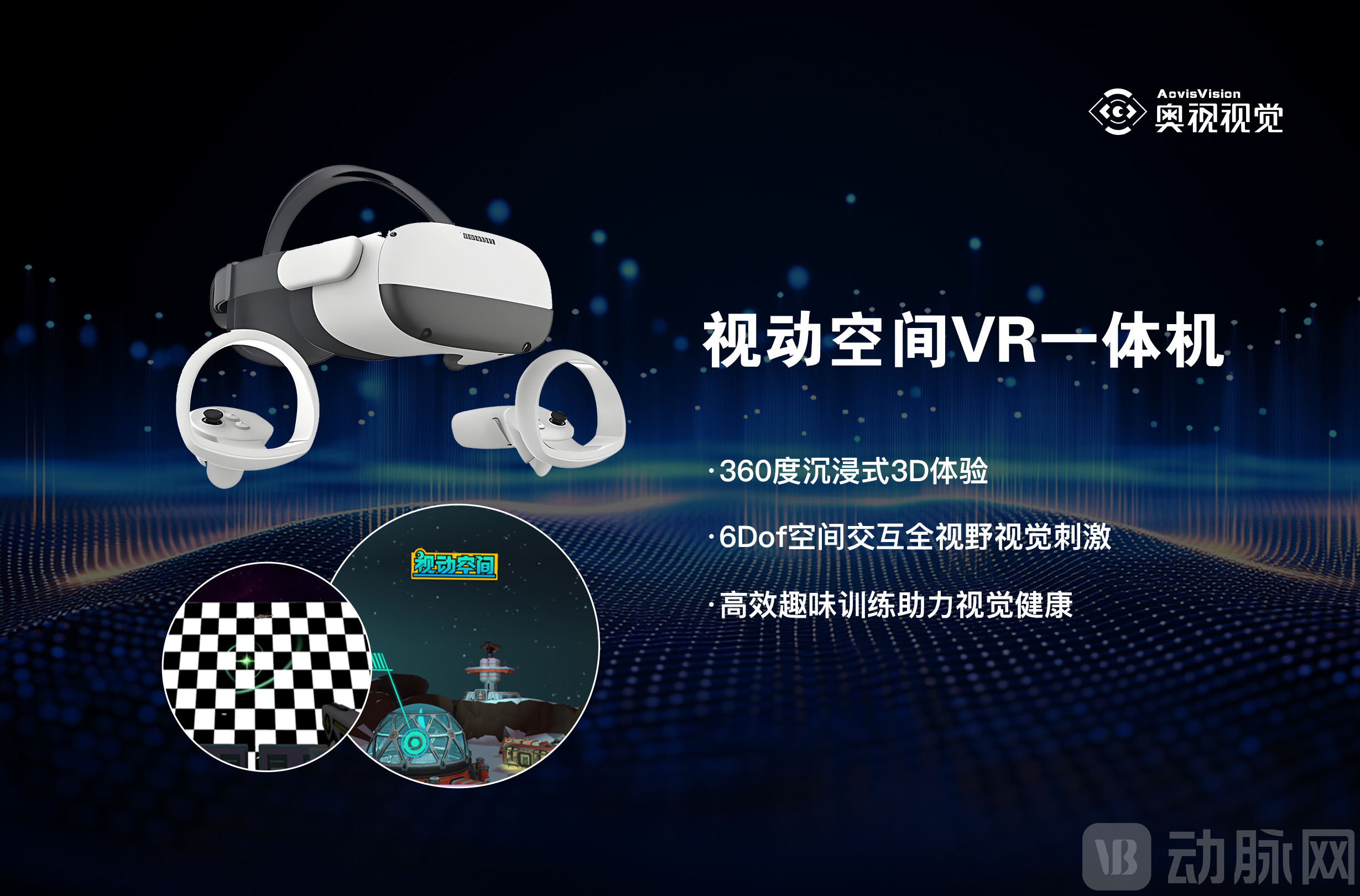
Aovis Vision - Visual Motion Space VR All-in-One Device
InStrabismusDiagnosis and Treatment PlanRegarding the clinically challenging intermittent exotropia, Aovis Vision transcends the limitations of traditional ocular alignment correction by implementing subtype-specific treatments based on brain visual perceptual function. This approach directly targets defects in visual central integration (including abnormalities in binocular-related cortical areas) in strabismus patients, promoting visual central remodeling through training and addressing the core pain point of “persistent cortical functional abnormalities despite corrected ocular alignment.”
TestingIn this regard, Aovis Vision’s strabismus diagnosis and treatment solution achieves pixel-level detection of perceptual eye position in both horizontal and vertical directions, with precision far exceeding the angular measurements of traditional synoptophores and prisms;TrainingIn terms of the protocol, the company adopts a “multi-task, multi-pathway” training model, with stereoscopic vision function as the core adjunct to ocular alignment correction. This approach simultaneously advances ocular alignment control, restoration of stereopsis, and improvement of comprehensive visual acuity metrics, thereby establishing a multidimensional synergistic training framework.
To address the instability associated with intermittent exotropia, Aovis Vision has also established a “Short-Term Plasticity Assessment System.” In the hospital setting, this system first evaluates the plasticity of patients’ visual functions through a 15-minute concentrated training session, and then precisely designs subsequent personalized treatment plans based on the assessment scores, ensuring targeted intervention.
In the Field of Amblyopia Treatment, traditional occlusion therapy focuses solely on activating the monocular visual pathway, neglecting the synergistic establishment of higher-order binocular visual pathways. This results in a failure to form effective central linkage between the fellow eye and the amblyopic eye. Aovis Vision breaks through this limitation by systematically activating visual signal pathways through personalized visual stimulation and visual learning, thereby enhancing patients' visual information processing capabilities. To achieve comprehensive intervention, Aovis Vision has constructedPhased Progressive Amblyopia Training System, with a focus on enhancing visual attention and higher-order visual cognitive functions, thereby comprehensively promoting the development of the visual cortex.
Its core breakthrough lies in the synergistic application of “neuroplasticity + multi-channel activation”: on one hand, it precisely activates visual signal pathways through biological stimulation methods such as gamma-band stimulation and flicker energy, laying the foundation for neural remodeling; on the other hand, it simultaneously addresses the two core pathways of the visual system—the dorsal stream, responsible for motion perception and spatial localization, and the ventral stream, responsible for static color recognition and fine shape discrimination—thereby achieving comprehensive pathway coverage. This intervention approach not only targets individual symptoms but also focuses on the complete chain of visual information processing, offering greater depth and breadth than training that relies solely on eye-movement feedback.
In the diagnosis and treatment plan for visual function impairmentAovis Vision has established a comprehensive cerebral visual perception assessment system, spanning from etiological classification and defect characterization to neural mechanism evaluation, thereby achieving precision and depth across the three core dimensions of etiological classification, defect characteristics, and neural mechanisms.
Leveraging this scientific assessment framework, Aovis Vision has developed an intelligently matched, personalized treatment protocol. The protocol employs a Long Short-Term Memory (LSTM) neural network to generate patient therapeutic progress curves, capturing performance data in real time during training sessions and dynamically adjusting training difficulty to ensure each patient remains within their optimal “learning zone” tailored to their individual capabilities. Concurrently, the company has established a proprietary expert system, wherein its core team of specialists iteratively refines the weighting of key parameters in the treatment protocol by integrating clinical practice with research findings, thereby continuously enhancing the protocol’s adaptability and efficacy. Furthermore, multi-platform integrated training optimization upholds the “activation-stabilization” intervention logic, enabling more precise personalized training and maximizing therapeutic outcomes.
On Dyslexia Diagnosis and Treatment Protocols, Aovis Vision has builtPrecise Assessment, Targeted Training, Closed-Loop Systemsuch core advantages. Traditional pediatric eye health assessments focus solely on whether “uncorrected/corrected visual acuity reaches 1.0,” overlooking the comprehensive capabilities of the visual system in supporting “continuous reading.” In contrast, Aovis Vision employs multidimensional, quantifiable, and digital testing to precisely pinpoint deficits in “brain-visual center” visual functions associated with reading disorders, thereby addressing the critical challenge of “identifying the underlying cause.”
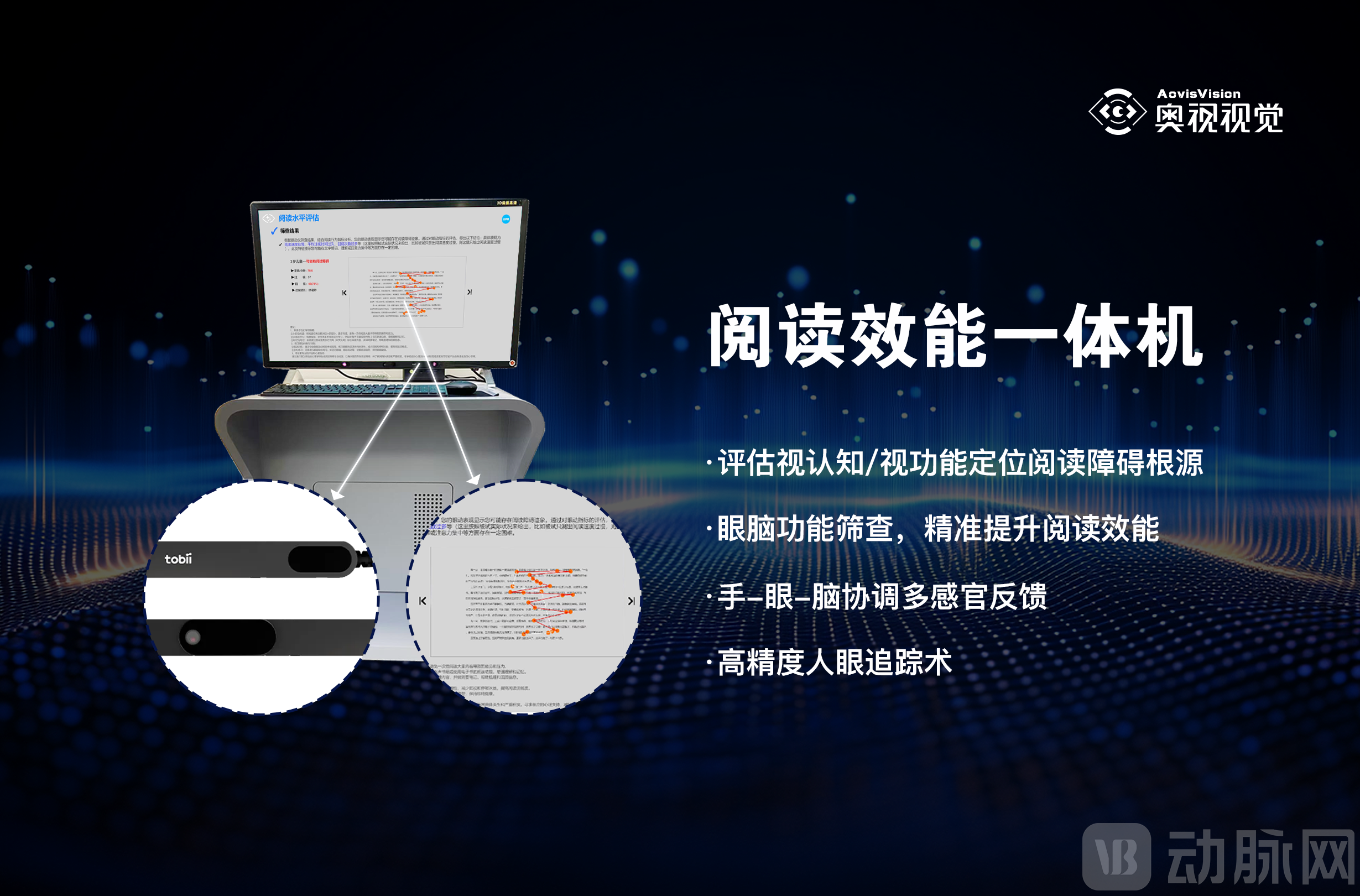
Aovis Vision - Reading Efficiency All-in-One Machine
In terms of training, Aovis Vision has designedScenario-Based, Disease-Specific, Multi-Platformtraining regimen that directly targets the core deficits in the “eye-brain-cognition” pathway, precisely matching training modules to “symptoms and underlying causes” to address the pain point of “ineffective training.”
The company adopts a dual-platform collaborative training model. It utilizes VR to conduct brain-based visual perception training (involving ocular alignment, stereopsis, and suppression elimination) to activate the adaptability of the visual system. Meanwhile, it employs computer-based functional training (covering fine stimulation, visual skills, as well as dimensions such as ocular alignment, stereopsis, and suppression elimination). Through hierarchical interaction, this approach achieves optimized improvements, thereby delivering twice the results with half the effort. Furthermore, addressing the common issues among children with dyslexia—such as “accommodation-convergence dysfunction,” “distance visual function deficits,” and “myopia-related visual fatigue”—Aovis Vision introduces AR technology. Leveraging its advantage of integrating virtual and real elements, it enables brain-based visual perception training that combines near and distance vision tasks.
By following the logic of “precisely identifying problems → providing targeted solutions → ensuring verifiable outcomes,” Aovis Vision has filled the gap between traditional eye health assessments and interventions for reading disorders.
3“SCI-Backed Clinical Rigor”: Building a Complete Visual Health Ecosystem
While some ophthalmic training products on the market currently emphasize “gamified fun,” Aovis Vision’s solution prioritizes “clinical rigor supported by scientific evidence (SCI),” as demonstrated across three key dimensions:
First,Upholding the Foundational Logic of Neuroscience. The product design is based on sophisticated algorithms for cerebral information processing, simulating signal input to the visual central pathways (including the dorsal and ventral streams) to achieve neuromodulation through neuroplasticity within the brain’s central closed-loop system. This specifically encompasses the research and application of technologies such as image filtering algorithms, high and low spatial frequencies, temporal frequencies, gradient noise, and Gaussian noise. Meanwhile, strictly adhering to neural adaptation models, all training programs are designed according to the neural adaptation laws and optimization pathways of the visual center, ensuring scientific rigor in training and avoiding indiscriminate visual stimulation;
Second, strongClinical Research and Scientific Support. Aovis Vision has launched eight multi-center clinical studies, encompassing both innovative research directions and clinical validation studies for traditional conditions such as amblyopia; meanwhile, backed by extensive scientific achievements, it further solidifies the scientific rigor of its clinical applications;
Third,Emphasis on High-Precision Feedback and Quantification. For example, in the trampoline component of gross motor training, precise quantification of movement data is achieved through high-precision sensors to prevent aimless exercises; the assessment phase also incorporates infrared distance sensing technology, enabling accurate detection at near, medium, and far ranges, thereby enhancing evaluation accuracy.
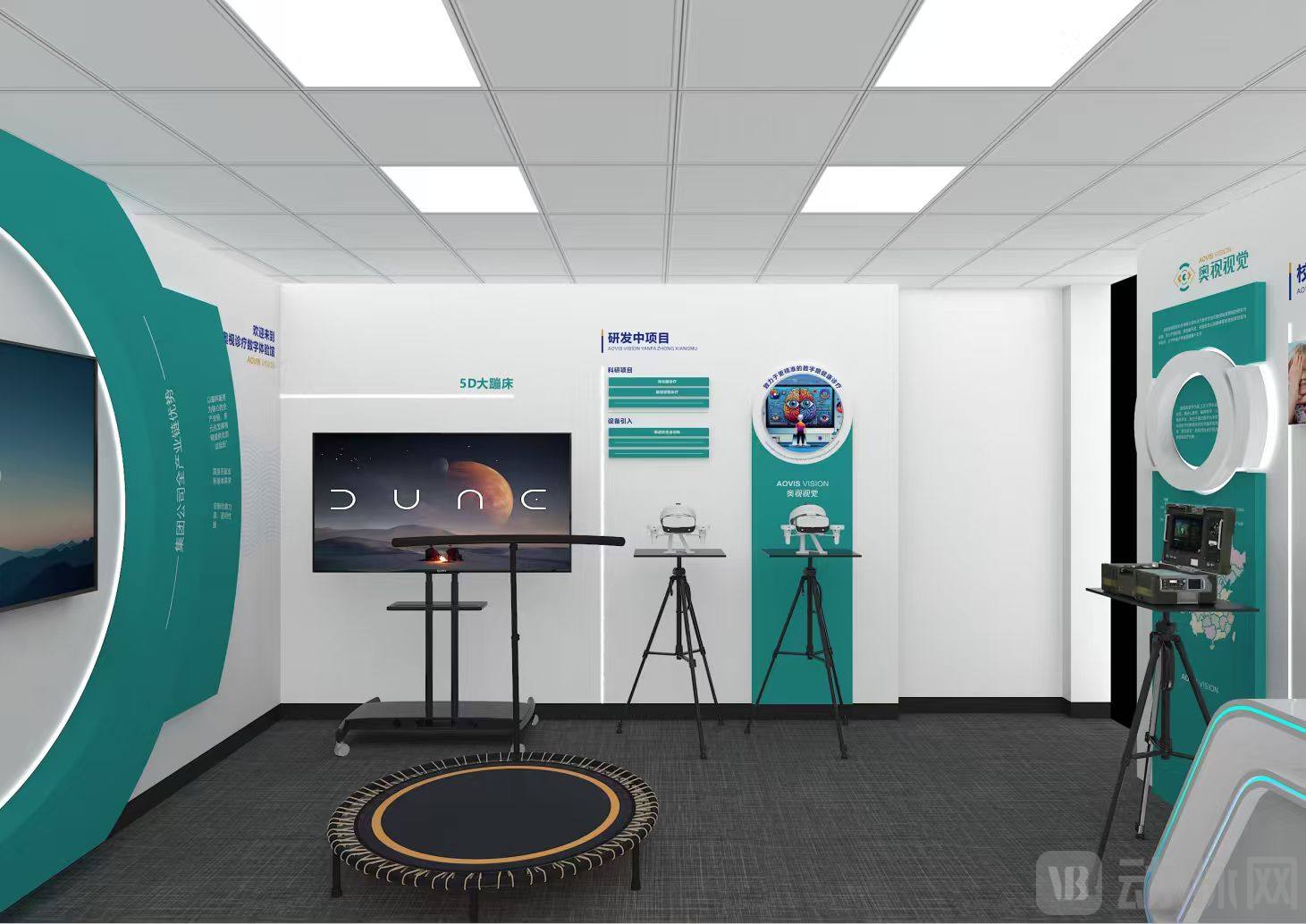
Aovis Vision Product Display
Meanwhile, to achieve a balance between functionality and engagement, Aovis Vision adopts a serious game (functional game) approach on one hand, deeply integrating traditional gaming formats with its own scientific therapeutic mechanisms to align with the acceptance habits of pediatric users. On the other hand, it employs more efficient serious medical design and personalized matching solutions tailored to individual needs (“one size fits one”), thereby shortening training duration and significantly enhancing children’s motivation and adherence to training.
To address the pain points of competing products on the market—namely, being trained solely on clinical examinations, lacking closed-loop systems, and insufficient physician involvement in iteration—as well as the current challenges physicians face in clinical practice, such as the difficulty in shifting traditional examination habits and the complexities of multidisciplinary adaptation, Aovis Vision leverages its deep collaborative foundation with top ophthalmologists in China. By implementing multi-dimensional mechanisms to ensure substantial physician engagement, Aovis Vision has established a clear process where clinical feedback drives product adjustments.
Chu Hang believes that over the next five years, development in the field of brain-based visual perception will primarily focus on highly intelligent and personalized solutions, multimodal integration and full-scenario coverage, a shift from treatment to prevention and early intervention, the combination of evidence-based medicine with real-world data, deep integration with brain science, and the maturation of serious gaming systems for medical products.
In this context, Aovis Vision will continue to deepen the standardization, intelligence, and systematization of its products to meet the core demands of rapid business expansion. The company will further advance its digital footprint in the field of visual perception, constructing a deeply integrated closed-loop system encompassing visual function, visual cognition, and visual behavior. This aims to accelerate the practical application of related technologies in the short term and lower barriers to adoption. Furthermore, Aovis Vision plans to expand its business presence into additional ophthalmic disease areas, including post-cataract surgery and post-refractive surgery care. It will also address visual health needs associated with the aging “silver economy” and intervene in widely prevalent reading and learning difficulties, thereby building a comprehensive visual health ecosystem and establishing itself as a leader in AI-assisted digital therapeutics.
Currently, Aovis Vision is seeking partnerships in distributor networks, investment and establishment in other provinces, and overseas expansion. If you are interested in Aovis Vision and its product solutions, please contact us: