Dehe Medical: Pioneering Micro-Oxygen Technology for Chronic Wound Care with 90% Cost Reduction vs. Competitors

DEHE MEDICAL
Medical Device R&D, Production, and Sales Company
Chronic wounds, such as diabetic foot ulcers, pressure injuries, and traumatic non-healing wounds, have long posed significant challenges in clinical diagnosis and treatment. The prolonged healing process not only causes persistent physical and psychological suffering for patients but also imposes a substantial financial burden on families and society due to the high costs associated with long-term care.
In traditional treatment pathways, although topical oxygen therapy has been proven to have a positive effect on wound healing, its widespread adoption in both clinical and home-care settings has been hindered by technical bottlenecks. These include difficulties in precisely regulating oxygen concentration and flow rates, bulky equipment that relies on professional environments, and the prohibitively high cost of imported devices. Consequently, a significant gap has long persisted in the market for topical oxygen therapy for chronic wounds.
It is against this industry backdrop that Jiangxi Dehe Medical Device Co., Ltd. (hereinafter referred to as “DEHE MEDICAL”) was established. It is an innovative high-tech enterprise integrating the research and development, manufacturing, and sales of high-end medical devices.Dedicated to the development and application of micro-oxygen technology in chronic wound care and the broader health and wellness sector.

1Pioneering China’s First Micro-Oxygen Technology to Fill the Market Gap in Topical Oxygen Therapy for Chronic Wounds
Zhang Xiaobo has long been deeply engaged in the pharmaceutical and healthcare sector of Yongfeng, Jiangxi, accumulating solid industry experience. He noted that Yongfeng County in Ji’an City, Jiangxi Province, known as a “leading pharmaceutical county in Jiangnan,” has formed a unique matrix of development conditions in the pharmaceutical industry thanks to the synergistic effects of multidimensional advantages such as policy innovation, resource endowments, industrial ecosystem, and technological innovation, thereby providing fertile ground for healthcare entrepreneurs. In 2019, Zhang Xiaobo founded DEHE MEDICAL, establishing its headquarters in this region. Since its inception, DEHE MEDICAL has been committed to the in-depth research and development and practical application of micro-oxygen technology, transforming its technical features into implementable health products and services, with strategic layouts in the fields of wound repair and general wellness.
In exploring these two major fields, the DEHE MEDICAL team initially focused on wound repair—particularly the challenge of chronic wound healing commonly encountered in clinical practice. The team recognized that to unlock the true value of micro-oxygen technology in this domain, it was essential to first clearly deconstruct the core mechanisms of wound healing and identify the key targets for technological breakthroughs.
“Wound healing is a complex physiological process involving multiple stages, including inflammatory response, cell proliferation, and tissue repair, with its outcomes influenced by a combination of various factors. However, from the perspective of the core mechanisms of wound healing, oxygen supply is a crucial key element.” Zhang Xiaobo introduced that after a wound forms, local blood vessels may rupture or suffer functional impairment, leading to impaired oxygen delivery to the wound area, andOxygen is precisely an indispensable supporting condition in the wound healing process, as it not only provides energy for the metabolism and proliferation of local cells at the wound site but also participates in regulating inflammatory responses and promoting tissue regeneration and repair.
Micro-oxygen technology leverages this principle. As an innovative oxygen therapy technique targeting local tissue hypoxia,Micro-oxygenation Technology Overcomes the Limitations of Traditional Oxygen Therapy by Precisely Regulating the Pressure, Concentration, and Delivery Mode of Oxygen, Thereby Achieving Targeted Oxygen Support for Damaged Tissues. Therefore, compared with other adjunctive wound therapies, micro-oxygen technology can more efficiently address the issue of insufficient oxygen supply to wounds, playing a more unique and critical role in promoting efficient wound healing.
According to Zhang Xiaobo, the penetration and adoption rate of micro-oxygen technology in the domestic market is currently low, leaving a significant market gap.DEHE MEDICAL, in collaboration with Shanghai Jiao Tong University, pioneered China’s first micro-oxygenation technology and has become one of the four major global manufacturers in this field.
DEHE MEDICAL is committed to promoting the systematic understanding and market education of micro-oxygen technology. Meanwhile, the company focuses on building technical barriers and protecting intellectual property rights. It has obtained more than 50 intellectual property rights and accumulated hundreds of literature studies both domestically and internationally, effectively avoiding risks such as intellectual property infringement and product counterfeiting, thereby ensuring the stability of its technological advantages and market competitiveness.
2Oxygen flow performance surpasses that of foreign competitors, with pricing reduced to one-tenth of theirs.
Based on its fuel cell-based oxygen generation technology platform, DEHE MEDICAL has developed a novel wound therapy device—the Wound Oxygen Therapy Device. Leveraging electrochemical principles, this product converts low-concentration oxygen from ambient air into a micro-flow, high-concentration oxygen stream. It continuously delivers oxygen to wound tissues via sustained drip-like permeation, establishing tissue oxygen partial pressure at the wound surface. When used in conjunction with medical dressings, it promotes wound healing.
“The key to micro-oxygenation technology lies in the word ‘micro,’” Zhang Xiaobo explained, noting that its flow rate is extremely low and it is delivered in a manner similar to an intravenous drip.It not only maintains the moist healing environment of the wound but also provides a high-concentration oxygen environment that accelerates healing, combats infection, and reduces inflammation and pain, effectively establishing a portable local oxygen chamber at the wound site.Meanwhile, DEHE MEDICAL has also optimized the device for home use by switching from battery power to rechargeable power, reducing its size so as not to interfere with patients’ daily activities during use, and implementing a “one-touch start” feature that makes it more suitable for elderly users at home.
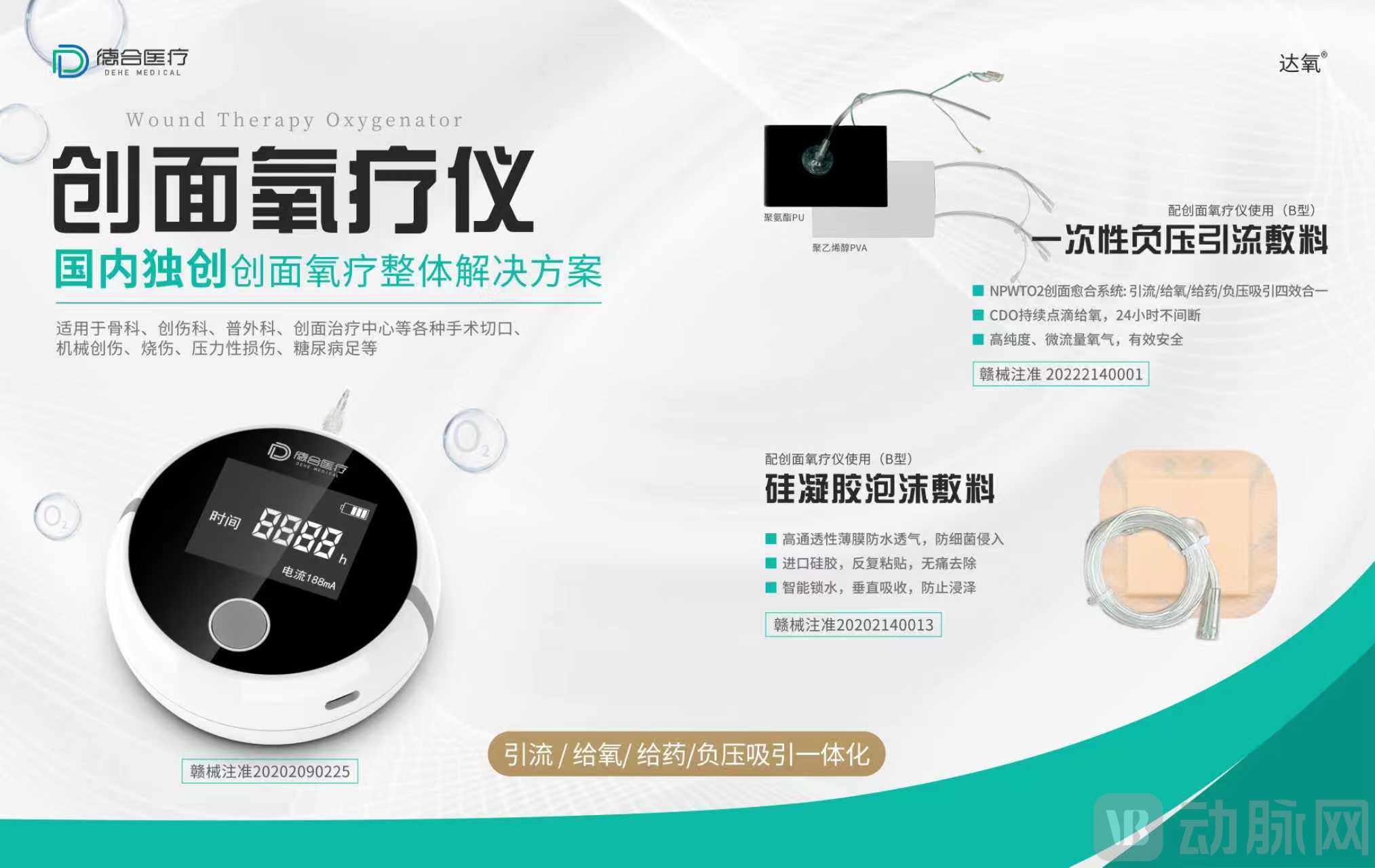
DEHE MEDICAL Wound Oxygen Therapy Device
Currently, the company has achieved breakthrough progress in the core component of fuel cell oxygen generation technology—the “oxygen-generating chip”: previously, DEHE MEDICAL’s oxygen-generating chips were primarily sourced from external suppliers; now,The company has established an independent production system, achieving self-controlled manufacturing of oxygen-generating chips through its proprietary spray coating technology and the addition of multiple sets of specialized equipment.
Leveraging its self-developed oxygen-generating chip, DEHE MEDICAL’s wound oxygen therapy device demonstrates dual advantages in core performance and cost control:
First,Oxygen flow performance is superior to that of similar foreign competing products. According to Zhang Xiaobo, similar competing products typically maintain an hourly oxygen output of only 3–10 mL, whereas DEHE MEDICAL’s products can consistently deliver over 20 mL per hour, demonstrating a significant advantage in oxygen delivery efficiency and enabling more personalized and precise titration based on the wound’s oxygen requirements; secondly,In-house development of core components has also given the product a significant cost advantage.. According to Zhang Xiaobo, the company’s wound oxygen therapy devices are priced at only one-tenth that of overseas competitors.
It is reported that DEHE MEDICAL’s wound oxygen therapy device has undergone clinical validation in multiple hospitals. In one study, 73 patients with traumatic wounds admitted to the General Hospital of the Eastern Theater Command were enrolled and assigned by complete randomization to a trial group (n=36, no dropouts) and a control group (n=37, with 2 dropouts, resulting in 35 completers). The trial group received treatment with a portable local micro-oxygen therapy device plus standard moist wound therapy, while the control group received standard moist wound therapy alone.
The results showed that the wound area reduction rate in the experimental group after 28 days of intervention was greater than that in the control group [(88.06±11.74)% vs (79.17±18.79)%, P=0.018], the healing rate was higher than that in the control group (41.67% vs 20.0%, P=0.048), and the healing score was significantly lower than that in the control group [(3.33±2.73) points vs (5.05±3.40) points, P=0.02]. At the 12-week follow-up, the healing rates in the experimental and control groups were similar (100% vs 94.29%, P=0.146). The healing time was significantly shorter than that in the control group [(34.81±13.31) days vs (42.74±17.40) days, P=0.034].
The trial results demonstrate that,Portable Localized Micro-Oxygen Therapy Device Promotes Healing of Traumatic Chronic Wounds, Improves Short-Term (28-Day) Healing Rates, and Reduces Total Healing Time. With its portability and stable parameters, the device is suitable for out-of-hospital and home-based care, offering new insights for the management of combat-related wounds in military medicine, where convenient and efficient treatment is essential.
According to Zhang Xiaobo, the wound oxygen therapy device has already been put into use at renowned hospitals such as Union Hospital affiliated to Tongji Medical College of Huazhong University of Science and Technology, Qilu Hospital of Shandong University, Shandong Provincial Hospital, Ruijin Hospital affiliated to Shanghai Jiao Tong University School of Medicine, and Sun Yat-sen Memorial Hospital of Sun Yat-sen University.Currently, it covers more than 200 Grade A tertiary hospitals.
3Creating an Integrated Solution for "Acute and Chronic Wound Healing + Sub-Health Wellness and Physiotherapy"
“As the emphasis on health and awareness of health management have significantly increased, public attention to personal health status has extended from basic medical needs to preventive healthcare and wellness conditioning,” said Zhang Xiaobo. In response to this market trend, the company has expanded the application scenarios of micro-oxygen technology into the fields of health care and wellness products. Since 2022, the company has been building its product portfolio in the broader health sector, creating an integrated solution for “acute and chronic wound healing + sub-health healthcare and physiotherapy.”
“Although wound repair is one of the important application scenarios for micro-oxygen technology, we are not limited to this. Instead, we plan to expand its use to more efficient oxygen absorption pathways in the human body,” said Zhang Xiaobo. This is also the core strategic direction for DEHE MEDICAL to deepen technological applications and unlock greater value—Focusing on the development of "targeted, site-specific" oxygen absorption channels, micro-oxygen technology is directly applied to specific pathways in the human body with high oxygen absorption efficiency, breaking through the bottlenecks of traditional oxygen inhalation methods and achieving more precise and efficient oxygen supplementation.
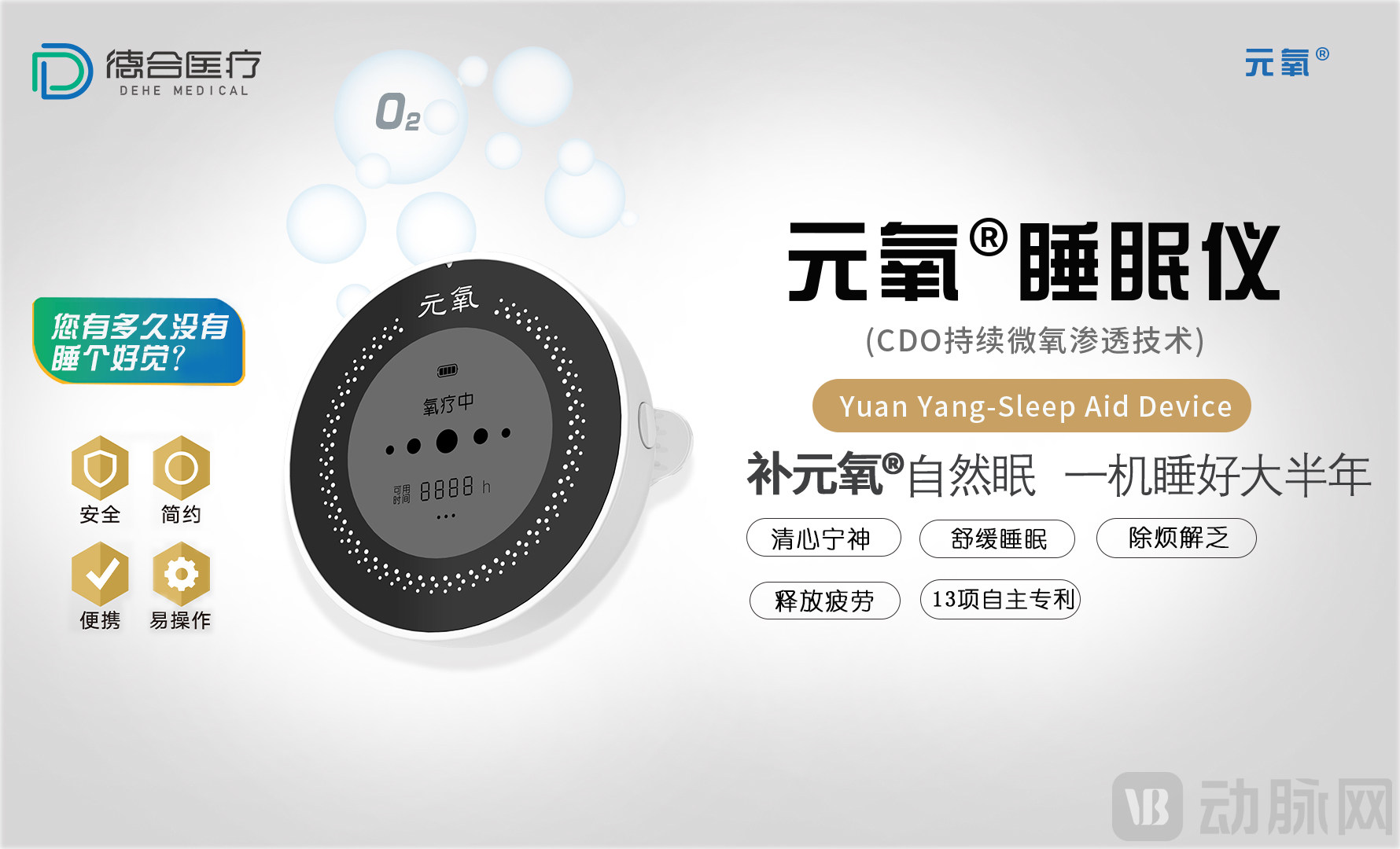
DEHE MEDICAL Yuan Oxygen Sleep Device
Currently, DEHE MEDICAL has established the "Yuanyang Health and Wellness Series" product line, which includes products such as the Yuanyang Umbilical Oxygen Device and the Yuanyang Sleep Aid Device. Among these, the Yuanyang Umbilical Oxygen Device is specifically designed for the human navel (known as the "Shenque Acupoint" in Traditional Chinese Medicine). By integrating micro-oxygen technology with the physiological characteristics of the Shenque Acupoint, it helps replenish the body's vital energy (Yuan Qi), thereby serving daily health maintenance and wellness purposes.
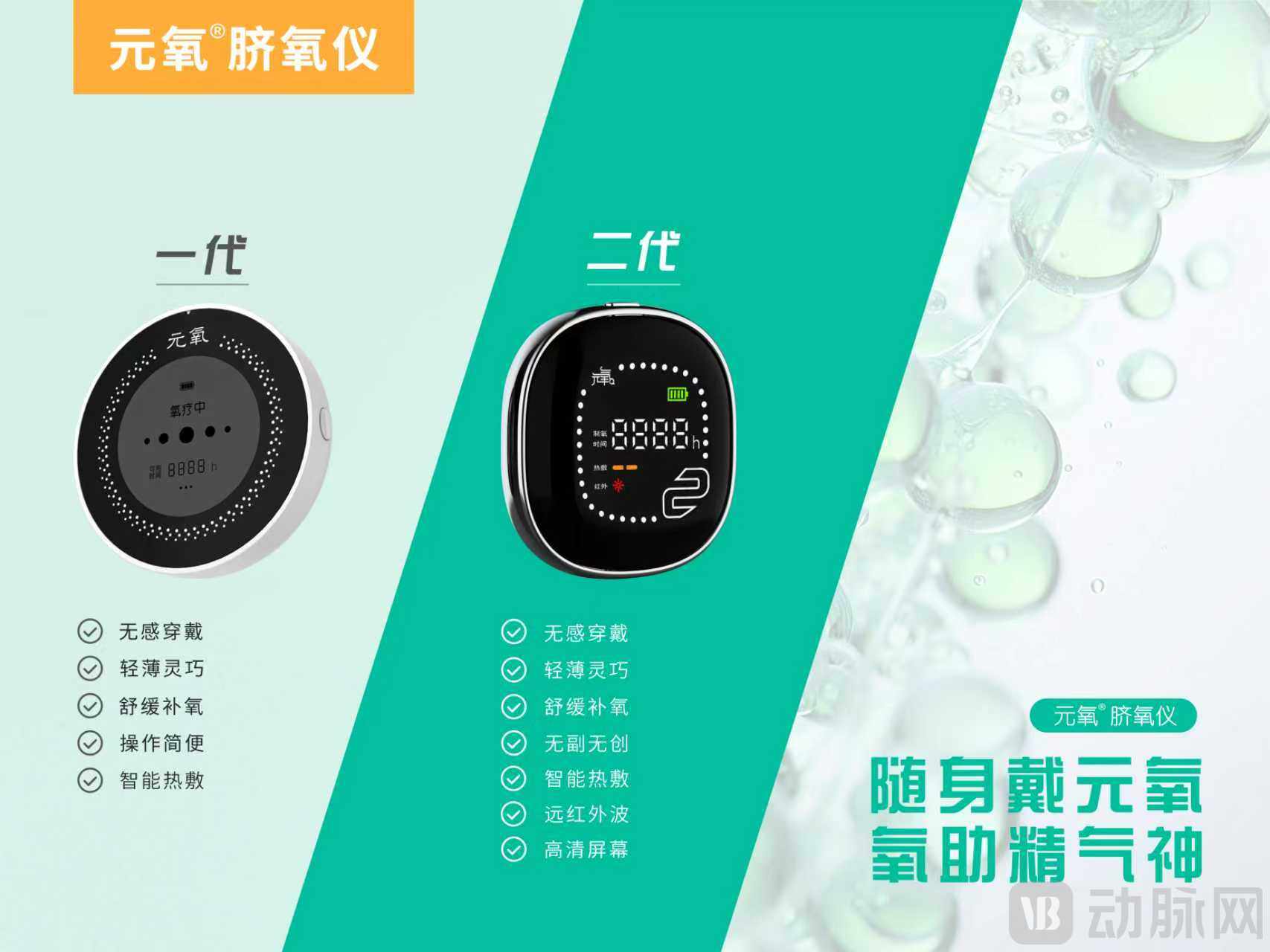
DEHE MEDICAL Yuan Yang Umbilical Oxygen Therapy Device
Moving forward, DEHE MEDICAL will continue to deepen the development and application of micro-oxygen technology, focusing on the research and development of portable home-use devices, dedicated to “making micro-oxygen a healthy lifestyle.”
Currently, DEHE MEDICAL has needs for connections in financing and investment, distributors, and overseas expansion. If you are interested in DEHE MEDICAL and its product solutions, please contact us: