

Where Is the Next Chapter of China's Medical Cloud Imaging Transformation Headed?
No Need to Run for Films—Just as the “King of Film” fell in the digital era, the medical imaging industry is also “de-filming” under the sweeping wave of digitization, accelerating its transition into its own “cloud” era.
Especially against the backdrop of healthcare insurance cost containment, the waste of medical resources caused by redundant examinations has become a focal point of public concern, while the shortage of personnel in primary-care radiology departments has become increasingly pronounced. These issues collectively highlight the market’s urgent demand for “cloud imaging” technology. In this context, what development opportunities are emerging within the industry? What challenges does the industry face amid its rapid growth? What commercialization paths have leading-tier companies pursued? And what are the future trends of the medical cloud imaging sector, and where lie its key inflection points for explosive growth?
To explore the answers to the aforementioned questions and build industry consensus,(Fudan University) Shanghai Institute of Medical Imaging, China Information Association Medical and Health Industry Branch, Shangpu Consulting Group, VCBeatSeizing the momentum, jointly released at the inaugural Medical Artificial Intelligence Conference (MAIC 1st 2025)《2025 China Medical Cloud Imaging Industry White Paper》。
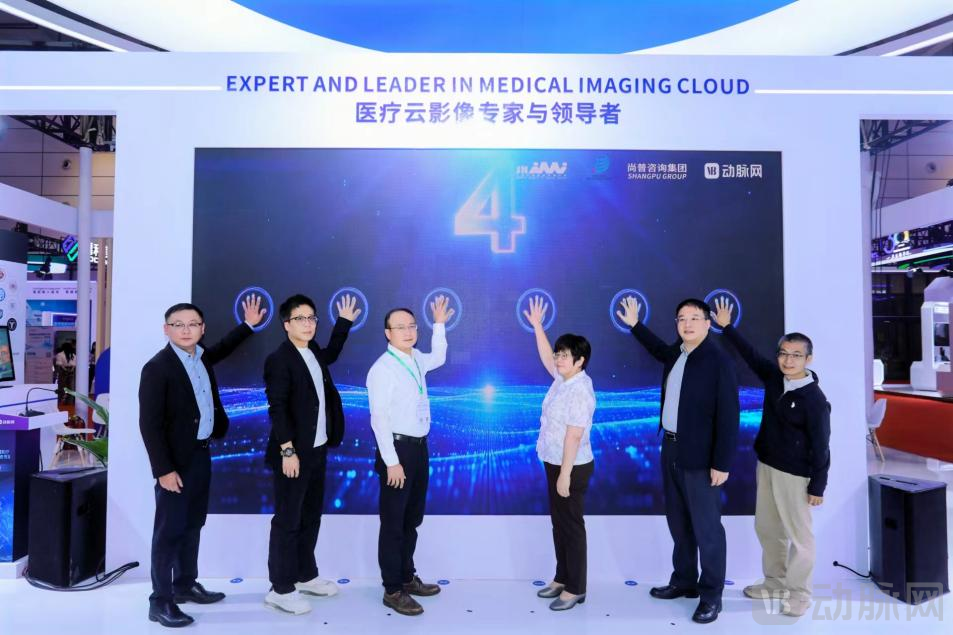
"White Paper on China's Medical Cloud Imaging Industry 2025" Launch Ceremony
From left to right are: Cao Jie, Partner at Champ Consulting Group; Zhang Kang, Director of the Development Department at the Shanghai Institute of Medical Imaging (Fudan University); Hu Bo, Deputy Secretary of the Party Leadership Group and Deputy Director of the Jinan Municipal Health Commission; Zhang Xuejun, Secretary of the Party Committee of the School of Medical Technology at Tianjin Medical University; Song Xin, President of the Healthcare and Health Industry Branch of the China Information Association; and Li Datao, Chairman of VCBeat.
Under the collaborative mechanism of “industry, academia, research, and healthcare,” the *2025 China Medical Cloud Imaging Industry White Paper* systematically reviews the economic support, policy orientation, technological evolution, and market demand of China’s medical cloud imaging industry. It provides an in-depth analysis of the current state of the industry, its application value, and typical case studies, aiming to leverage authoritative industry insights to promote the implementation of medical cloud imaging technologies and the construction of an industrial ecosystem, thereby injecting new momentum into the high-quality development of the medical imaging sector.
At the press conference,Cao Jie, Partner at Shangpu Consulting GroupHe provided an in-depth interpretation of the white paper for attending guests and the audience. He emphasized, “Cloud imaging is a key enabler for empowering grassroots healthcare and achieving balanced allocation of medical resources. In light of future trends toward intelligence, full-scenario integration, and platformization, enterprises should actively seize the opportunities brought by deep AI empowerment, complete the strategic transformation from product providers to service operators, strengthen technological innovation and ecosystem collaboration, ensure service compliance and data security, and work with all sectors of the industry to co-create a new era of inclusive healthcare.”
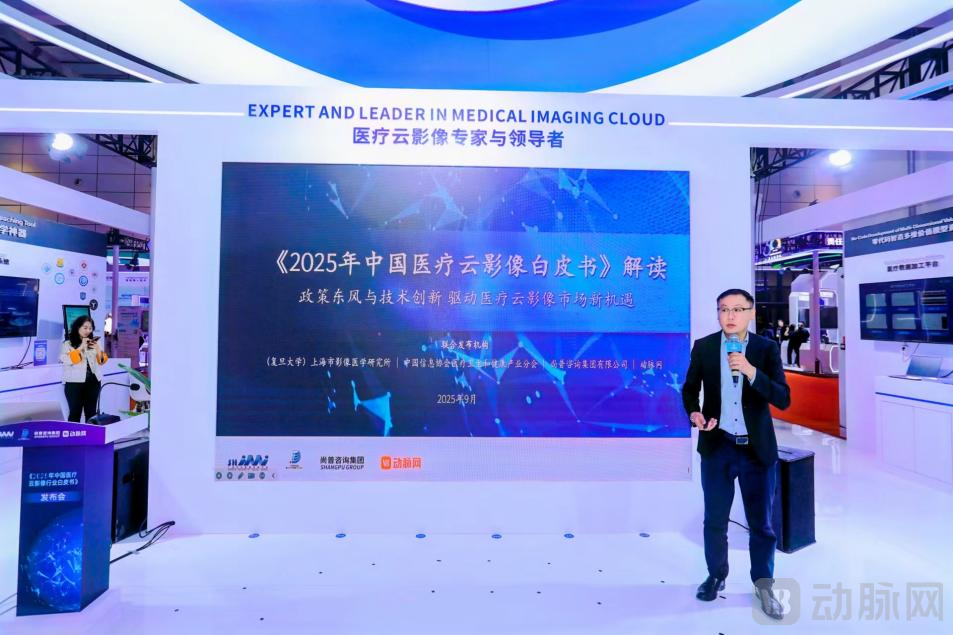
Cao Jie, Partner at Shanpu Consulting Group
To further deepen industry insights, the subsequent roundtable discussion invited five representative guests from academia, industry, research, and healthcare:Zhang Xuejun, Secretary of the Party Committee of the School of Medical Technology at Tianjin Medical University; Zhang Kang, Director of the Development Department of the Shanghai Institute of Medical Imaging (Fudan University); Song Xin, President of the Healthcare and Health Industry Branch of the China Information Association; Cao Jie, Partner at Shangpu Consulting Group; Yu Wenshui, Director of the Information Department of Jinan Third People's Hospital, centered around "Ecological Integration and Value Deepening:a dialogue on the theme of “Innovative Development Pathways for Medical Cloud Imaging.”
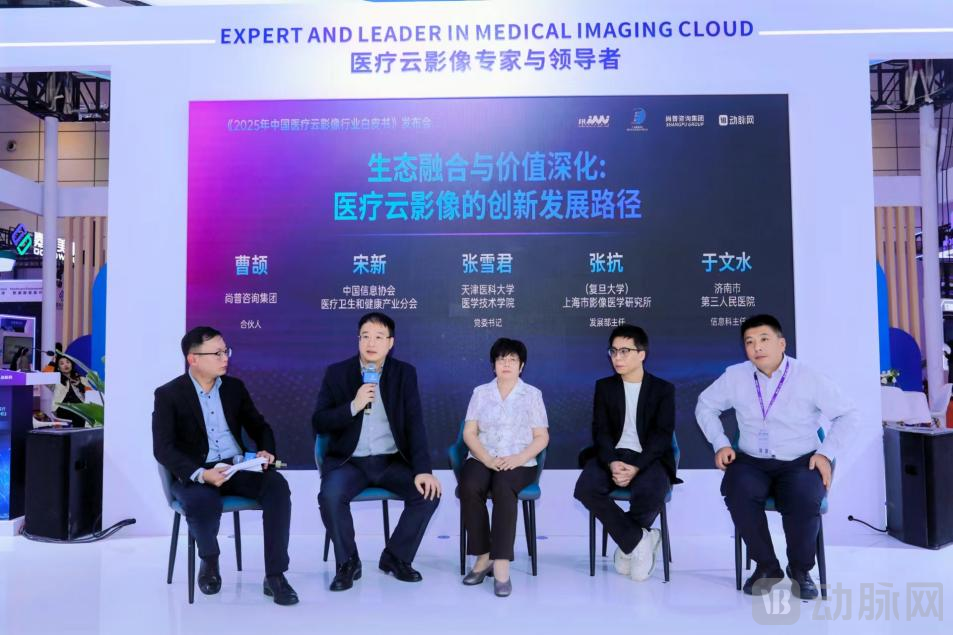
Roundtable Discussion
The guests unanimously agreed that,Medical cloud imaging has evolved from basic data storage to a new phase centered on data elementization and value extraction, demonstrating significant potential in clinical decision support, refined hospital management, and multi-center research.Faced with challenges such as data integration, security and compliance, and a shortage of interdisciplinary talent, experts emphasize the need for a multi-pronged approach—deepening collaboration among industry, academia, research, and healthcare institutions, breaking down barriers related to clinical trust and payment mechanisms, and jointly creating a new industry landscape that is safe, open, and innovative.
As an in-depth research report resulting from months of investigation, the “2025 White Paper on China’s Medical Cloud Imaging Industry” has specially invited more than twenty experts from major hospitals across China and the field of data science to serve as members of its advisory committee., ensuring the white paper’s professionalism, forward-looking perspective, and practicality through rigorous review and authoritative support. VCBeat has distilled four key insights from the 60,000-word document, aiming to provide decision-making references—from strategic planning to implementation—for experts and scholars, policymakers, entrepreneurs, and investors both within and outside the industry.
01 Empowering Grassroots Healthcare: High-Quality Diagnostic and Treatment Resources at Your Fingertips via the Cloud
Over the past five years, the number of primary healthcare institutions in China has continued to grow, with the growth rate in 2023 basically on par with that of hospitals. However, the proportion of medical devices valued at over RMB 10,000 accounts for only 11.5%, indicating a significant gap compared to higher-level hospitals. Meanwhile, the annual growth rate of radiologists (4%) is far lower than the growth rate of imaging examinations (30%). This suggests that primary care facilities are not only facing the need to expand coverage and enhance service capabilities, but also grappling with a dual shortage of equipment and personnel, which further exacerbates resource constraints and hinders improvements in diagnostic and treatment efficiency and quality.
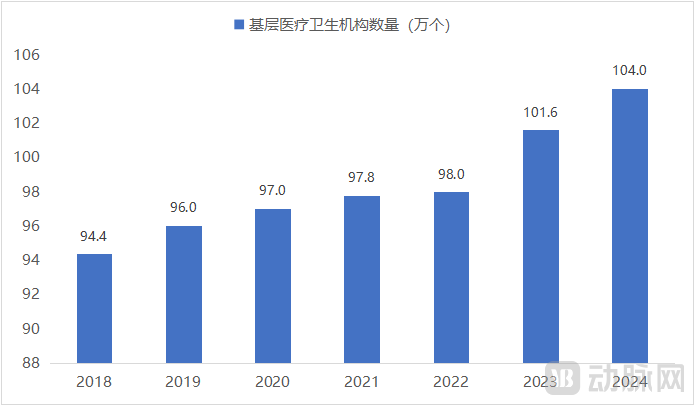
Number of Primary Healthcare Institutions (2018–2024) (10,000 units)
Amid the dual pressures of resource imbalance and surging demand, cloud-based medical imaging services have become a crucial means to address the shortage of primary healthcare resources and enhance diagnostic and treatment efficiency and quality, leveraging their advantages in convenience, efficiency, and cost-effectiveness.
Medical Cloud Imaging is the product of deep integration between technologies such as cloud computing and medical imaging systems. On one hand, cloud imaging enables tertiary hospitals to support primary care institutions through remote diagnosis and consultation via cloud-based storage and transmission technologies. On the other hand, its cloud film service reduces medical data storage costs, significantly alleviating the financial burden on primary care institutions and allowing them to deliver healthcare services more efficiently despite limited resources.
Furthermore, in optimizing diagnostic and treatment quality, cloud imaging helps reduce the rate of missed diagnoses by integrating AI-assisted diagnostic technologies. Meanwhile, through remote quality control and multidisciplinary team (MDT) consultation mechanisms, it enables senior experts to provide real-time guidance and quality supervision to grassroots medical institutions. In the future, as the imbalance in the distribution of medical resources is gradually addressed, cloud imaging will be applied and promoted across broader regions, meeting the healthcare needs of more patients.
02 Cloud Imaging: Not Just Migrating Images to the Cloud, but Ecosystem Restructuring
The medical cloud imaging industry chain differs significantly from the traditional medical imaging industry chain. From upstream infrastructure and technical support, to midstream service provision and platform development, and finally to downstream application scenarios and end users, all segments have achieved tighter integration through “cloud-based” transformation.
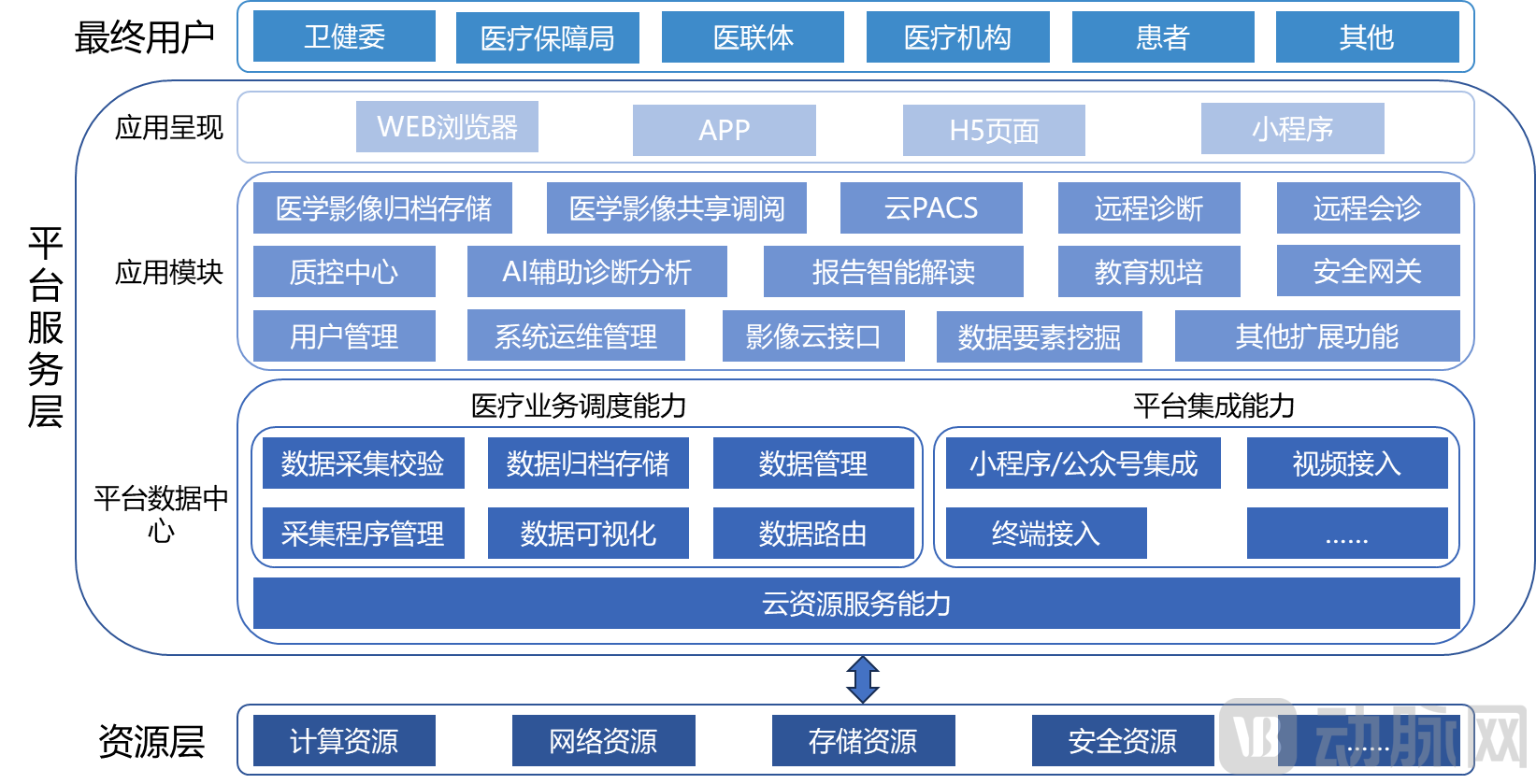
Overall Architecture of the Medical Cloud Imaging Platform
As the core vehicle for healthcare informatization and digital transformation, cloud imaging has transcended its role as a mere diagnostic aid, evolving into an intelligent platform that spans the entire care continuum and connects all stakeholders in the patient-provider relationship. By leveraging data flow as the linking mechanism, it establishes a new paradigm of collaborative, patient-centered care. In practical applications, cloud imaging is demonstrating trends toward diversification, intelligence, and personalization, tailored to the core needs of different user groups.
Therefore, medical cloud imaging is by no means a mere technological upgrade, but a critical infrastructure for reshaping the healthcare ecosystem. Its ultimate goal is to achieve centralized management and efficient utilization of medical imaging resources, thereby driving the entire healthcare industry toward digitalization and intelligence.
03 “Data-Driven, Medical Consortium-Led” Path to Industrial Transformation
From the disordered emergence in the 1980s to the orderly development led by national top-level design, China’s medical cloud imaging industry is entering a critical stage of coordinated evolution among policy, technology, market, and ecosystem.
In this process, data has undergone a role transformation from a “passive storage object” to an “active value engine” that drives clinical practice, scientific research, management, and industrial development. With the continuous integration of new technologies such as AI, data elements will become a key force driving the evolution of the healthcare sector toward “precision, intelligence, and inclusivity,” leading the industry fully into a new era of data-driven development.
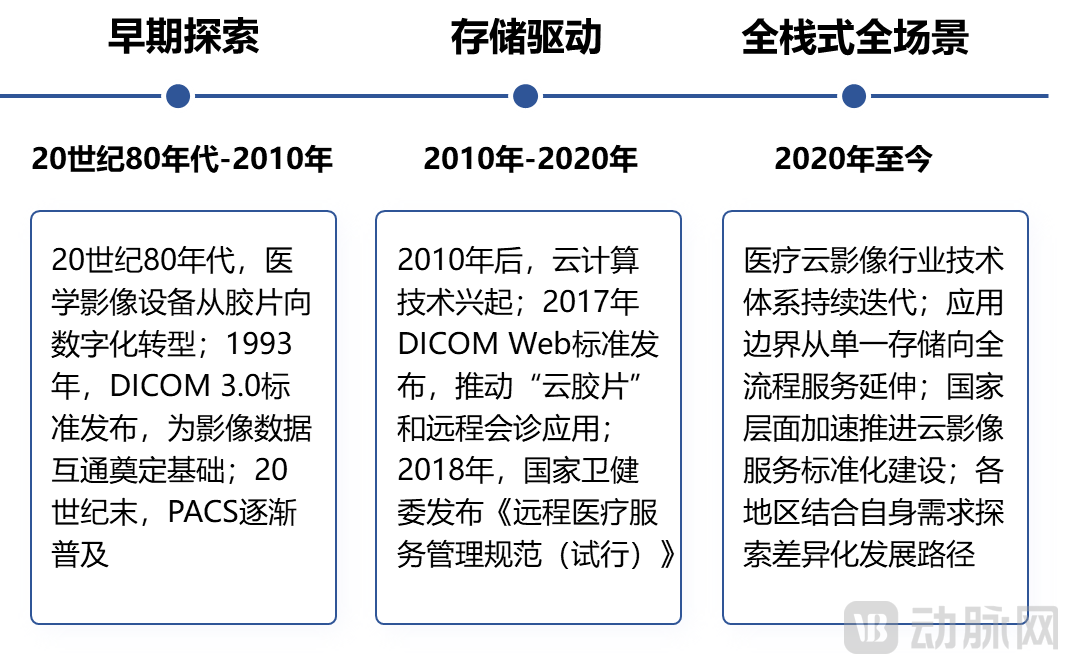
Development Stages of Medical Cloud Imaging Solutions
Under this trend, medical cloud imaging will usher in Version 2.0, characterized by the deep integration and application of data elements, namely “Cloud Imaging Based on Data Elements.” Meanwhile, medical consortia, as key vehicles for implementing tiered diagnosis and treatment and integrating grassroots resources, provide core application scenarios and broad practical space for this new platform.
Leveraging cloud-based imaging platforms, real-time sharing of imaging data, remote consultations, and two-way referrals can be achieved across multiple hospital campuses and medical consortia, addressing pain points such as low cross-institutional collaboration efficiency and “data silos.” In the future, the widespread adoption of technologies like 5G and blockchain will further drive the industry’s upgrade from “single-point applications” to “network-wide collaboration.” Moreover, the continuous improvement of supporting measures, including standardized operation of grassroots equipment and mutual recognition of examination results, will further unlock the market potential of medical consortium development, providing solid support for the industry’s long-term growth.
04 Breaking Through with Value: Winning the “Summit Battle” with Full-Stack Capabilities
Currently, the overall market concentration of China's medical cloud imaging industry is relatively high, but the long-tail effect is significant, presenting a clearly stratified competitive landscape with a "pyramid-shaped" industry structure.— Leading enterprises have established barriers by setting technical standards and providing services at scale, capturing nearly half of the market share; companies in the third tier mostly focus on regional markets or niche segments, possessing a certain scale and business influence, yet the market remains highly fragmented.
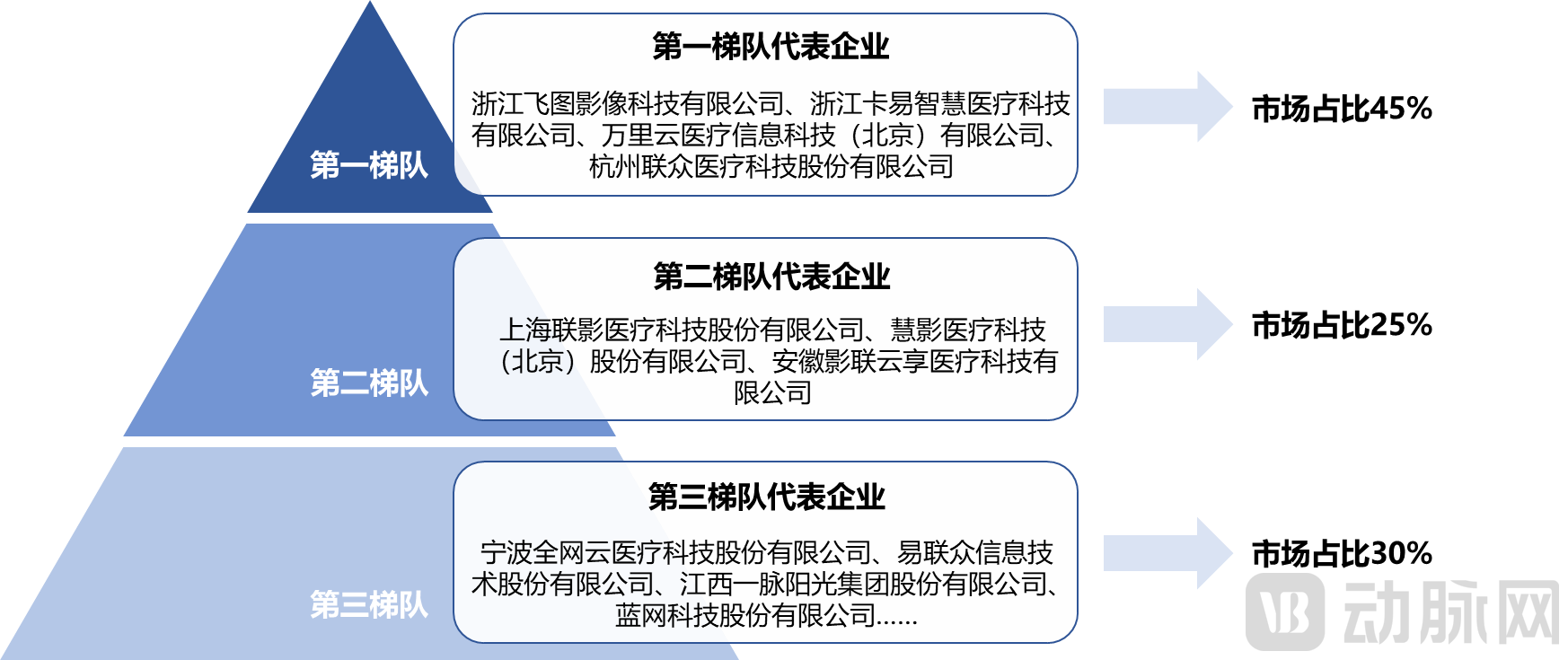
2024 Competitive Landscape of China's Medical Cloud Imaging Industry
This indicates that in the short to medium term, storage demand will remain the primary driver of market growth, while the need for interoperability and mutual recognition of examination and test results will become the main growth engine for the regional healthcare market. However, the market size for data storage itself is limited, and industry profit margins are gradually narrowing amid intensifying competition. Meanwhile, user demands continue to upgrade, expanding steadily toward full-stack and all-scenario solutions.
These ongoing changes are compelling vendors to actively explore new avenues for secondary growth—shifting from competition based solely on technology or products to comprehensive competition encompassing full-stack capabilities, ecosystem development, and regulatory compliance. In the future, vendors with full-stack capabilities will gain an advantage in the “battle at the pinnacle,” enhancing their market competitiveness by building open ecosystems, innovating business models, and strengthening compliance frameworks.
Undoubtedly, as the medical cloud imaging industry experiences rapid growth, it also faces severe challenges of “involution” and “homogenization.” Against this backdrop, the *White Paper on China’s Medical Cloud Imaging Industry 2025*, building on core insights, systematically reviews and interprets innovative practices and typical cases in the domestic market, offering a referenceable “Chinese solution” for the industry’s sustainable development.
Based on this, we further explore: How do the first-tier enterprises at the “pyramid’s apex” achieve breakthroughs?
According to research data from Shangpu Consulting, Zhejiang Feitu Imaging Technology Co., Ltd. (hereinafter referred to as “Feitu Medical”))Having secured the achievement of “No. 1 market share in China for medical cloud imaging for three consecutive years*,” this specialized and sophisticated “Little Giant” enterprise, founded by a chief physician from the radiology department of a Grade III Class A hospital, warrants an in-depth analysis of its underlying development logic and core competitiveness.
At a time when the entire industry is focusing on building full-stack capabilities, Feitu Medical has taken the lead in breaking through the limitations of single-image storage and established a digital ecosystem centered on medical cloud imaging.
Feitu Medical leverages the integrated innovation of new technologies—such as big data, cloud computing, and artificial intelligence—with medical imaging science as its breakthrough point, establishing a “1+N” business development model that extends data application solutions and services around its medical cloud imaging platform. This model not only achieves a full-link closed loop for the storage, transmission, and application of imaging data, serving all medical scenarios and entire processes, but also builds a digital medical imaging application ecosystem. Currently, this model has been implemented across 31 provinces in China, cumulatively serving more than 3,000 medical institutions nationwide, with over 80 million patient visits served annually.
Secondly, by closely aligning with market demands and technological trends, Fitu Medical has taken the industry lead in achieving a “three-stage leap”: perfecting basic functionalities, deepening vertical scenario applications, and upgrading ecosystem collaboration.
Leveraging its full-stack service capabilities and product capability matrix, Fitu Medical can tailor the most suitable scenario-based solutions to meet the specific needs of healthcare institutions at various levels. Notably, in 2025, Fitu Medical officially launched the “Fei Jiangjun Service” system, becoming the first company in the industry to achieve standardization across the entire service process, thereby setting a new benchmark for service quality in the field of medical cloud imaging.
Finally, at this critical juncture of industry transformation, concerted efforts across the entire sector are required. As a representative of the first tier, Fitu Medical is actively building an open and mutually beneficial industrial ecosystem.
As an expert and leader in medical cloud imaging, Feitu Medical is building an ecological network characterized by resource integration and symbiotic value creation through collaboration with upstream and downstream partners across the industry chain. Meanwhile, it actively participates in the formulation of industry and group standards to comprehensively promote the steady and high-quality development of the sector. Notably, at the inaugural Medical Artificial Intelligence Conference, Feitu Medical officially launched three digital-intelligence products from its “Big Dipper” Data Value Mining Solution: the Cloud Imaging Platform for Data Elements, the Medical Data Processing Platform, and the Imaging Report GPT. These launches further accelerate the application of “Data Elements ×” and “Artificial Intelligence +” in the healthcare sector, thereby fostering the growth of the medical imaging AI industry.
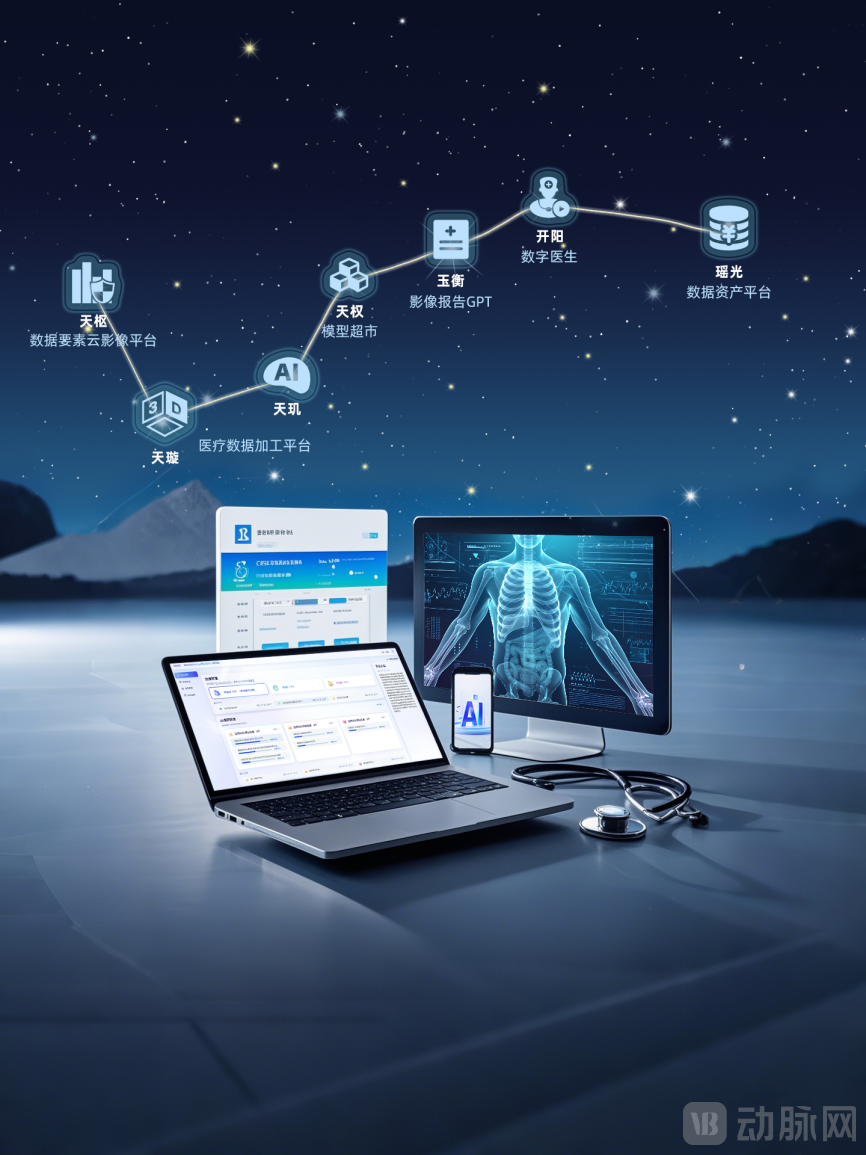
Feitu Medical: Big Dipper Data Value Mining Solution
Overall, Feitu Medical’s leapfrog growth over the past eight years is not only a testament to the company’s own success but also a vivid microcosm of China’s medical digitalization process. The newly released “2025 White Paper on China’s Medical Cloud Imaging Industry” systematically outlines the rise of Chinese medical cloud imaging companies represented by Feitu Medical, while further elucidating the evolutionary logic and core opportunities driving industry development.
We firmly believe that, driven by leading enterprises and through the collaborative efforts of industry, academia, research, and healthcare institutions, China’s medical imaging industry will ultimately achieve deep integration of digitalization and intelligence, starting with filmless imaging as its foundation and boundary-less expansion as its breakthrough. This process will play an increasingly vital role in enhancing the quality of medical services and improving patient care experiences, while providing strong momentum and solid support for the steady implementation of the “Healthy China” strategy.
Scan the QR code below to access the full white paper

*Data source: Shangpu Consulting Group. Based on a comparison of sales and market share of medical cloud imaging across all channels among various enterprises nationwide (excluding Hong Kong, Macao, and Taiwan), it is concluded that “Zhejiang Feitu Imaging Technology Co., Ltd. has ranked first in national market share for medical cloud imaging for three consecutive years” (by sales revenue).Statistical Period: January 1, 2022 – December 31, 2024; This certificate was completed in March 2025.